
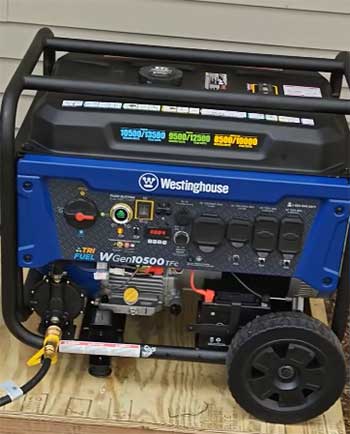
I have spent a lot of time around generators, from job sites where noise is just background clutter to quiet campsites where a loud engine can ruin the weekend. When people ask me about portable power, the conversation almost always lands on two massive contenders: Generac and Westinghouse. It is a classic battle of “The Establishment” versus “The Challenger.”
Generac is the Kleenex of the generator world—a name so ubiquitous that many people use it to refer to any backup power source. They dominate the home standby market, and their portable units carry that heavy reputation. Westinghouse, on the other hand, is a legacy American brand that has reinvented itself in the portable power space, often offering sleeker designs, quieter engines, and more “bang for your buck” features.
In this guide, I am going to strip away the marketing fluff. I will take you through the reality of owning both—not just the specs on the box, but what it feels like to live with them, maintain them, and rely on them when the grid goes down. By the end, you will know whether you should pay the premium for the Orange and Black or save some cash with the Blue and Black.
A Brief Comparison Table
| Feature | Generac Generators | Westinghouse Generators |
| Primary Strength | Massive dealer network and parts availability | Feature-rich value (Remote start, Dual Fuel) |
| Noise Level | Generally louder (Open frames are 70dB+) | Quieter operation (iGen series is notably silent) |
| Fuel Options | Mostly gasoline (Dual-fuel options are limited) | Excellent Dual-Fuel and Tri-Fuel variety |
| Total Harmonic Distortion (THD) | <5% on “TruePower” models, higher on basic GP series | <3% on most Inverters (Clean power standard) |
| Customer Support | Superior; extensive local dealer service network | Often difficult; relies heavily on email/warranty claims |
| Build Quality | Industrial, utilitarian, heavy steel cages | Modern, consumer-friendly, plastic-encased inverters |
| Best For | Long-term homeowners wanting serviceability | RVers, campers, and budget-conscious backup |
My Experience With Generac
Walking into a dealer to look at a Generac feels different than buying other brands. You get the sense that you are buying into an ecosystem. My experience with the Generac GP series (their standard portable line) has always been one of “predictable competence.” I recall dragging a GP6500E out of a shed after it sat for six months. I hadn’t treated the fuel (my mistake), but after draining the carb bowl and adding fresh gas, it roared to life on the second pull.
That word “roar” is important. My biggest takeaway with Generac portables is that they are unapologetically loud. They are built with construction sites in mind. When I ran one during a neighborhood blackout, it was easily the loudest thing on the block. However, it felt incredibly substantial. The steel frame doesn’t flex, the wheels are solid, and the “PowerRush” technology they market actually works. I noticed that when my well pump kicked on—a huge surge of power—the Generac didn’t bog down as much as other units I’ve tested.
The ownership experience feels safe. I know that if something breaks, I can drive ten miles in any direction and find a “Generac Certified” technician. You aren’t just buying a machine; you are buying the infrastructure that supports it. That peace of mind is expensive, but for me, knowing I wouldn’t be stranded with a broken plastic part I couldn’t replace was worth the premium.
Pros Of Generac
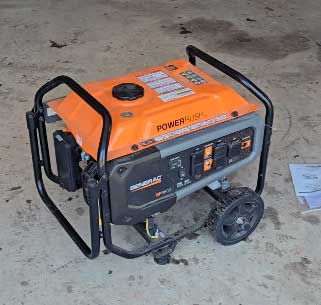
- Unmatched Service Network: This is Generac’s “killer app.” Unlike almost every other portable generator brand where you are forced to ship the unit back or hunt for a small engine mechanic, Generac has thousands of certified dealers across North America. If your generator fails during a widespread outage, you have a much higher chance of finding local support or parts in stock. For a homeowner who isn’t mechanically inclined, this accessibility is the single biggest reason to buy Generac.
- “PowerRush” Starting Capacity: Generac engineers their alternators to handle “inrush current” exceptionally well. This is the momentary spike in power needed to start electric motors (like in your AC unit or fridge). I have found that a 6500-watt Generac can often start loads that would trip the breaker on a competitor’s 7000-watt unit. It punches above its weight class when it comes to starting heavy inductive loads, which is critical for whole-home backup.
- Industrial Durability: These machines are built to take a beating. The “GP” and “XC” series feature hardened steel tube cradles and heavy-duty fuel tanks. I have seen Generac units fall off tailgates and get rained on for days, yet they continue to run. They use a splash lubrication system on many models that is simple and robust. If you are using your generator on a job site where it will be kicked, bumped, and covered in dust, Generac’s build quality stands up to the abuse.
- User-Friendly Control Panels: Generac keeps it simple. The “Hour Meter” on the control panel is standard on almost all models, which is essential for tracking maintenance. The outlets are almost always covered with rubber debris guards that actually stay closed (unlike cheaper brands where they flap open). The layout is logical—Start, Run, Stop—making it easy for a panicked family member to operate in the dark during an emergency.
- Resale Value: Because of the brand name, selling a used Generac is significantly easier than selling a budget brand. I have sold used units for nearly 70% of their new value simply because buyers trust the orange logo. It holds its value like a Honda or a Toyota, whereas cheaper brands depreciate rapidly once they leave the store.
Cons Of Generac
- Significant Noise Output: Generac portables are not designed to be whisper-quiet. The open-frame GP series is loud—often exceeding 74-78 dBA. If you are using this in a suburban driveway, your neighbors will hate you. Even their “inverter” hybrids are often louder than the competition. They lack the sophisticated sound-dampening mufflers found on Westinghouse or Honda units, focusing instead on raw power output.
- Higher Price Tag: You are paying a “brand tax.” A Generac portable with 8000 watts of power can cost $200-$300 more than a comparable Westinghouse or Champion unit. When you look at the spec sheet, it can be hard to justify the extra cost because the engine is often a similar Chinese-sourced clone (in their portable line) to what cheaper brands use. You are paying for the support network, not necessarily a superior engine in the portable class.
- Limited Dual-Fuel Options: Generac has been slower to adopt dual-fuel (gas/propane) technology across their portable lineup compared to Westinghouse. While they have recently introduced some models, they are not as widely available or as affordable as the competition. If running on propane is a non-negotiable for you, your choices within the Generac catalog are much more limited.
- Sensitive CO-Sense Technology: Like many modern generators, Generac units come with Carbon Monoxide (CO) safety shutoffs. However, I have found Generac’s sensors to be overly sensitive. I’ve had units shut down simply because the wind shifted and blew a tiny amount of exhaust back toward the frame. While safety is good, “nuisance tripping” during a storm when you desperately need power is incredibly frustrating.
- Heavy and Bulky: Generac units are rarely lightweight. They prioritize steel over plastic, which means a standard 5500-watt unit can be a beast to move, even with the wheel kit. The handles often fold down but can be short, meaning if you are tall, you might be hunched over while dragging 180 pounds of steel across your yard.
Read more: Comparison Of DuroMax And Honda Generators
Maintenance Tips For Generac
- Keep the Battery Charged (Electric Start Models): Generac portable batteries are notorious for losing charge if left sitting. The unit will start with the pull cord, but pulling a high-compression Generac engine is a workout. I highly recommend installing a permanent “SAE” pigtail connector to the battery terminals so you can plug in a trickle charger without disassembling the unit. Keep it green, and it will start with the push of a button every time.
- Stock Up on Air Filters: The foam air filters on the GP series are simple, but they degrade over time, even if you don’t use the generator. I have opened airboxes to find the foam has turned to sticky dust that gets sucked into the carburetor. Check the filter every 6 months. If it crumbles when you pinch it, replace it immediately. It is a cheap part that saves the engine.
- Use Stabilizer in Every Tank: Generac carburetors have tiny jets that clog easily with modern ethanol fuel. Since you likely won’t run this generator weekly, fuel stabilizer is mandatory. I prefer using a “fuel shutoff valve” technique: turn the fuel valve to “OFF” while the engine is running and let it stall out. This drains the carb bowl so no fuel sits inside to varnish while it’s stored.
- Check the Oil Level Sensor: Generac’s low-oil shutdown sensors are a great safety feature, but they can get stuck. If you have plenty of oil but the unit won’t spark, the sensor might be stuck in the “float down” position. Sometimes a gentle tap on the crankcase near the sensor can free it, but keeping the oil clean is the best prevention. Dirty sludge makes the sensor stick.
- Adjust Valve Lash After Break-in: Most users skip this, but it is vital. After the first 20-30 hours of use, the valves on these OHV engines tend to seat and tighten up. If you don’t adjust them, the generator will become hard to start when hot. It’s a simple 20-minute job with a feeler gauge that keeps the engine running like new for years.
My Experience With Westinghouse
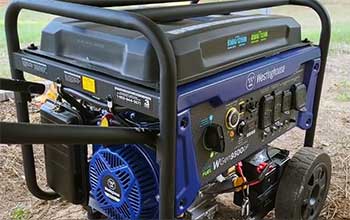
When I unboxed my first Westinghouse generator—the WGen series—it felt like a gadget lover’s dream.
Where Generac feels like a tool from a 1990s hardware store, Westinghouse feels like a modern appliance.
It came with a remote start fob, a fancy battery charger, and clearly labeled “lifetime technical support” stickers.
I used a Westinghouse iGen4500 inverter for a week-long RV trip, and the difference in user experience was stark.
It was quiet. Ridiculously quiet. I could sit in a camp chair reading a book six feet away from it. The “efficiency” of the Westinghouse really shone through; the variable speed engine meant that when I was just charging phones and running LED lights, the engine idled down to a whisper and sipped gas.
However, the experience wasn’t flawless. The plastic casing, while looking sleek, felt a bit brittle. I was constantly worried about cracking the shell when loading it into the truck. And there is a certain “digital anxiety” with Westinghouse—there are so many electronic modules and sensors that you wonder what happens if the control board fries. But for the price, the feature set was undeniable. It felt like I got a luxury car for the price of an economy sedan.
Pros Of Westinghouse
- Feature-Rich for the Price: Westinghouse packs an incredible amount of tech into their units for the money. Remote start key fobs, push-button start, and LED data centers are often standard on mid-range models. To get similar features on a Generac or Honda, you often have to step up to a much more expensive tier. If you love gadgets and convenience, Westinghouse wins hands down.
- Superior Fuel Versatility: Westinghouse is a leader in Dual-Fuel (Gas/Propane) and Tri-Fuel (Gas/Propane/Natural Gas) portable generators. The ability to plug a portable generator directly into your home’s natural gas line (on specific models) is a game-changer. It means unlimited run time during an outage without ever having to refuel. This flexibility makes them a top choice for preppers and those living in hurricane zones.
- Quiet Operation (Inverter Series): The iGen series is world-class when it comes to noise reduction. They use double-insulated acoustic enclosures and asymmetric cooling fans to cut down on the “whine” typical of small engines. I have measured their 4500-watt unit at around 52-53 dBA. This is the difference between sleeping through the night and lying awake listening to an engine drone.
- Low Total Harmonic Distortion (THD): Almost all Westinghouse inverter generators produce less than 3% THD. This “clean power” is critical for modern life. I have plugged sensitive medical equipment and high-end gaming PCs into Westinghouse units without a single issue. With standard open-frame generators, you often risk frying the motherboard of your smart furnace or fridge; Westinghouse inverters eliminate that risk.
- Lightweight and Compact: By using plastic composites and advanced inverter alternators, Westinghouse sheds a lot of weight. Their 2500-watt suitcase generators are easy to carry with one hand. Even their larger open-frame units tend to be 10-15 pounds lighter than the equivalent Generac, making them much more manageable for a single person to deploy.
Cons Of Westinghouse
- Customer Support Frustrations: This is the biggest complaint you will find online, and it holds water. Westinghouse support is often handled via email or ticketing systems, and response times can be slow. Unlike Generac, you can’t just drive to a local dealer. If your unit arrives with a broken part (which happens due to shipping), you might be stuck in a warranty loop for weeks waiting for a replacement.
- “DOA” (Dead on Arrival) Issues: Due to the lighter packaging and perhaps less rigorous final QC checks, there is a higher rate of Westinghouse units arriving with loose wires or cracked housings. I have advised friends to open the box and test the unit immediately upon delivery, rather than waiting for an emergency, because the return window at big-box stores is your best safety net.
- Plastic Durability: The sleek blue plastic shells look great, but they don’t age as well as steel. UV light can make them brittle over time, and a single accidental drop can shatter the casing, potentially exposing live electrical components or the engine. You have to treat a Westinghouse with care; it is not a piece of construction equipment.
- Battery Access: On several enclosed inverter models, the battery is buried deep inside the plastic shell. If the battery dies (which they do), you often have to unscrew a maintenance panel to get to it. Trying to find a Phillips head screwdriver in the pitch black during a power outage just to jump-start your generator is a design flaw that drives me crazy.
- Oil Change Mess: Similar to other consumer brands, the oil drain on some Westinghouse models is poorly placed. It often requires a special funnel (usually included, but easily lost) to drain the oil without it running inside the plastic bottom of the case. If you spill oil inside the enclosure, it will drip on your garage floor for weeks.
Maintenance Tips For Westinghouse
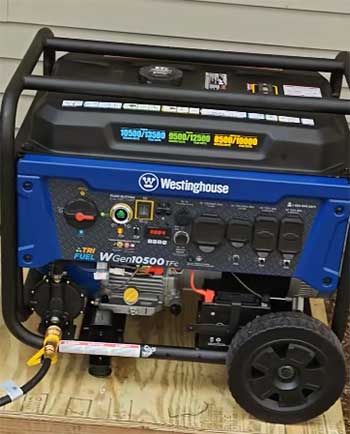
- Check Internal Connections Early: When you first get your Westinghouse, take 10 minutes to remove the side maintenance panel. Gently push on all the wire connectors. I have found loose spade connectors on the start switch or the inverter board right out of the box. Ensuring these are tight prevents the unit from vibrating loose and shutting down unexpectedly later.
- Respect the “Eco Mode” Switch: Only use “Eco Mode” or “Efficiency Mode” when the load is light (under 50%). If you try to start a heavy load like an air conditioner while the generator is idling low in Eco Mode, it may stall before the engine can rev up. Turn Eco Mode off before applying heavy loads to ensure the engine is already at speed to handle the surge.
- Clean the Spark Arrestor: Because Westinghouse units are often run quietly at low RPMs, the spark arrestor screen in the muffler clogs with carbon faster than on loud, high-revving generators. If you notice the generator losing power or “sputtering,” check the screen on the exhaust outlet. A quick blast with a torch or wire brush usually fixes it.
- Exercise the Dual-Fuel Regulator: If you own a dual-fuel model, do not let the propane regulator sit unused for years. The internal diaphragm can stiffen. Hook it up to a propane tank once a year and run it for 30 minutes. This keeps the rubber flexible and ensures the system works when you run out of gasoline.
- Invest in a Magnetic Dipstick: Westinghouse generators (and many others) often come with plastic oil dipsticks. There are aftermarket magnetic dipsticks available for these engines. I highly recommend buying one. It sits in the oil fill tube and catches microscopic metal shavings from the engine, preventing them from circulating and wearing out the cylinder. It is a cheap upgrade that extends engine life.
Comparison with other brands
- Comparison with Honda: Honda is the benchmark for silence and reliability. A Honda EU2200i will likely outlast a Westinghouse iGen2200 by a decade, but it costs twice as much. Compared to Generac, Honda is in a different league regarding refinement. If you want a generator you can pass down to your grandkids, buy Honda. If you want good power for right now, Generac or Westinghouse are more economical.
- Comparison with Champion: Champion is the most direct rival to Westinghouse. They are almost identical in terms of features (Dual-Fuel, yellow vs. blue). I find Champion’s customer service to be slightly more responsive than Westinghouse’s, but Westinghouse often has slightly better tech (lower THD). Generac sits above both in terms of dealer support but often below both in terms of “bang for your buck” features.
- Comparison with Predator (Harbor Freight): Predator generators are eating everyone’s lunch. They are cheaper than Generac and often quieter. The Predator 3500 is a direct competitor to the Westinghouse iGen4500. The advantage of Predator is the warranty—you can just walk into Harbor Freight and swap it. With Generac or Westinghouse, you are dealing with parts and repairs. If you live near a Harbor Freight, Predator is a compelling alternative.
- Comparison with DuroMax: DuroMax specializes in “big iron”—cheap, loud, high-wattage generators. They compete more with Generac’s GP series than Westinghouse’s inverters. DuroMax is often cheaper than Generac for the same wattage, but the build quality is rougher. If you just need raw power for a welder or a table saw and don’t care about the brand, DuroMax saves you money.
- Comparison with Briggs & Stratton: Briggs used to be the king, but they have faded. Generac has largely taken their spot as the “American” brand of choice. I find modern Briggs portables to be very similar to Generac—decent, loud, and reliable—but they lack the massive dealer network that Generac has built over the last 15 years.
Also Read: Is Generac Better Than DuroMax Portable Generator
Frequently Asked Questions (FAQ)
For whole-home backup where you need long-term reliability and serviceability, Generac is better due to its dealer network. For occasional backup where budget and features (like dual-fuel) matter more, Westinghouse offers better value.
Yes, specifically the iGen (Inverter) series. They are among the quietest on the market, operating around 52-60 dBA. However, their open-frame “WGen” series are standard generators and are just as loud as Generac models.
Most of Generac’s portable generator engines are manufactured in China to Generac’s specifications. While they are “Generac G-Force” branded, they are similar in design to other industry-standard engines, unlike their home standby units which use engines built specifically for that purpose in the USA.
On Generac Inverter models or units labeled with “TruePower” technology, yes. However, on the standard GP series open-frame generators, the THD (Total Harmonic Distortion) can exceed 5-10%, which is risky for sensitive electronics like smart TVs or medical equipment.
Conclusion
The decision between Generac and Westinghouse comes down to what kind of “insurance” you are buying.
If you are the type of person who wants the security of a name brand, a massive service network, and a machine that feels like it could survive a drop from a truck, the Generac is your choice. You are paying a premium for the certainty that if it breaks, there is a certified pro in your zip code who can fix it. It is the safe, industrial choice for homeowners who value longevity and support over bells and whistles.
However, if you are looking for the modern, smart choice—a generator that is quiet enough to sleep next to, offers the flexibility of propane without aftermarket kits, and gives you clean power for your laptop—the Westinghouse is the superior product. You get more features, less noise, and better fuel efficiency for your dollar. Just be prepared to be your own mechanic if customer support is slow to answer the phone.
Evaluate your tolerance for noise and your need for local support, and you will know exactly which plug to reach for when the lights go out.