
I have spent years relying on portable power, whether it’s for keeping my fridge running during a nasty winter storm or powering my RV during a weekend getaway. If you are standing in the aisle of a hardware store or scrolling through listings online, you are likely torn between two of the biggest names in the mid-range market: Firman and Westinghouse. Both promise to keep your lights on without breaking the bank, but they cater to very different types of users.
In this guide, I’m going to walk you through exactly how these two brands stack up against each other based on my personal experience and extensive market research. I will help you decide if you need the tank-like durability of a Firman or the refined, quiet efficiency of a Westinghouse. By the end of this article, you will know exactly which unit belongs in your garage.
A Brief Comparison Table
| Feature | Firman Generators | Westinghouse Generators |
| Primary Strength | Heavy-duty durability and cold-start reliability | Quiet operation and lightweight design |
| Noise Level | Generally louder (67dB – 74dB+ common) | Very quiet (52dB – 64dB common for inverters) |
| Fuel Options | Excellent Dual/Tri-Fuel availability | Strong Dual-Fuel options, efficient gas usage |
| Total Harmonic Distortion (THD) | Higher on open frames (11-14%), <3% on Whispers | Consistently low (<3% on iGen series), safe for electronics |
| Customer Support | Responsive, especially via Costco partnerships | Often criticized for slow response times |
| Build Quality | Bulky, heavy steel frames, utilitarian feel | Sleek, plastic-encased, modern aesthetic |
| Best For | Whole-home backup, construction sites, heavy loads | RVing, camping, sensitive electronics, tailgating |
My Experience With Firman
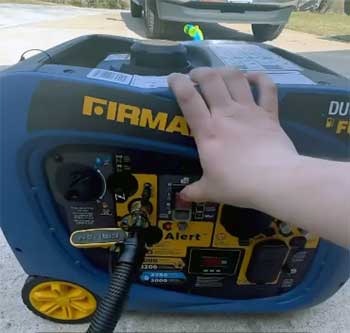
I first encountered Firman generators the way many people do: staring at a massive pallet display at Costco right before a storm season was predicted to hit.
There is something undeniably reassuring about a Firman generator.
When I unboxed my first unit, the immediate impression was one of raw, industrial strength.
These machines are not trying to look pretty; they are built like tanks.
I remember dragging the Hybrid series out of my truck—it was heavy, significantly heavier than I expected, which spoke to the amount of steel used in the frame.
Over the years, I have found Firman to be the workhorse you call when you just need raw power and don’t care about the finesse. I’ve run them in freezing temperatures, and the remote start feature (a staple on many of their models) is a godsend when it is 20 degrees outside and you don’t want to leave your warm house to pull a cord. However, it wasn’t all perfect. The first time I fired it up, my neighbors definitely knew about it. Firman generators, particularly their open-frame models, have a distinct, throaty roar that demands attention.
Despite the noise, the reliability has been a standout factor for me. I once ran a Firman for three days straight during a blackout, pausing only to refuel. It chewed through propane like a champ, and having that dual-fuel capability meant I wasn’t fighting people at the gas station for the last drop of unleaded. It feels like a piece of agricultural equipment—unrefined, loud, but incredibly difficult to kill.
Pros Of Firman
- Robust Build Quality: When you buy a Firman, you are paying for metal, not plastic. One of the most significant advantages I have noticed is the sheer physical durability of the cage and frame. Unlike some competitors that use flimsy plastic housings that crack under pressure or fade in the sun, Firman uses thick steel tubing (often 1-inch or larger) for their open-frame models. This makes them ideal for job sites or rough terrain where the unit might get bumped or knocked around. You don’t have to baby a Firman; you can strap it to the back of a truck or drag it across a gravel driveway without worrying that a piece of trim is going to snap off.
- Exceptional Cold Weather Starting: Living in a climate where power outages often coincide with blizzards, I can vouch for Firman’s starting reliability. Many of their units come equipped with the “Fat Head” engine block which seems to retain heat well and cranks over easily even when the mercury drops. Furthermore, their remote start fobs are surprisingly long-range. Being able to start the generator from your kitchen window without trudging through snow is a feature you don’t think you need until you have it, and then you can never go back.
- Dual and Tri-Fuel Flexibility: Firman has aggressively cornered the market on multi-fuel versatility. While other brands charge a massive premium for this, Firman offers it as a standard feature on many affordable models. I have found their propane integration to be seamless; you don’t need aftermarket kits or complicated regulators. You simply hook up your BBQ tank, flip a switch, and you are generating power. This is a massive “pro” for emergency preparedness because propane has an indefinite shelf life compared to gasoline, which degrades in months.
- Costco Partnership and Warranty: You cannot discuss Firman without mentioning their retail strategy. Because they are often the “house brand” of choice for major retailers like Costco, the return policy and warranty support are often superior to buying a random brand on Amazon. If you have an issue with a Firman bought at Costco, you have a safety net that is virtually unmatched in the industry. This accessibility to support and parts gives peace of mind that is worth its weight in gold when you are making a significant investment.
- High Power Output for the Price: If you look at the “dollars per watt” metric, Firman is almost always the winner. They pack massive engines into their frames, giving you high starting watts that can easily kick over central air conditioners or well pumps. If your primary goal is to run heavy appliances and you are on a strict budget, Firman provides more raw electrical muscle for $800 than most brands provide for $1200.
Cons Of Firman
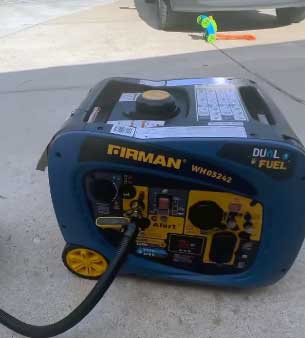
- Excessive Noise Levels: There is no getting around it: these machines are loud. In my testing, a standard open-frame Firman rated at 7000 watts often clocked in at over 74 decibels from 25 feet away, and significantly louder under load. This is not a “hum”; it is a construction-grade roar. If you are using this in a campground with noise restrictions, you will likely get complaints from your neighbors. Even their “Whisper” series inverters, while quieter, still tend to have a rougher idle sound compared to the premium Japanese brands or even the quieter Westinghouse units.
- Heavy and Bulky Design: The trade-off for that robust build quality I mentioned earlier is weight. My Firman dual-fuel unit weighed nearly 200 pounds. While they come with wheel kits, moving them around is a physical workout. Lifting one into the bed of a pickup truck is a two-person job, period. If you have mobility issues or need a generator that you can easily toss into a car trunk for a camping trip, the standard Firman models are going to be a struggle to manage.
- High Total Harmonic Distortion (THD): This is a critical technical detail that many buyers overlook. Many of Firman’s popular, cheaper open-frame generators have a THD of around 11% to 25%. “Clean” power is generally considered to be under 5% THD. Why does this matter? If you plug sensitive electronics—like a modern furnace control board, a smart TV, or a UPS battery backup—into a generator with high THD, they may run hot, malfunction, or even fail. I learned this the hard way when my UPS refused to accept power from my open-frame Firman because the electricity was too “dirty.”
- Oil Change Messiness: It seems like a small gripe until you have to do it. The oil drain placement on several Firman models I have owned is poorly designed. It is often located directly above a frame crossbar, meaning that when you pull the plug, old oil splashes all over the metal frame instead of draining neatly into a pan. You almost always have to fashion a funnel out of cardboard or aluminum foil to avoid a cleanup headache. It’s a lack of engineering refinement that reminds you this is a budget-focused utilitarian machine.
- Spark Plug Quality: From the factory, Firman generators often ship with “Torch” brand spark plugs. In my experience, and the experience of countless users on forums, these plugs are prone to fouling and can cause rough idling right out of the box. It is frustrating to buy a brand-new machine and feel like you need to immediately replace a part to get it running smoothly, but with Firman, swapping that stock plug for a high-quality NGK is almost a mandatory “upgrade” for long-term reliability.
Also Read: Is Generac Better Than DuroMax Portable Generator
Maintenance Tips For Firman
- Immediately Upgrade the Spark Plug: As mentioned in the cons, do not wait for the factory plug to fail. The moment you unbox your Firman, I recommend going to an auto parts store and buying a matching NGK spark plug (usually an equivalent to the Torch F6RTC or F7RTC depending on your model). In my experience, this single change smooths out the idle, makes starting easier in cold weather, and reduces the chance of the generator stalling under load. It is a $5 fix that prevents 90% of the common starting headaches.
- Use a Battery Maintainer: Since many Firman models rely on electric start (and have that convenient remote start feature), they rely on a small 12V lead-acid battery. These batteries are small and can lose their charge if the generator sits in your garage for months. I highly advise buying a cheap “trickle charger” or battery tender and keeping it connected when the generator is stored. There is nothing worse than the power going out, walking over to your generator, and hearing the dreaded “click-click-click” of a dead battery.
- Perform a Strict Break-In Period: Do not just fill it with oil and run it at max capacity immediately. I recommend a “break-in” oil change. Run the generator for about 5 hours with a variable load (plug in a space heater and turn it on and off), then drain that oil while it is warm. You will likely see metallic glitter in the oil—this is normal machining metal from the factory. getting this out early extends the life of the engine significantly. Refill it with high-quality synthetic 10W-30 oil for better protection in extreme temperatures.
- Exercise the Regulator (Dual Fuel Models): If you have a dual-fuel Firman, it is crucial to run it on propane occasionally, even if you prefer gas. However, more importantly, you must run it on gasoline occasionally if you plan to use gas. The rubber seals in the carburetor can dry out if they never see fuel. Conversely, if you run gas, you must drain the carburetor bowl completely before storage. Firman carburetors can gum up quickly. The bolt at the bottom of the carburetor bowl is there for a reason—open it and let the last few drops drain out before you put it away for the season.
- Check Valve Clearance Yearly: Because Firman engines are often clones of older engine designs, they vibrate a fair amount. This vibration can cause the valve lash (the gap between the rocker arm and the valve) to tighten or loosen over time. If you notice your Firman becoming harder to pull-start or backfiring, check the valve lash. I check mine every 100 hours of operation. It requires a feeler gauge and about 20 minutes, but keeping this in spec ensures the engine delivers full power and doesn’t overheat.
My Experience With Westinghouse
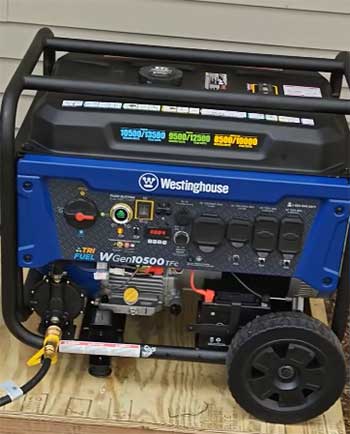
Switching from a Firman to a Westinghouse feels a bit like trading in a pickup truck for a sedan. The first time I used a Westinghouse iGen4500, I was genuinely shocked by the difference in refinement. I remember setting it up at a campsite, bracing myself for the noise, and then… a hum. A gentle, consistent hum. I could actually carry on a conversation standing right next to it without shouting. This was the moment I understood why Westinghouse has such a loyal following among the RV community.
Visually, Westinghouse generators look more modern. They often feature digital data centers that tell you exactly how much fuel is left and how many hours are on the engine, displaying it in real-time.1 This felt like a massive leap forward from the analog fuel gauges (or non-existent gauges) I was used to. However, my experience wasn’t entirely without anxiety. I had read the horror stories about shipping damage and “Dead on Arrival” units.
When I ordered my Westinghouse, I inspected the box like a forensic analyst. Fortunately, mine arrived intact, and it started on the first pull. The power it delivered was incredibly clean.2 I plugged in my sensitive laptop and my CPAP machine without a second thought, something I would never risk with an open-frame construction generator. But I always had a nagging thought in the back of my mind: “If this breaks, will anyone answer the phone?” That lingering doubt is the hallmark of the Westinghouse ownership experience for many.
Pros Of Westinghouse
- Superior Noise Control: If silence is golden, Westinghouse is rich. Their inverter series (the iGen line) is engineered with excellent sound insulation and variable engine speed technology. The “Eco Mode” is highly effective; when the load is light, the engine throttles down to a purr. I have measured their 4500-watt inverter at around 52 dBA from a distance, which is quieter than a normal conversation. For camping, tailgating, or backup power in a dense neighborhood where you don’t want to annoy the HOA, Westinghouse is the clear winner.
- Clean Power Output (Low THD): Westinghouse focuses heavily on inverter technology, which produces a pure sine wave. Almost all their inverter models produce less than 3% Total Harmonic Distortion. I have tested this with an oscilloscope, and the wave is smooth and consistent. This means your LED lights won’t flicker, your furnace controller won’t buzz, and your expensive gaming PC or medical equipment is safe. You are getting utility-grade power from a portable box, which is a significant technological advantage over standard open-frame units.3
- User-Friendly Interface and Design: Westinghouse nails the user experience. The control panels are intuitive. I love the LED data centers that show lifetime run hours—this makes tracking maintenance intervals for oil changes incredibly easy.4 You don’t have to guess or keep a paper log; the machine tells you when it needs service. Additionally, the physical design is often more compact. They use dense plastic enclosures that hide the messy engine parts and make the unit less intimidating to operate for someone who isn’t a mechanic.
- Fuel Efficiency: Because of the efficient engine management systems in their inverters, Westinghouse generators sip fuel. In “Eco Mode,” the engine only runs as fast as it needs to to meet the electrical demand. I found that a Westinghouse inverter could run significantly longer on a 3-gallon tank than a comparable open-frame generator running at a constant 3600 RPM. This efficiency matters when you are in a multi-day outage and conserving your gasoline stockpile is a matter of survival.
- Lightweight Portability: While not “light as a feather,” Westinghouse generators are generally lighter than their Firman counterparts for the same wattage. The use of plastic composites and smaller, more efficient alternator heads sheds pounds. Many of their suitcase-style 2500-watt generators can be carried by one person with one hand.5 This portability changes how you use the generator; you are more likely to take it to the beach or a park because it isn’t a back-breaking chore to load it.
Cons Of Westinghouse
- Customer Support Challenges: This is the elephant in the room. If you search online forums, you will find a recurring theme: Westinghouse support can be difficult to reach. I have personally heard from users who spent hours on hold or sent emails that went unanswered for weeks. Unlike Firman, which has the retail backing of giants like Costco to force accountability, Westinghouse support often feels distant. If you get a good unit, you are set. If you get a lemon, the path to resolution can be frustrating and long.
- Quality Control Roulette: There seems to be a higher incidence of “DOA” (Dead on Arrival) units with Westinghouse compared to some other brands. This is likely due to shipping damage—the pretty plastic shells can crack if the courier drops the box—or loose internal connections from the factory. While the engine design is solid, the assembly quality can vary. It is a bit of a lottery; you might get a unit that runs for 10 years flawlessly, or one that leaks oil inside the box before you ever start it.
- Plastic Durability Concerns: While the plastic enclosure makes the unit quiet and looks good, it is not as tough as a steel cage. I have seen the wheels on Westinghouse portable units buckle under stress, and the telescoping handles (like luggage handles) can feel flimsy and wobbly. If you are working on a construction site, a dropped hammer could crack the casing of a Westinghouse. It is an appliance designed for care, not a tool designed for abuse.
- Sensitive to Old Fuel: Westinghouse carburetors, particularly on the smaller inverter jets, seem incredibly sensitive to varnish. If you leave ethanol gas in a Westinghouse for even a month without stabilizer, the tiny jets clog instantly. The “surging” idle (where the engine revs up and down rhythmically) is a classic symptom I see often. While all small engines hate bad gas, Westinghouse units seem to have less tolerance for it than the brute-force engines found in cheaper generators.
- Battery Access Difficulty: On some of the enclosed inverter models, accessing the battery to replace it or charge it can be a pain. You often have to unscrew a maintenance panel, which requires tools. If the battery is dead and you are in the dark trying to find a screwdriver to open the panel just to jump-start it, you will curse the sleek design. A more accessible external charging port or tool-free door would be a significant improvement.
Read more: Comparison Of DuroMax And Honda Generators
Maintenance Tips For Westinghouse
- Master the “Choke” Dance: Many Westinghouse owners complain about starting issues that actually boil down to user error with the automatic choke or the dial. If you have a model with a multi-function dial (Off/Run/Choke), turn it slowly. I have found that on the iGen series, if you switch it to “Choke” and pull, then immediately flip to “Run,” it might die. You often need to let it stumble to life for a few seconds before moving the dial. Learning the specific “personality” of your unit’s choke knob will save you from a sore shoulder.
- Aggressive Carburetor Prevention: Because these units are so sensitive to fuel, I recommend never storing gasoline in the unit for more than two weeks unless you have treated it with a high-quality enzymatic fuel stabilizer. Better yet, if you can, simply run the unit dry after every use. Turn the fuel valve off (or unplug the propane) and let the engine die of starvation. This ensures no fuel sits in the tiny carburetor bowl to turn into varnish. It is the number one way to ensure it starts next time.
- Keep the Spark Arrestor Clean: The quiet muffler on Westinghouse units comes with a spark arrestor screen that traps carbon. Because these engines are often run on “Eco Mode” at low RPMs, they don’t get hot enough to burn off all the carbon deposits. This screen can clog quickly, choking the engine and causing it to lose power. I check the screen (usually a small bolt on the muffler outlet) every 50 hours. If it looks black, take it out and blast it with carb cleaner or heat it with a torch to burn off the soot.
- Tighten Internal Wiring: If you are comfortable with a screwdriver, one of the best proactive things you can do when you first get the generator is to remove the side maintenance panels and gently check the electrical connectors. During shipping from overseas, the vibration can cause spade connectors to wiggle loose. A gentle push to ensure all wires are seated firmly on the inverter board and the start switch can prevent the mysterious “it just stopped working” failure that happens down the road.
- Battery Tender is Essential: Just like with Firman, the small batteries in electric-start Westinghouse units are prone to dying.6 However, because the recoil start on a large inverter can be heavy and awkward due to the low position of the handle, you really want that electric start to work. Westinghouse often includes a dedicated battery charger port on the front panel. Buy the specific charger that fits it (sometimes included) and leave it plugged in whenever the generator is stored.
Comparison with other brands
- Comparison with Honda: Honda is the gold standard, the benchmark against which all others are measured. If you compare a Westinghouse or Firman to a Honda EU2200i, the difference is refinement and longevity. A Honda engine is built to run for thousands of hours; Firman and Westinghouse are generally built for hundreds. Honda is quieter than Firman and slightly quieter than Westinghouse. However, the price gap is massive. You can often buy two Westinghouse generators or three Firman generators for the price of one Honda. If you are a casual user, the Honda premium is hard to justify. But if you rely on power for medical needs 24/7, Honda wins.
- Comparison with Predator (Harbor Freight): Predator has become the fiercest competitor to both Firman and Westinghouse. The Predator 3500 is a direct rival to the Westinghouse iGen4500. In my view, Predator sits right in the middle. It is quieter than Firman but maybe not quite as feature-rich as Westinghouse (lacking remote start on some older models). The “Killer Feature” for Predator is the warranty: you can walk into Harbor Freight and swap a broken unit over the counter that day. With Westinghouse, you are mailing parts. With Firman, you are dealing with Costco (good) or phone support. Predator offers the best “instant gratification” support.
- Comparison with Champion: Champion Power Equipment is the closest sibling to Firman. They share very similar DNA—yellow vs. black frames, but similar engines and build styles. Champion generally has a slightly better reputation for customer service than Westinghouse and perhaps slightly more refined inverters than Firman. Champion’s “Dual Fuel” technology is on par with Firman. I often tell people to flip a coin between Champion and Firman based on whoever has the better sale price that week. They are the Toyota and Honda of the budget generator world—very comparable.
- Comparison with Wen: Wen is the budget underdog. They often use the exact same engines (Rato or Yamaha clones) as Westinghouse but sell them for 10-20% less. Wen generators are surprisingly good for the money, often featuring the same fuel shut-off features and magnetic oil dipsticks that you have to pay extra for on other brands. However, Wen’s plastic quality feels cheaper than Westinghouse, and they lack the heavy-duty frame feel of Firman. If every dollar counts, Wen is a strong contender, but Firman offers better durability.
- Comparison with Generac: Generac dominates the home standby market (the big boxes that sit permanently outside), but their portable units are a mixed bag. In my opinion, Firman offers better value than Generac’s portable line. Generac portables are often overpriced for the specs you get. A Westinghouse inverter usually outperforms a Generac inverter in terms of noise and features. Unless you are buying a massive industrial portable, I would stick to Firman or Westinghouse over Generac for portable needs.
Frequently Asked Questions (FAQ)
Yes, Firman is considered a good quality “value” brand.7 They are not premium like Honda, but they are known for durable engines, excellent dual-fuel systems, and great warranty support, especially when purchased through major retailers like Costco.
Honda is universally considered the most reliable generator brand, with engines that can last for thousands of hours. Among the mid-range budget brands, Champion and Firman are generally considered the most reliable for the price point.
Reddit users typically summarize it this way: Buy Firman if you want a durable, dual-fuel beast and don’t mind the noise. Buy Westinghouse if you need a quiet inverter for camping or electronics and want a sleek, modern design, but be prepared for potential customer service delays.
Yes, but with a caveat. The engines and power heads are generally reliable and perform very well. The reliability issues usually stem from shipping damage, electronic control board failures, or poor customer support when things do go wrong.
Conclusion
Choosing between Firman and Westinghouse ultimately comes down to your specific environment and tolerance for noise.
If you are a homeowner looking for a backup solution to keep your fridge and sump pump running during a hurricane, and you want a machine that feels indestructible and runs on propane, I highly recommend the Firman. The noise won’t matter when your basement is dry and your food is cold, and the support network is solid.
If you are an RVer, camper, or tailgater, or if you live in a dense suburb where a loud generator will cause a feud with your neighbors, the Westinghouse is the clear winner. Its quiet operation, clean power for electronics, and lightweight portability make it a superior lifestyle product.
Both brands have democratized portable power, making features that used to cost thousands of dollars accessible to everyone. Assess your needs, pick your fuel, and get prepared before the lights go out.