
We have all been there—scrolling through Pinterest or Instagram, spotting a gorgeous, aesthetic playroom that looks nothing like the plastic explosion currently taking over our living rooms. You want a play kitchen that entertains your toddler for hours but also doesn’t look like a neon eyesore. That is likely how you found the Robud Play Kitchen. It is marketed as the perfect blend of Montessori-inspired design, wooden durability, and modern aesthetics, often popping up in “must-have” lists for trendy parents.
In this comprehensive review, I am going to break down everything you need to know about the Robud Wooden Play Kitchen. I will take you through the grueling assembly process, the quality of the materials, and whether it actually withstands the chaos of a toddler chef. We will analyze if the “realistic” features like the ice maker and clicking knobs are enough to justify the price tag compared to cheaper alternatives. By the end of this guide, you will know if this kitchen is the culinary corner your child dreams of or just another piece of furniture you will regret building.
My Experience With The Robud Play Kitchen
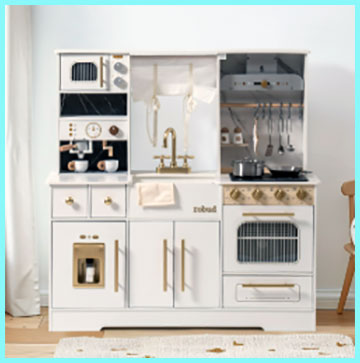
I decided to purchase the Robud Play Kitchen (specifically the white and gold modern version) for my daughter’s third birthday. I was drawn to it because it looked like a miniature version of a kitchen I would actually want to cook in, rather than a gaudy toy. The promise of “solid wood” construction and the included accessories sealed the deal for me, as I didn’t want to buy a separate pot and pan set immediately.
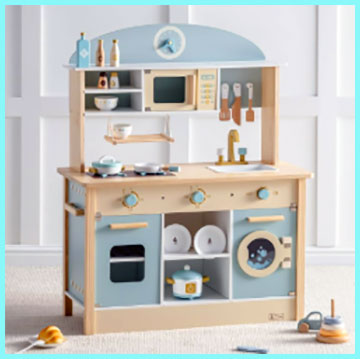
When the box arrived, my first thought was, “This is heavier than I expected.”
That was a good sign for durability but a bad sign for my back.
I made the classic mistake of deciding to assemble it the night before her birthday.
Let me be very clear: do not do this.
The unboxing revealed a sea of Styrofoam and what felt like four hundred individual pieces of wood.
The instructions were entirely visual—no text—which is fine if you are building a LEGO set, but less fine when you are trying to distinguish between three screws that look identical but are millimeter-different in length.
It took me roughly three hours to build. There were moments of genuine frustration where pilot holes didn’t line up perfectly, requiring some elbow grease to force the screws in. However, once the frame was up, the quality became apparent. The wood felt dense and smooth, coated in a paint that seemed resistant to chipping.
The next morning, the reaction made the late-night struggle worth it. My daughter immediately gravitated toward the ice maker. It is a simple mechanical feature—you put wooden cubes in a slot, push a cup against the lever, and they drop out—but to a three-year-old, it is magic. She spent the first forty-five minutes just filling and emptying cups of “ice.”
Over the last six months, the kitchen has held up surprisingly well. It fits perfectly in the corner of our living room without dominating the space. The “clicking” sound of the stove knobs is satisfyingly tactile, and the storage space under the sink is actually functional for hiding away the play food when we are done.
However, I did notice a distinct chemical smell for the first few days, likely from the paint or the MDF glue. I had to air it out on the porch before bringing it fully indoors. Also, the height is a bit on the shorter side. My daughter is tall for her age, and I can already see her hunching slightly to use the countertop. It is perfect for a two or three-year-old, but a five-year-old might tower over it. Despite the assembly headache, it has become the most-used toy in our house, sparking endless rounds of “soup” made from wooden blocks and plastic corn.
Read More: My Thoughts on Big Bad Toy Store
Pros Of Robud Play Kitchen
When analyzing the Robud kitchen against the vast market of plastic and wooden competitors, several distinct advantages make it a strong contender for design-conscious parents. Here are the specific benefits that stood out during my testing.
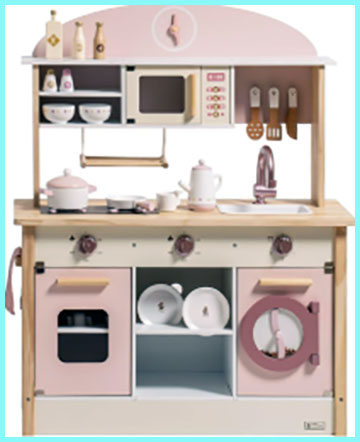
- Aesthetic That Fits Modern Home Decor: The primary selling point for this kitchen is undoubtedly its look. Unlike the primary-colored plastic kitchens of the early 2000s, Robud designs their units with a palette of sage greens, soft pinks, and clean whites with gold or wood accents. It looks like a piece of furniture rather than a toy, meaning you don’t feel the need to hide it away when guests come over. The hardware (handles and faucets) often mimics trendy brass or matte black finishes found in real renovated kitchens. This visual appeal makes it much more likely to stay in a central living area, which in turn means your child plays with it more often because they are near you.
- Interactive Mechanical Features: While it lacks the flashing lights and blaring sirens of electronic kitchens (which many parents count as a pro), it compensates with clever mechanical interactions. The standout feature on most models is the working ice dispenser, which uses gravity and a lever to drop wooden cubes. The stove knobs make a loud, satisfying “click-click-click” sound when turned, mimicking the ignition of a gas stove without needing batteries. The faucet handles turn smoothly, and the oven doors have magnetic latches that offer just the right amount of resistance. These tactile feedback loops keep children engaged without overstimulating them with noise.
- Generous Inclusion of Accessories: Most play kitchens require you to buy a separate “starter set” of pots and food, but Robud typically includes a robust kit in the box. My set came with a metal pot and pan, cooking utensils, a chef’s hat, an apron, and even some cuttable wooden vegetables. This adds tremendous value because you are “ready to play” the moment it is built. The accessories are usually made of wood or metal rather than cheap plastic, matching the durability of the kitchen itself. Having a matching apron is a cute touch that enhances the role-playing experience for toddlers.
- Solid and Stable Construction: Once assembled, this thing is a tank compared to flimsy plastic alternatives that tip over easily. The use of MDF and solid wood gives it a low center of gravity, making it very difficult for a climbing toddler to pull down (though you should always anchor furniture). The doors feel heavy and substantial; they don’t flex or wobble when opened. This sturdiness means it can survive the “slamming phase” where toddlers enjoy banging cupboard doors shut repeatedly. It feels like an heirloom piece that could theoretically be passed down to a younger sibling or sold secondhand in good condition.
Cons Of Robud Play Kitchen
Despite the beautiful design, the Robud kitchen is not without its flaws. There are significant logistical and quality control issues that you need to be aware of before clicking “buy.”
- The Assembly Process Is grueling: There is no sugarcoating this: building this kitchen is a test of patience and marital strength. The box contains dozens of wooden panels, seemingly hundreds of screws, and instructions that can be vague about orientation. Some pilot holes are painted over or not drilled deep enough, forcing you to use significant hand strength to get the screws flush. If you do not own a power drill (used carefully on low torque), you are in for a hand cramp that will last days. Expect to set aside at least two to three hours for assembly, and do not attempt to do it with a toddler in the room stealing the screws.
- Strong Chemical Odor Upon Unboxing: A common complaint, which I also experienced, is a strong “factory smell” when you first open the box. This is likely off-gassing from the paints, lacquers, or the adhesives used in the MDF wood. While the company claims to use non-toxic water-based paints, the smell can be overpowering in a small room. You will likely need to assemble it in a garage or a well-ventilated room and let it sit for 24 to 48 hours before letting your child play with it. For parents who are strictly “low-tox,” this initial off-gassing period is a significant negative.
- Countertop Height Is Limited: The kitchen is compact, which is great for space but bad for longevity. The countertop height sits around 19 to 20 inches, which is perfect for a 2-year-old or a small 3-year-old. However, a tall 4-year-old or a 5-year-old will tower over it, having to kneel to use the oven or hunch to stir the pot. Compared to larger brands like KidKraft which offer “grow-with-me” options or taller decks, the Robud is definitely a “toddler” kitchen rather than a “young child” kitchen. Your child might physically outgrow the ergonomics of it before they outgrow their interest in pretend cooking.
- Hardware Quality Control Issues: While the wood is solid, the metal hardware (screws and cam locks) can be hit-or-miss. Some users report the heads of the screws stripping easily if you apply too much pressure. The cam locks used to hold the side panels together are made of a softer metal that can break if over-tightened. If you strip a specialized screw, finding an exact replacement at a local hardware store can be difficult. Additionally, the magnetic latches on the doors are sometimes too strong, making it hard for a weaker toddler to pry the oven open without pulling the whole kitchen forward.
Maintenance Tips For Robud Play Kitchen
Since this is a painted wooden toy that will see heavy use (and likely some aggressive playing), proper maintenance is key to keeping it looking Instagram-ready. Here is how to keep your Robud kitchen in top shape.
- Regular Screw Tightening Schedule: Wood expands and contracts with humidity changes, and toddlers vibrate furniture with their playing. Set a reminder on your phone to go over the main structural screws every three months. Pay special attention to the door hinges and the handle screws, as these see the most movement. A loose hinge can lead to a door being ripped off completely, splitting the wood frame which is difficult to repair. Keep the Allen key that came with the kit taped to the back or bottom of the kitchen so you don’t lose it.
- Cleaning Painted Surfaces Gently: The paint finish on Robud kitchens is durable but not invincible. Do not use harsh chemical cleaners, bleach, or abrasive scrubbing sponges (like Magic Erasers) on the painted wood, as they can dull the finish or strip the paint. Use a simple solution of warm water and a tiny drop of dish soap on a microfiber cloth to wipe down sticky fingerprints or pretend “food spills.” Dry the surface immediately; MDF wood swells if water is left to soak into the seams, which will cause the paint to bubble and crack.
- Lubricating Moving Parts: The mechanical clicking knobs and the ice maker lever can become stiff or “squeaky” over time. If the stove knobs stop clicking or get stuck, a tiny spray of food-grade silicone lubricant (not WD-40, which smells) behind the knob can restore smooth movement. Check the ice dispenser slot regularly to ensure no small foreign objects (like real food or other small toys) are jammed inside. If the oven door magnets become too strong, putting a small piece of tape over the metal plate can dampen the magnetic force, making it easier for little hands to open.
- Touch-Up Paint For Chips: Inevitably, your child will bang a metal pot against the edge of the white counter, causing a paint chip. Because the kitchen is made of MDF/wood composite, exposed chips can absorb moisture. Keep a small bottle of white (or matching color) acrylic craft paint or even nail polish on hand for quick cosmetic repairs. Sealing these chips prevents them from growing larger and keeps the “aesthetic” look intact. Sand the chip lightly with a nail file before painting to ensure the touch-up sticks.
Comparison with Other Brands
The market for wooden play kitchens is crowded. To see if Robud is the right choice, we need to compare it to the heavy hitters in the industry. Here is how it stacks up.
- IKEA Duktig Play Kitchen: The ubiquitous, affordable standard for wooden kitchens. Comparison: IKEA is significantly easier to customize (“hack”) because of its simple, untreated design, but it looks very plain out of the box. Robud comes with a finished, high-end look immediately, saving you the trouble of painting and replacing handles. IKEA’s kitchen has adjustable leg heights, meaning it grows with your child much better than the fixed-height Robud. However, IKEA does not include any accessories (pots/pans) and lacks the “clicking” knobs or ice maker; you are buying just the shell. If you want a DIY project that grows with your kid, get IKEA; if you want a complete, beautiful package instantly, get Robud.
- KidKraft Vintage Kitchen: The long-standing champion of durability and size. Comparison: KidKraft kitchens are generally larger, heavier, and taller than Robud models. They often feature more complex designs with more doors, shelves, and sometimes a phone. However, KidKraft assembly is notoriously even worse than Robud, often taking 4+ hours. Robud’s aesthetic feels more “2024 modern” with its gold accents and pastel colors, whereas KidKraft often leans into brighter, more “toy-like” designs. KidKraft is better for durability in a daycare setting or for older kids; Robud is better for a stylish home living room for toddlers.
- Tiny Land Play Kitchen: A direct competitor often appearing alongside Robud in search results. Comparison: Tiny Land and Robud are extremely similar in price, size, and aesthetic (both offer the trendy white/gold look). Tiny Land often includes a battery-operated range hood light and sound effect, whereas Robud focuses on mechanical clicking sounds. Robud’s wood panels often feel slightly thicker and heavier than Tiny Land’s, which some users report feeling a bit flimsy. Tiny Land customer service is known for being very responsive with replacement parts. It is largely a toss-up, but if you prefer mechanical durability over electronic lights that require batteries, Robud is the safer bet.
Also Read: Comparison Of Lillypost And Bookroo
Frequently Asked Questions (FAQ)
The manufacturer recommends this kitchen for ages 3 and up, primarily due to small parts like screws and the ice cubes. However, in terms of height and ergonomics, it is best suited for children between the ages of 2 and 5. Children older than 5 or 6 will likely find the countertop too low for comfortable standing play.
It is a mix. The structural frames and legs are often made of solid pine or beech wood, which provides stability. However, the large flat panels (doors, side walls, backboard) are typically made of MDF (Medium Density Fiberboard). This is standard for this price point and helps prevent warping, but it means you must be careful not to get the panels wet.
Yes, but they are mechanical, not electronic. The knobs on the stove and oven make a “click-click” sound when turned, providing tactile feedback. Some newer models might include a battery-operated stove light, but the classic Robud models rely on mechanical interaction, which many parents prefer as it requires no batteries.
You should budget between 2 to 3 hours for assembly. It comes flat-packed with many pieces, and while the instructions are generally clear visuals, there are a lot of screws. Using a manual screwdriver is recommended to avoid stripping the wood, but it increases the time required.
Conclusion
The Robud Play Kitchen is a triumph of form meeting function for the modern family. It successfully bridges the gap between a child’s desire for imaginative play and a parent’s desire for a home that doesn’t look like a preschool explosion. While the assembly process is a legitimate hurdle and the size is definitely geared toward the toddler years rather than the school-age years, the quality of the materials and the joy provided by features like the ice maker make it a worthwhile investment.
If you are looking for a stunning, sturdy, and engaging playset that comes with everything you need right out of the box, Robud is a fantastic choice. It might cost a bit more than a basic IKEA unit and take longer to build than a plastic Step2, but the result is a beautiful heirloom-quality toy that will be the centerpiece of your child’s memories—and your living room—for years to come.