
If you are redesigning your garage to fit a car lift, maximize storage, or simply eliminate that noisy chain rattling above your bedroom, you have likely landed on wall-mount openers. My intent with this article is to guide you through the critical differences between the residential champion, the LiftMaster 98022, and its heavy-duty commercial sibling, the LiftMaster 98032, so you can decide which motor has the right torque for your specific door. We will analyze the weight capacities, duty cycles, and smart features that separate these two wall-mount titans.
A Brief Comparison Table
| Feature | LiftMaster 98032 | LiftMaster 98022 |
| Primary Application | Light Commercial / Heavy Residential | Standard Residential |
| Max Door Weight | Approx. 1,100 – 1,500 lbs (Setup Dependent) | 850 lbs |
| Duty Cycle Rating | High Cycle (Commercial Grade) | Standard Residential Cycle |
| Battery Backup | Included (Often larger capacity capability) | Included (Standard capacity) |
| Drive Mechanism | Direct Drive Jackshaft (Heavy Duty) | Direct Drive Jackshaft |
| Vertical Lift Clearance | Optimized for High Lift / Vertical Lift | Standard / High Lift up to 54″ |
| Smart Connectivity | myQ Business / Facility Capabilities | myQ Residential Built-in |
| Warranty Profile | 2 Years Electronics / Commercial Terms | Lifetime Motor / 5 Years Parts |
My Experience With LiftMaster 98032
I first encountered the LiftMaster 98032 on a project involving a “Barndominium” conversion. The client had installed massive, 14-foot high carriage house doors made of reclaimed oak. They were beautiful, but they were monstrously heavy. The standard residential openers the builder had tried originally were stalling out halfway up.
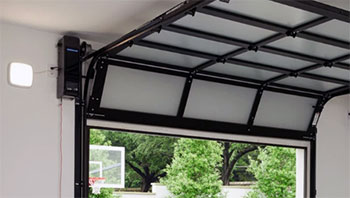
Installing the 98032 felt different from the get-go.
The unit was physically denser. Mounting it required ensuring the wall blocking was absolutely solid because the torque this thing generates is significant.
When we finally keyed it into the torsion shaft and hit the button, the experience was visceral.
There was no hesitation. The motor hummed with a deep, low frequency—the sound of industrial competence. It picked up that 1,100 lb door like it was made of cardboard.
What impressed me most was the control. Usually, heavy doors tend to “coast” or jerk when they stop, but the 98032’s internal logic managed the momentum perfectly. The soft-stop was precise, gently setting the door onto the concrete without a slam. We set up the timer-to-close feature for the client, and I remember thinking that this was the kind of machine that would outlive the building itself. It didn’t have the frills of the residential units—no fancy LED light rings or built-in cameras—but it had a raw reliability that was reassuring. It felt like industrial equipment, not a home appliance.
Read More: Comparison Of Genie 7055 And 7155 Garage Door Openers
Pros Of LiftMaster 98032
- Unrivaled Lifting Capacity For Heavy Doors: The most significant advantage of opting for the 98032 over the residential model is pure, unadulterated strength. If you have a custom wood carriage house door, a heavily insulated steel door with glass overlays, or an oversized door for an RV bay, the 98022 might struggle near its limit. The 98032 is engineered as a light commercial unit, meaning its internal gearing and motor torque are calibrated to handle weights that would burn out a standard residential motor. I have seen this unit lift solid mahogany doors that weigh over 1,000 pounds with the smoothness of a luxury sedan. It eliminates that straining sound you sometimes hear when a residential opener is pushing its maximum load rating.
- Commercial Grade Duty Cycle: One aspect people often overlook is the “duty cycle,” which essentially means how many times you can open and close the door in an hour without the motor overheating. The 98032 is built for high-traffic environments. While you might just be a homeowner, if you have a busy household with five cars, or if you use your garage as the main entry point 20 times a day, the 98032’s commercial DNA ensures it won’t thermal cycle (shut down to cool off) during heavy use. This reliability is crucial for “barndominiums” or workshops where the door is constantly going up and down.
- Superior Vertical Lift and High Lift Management: While both openers work on jackshaft systems, the 98032 excels in complex track configurations. If you are converting your garage to have “high lift” tracks (where the door goes straight up closer to the ceiling before turning back) to fit a car lift, the 98032’s cable tension monitoring system is often more robust. It handles the variable physics of vertical lifting better than the residential version. The commercial logic board is designed to understand that the door might not be perfectly balanced in the same way a lightweight residential door is, providing a smoother soft-start and soft-stop even on tracks that are 12 or 14 feet high.
- Enhanced Security Options: Because the 98032 is derived from the commercial sector, it often supports more robust locking mechanisms or integration with commercial security systems. While the residential version comes with a standard slide lock, the commercial version can often drive heavier-duty electric locks or integrate with facility management access controls. If you are protecting expensive classic cars or a workshop full of tools, the added security protocols available on the commercial logic board provide a peace of mind that goes beyond standard myQ alerts.
- Durability of Internal Components: When you crack open the casing of the 98032, you see components meant to last. We are talking about heavier capacitors, more heat-resistant circuit boards, and gearing that is designed for abuse. In a residential setting, this translates to “over-engineering.” You are essentially buying a semi-truck to tow a jet ski. It might be overkill, but it means the machine is barely working to do its job, which theoretically extends the lifespan of the unit significantly compared to a residential unit running at 80% capacity every day.
Cons Of LiftMaster 98032
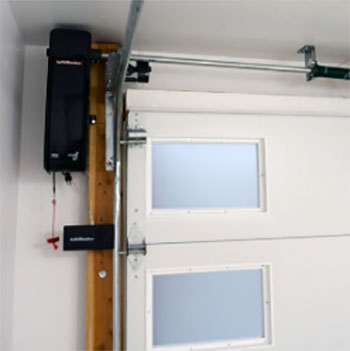
- Significantly Higher Price Point: The primary barrier to entry for the 98032 is the cost. You are paying for commercial-grade iron, and the price tag reflects that. It can often cost 50% to 100% more than the 98022 once you factor in the unit itself and the specialized installation it might require. For a standard aluminum sectional door, this extra cost is almost impossible to justify. You are paying for torque you will simply never use. It is like buying a commercial espresso machine for a house that only drinks one cup of coffee a week—impressive, but financially inefficient.
- Complex Installation Requirements: Installing a 98032 is not typically a DIY weekend project. The commercial mounting hole patterns, the requirement for solid keyed shafts, and the electrical wiring can be different from standard residential units. It often assumes you have a solid 1-inch shaft (though adaptable), whereas many residential doors use hollow tubes. If your door has a hollow shaft, you might need to insert a solid keyway or replace the shaft entirely to handle the torque of the 98032, adding to the labor cost and complexity of the install.
- Industrial Aesthetics: The 98032 looks like it belongs in a warehouse. While LiftMaster has improved the design, it lacks the sleek, consumer-friendly polish of the 98022. It is boxier, often has more exposed conduit entry points, and doesn’t blend into a finished garage as seamlessly. If you have a high-end, finished garage interior with drywall and paint, the 98032 stands out as a piece of industrial machinery. It prioritizes function over form, which might clash with the “showroom” vibe many homeowners are trying to achieve.
- MyQ Business vs. Residential Features: Sometimes, the commercial lineage of the 98032 means it pushes you toward the “myQ Facility” or business interface, which might have subscription fees for certain advanced features that are free on the residential side. While you can usually add it to a home account, the integration isn’t always as “plug-and-play” as the 98022, which is designed explicitly for the homeowner ecosystem. You might miss out on some of the softer consumer features like Amazon Key In-Garage Delivery compatibility out of the box unless you use specific residential gateways.
- Noise Levels: While still a quiet DC motor, the 98032 is generally louder than the 98022. The larger motor and heavier gearing produce a more distinct hum. It is not “chain drive loud,” but it doesn’t have that “whisper quiet” operation that the residential model is famous for. If your bedroom is directly above the garage, the increased power of the 98032 transmits slightly more vibration through the wall mounting plate, potentially creating more structure-borne noise than the smaller, residential-tuned 98022.
My Experience With LiftMaster 98022
My relationship with the LiftMaster 98022 is much more personal; it is the unit I chose for my own home. I wanted to turn my two-car garage into a home gym, and the center rail of my old chain drive was right where I wanted to swing a kettlebell. Removing that rail and installing the 98022 was one of the most satisfying DIY upgrades I have ever done.
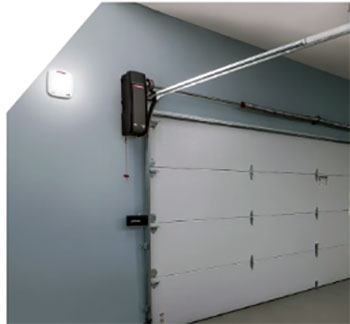
The immediate difference was the noise—or lack thereof.
My previous opener would rattle the whole house.
The 98022 is so quiet that the loudest sound is literally the rollers moving in the tracks.
I had to lubricate my door hinges because suddenly I could hear them squeaking, a sound previously drowned out by the chain drive.
Living with it has been seamless, but not without quirks.
The cable tension monitor gave me grief for the first week.
My door had a slight “hop” in the track that would trigger the monitor, reversing the door. I had to spend an afternoon really dialing in the track alignment and spring tension to make the 98022 happy. It forces you to maintain your door properly, which is honestly a good thing. The battery backup saved me during a summer thunderstorm last year; being able to open the door to get the generator out while the power was down was a feature I didn’t appreciate until I desperately needed it. It just works, silently and reliably, in the background of my life.
Pros Of LiftMaster 98022
- Whisper Quiet Operation: The absolute standout feature of the LiftMaster 98022 is silence. This opener uses a highly refined DC motor that virtually eliminates vibration. Because it mounts to the wall and turns the torsion shaft directly, there is no belt or chain rattling against a rail. I have installed these in garages where the nursery was directly above, and the parents reported they couldn’t even hear the door open. If you work in a garage office or have living space attached to the garage, the acoustic comfort this model provides is unmatched in the industry.
- Space-Saving Design: The 98022 is the king of reclaiming ceiling space. By removing the center rail and motor head from the middle of your ceiling, you open up the entire overhead area. This is a game-changer for homeowners who want to install overhead storage racks, hang bikes, or simply have a cleaner, more open aesthetic. It makes the garage feel larger and less cluttered. For car enthusiasts, this clearance is often the deciding factor that allows them to install a 4-post car lift to stack two vehicles in one bay.
- Integrated Residential Smarts: This unit comes ready to rock with the residential myQ ecosystem. Connecting it to your Wi-Fi is seamless, and within minutes you can control your door from your phone, set schedules to close it automatically at night, and grant access to guests. It works natively with Amazon Key for in-garage delivery (in supported areas), ensuring your packages are safe. The user interface is designed for the non-technical homeowner, making it incredibly easy to troubleshoot and manage without needing a degree in IT.
- Battery Backup Included: Power outages are annoying, but with the 98022, they are not a crisis. The unit comes with an integrated battery backup that kicks in instantly when the power goes out. I love the peace of mind this offers. You can still open and close your door multiple times during a blackout, meaning you are never trapped in or locked out of your home. The transition to battery power is silent and automatic; you only know it is happening because the unit beeps to alert you.
- Automatic Garage Door Lock: The 98022 includes the heavy-duty Power Lock (deadbolt) that automatically engages when the door closes. This adds a physical layer of security that makes the door nearly impossible to force open from the outside. Hearing that “thunk” of the deadbolt sliding into place gives you a tangible sense of security. It basically turns your garage door into a solid wall, preventing the old “coat hanger trick” that thieves used to use to pull the emergency release latch.
Cons Of LiftMaster 98022
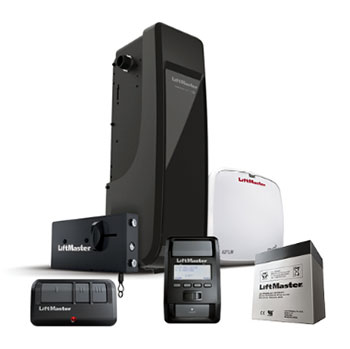
- Strict Weight Limitations: The 98022 has a hard limit of 850 lbs. While this covers 95% of residential doors, it is a hard ceiling. If you have a custom wood overlay door that absorbs moisture and gets heavy in the winter, the 98022 can struggle. I have seen instances where the motor detects the extra weight as an obstruction and reverses the door, which is frustrating. It lacks the brute force to power through slight imbalances that a commercial unit or a powerful chain drive would ignore.
- Cable Tension Monitor Sensitivity: One of the most common headaches with the 98022 is the Cable Tension Monitor. This is a safety device required for jackshaft openers to prevent cables from unspooling if the door gets stuck. However, on older tracks or doors with slightly jumpy movement, this monitor can be incredibly sensitive. It can trigger “phantom” reversals, refusing to close the door because it sensed a micro-second of slack in the cable. It requires the door to be tuned perfectly; it is not forgiving of sloppy track installation.
- Not Compatible with All Track Types: The 98022 strictly requires a front-mount torsion bar system. If you have a “Wayne Dalton TorqueMaster” system (where the springs are hidden inside a tube) or low-headroom tracks with outside-hook-up bottom brackets, you cannot install this opener without a costly conversion. It is not a universal fit like a trolley opener. You have to verify your garage door’s specific anatomy before buying, or you will be stuck with a box of expensive paperweights.
- Slower Opening Speed: Compared to some high-end belt drive trolley openers that zip the door up, the 98022 is more methodical. It is not slow, but it isn’t fast. It prioritizes smoothness over speed. If you are the type of person who sits in the driveway tapping the steering wheel waiting for the door to open, you might find the pace a bit leisurely. It takes its time to soft-start and soft-stop to protect the door, which adds a few seconds to the cycle time.
- Reliance on Internet for Diagnostics: While the unit works fine offline, many of the advanced diagnostic features and alert systems rely on the myQ cloud. If your Wi-Fi in the garage is spotty (which is common due to concrete walls), you might lose connection frequently, leading to annoying “offline” alerts on your phone. Unlike the 98032 which might have hardwired network options in some facility setups, the 98022 is purely dependent on your home’s wireless signal strength.
Comparison With Other Brands
- Genie: Genie offers a wall-mount competitor, the Genie 6170, which is a strong alternative to the 98022. The main pro of the Genie is that it is often slightly more compact and the Bluetooth LED light fixture it comes with is incredibly bright. However, in my experience, the Genie lacks the “deadbolt” locking mechanism solidity that LiftMaster has. The LiftMaster lock feels like a bank vault; the Genie lock feels a bit more lightweight. Also, the myQ app ecosystem is generally more polished and widely integrated than Genie’s Aladdin Connect, though Genie is catching up fast.
- Chamberlain: This is the confusing one for many people because Chamberlain and LiftMaster are the same company. The Chamberlain RJO70 is the retail version of the 98022. They are 90% identical mechanically. However, the LiftMaster 98022 (sold through dealers) uses a solid one-piece rail construction for the tension monitor and often comes with a longer warranty on parts. The Chamberlain uses a segmented tension monitor that is a bit flimsier. If you are a DIYer, the Chamberlain is easier to buy at Home Depot, but the LiftMaster 98022 feels like a more “pro” product with better quality control on the peripherals.
- Sommer: The German brand Sommer has a unique wall-mount approach with their “evo+” line, though they are known more for their rail carriage technology. Sommer openers are engineered beautifully and are even quieter than the LiftMaster, but they lack the widespread parts availability in the US. If your LiftMaster breaks, every garage door tech in America has parts in their truck. If a Sommer breaks, you might be waiting weeks for a shipment from Germany or a specialty distributor. For long-term serviceability, LiftMaster wins the logistical battle hands down.
Also Read: My Thoughts On Precision Garage Door
Frequently Asked Questions (FAQ)
Yes. The LiftMaster 98022 has built-in Wi-Fi and connects natively to the myQ app. This allows you to control the door remotely, check its status, receive alerts, and integrate with smart home partners like Amazon Key and IFTTT.
Yes. The LiftMaster 8500 and 8500W have been discontinued. The LiftMaster 98022 is the direct, updated replacement model for these residential wall-mount units, featuring improved electronics and a new design.
The weight limit varies based on the specific drum and spring setup, but the LiftMaster 98032 (in its light commercial/heavy-duty configuration) is generally rated for doors exceeding 1,000 lbs, often handling up to 1,500 lbs with the correct shaft coupling, making it significantly stronger than residential models.
The LiftMaster 98022 is rated for a maximum door weight of 850 lbs. It is designed for standard and heavy residential doors but is strictly limited to this capacity to prevent motor strain and ensure safety compliance.
Conclusion
Choosing between the LiftMaster 98022 and the 98032 comes down to a simple question: Is your door a standard residential barrier or a commercial-grade beast?
If you are a typical homeowner with a standard steel, aluminum, or even a moderately heavy wood-overlay garage door, the LiftMaster 98022 is undoubtedly the correct choice. It is quieter, sleeker, and packed with the smart features you will actually use daily. It cleans up your ceiling and offers plenty of power for 95% of residential applications without breaking the bank.
However, if you are building a luxury barndominium, housing a massive RV behind an oversized door, or dealing with heavy custom hardwood construction that pushes the scales past 900 pounds, the LiftMaster 98032 is non-negotiable. It provides the industrial torque and duty cycle needed to lift heavy loads reliably year after year. Do not try to save money by under-powering a heavy door; buy the 98032 and enjoy the peace of mind that comes with true commercial-grade muscle.