
If you are tired of the elbow to the ribs every night and waking up feeling like you ran a marathon, you are in the right place. The ZQuiet mouthpiece is widely available, and I highly recommend picking it up directly from their official website to ensure you get the 60-night guarantee, or through verified sellers on Amazon.
In this review, I am going to break down everything you need to know about this “living hinge” device, from my personal jaw-aching first night to the silent nights that followed. Let’s determine if this little piece of plastic is the miracle you have been looking for.
My Experience With ZQuiet
I have been a snorer for the better part of a decade.
It started as a light rumble, something my partner could ignore with a heavy pillow, but over the years, it evolved into what she describes as “a freight train derailing in the bedroom.”
I had tried everything before landing on ZQuiet.
I did the nose strips, which just stuck to my pillow.
I tried the special pillows that hurt my neck. I even tried taping my mouth shut, which was a terrifying experience I do not recommend.
I was skeptical about mouthpieces because the idea of sleeping with a “puck” in my mouth sounded awful, but desperate times call for desperate measures.
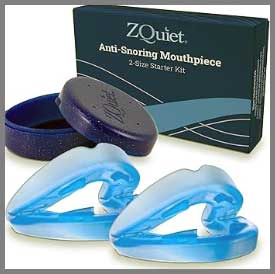
When the ZQuiet box arrived, I was surprised to see two devices inside. Most companies make you buy different sizes separately, but ZQuiet includes a Size #1 (for mild adjustment) and a Size #2 (for more aggressive jaw advancement). This was a huge plus right out of the gate. I didn’t have to boil water or mess around with molding putty. I just took Size #1 out, washed it with warm water, and popped it in.
The first thing I noticed was the “Living Hinge.” Unlike the sports guards I used back in high school, this thing let me open and close my mouth. I could take a sip of water and even mumble a few words to my partner before lights out. That freedom of movement reduced my anxiety about wearing it significantly.
However, I won’t lie to you—the first night was not a walk in the park. It felt foreign. My mouth produced an embarrassing amount of saliva, which is apparently a normal bodily reaction to a foreign object.
I woke up the next morning with a distinct soreness in my jaw muscles, similar to how you feel after chewing a tough steak for too long. But here is the kicker: my partner had slept through the night. She said she heard me breathing, but the rattling, room-shaking snore was gone. That victory alone was enough to make me push through the discomfort.
Over the next three days, the drooling subsided. My jaw soreness lingered for about a week, but I learned to do some stretches in the morning which helped immensely. I eventually tried the Size #2 device just to see the difference, but it pushed my jaw too far forward and was uncomfortable, so I stuck with Size #1. After three weeks, putting the ZQuiet in became just as routine as brushing my teeth. The trade-off of a little initial physical discomfort for high-quality, uninterrupted sleep was absolutely worth it for me.
Read More: My Thought on Bownet Commander Catcher’s Bag
Pros Of ZQuiet
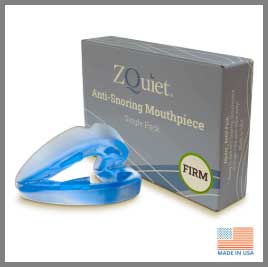
- The Living Hinge Design Is A Game Changer: This is arguably the most significant advantage ZQuiet has over its competitors. Most anti-snoring mouthpieces are rigid, locking your upper and lower jaw into a static position. This can feel claustrophobic and panic-inducing for some people. The ZQuiet features a flexible hinge connecting the upper and lower trays.1 This elasticity allows you to open your mouth to breathe, drink water, or speak without removing the device.2 For me, this was critical because I often start the night breathing through my nose but switch to mouth breathing later. If you have sinus issues or a deviated septum, a rigid device might suffocate you, but ZQuiet accommodates both breathing styles naturally.3
- Ready To Use Right Out Of The Box: One of the biggest hassles with Mandibular Advancement Devices (MADs) is the “boil-and-bite” fitting process.4 It requires a pot of boiling water, a timer, and the nerve to stick hot plastic into your mouth to mold it. If you mess up the timing, you can ruin the device before you even sleep with it. ZQuiet eliminates this entire headache. It is designed with a universal fit that works for most mouth shapes immediately. You simply open the package, rinse it off, and place it in your mouth. This “plug-and-play” aspect lowers the barrier to entry significantly for people who are hesitant about fiddling with dental appliances.
- Two Levels Of Advancement Included: Value is a major factor when you are spending money on sleep aids. ZQuiet includes two separate mouthpieces in the starter kit.5 The first one, labeled “A” or #1, provides a gentle advancement of the lower jaw. The second one, “B” or #2, advances the jaw further forward. This is brilliant because you don’t know how much tension your throat tissues need to stay open until you try. Most people, myself included, start with the first size. If snoring persists, you have the immediate option to graduate to the stronger device without having to wait for shipping or pay for an upgrade. It essentially gives you a backup plan in the same box.
- Slim Profile And Material Comfort: Many boil-and-bite devices are bulky. They have to be thick enough to hold the impression of your teeth, which can make you feel like you have a mouthful of marbles. ZQuiet is made from a thermoplastic elastomer that is incredibly thin and lightweight. It doesn’t crowd the tongue as much as other devices, which helps reduce the gag reflex. Because it is latex-free and BPA-free, there is no weird chemical taste, and the texture is smooth against the gums. This slim profile makes it much easier to fall asleep, as you aren’t hyper-aware of a giant block of plastic sitting between your teeth all night.
- Allows For Natural Lateral Movement: Rigid devices lock your jaw in a “bulldog” bite, preventing any side-to-side movement.6 This can put immense strain on the temporomandibular joint (TMJ). Because of the hinge design, ZQuiet allows for a small degree of lateral freedom.7 While it still holds the jaw forward, it doesn’t feel like your jaw is being clamped in a vice. This subtle flexibility contributes significantly to long-term comfort, reducing the likelihood that you will wake up with a locked jaw or severe facial pain after eight hours of wear.
Cons Of ZQuiet
- Significant Initial Jaw Soreness: You cannot escape the reality that this device physically moves your anatomy. By holding your lower jaw forward, ZQuiet puts your facial muscles in a position they are not used to holding for eight hours. Almost every user, myself included, experiences jaw tenderness for the first week or two. It feels like a dull ache in the hinge of your jaw near the ears. For some people, this pain is mild and fades within an hour of waking up. For others, particularly those with pre-existing TMJ issues, the pain can be intense enough to stop using the device. While it usually resolves as your muscles adapt, that initial “break-in” period is a genuine hurdle that requires perseverance.
- Excessive Drooling During Adaptation: When you put something in your mouth, your brain’s biological signal is “food,” and it tells your salivary glands to get to work. Because the ZQuiet prevents you from fully closing your lips around the device initially (due to the propped-open jaw position), you will likely drool. I am talking about waking up with a very wet pillowcase. This isn’t just a little moisture; it can be messy and annoying. While your brain eventually figures out that the device isn’t food and the saliva production slows down, those first few nights can be unpleasant and might require you to sleep with a towel over your pillow.
- Lack Of Custom Fit Adjustability: The flip side of the “no boil-and-bite” convenience is that you cannot mold the ZQuiet to your specific teeth. The device uses a universal fit tray.8 If you have crooked teeth, a very narrow arch, or a particularly wide mouth, the fit might feel sloppy. It relies on the natural pressure of your jaw to stay in place rather than gripping your teeth. Some users report that it falls out during the night because it doesn’t latch onto the dental arch tightly enough. If you are someone who needs a rock-solid, snap-in fit to feel secure, the floating nature of the ZQuiet might feel too loose for your liking.
- Recurring Cost Of Replacement: The ZQuiet is not a one-time purchase that lasts forever. The “Living Hinge” is made of flexible plastic that undergoes stress every single night as you open and close your mouth.9 Over time, this material fatigues. The manufacturer recommends replacing the device every 4 to 6 months.10 If you are a teeth grinder (bruxism), you might chew through it even faster, perhaps in 3 months. At roughly $40 to $50 for a replacement, this creates a subscription-like cost for your sleep. Compared to some custom dental devices that last years, the ZQuiet is a consumable product that adds to your annual budget.
- Not Suitable For Denture Wearers: This is a hard constraint. The device requires healthy, strong teeth to hold the jaw forward. It leverages the upper and lower teeth as anchors to pull the mandible anteriorly. If you have full dentures, the device will simply dislodge them. Even if you have partials or loose teeth specifically in the front, the pressure exerted by the mouthpiece can be damaging. It puts a constant shear force on the incisors. If you have complex dental work like bridges or implants in the front of your mouth, you absolutely must consult your dentist before using this, or you risk costly damage to your dental investments.
Maintenance Tips For ZQuiet
- Establish A Daily Cleaning Routine: Hygiene is non-negotiable when dealing with oral appliances.11 Bacteria thrive in the moist, warm environment of your mouth, and plaque can build up on the ZQuiet just like it does on your teeth. Every single morning, immediately after taking the device out, you should rinse it with warm (not hot) water. Use a soft-bristled toothbrush—separate from the one you use for your teeth—and mild dish soap or a non-abrasive toothpaste to scrub the device. Pay special attention to the nooks and crannies around the hinge where saliva can get trapped. If you skip this step, the device will develop a funky smell and could start to discolor, not to mention the risk of introducing bacteria back into your system the next night.
- Use An Ultrasonic Cleaner For Deep Cleans: While daily brushing is great, it doesn’t always get everything. I found that investing in a small ultrasonic cleaner (the kind used for jewelry or retainers) was a great move. Once a week, drop the ZQuiet into the ultrasonic bath with a denture cleaning tablet. The ultrasonic waves create microscopic bubbles that implode and blast away stubborn bio-film and tartar buildup that your brush might miss. This keeps the material clear and fresh. If you don’t want to buy a machine, simply soaking it in a glass of water with a denture tablet like Polident for 15 minutes once a week is a solid alternative to keep it sanitized.
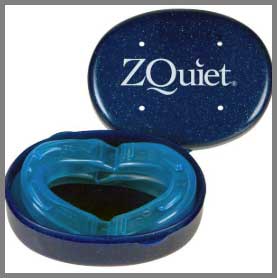
- Proper Storage Is Crucial: Never throw a wet mouthpiece into a closed case. That is a recipe for mold growth. After you clean and rinse your ZQuiet, shake off the excess water and let it air dry completely on a clean towel or tissue. The ZQuiet comes with a protective travel case, which is great for keeping dust off, but make sure the device is bone dry before you snap that lid shut.12 If you live in a humid environment, you might want to leave the case slightly cracked open to allow for airflow. Keep the case on your nightstand, away from direct sunlight and heat sources, as extreme heat can warp the thermoplastic material and ruin the fit.
- Inspect The Hinge Regularly: The hinge is the moving part of the ZQuiet, and like any moving part, it is the weak point. Make it a habit to inspect the hinge area every few days under a bright light. You are looking for stress fractures, small tears, or white stretch marks in the plastic. If you see the plastic starting to rip or turn opaque white at the bending point, the structural integrity is compromised. A broken hinge during the night could pose a choking hazard or simply render the device useless. As soon as you see signs of failure, it is time to order a replacement. Don’t try to extend its life beyond safety limits.
- Manage Morning Jaw Stiffness: Maintenance isn’t just about the device; it’s about your body too. To maintain your ability to wear the device comfortably long-term, you need to care for your jaw muscles. When you wake up and take the ZQuiet out, your bite might feel “off,” meaning your front teeth don’t touch the way they usually do. This is temporary. To speed up the recovery, perform simple jaw exercises. Open your mouth wide, move your jaw side to side, and chew on a specialized “morning aligner” wafer or even a piece of gum for a few minutes. This helps reset your jaw into its natural position and reduces the cumulative strain on your TMJ, ensuring you can wear the device night after night without chronic pain.
Read More: My Thought on Sleep Connection Wristband
Comparison with Other Brands
- ZQuiet vs. SnoreRx: This is the battle of “Comfort vs. Customization.” SnoreRx is a boil-and-bite device, but it also features a calibrator that allows you to adjust the jaw advancement in 1-millimeter increments.13 This gives you precise control over the fit and the level of protrusion. However, SnoreRx is notoriously bulky. It feels like a double-layered mouthguard and fills up your entire oral cavity. ZQuiet lacks the micro-adjustability and the custom dental mold, but it wins effortlessly on comfort and profile. With SnoreRx, you are locked in; you cannot open your mouth. With ZQuiet, the living hinge allows movement.14 If you have a small mouth or a sensitive gag reflex, ZQuiet is the superior choice. If you need a very specific, aggressive jaw position to stop heavy snoring, SnoreRx might be more effective despite the bulk.
- ZQuiet vs. VitalSleep: VitalSleep is another major competitor that uses the boil-and-bite method but includes a mechanism to adjust the jaw position using hex screws.15 VitalSleep allows for side-to-side movement, similar to ZQuiet, but it achieves this through a metal pin system rather than a flexible plastic hinge. The main difference here is the cleaning and the “nooks and crannies.” VitalSleep’s adjustment mechanism has crevices that are difficult to keep clean and can accumulate gunk. ZQuiet is a single piece of plastic, making it much more hygienic and easier to maintain. VitalSleep offers a tighter fit because it is molded to your teeth, so it stays in place better than ZQuiet, but ZQuiet feels less mechanical and invasive.
- ZQuiet vs. Smart Nora: This is a comparison of apples and oranges. Smart Nora is a non-invasive device that doesn’t go in your mouth at all.16 It is a smart pillow insert that detects snoring and gently inflates to move your head, stimulating throat muscles to open the airway. If you absolutely cannot tolerate putting something in your mouth—if you have a severe gag reflex or dentures—Smart Nora is the better path, albeit at a much higher price point (often $300+). ZQuiet is a mechanical intervention that physically forces the airway open. ZQuiet is generally more effective for severe snoring because it treats the root cause (tongue collapse) directly, whereas Smart Nora relies on your body reacting to movement, which doesn’t work for everyone.
- ZQuiet vs. Tongue Stabilizing Devices (like GMSS): Good Morning Snore Solution (GMSS) works by suctioning onto the tip of your tongue and pulling it forward, rather than moving the jaw. This is great if you have jaw pain (TMJ) because it doesn’t stress the jaw joint. However, sleeping with your tongue suctioned out is a bizarre sensation that many find painful or irritating to the tongue frenulum. ZQuiet is more intuitive; moving the jaw forward feels more natural than stretching the tongue. However, ZQuiet requires nasal breathing or open mouth breathing, while GMSS requires you to have a fairly clear nose (though you can breathe through the sides of your mouth). If ZQuiet causes too much jaw pain, a tongue retainer like GMSS is a valid alternative, but ZQuiet is generally easier to get used to for the average person.
Frequently Asked Questions (FAQ)
Yes, for the majority of users, ZQuiet effectively stops or significantly reduces snoring.17 It works on the clinical principle of Mandibular Advancement. By physically moving the lower jaw forward, it tightens the soft tissues in the upper airway and prevents the tongue from collapsing backward during sleep.18 This prevents the vibration that causes the snoring sound. While success rates vary depending on the severity of sleep apnea or nasal obstructions, it is a proven method for treating obstructive snoring.
Ratings fluctuate across platforms, but ZQuiet consistently ranks in the top tier alongside SnoreRx and VitalSleep. ZQuiet is often rated highest for “comfort” and “ease of use” because of its hinged design and lack of setup.19 SnoreRx often rates higher for “adjustability.” Ultimately, the “highest rated” device is subjective to the user’s specific mouth shape and tolerance, but ZQuiet is frequently cited as the best starting point for new users due to its low profile.
The most common side effects are jaw soreness, tooth sensitivity, and excessive drooling. These usually occur during the first few weeks of use as your facial muscles adapt to the new position. Some users may also experience a temporary change in their bite (how their teeth fit together) in the morning, which typically resolves within an hour. In rare cases, it can aggravate existing TMJ (temporomandibular joint) disorders.
Yes, anti-snoring mouthpieces (MADs) are a medically recognized treatment for snoring and mild-to-moderate Obstructive Sleep Apnea.20 They are often the first line of defense recommended by sleep specialists before moving to CPAP machines. They work mechanically by keeping the airway open. However, they work best for “tongue snorers” and throat snorers. They may be less effective for people whose snoring is caused solely by nasal congestion or deviated septums, although ZQuiet’s open front helps mouth breathers more than other designs.
Conclusion
In the crowded market of anti-snoring gadgets, ZQuiet stands out not because it is the most high-tech, but because it is the most livable. The Living Hinge design solves the claustrophobic feeling that makes other mouthguards intolerable.
While the initial jaw soreness is a real hurdle, the payoff of silent, restorative sleep is undeniable. If you are a mouth breather or someone looking for a simple solution without the hassle of boiling plastics, this is the device to try. You can purchase the ZQuiet starter pack directly from their official website or via trusted retailers like Amazon to take advantage of their return policy if it’s not the right fit for you.