
If you’re grinding through intense gaming sessions on console or PC, grab a Turtle Beach headset right now. These bad boys deliver killer audio that pulls you into the action, crystal-clear mics for squad chats, and comfort that lasts hours without pinching your head. Trust me, you won’t regret upgrading your sound game today.
My Experience With Turtle Beach Headset
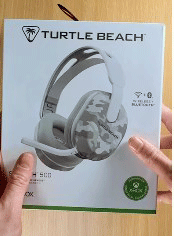
I remember unboxing my Turtle Beach Stealth 700 Gen 3 like it was yesterday.
I’d been using a cheap wired pair that sounded muddy and made my ears sweat after an hour.
You know that frustration when footsteps in Call of Duty blend into the background noise? Yeah, that ended fast.
Slipping these on, the 60mm drivers hit me with this rich, punchy bass that rumbled through explosions in Battlefield, while highs stayed crisp for picking out distant gunfire.
I fired up a solo queue in Valorant, and suddenly, every enemy flank felt obvious—the spatial audio wrapped around me like I was right there.
That first night, I clocked over five hours straight. No headache, no hot spots. The gel-infused memory foam earcups molded to my head perfectly, even with my glasses on.
Pro tip from me to you: if you’re a glasses wearer like I am, these hug without pressing on the arms. The flip-to-mute mic? Game-changer.
I flipped it up during a tense clutch, and my teammates didn’t hear a peep. When I dropped back in, my voice came through super clear—no background fan noise from my PC setup bleeding in. We clutched the round, and I owe it to that mic quality.
Wireless freedom blew my mind too. The 2.4GHz dongle kept a rock-solid connection across my room—no lag, no dropouts, even when I paced during loading screens.
Bluetooth kicked in seamlessly for mixing Spotify tunes with game audio. Picture this: queuing for Apex Legends while bumping my playlist.
Battery lasted 80 hours on one charge during my test week—insane. I forgot to plug it in twice, and it still had juice.
But let’s get real, it wasn’t all perfect at first. The Swarm II app felt clunky on mobile, taking a couple tries to EQ right.
I tweaked the 10-band equalizer to boost mids for better dialogue in story games like The Last of Us remake. Once dialed in, it transformed single-player immersion—rain pattering, whispers echoing.
Multiplayer? Superhuman Hearing mode amplified footsteps without making everything tinny. I racked up double-digit kills in Warzone because I heard that sneaky player circling behind.
Over months, comfort held up during marathon weekends. 12-hour streams? No sweat. The build felt sturdy, plastic but not cheap—hinges didn’t creak.
One gripe: the volume dial got snaggy with sweaty hands, but a quick wipe fixed it. Compared to my old Razer that died after a year, this one’s durability shines. I travel with it now—dongle slips in a pouch, survives my backpack tosses.
Also read: My Thoughts on HyperX Cloud Alpha Wireless
Pros Of Turtle Beach Headset

- Immersive Sound Quality: You get 50mm or 60mm Nanoclear drivers pumping out bass-heavy audio that’s perfect for explosions and gunfire, while spatial sound helps pinpoint enemies in FPS games like never before.
- Exceptional Battery Life: Models like the Stealth 700 Gen 3 offer up to 80 hours per charge, meaning you game all weekend without hunting for a cable—pure freedom for marathon sessions.
- Clear, Professional-Grade Mic: The flip-to-mute boom mic with noise rejection picks up your voice crystal clear, cutting out keyboard clacks and room noise so your squad hears every callout perfectly.
- All-Day Comfort: Gel memory foam earcups and lightweight design (under 300g) let you wear them for hours without fatigue, even if you’re rocking glasses—the ProSpecs system relieves pressure just right.
- Versatile Connectivity: Low-latency 2.4GHz wireless, Bluetooth for dual audio mixing, and wired options cover PC, PS5, Xbox, Switch, and mobile—you switch platforms without skipping a beat.
- Customizable EQ Presets: Swarm II app gives 10-band EQ tweaks, Superhuman Hearing for footsteps, and game-specific profiles, tailoring sound to your playstyle whether competitive or casual.
- Cross-Platform Compatibility: One headset works across consoles and PC with dedicated versions—no adapters needed for most setups, saving you hassle and cash.
- Affordable Premium Features: At mid-range prices, you snag ANC on higher models, hot-swappable batteries, and solid build that punches above its weight compared to budget rivals.
Cons Of Turtle Beach Headset
- Inconsistent Build Quality: Some users report hinges snapping or plastic cracking after 6-12 months of heavy use, especially if you toss it around—feels cheap on lower models compared to metal-framed competitors.
- Clunky Software Experience: Swarm II app crashes or lags on mobile/PC, EQ changes don’t always sync instantly, and Superhuman Hearing can sound artificial if not tuned right—frustrating for tinkerers.
- Average Noise Isolation: Open-back like Atlas Air leaks sound and lets in ambient noise; even closed-backs don’t block as well as Bose-level ANC, distracting in noisy rooms.
- Mic Falls Short on Premiums: While good, it doesn’t match dedicated studio mics—some distortion at high volumes, and flip-mute feels less premium than retractables on rivals.
- Short Charging Cable: Stock USB-C cable’s barely 2 feet, forcing awkward desk setups—you’ll want your own braided one ASAP for convenience.
- Bass-Heavy Default Profile: Out-of-box sound booms lows but muddies mids for music/movies—not neutral enough for audiophiles without EQ tweaks.
- Warranty Hassles: Replacements for defects drag on, with poor customer service reports—multiple RMA cycles before resolution, testing your patience.
Maintenance Tips For Turtle Beach Headset
- Clean Earpads Regularly: Wipe foam cushions weekly with a microfiber cloth and mild soap solution—removes sweat/oil buildup that causes cracking, keeping them plush for years.
- Avoid Full Battery Drains: Recharge at 20-30% to preserve lithium-ion health; aim for 80% max—extends life to 500+ cycles, dodging sudden drop-offs after a year.
- Store Properly When Idle: Hang on a hook or lay flat in a dust-free case—prevents headband warping or earcup deformation from desk clutter pressure.
- Update Firmware Promptly: Check Swarm app monthly for patches—fixes bugs, boosts battery efficiency, and improves wireless stability you might miss otherwise.
- Handle Hinges Gently: Support the headband with both hands when adjusting—avoids stress cracks at joints, common failure point lasting 2+ years with care.
- Replace Mic Foam Annually: Pop off the windscreen, swap with generics—keeps noise rejection sharp, preventing muffled voice over time.
- Keep Away From Heat/Moisture: No direct sun or steamy bathrooms—warps plastic, kills battery faster; room temp storage adds years to lifespan.
- Test Connections Weekly: Cycle dongle/Bluetooth pairings—catches dongle wear early, ensuring lag-free play without mid-game surprises.
Comparison with Other Brands
Versus SteelSeries Arctis Nova Pro
You might eye SteelSeries for that premium steel frame, but Turtle Beach edges in battery—80 hours crushes Nova Pro’s 40. Sound? Both spatial kings, but TB’s bass thumps harder for shooters; SteelSeries feels neutral, less punchy. Mic on TB clearer for squads, though Nova’s retractable fancier. Price-wise, TB saves $100 without skimping comfort—gel cups rival ski-band. Build? SteelSeries tougher, fewer break reports, but TB’s lighter for long hauls.
TB wins versatility—simpler cross-play. If you marathon, TB’s endurance rules; pros pick SteelSeries for tourneys.
Versus Razer BlackShark V2 Pro
Razer’s sleek, low-latency shines in esports, but TB’s Bluetooth mixing lets you jam music mid-game—Razer lags there. Audio? Razer hyperspeed drivers crisp highs, but TB’s Nanoclear bass dominates explosions. Comfort? Both plush, but TB glasses-friendly. Mic? Razer’s beamforming good, TB boom natural. Battery similar, but TB dongle stabler in tests. Razer’s RGB flashy; TB practical. At same price, TB better value for casual-competitive mix.
You get more features without fluff.
Versus Logitech G Pro X 2
Logitech’s Lightspeed wireless solid, 50-hour battery close, but TB pulls ahead with 80+. Soundstaging? Both excellent, Logitech planar detailed for music, TB gaming-tuned bass. Mic detachable on Logitech pro-level; TB fixed but clearer casual. Software? Logitech GG polished, TB Swarm buggy. Build premium metal vs TB plastic—Logitech lasts longer rough use. Comfort equal, lightweight champs. TB cheaper, broader platform support.
Budget gamers, TB; pros, Logitech.
Versus HyperX Cloud Alpha
HyperX wired king—comfort legend, aluminum frame tanks abuse better than TB plastic. Sound balanced, less bassy than TB’s boom. Mic HyperX edge in clarity. No wireless though—TB frees you up. Battery irrelevant, but TB 80 hours wins mobility. Price? HyperX steals budget wired; TB mid wireless value. Software HyperX simple; TB customizable. Durability HyperX 3+ years easy; TB 2 with care.
Read more: My Thoughts on Saluspa Hot Tub
Frequently Asked Questions (Faq)
Stealth Pro Wireless tops for premium—ANC, swappable batteries, multi-platform. Budget? Stealth 600 Gen 3—85-hour battery, solid sound.
Bass-heavy gaming audio, console focus, affordable features like Superhuman Hearing draw FPS fans—immersive without breaking bank.
SteelSeries Arctis Nova Pro Wireless often claims it for pro audio/build, but Turtle Beach Stealth 700 Gen 3 close for value/battery.
1-3 years average with care; premium like Stealth 700 hit 2+ via maintenance—build varies, but proper handling extends it.
Conclusion
Turtle Beach headsets absolutely crush it for gamers craving immersive sound and reliability. Snag one today—your ears (and K/D) will thank you.