
If you are staring at a “Check Engine” light and a repair bill that costs more than your monthly car payment, you should buy TRQ ignition coils. They are the perfect solution for drivers who need to get their vehicle running smoothly again without draining their savings on dealership-priced parts.
I highly recommend these for anyone with an older vehicle where installing premium OEM parts feels like financial overkill, yet you still need a reliable, direct-fit solution that clears those misfire codes instantly.
My Experience With TRQ Ignition Coil
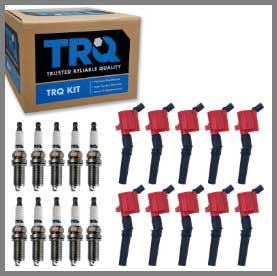
I stumbled upon TRQ ignition coils out of sheer necessity. I drive a 2012 Ford F-150 with the 5.0L V8, a truck I love but one that has started to show its age.
One Tuesday morning, while merging onto the highway, the truck began to shudder violently.
The check engine light didn’t just turn on; it started flashing—the universal sign of “pull over immediately, something is misfiring.”
I limp-moded it home and plugged in my OBDII scanner.
The code P0303 stared back at me: Cylinder 3 Misfire Detected.
I called the local dealership, and they quoted me nearly $90 per coil. For a V8, doing all eight (which is recommended once one fails) would have cost me over $700 just in parts, not including labor. That was simply not happening. I went online and found a full set of eight TRQ ignition coils for a fraction of that price—in fact, the entire set cost less than two OEM coils. I was skeptical. How could they be this cheap and still work? But with a tight budget and a truck that needed to run, I clicked “buy.”
When the box arrived, I was pleasantly surprised by the packaging. Each coil was individually wrapped and boxed, not just thrown into a bag together. Holding a TRQ coil in one hand and my old Motorcraft coil in the other, the differences were negligible. The weight felt similar, the plastic housing was rigid, and the rubber boot felt thick and pliable. The installation was straightforward. The TRQ coils clicked onto the harness with a satisfying snap, fitting perfectly onto the spark plugs without any wiggling or forcing.
The moment of truth came when I turned the key. The engine cranked and fired up immediately. The rough, stumbling idle that shook my coffee cup out of the holder was gone. It settled into a smooth, steady hum. I took it for a test drive, and the power was back. No hesitation on acceleration, no stuttering at red lights. I drove that truck for another 15,000 miles before I eventually sold it, and in that time, I never had another misfire code.
However, I did notice one small thing: the rubber boots on the TRQ coils seemed to dry out a bit faster than the originals when I pulled one to check a plug months later. They were slightly stiffer but still functional. For the price I paid, the value was undeniable. TRQ turned a catastrophic repair bill into a manageable Saturday afternoon project, and honestly, the truck ran just as well as it did the day I bought it.
Read More: My Thoughts On CCIYU Auto Parts
Pros Of TRQ Ignition Coil
- Incredible Value for Money: The most significant advantage of TRQ coils is the price-to-performance ratio. You are often getting an entire set of 4, 6, or 8 coils for the price of a single OEM unit from the dealership. For owners of older vehicles with high mileage, spending $800 on ignition coils doesn’t make financial sense. TRQ allows you to perform a complete tune-up without breaking the bank. This affordability means you can proactively replace all your coils at once rather than playing “whack-a-mole” replacing them one by one as they fail, which saves you time and stress in the long run.
- Complete “Tune-Up in a Box” Solutions: TRQ specializes in selling kits. Instead of hunting down individual part numbers, you can often buy a bundle that includes all the ignition coils and a full set of pre-gapped spark plugs. This convenience is a major pro for DIYers. It ensures that all your ignition components are fresh at the same time, eliminating variables if you are chasing a rough idle. I found this incredibly helpful because it meant I didn’t have to worry about mismatched parts or wondering if my old spark plugs were ruining my new coils.
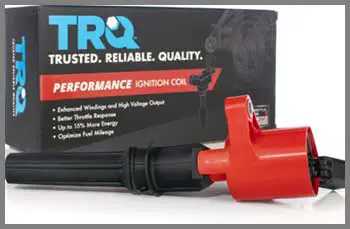
- Direct Fit and Easy Installation: There is nothing worse than buying an aftermarket part and finding out the bolt holes don’t line up or the electrical connector is shaped wrong. TRQ coils are engineered to be exact OEM replacements. In my experience, and based on countless user reports, the fitment is spot-on. The connectors lock in securely, the mounting bolts thread in without resistance, and the height of the coil is identical to the stock unit. This “plug-and-play” nature turns what could be a frustrating mechanic job into a simple driveway repair that anyone with a socket set can handle.
- Immediate Restoration of Performance: If you are driving with a bad coil, your car feels sluggish, fuel-thirsty, and shaky. Installing TRQ coils provides an instant fix. Users consistently report that their “Check Engine” lights turn off immediately (after a code clear) and the engine idle smooths out instantly. The throttle response returns to normal, and you stop dumping unburnt fuel into your catalytic converter. Because these coils meet OEM specifications for resistance and output, they restore the factory power curve of your engine, making your car feel ten years younger in a matter of minutes.
- Solid Warranty Support: While the exact terms can vary depending on the retailer (usually 1A Auto), TRQ parts typically come with a generous warranty, often a limited lifetime warranty for the original purchaser. This offers peace of mind that many cheap “eBay special” unbranded coils do not. If a coil fails prematurely—which can happen with any electrical part—you have a recourse to get a replacement without buying a new one. Knowing that the company stands behind the product adds a layer of trust that is often missing in the budget aftermarket sector.
Cons Of TRQ Ignition Coil
- Longevity Concerns vs. OEM: While TRQ coils work great out of the box, they generally do not have the same 100,000-mile lifespan as a genuine Denso, NGK, or Motorcraft coil. The materials used in the internal windings and the insulation resin are likely of a slightly lower grade to achieve the price point. Many users report getting a solid 30,000 to 50,000 miles out of them before one might start to drift out of spec. If you plan to keep your car for another 10 years and drive 20,000 miles a year, you might end up replacing these sooner than you would a factory part.
- Potential for “Dead on Arrival” Units: Quality control in the budget aftermarket is not as rigorous as it is for Tier 1 suppliers. There is a slightly higher chance that out of a box of eight coils, one might be defective right from the start or fail within the first week. While the warranty covers this, it is still a hassle to diagnose which new coil is the dud and wait for a replacement. It adds a variable to troubleshooting that you rarely experience with premium brands. This “infant mortality” of electronics is the trade-off for the massive cost savings.
- Rubber Boot Quality: The silicone or rubber boot that connects the coil to the spark plug is critical for preventing “flashover” (electricity jumping to the engine block). I noticed that the rubber on TRQ coils can feel a bit less robust than OEM boots. Over time, high engine heat can cause this rubber to become brittle or crack sooner than the high-grade silicone used by manufacturers like Bosch. If the boot cracks, the spark can leak out, causing a misfire even if the coil pack itself is technically still working.
- Lack of Brand Prestige/Resale Value: If you are selling a high-end car, like a BMW or a Lexus, knowledgeable buyers might look under the hood. Seeing a budget brand like TRQ instead of the expected Bosch or Denso parts might signal to them that the car was maintained on a budget. While this doesn’t affect the car’s operation, it can be a psychological factor for purists who insist on “Genuine Parts Only.” It marks the vehicle as a “daily driver” rather than a “collector’s item” where every bolt must be factory correct.
- Inconsistent Manufacturing Origins: TRQ is a private label, meaning they source parts from various factories globally. This can lead to slight inconsistencies. One batch of coils for a Toyota might be excellent, while a batch for a Chevy might come from a different assembly line with different tolerances. You don’t have the single-source guarantee that you get with a manufacturer that owns its own factories. You are relying on TRQ’s vetting process, which is generally good, but not as transparent as buying directly from the company that invented the part.
Maintenance Tips For TRQ Ignition Coil
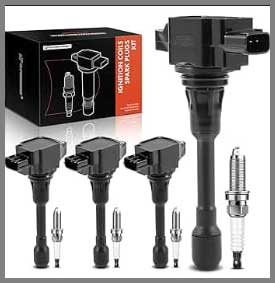
- Use Dielectric Grease Generously: This is the single most important tip for installing any ignition coil, especially aftermarket ones. Apply a small amount of dielectric grease to the inside of the rubber boot (the end that goes over the spark plug) and a tiny dab on the electrical connector seal. This grease prevents moisture from getting in and causing corrosion, which is the number one killer of ignition coils. It also prevents the rubber boot from “baking” onto the ceramic of the spark plug, making it much easier to remove the next time you do a tune-up.
- Change Spark Plugs Simultaneously: Never install new TRQ coils onto old, worn-out spark plugs. As spark plugs age, the gap between the electrodes widens. This forces the ignition coil to work much harder to bridge that gap with a spark, which generates excessive heat inside the coil pack. This extra strain can burn out your new TRQ coils in a matter of months. Always treat coils and plugs as a married pair—replace them together to ensure your new coils have the easiest job possible and last their full lifespan.
- Torque Bolts Correctly: It is tempting to just crank down the mounting bolts until they are tight, but you must be careful. The mounting ears on ignition coils are often plastic with a metal sleeve. If you over-torque them, you can crack the plastic housing. Once the housing is cracked, moisture can intrude, or the vibration can cause the internal connections to break. Use a small ratchet or a torque wrench to tighten them to the manufacturer’s spec (usually very low, around 8-10 ft-lbs). “Snug” is better than “crushed.”
- Keep Your Engine Bay Clean: Dirt and oil are enemies of electrical components. If you have a leaky valve cover gasket that is dripping oil into the spark plug wells, it will destroy your new TRQ coils rapidly. Oil causes the rubber boots to swell and degrade, leading to short circuits. Before installing the new coils, inspect the spark plug tubes. If you see oil pooling there, you must fix the oil leak first. Keeping the engine bay relatively free of grime also prevents debris from falling into the cylinder when you change the plugs.
- Inspect Electrical Connectors: The wiring harness connector that clips into the coil is often brittle on older cars. When installing your TRQ coils, check the condition of the locking tabs on your car’s harness. If the clip is broken, the coil might vibrate loose over time, causing an intermittent misfire. If the tab breaks, use a zip tie to secure the connector to the coil or replace the connector pigtail. A loose connection can cause arcing that melts the plastic terminal on your new coil, ruining it instantly.
Also Read: My Thoughts On OCPTY Auto Parts
Comparison with Other Brands
- TRQ vs. OEM (Motorcraft / Denso / ACDelco): This is the classic “Price vs. Longevity” battle. Reliability: OEM parts are built to last 100,000+ miles and undergo the strictest quality control in the industry. TRQ is a budget alternative that performs well but is unlikely to match that extreme lifespan. Price: OEM coils can cost 300% to 500% more than TRQ. Verdict: If you plan to keep the car for another 10 years or drive in extreme conditions, buy OEM. If you are driving an older car, on a budget, or plan to sell the vehicle in a few years, TRQ is the smarter financial choice.
- TRQ vs. MSD / Accel (Performance Brands): MSD and Accel market their coils as “high performance” with higher voltage output for modified engines. Application: Unless you have a supercharger, turbo, or aggressive ECU tune, you do not need “high output” coils. Performance: Putting an MSD coil on a stock Camry won’t give you more horsepower. TRQ is designed to meet stock specifications. Value: Performance coils are expensive and often have a higher failure rate on street cars because they run hotter. TRQ is the better choice for a daily driver; stick to MSD only if you are building a race car.
- TRQ vs. Duralast (AutoZone Store Brand): These are very similar in terms of market position. Availability: The main difference is convenience. You can walk into AutoZone and buy Duralast today, whereas TRQ usually has to be ordered online (shipping time). Warranty: Duralast has a great warranty because you can swap it in-store. Price: TRQ is almost always significantly cheaper than store-bought Duralast coils. If you can wait two days for shipping, TRQ saves you money. If you are stranded on the side of the road, Duralast wins on availability.
- TRQ vs. Generic “Unbranded” (eBay/Amazon Cheapies): There is a tier below TRQ—the no-name white box parts selling for $40 a set. Risk: These are a massive gamble. They often lack proper resistance, cause radio interference, and fail in weeks. Quality: TRQ puts their name on the box and offers a real warranty. Support: With TRQ (via 1A Auto), you have customer service. With generic eBay coils, you are on your own. TRQ is the “safe” budget option, while the unbranded ones are risky. Do not cheap out that far; stick to a brand like TRQ that at least has a reputation to protect.
Frequently Asked Questions (FAQ)
The most common symptoms include a rough idle (shaking engine), a flashing or solid Check Engine Light, and a distinct loss of power during acceleration. You might also experience “stumbling” when stopped at a red light or a significant drop in fuel economy as the engine struggles to burn fuel efficiently.
TRQ stands for “Trusted Reliable Quality.” They are a private label brand that sources automotive parts from various manufacturing facilities worldwide (often in Asia) to rigorous specifications. They are primarily distributed by 1A Auto, a major US-based online auto parts retailer known for its instructional videos and customer support.
Yes, for the price point, they are considered excellent quality. They are designed to be direct OEM replacements and are tested to ensure fitment and function. While they may not always match the 15-year longevity of factory parts, they are widely regarded as a safe, reliable mid-range option that is far superior to unbranded “junk” parts found on marketplaces.
Factory ignition coils typically last between 80,000 and 100,000 miles. Aftermarket coils like TRQ can vary, but you can generally expect 40,000 to 60,000 miles of reliable service. Heat, vibration, and worn-out spark plugs are the primary factors that shorten the life of an ignition coil.
Conclusion
In conclusion, you should buy TRQ ignition coils if you value your wallet as much as your vehicle. They offer a rare combination of affordability, reliability, and ease of installation that makes them the champion of DIY repairs. While they may not be the choice for a million-mile commercial vehicle, for the average driver needing to fix a misfire and get back to work, TRQ delivers exactly what you need without the painful dealership markup.