
I’ve spent years tinkering with car care products on my own vehicles, trying everything from basic waxes to advanced protectants. Recently, I put TopCoat F11 and a professional ceramic coating head-to-head on two of my cars. My goal here is to help you decide which one truly delivers better protection, shine, and value for everyday driving.
Right after this intro, you’ll find a straightforward comparison table breaking down the key differences.
A Brief Comparison Table Topcoat F11 Vs Ceramic Coating
| Feature | TopCoat F11 | Ceramic Coating |
| Type | Water-based polish and sealer | Nano-ceramic (SiO2-based) bond |
| Application | DIY spray-on, wipe-off | Professional (or advanced DIY) |
| Durability | 3-12 months (depending on version/use) | 2-7 years |
| Hydrophobicity | Good initial beading | Excellent, long-lasting |
| Scratch Resistance | Minimal | High (9H hardness in pro grades) |
| Ease of Maintenance | Very easy | Easy once applied |
| Cost | $50-100 per bottle (multiple uses) | $500-2000+ professional application |
| Versatility | All surfaces (paint, glass, trim) | Primarily paint (some multi-surface) |
| Shine Depth | Deep, wet look | Candy-like gloss |
My Experience With Topcoat F11
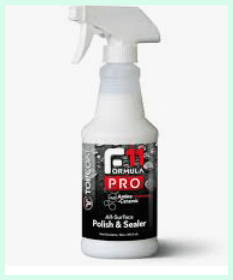
I first tried TopCoat F11 a few years back after seeing ads everywhere. I applied it to my daily driver, a black sedan that sits outside most days.
The process felt straightforward. I washed the car, sprayed F11 section by section, and buffed it with microfiber towels. It went on easily without streaking when I worked in the shade.
Right away, the paint looked deeper and slicker. Water beaded up nicely for the first few weeks, and bugs wiped off without much effort. I even used it on the wheels and glass, where it made rain slide off better.
Over time, though, the effects faded faster than expected. After about three months of regular driving and washes, the beading weakened, and dirt stuck more. I reapplied every couple of months to keep the shine.
I later tried the F11 Pro version on another car. It felt like an upgrade with stronger initial hydrophobicity and gloss. The water repellency held up a bit longer, maybe four to six months, but still required touch-ups.
Overall, I enjoyed the quick boost it gave my cars. It worked great as a maintenance topper or standalone for someone who details often. It never matched the rock-hard feel of a true ceramic, though.
Also read: Comparison of DeWalt ToughSeries And Irwin Quick-Lift
Pros Of Topcoat F11
- Ease of Use: Anyone can apply it at home in under an hour with no special tools.
- Versatility: Safe on paint, glass, wheels, trim, plastic, and even interiors without damage.
- Immediate Shine: Creates a deep, wet-look gloss that makes colors pop right away.
- Waterless Cleaning Option: Acts as a quick detailer to remove light dust or bugs without full washes.
- Eco-Friendly Formula: Water-based with no harsh solvents or abrasives.
- Multi-Purpose: Replaces several products like wax, sealant, and glass cleaner.
- Affordable Upfront: One bottle covers multiple applications and vehicles.
- Restores Faded Trim: Brings back blackness to plastic and rubber parts effectively.
- No Curing Time Needed: Drive immediately after application.
- Safe on Matte Finishes: Doesn’t add unwanted gloss to flat paints.
Cons Of Topcoat F11
- Limited Durability: Protection fades after a few months, requiring frequent reapplication.
- Not True Protection: Offers minimal resistance to scratches or swirl marks.
- Overhyped Marketing: Claims sometimes exceed real-world performance, especially longevity.
- Can Streak if Misapplied: Needs careful buffing in cool conditions to avoid haze.
- Expensive Per Use: Frequent reapplications make it costlier over time.
- Weaker Hydrophobicity Long-Term: Beading diminishes quickly compared to competitors.
- No Hard Bond: Doesn’t chemically bond like ceramics, so it washes off easier.
- Dust Attraction Initially: Fresh applications sometimes pull in more dust until settled.
- Not Ideal for Heavy Contaminants: Struggles with embedded dirt or heavy bird droppings.
- Version Confusion: Differences between standard F11 and Pro can confuse buyers.
Maintenance Tips For Topcoat F11
- Wash Gently: Use pH-neutral soap and microfiber mitts to avoid stripping the sealer.
- Reapply Regularly: Top up every 2-4 months or after heavy contamination for best results.
- Avoid Harsh Chemicals: Skip strong degreasers or alkaline cleaners that break down the formula.
- Dry Thoroughly: Use blower or soft towels to prevent water spots on treated surfaces.
- Layer for Longevity: Multiple coats (2-3) build better protection and shine.
- Store Properly: Keep bottle in cool, dark place to maintain effectiveness.
- Use as Quick Detailer: Mist lightly between washes for dust removal and boost.
- Protect from Heat: Apply in shade and avoid hot surfaces to prevent streaking.
- Combine with Prep: Clay or polish first for maximum bonding on clean paint.
- Monitor Trim: Re-treat faded plastics more often as they wear faster.
Comparison With Other Brands For Topcoat F11
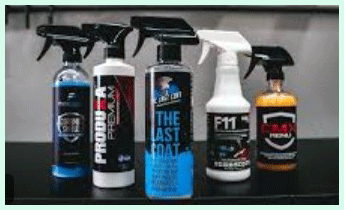
- Vs. Turtle Wax Hybrid Solutions: Similar spray ease, but Turtle offers better initial beading at lower cost.
- Vs. Chemical Guys Products: F11 edges in versatility, while Chemical Guys butterslick lasts similar but shines warmer.
- Vs. Meguiar’s Ultimate: Meguiar’s provides comparable gloss cheaper, though less multi-surface.
- Vs. Adam’s Polishes Sealants: Adam’s often outlasts F11 slightly with stronger UV protection.
- Vs. Gtechniq Quick Detailers: Gtechniq bonds better for longevity, but costs more upfront.
- Vs. Torque Detail: Torque claims similar all-in-one, with users reporting comparable fade times.
- Vs. Shine Armor: Armor cheaper and easier wipe-off, but F11 deeper initial depth.
- Vs. Griot’s Ceramic Spray: Griot’s stronger SiO2 for better durability at similar price.
- Vs. Bead Maker: Bead Maker slicks more extremely, though shorter-lived.
- Vs. Hydrosilex: Many prefer Hydrosilex for longer hold and value over F11.
My Experience With Ceramic Coating
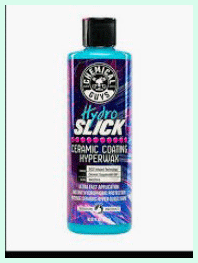
I had a professional apply a mid-tier ceramic coating to my weekend car, a silver coupe garaged most times.
Prep took hours—polish, decontamination, and IPA wipe-down. The applicator layered the product carefully, letting it cure overnight.
The transformation impressed me. The paint gained insane depth, almost glass-like. Water sheeting became dramatic, with dirt rinsing off easily.
Years later, it still beads strongly and resists swirls better than unprotected paint. Washes take half the time, as grime doesn’t bond.
Downsides hit too: upfront cost stung, and prep demanded perfection. I avoided automatic washes early on.
For low-maintenance shine that lasts, it changed everything for me.
Read more: Comparison of Viofo A119 Mini 2 And A119 V3
Pros Of Ceramic Coating
- Superior Durability: Lasts years with proper care, outpacing any sealant.
- Excellent Hydrophobicity: Water beads and sheets off dramatically for self-cleaning.
- Scratch Resistance: Hard layer (up to 9H) protects against light swirls and marks.
- UV Protection: Prevents fading and oxidation for vibrant paint longer.
- Chemical Resistance: Shields from bird droppings, tree sap, and road salts.
- Easier Cleaning: Dirt and grime release with minimal effort.
- Enhanced Gloss: Creates candy-like depth and clarity.
- Heat Resistance: Handles high temperatures without degrading quickly.
- Increased Resale Value: Documented protection appeals to buyers.
- Low Maintenance Long-Term: Fewer products and washes needed over time.
Cons Of Ceramic Coating
- High Initial Cost: Professional application runs expensive.
- Complex Prep Required: Paint must be perfect; corrections add expense.
- Not Removable Easily: Mistakes or damage require polishing off.
- Still Needs Care: Contaminants build up without regular washing.
- Curing Time: Vehicle off-road for days during full cure.
- No Major Scratch Proof: Deep scratches still penetrate.
- Water Spot Risk: Hard water can etch if not dried promptly.
- Professional Dependency: DIY tricky for best results.
- Potential Hazing: Poor application leads to high spots or streaks.
- Warranty Conditions: Annual inspections often required.
Maintenance Tips For Ceramic Coating
- Use pH-Neutral Soap: Avoid stripping with gentle, coating-safe shampoos.
- Hand Wash Only: Skip automatics to prevent swirl introduction.
- Two-Bucket Method: Grit guard prevents redepositing dirt.
- Dry Immediately: Blown or microfiber to avoid water spots.
- Boost Periodically: Apply ceramic toppers every 6-12 months.
- Decontaminate Regularly: Iron removers and clay for embedded particles.
- Avoid Harsh Chemicals: No strong degreasers or alkaline cleaners.
- Garage When Possible: Limit UV and contaminant exposure.
- Inspect Annually: Professional check for warranty compliance.
- Touchless Early: First weeks, rinse only if needed.
Comparison With Other Brands For Ceramic Coating
- Vs. Gtechniq Crystal Serum: Similar hardness, but Gtechniq often slicker.
- Vs. Ceramic Pro: Pro warranties longer, though pricier installation.
- Vs. System X: Comparable durability; System X flexible packages.
- Vs. Feynlab: Feynlab self-heals better in some tests.
- Vs. CarPro CQuartz: CarPro easier DIY with strong beading.
- Vs. Adam’s Graphene: Adam’s adds graphene for heat resistance.
- Vs. XPEL Fusion: Ties to PPF; excellent chemical resistance.
- Vs. Modesta: Premium Japanese; unmatched gloss depth.
- Vs. Opti-Coat: Early pioneer; proven track record.
- Vs. IGL Kenzo: Multi-layer options for extreme hardness.
Frequently Asked Questions (FAQ)
No, standard TopCoat F11 is a water-based polish and sealer, not a true ceramic. The Pro version incorporates some functional ceramic tech but isn’t a full nano-ceramic bond.
Typically 3-6 months for standard F11, up to 12 months claimed for Pro with proper maintenance, though real-world often shorter.
Nothing fully replaces a professional ceramic coating for long-term protection, though F11 offers easier DIY application and versatility.
F11 Pro uses advanced amino-functional tech for better bonding, hydrophobicity, and claimed 12+ month durability versus standard F11’s shorter lifespan.
Conclusion: For Topcoat F11 And Ceramic Coating
I’ve loved the convenience of TopCoat F11 for quick shine-ups on my daily rides—it’s forgiving and fun to apply. But for lasting defense on cars I truly care about, ceramic coating wins every time.
You might choose F11 if you enjoy hands-on detailing and want affordable versatility without commitment. Go ceramic if you’re after set-it-and-forget-it protection that saves effort over years.
Whichever you pick, consistent care keeps your car looking sharp. What’s your experience been—team F11 or ceramic all the way? I’d love to hear your thoughts.