
If you are in the middle of a bathroom renovation, you have probably hit that point where decision fatigue sets in. You have picked the tile, the vanity, and the faucet, and now you are staring at a dark hole in the wall where a mirror should be.
You want that modern, hotel-luxury look—the kind with the glowing perimeter light that makes you look like a movie star while you brush your teeth. That is likely how you found Toolkiss. They pop up everywhere on Wayfair, Home Depot, and Amazon with glossy photos and prices that seem significantly lower than the high-end showroom brands.
But is a “smart mirror” actually functional, or is it just a gimmicky nightlight that is going to break in a year? I had the exact same skepticism. I needed a mirror that could handle a humid bathroom, provide enough light for makeup and shaving without casting weird shadows, and actually remember my settings so I wasn’t fiddling with buttons every morning at 6 AM. After living with a Toolkiss LED mirror, I have some very specific thoughts on whether it is a steal or a mistake.
The short answer is: yes, it is worth it, but with a major caveat regarding how you plan to use it as a primary light source. For the best warranty support and shipping protection (glass is fragile, after all), I recommend purchasing through major retailers like Wayfair or Home Depot where return policies are robust.
My Experience With The Toolkiss LED Mirror
I bought the 36×24 inch backlit/front-lit combo model for my guest bathroom renovation. I wanted to impress guests without blowing the budget on a name-brand electric mirror that cost as much as the vanity itself. When the box arrived, my first reaction was pure anxiety.
The box looked beaten up by the courier, and I was convinced I was going to open it to a pile of expensive jagged glass. To my relief, the packaging was overkill in the best way possible. The mirror was sandwiched between thick honeycomb cardboard and high-density foam. It survived the journey without a scratch.
Installation, however, was a “two-coffee” job. I consider myself handy, but this isn’t just hanging a picture frame. You are dealing with electricity in a wet room. I decided to hardwire it directly into the wall switch so I wouldn’t have an ugly cord dangling down to the outlet.
This required cutting the plug off the end of the mirror’s cord and splicing it into my junction box. The Z-bar mounting bracket provided was actually quite sturdy, which was a relief. The hardest part was tucking the thick knot of wires behind the mirror so it would sit flush against the wall. There isn’t a massive recessed cavity on the back, so you have to be meticulous with your wire management.
Once I flipped the breaker back on, the “wow” factor was immediate. The touch button glows a soft blue when it’s off, which acts as a perfect nightlight for guests navigating a strange bathroom in the dark. When I tapped it on, the light was crisp and clean. I loved that I could hold the button down to dim it.
But here is the reality check: for the first few days, I kept trying to use only the mirror light. I quickly realized that while it looks cool, it is not a searchlight. It provides fantastic “fill light” that removes shadows from your face (great for shaving), but it doesn’t illuminate the shower or the toilet area very well. I had to rely on my recessed ceiling lights for general room brightness.
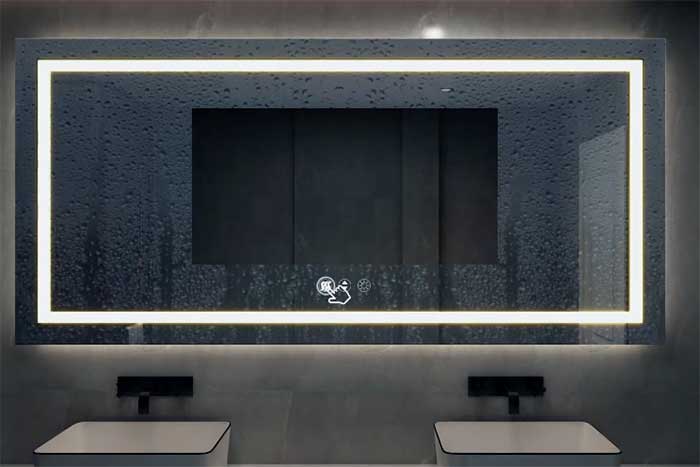
The anti-fog feature, however, is a game-changer. I stepped out of a steaming hot shower, and while the walls were dripping wet, a perfect clear rectangle remained in the center of the mirror. No more wiping it with a towel and leaving streaks. That feature alone made me feel like I was living in the future.
Also Read: My Thoughts On Gus Modern Furniture
Pros Of Toolkiss LED Mirrors
- Dual Lighting Design (Front and Backlit Options): Many budget LED mirrors only offer “backlighting,” which looks cool on the wall but throws zero light on your face, leaving you in the dark. Toolkiss offers models that have both a frosted edge on the front and a glow behind the glass. This is a critical distinction. The front light projects illumination directly onto you, while the backlight creates that moody, floating aesthetic against the wall. Having both means you get functional task lighting for detailed work like eyeliner or shaving, plus the decorative ambiance. It effectively solves the “shadowy face” problem that plagues cheaper backlit-only mirrors.
- Customizable Color Temperature (CCT): Lighting is not one-size-fits-all. Some people prefer the warm, golden glow of a candle (3000K), while others need the clinical, stark brightness of daylight (6000K) to see true colors. Toolkiss mirrors allow you to toggle between three distinct color temperatures—Warm, Natural, and White—just by tapping the touch sensor. This is incredibly useful. I use the bright white setting in the morning to wake up and apply makeup, but I switch to the warm, golden setting in the evening when I’m winding down for a bath. It allows the mirror to adapt to the time of day and your mood.
- Effective Anti-Fog Technology: If you have poor ventilation in your bathroom, you know the struggle of a foggy mirror. The Toolkiss defogger works by gently heating the glass from behind, preventing condensation from forming on the surface. It is separate from the light switch on most models, so you can turn it on only when you need it. It works surprisingly fast—usually clearing the center viewing area within a minute or two. It feels like a small luxury, but once you get used to stepping out of the shower and seeing your reflection immediately, you will never want to go back to a standard mirror.
- Memory Function Adds Convenience: One of the most annoying things about “smart” tech is when it resets every time you turn it off. Toolkiss mirrors have a built-in memory chip. If you dim the light to 50% brightness and set it to “Warm White,” and then turn it off at the wall switch, it will remember those exact settings when you turn it back on. You don’t have to re-adjust the brightness every single time you walk into the room. This makes it feel like a seamless part of the room rather than a gadget you have to constantly fiddle with.
Cons Of Toolkiss LED Mirrors
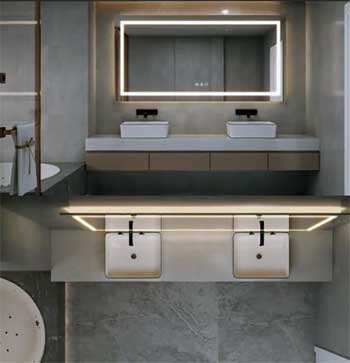
- Installation Requires Electrical Planning: This is not a “plug-and-play” device unless you are okay with a visible cord. To get the clean, floating look you see in the marketing photos, you need to hardwire the unit. This often means you need a recessed electrical box behind the mirror, or you need to be comfortable splicing wires. If your current bathroom only has a light fixture above the vanity and no power source behind the mirror, you will need to hire an electrician to run a new line. This can add $200-$400 to the cost of the project, which is a significant hidden expense that many buyers overlook until the box arrives.
- Touch Sensor Sensitivity Issues: While the touch buttons look sleek, they can be finicky. I have noticed that if your fingers are wet (which happens often in a bathroom), the sensor might not register the tap immediately. Conversely, sometimes the “blue light” on the button is too bright for light sleepers if the bathroom is attached to the bedroom without a door. You have to tap perfectly on the icon. It lacks the tactile satisfaction of a physical switch, and there is a slight delay—maybe half a second—between touching the button and the light reacting. It is a minor annoyance, but it can be frustrating when you are in a rush.
- Brightness Limitations (Lumens): Despite the marketing claims of “super bright,” these mirrors should rarely be used as the only light source in a bathroom. Even at 100% brightness, the LED strips are diffused behind glass and acrylic. They are designed for task lighting (lighting up your face), not ambient lighting (lighting up the room). If you have a large master bathroom and you remove your vanity bar light to replace it with this, you might find the corners of the room are quite dark. You absolutely need recessed can lights or a central ceiling fixture to supplement the mirror, or else your bathroom might feel like a cave.
- Thick Profile Visible from Side: From the front, the mirror looks sleek and frameless. However, because it houses a transformer, LED strips, and a heating pad, the mirror sits about 1.5 to 2 inches off the wall. If your vanity is positioned in a way that you walk into the room and see the side of the mirror immediately, you will see the black or silver casing and the mounting bracket gap. It doesn’t look “bad,” but it doesn’t look as flush as a standard glued-on mirror. It is a piece of hardware that hangs on the wall, and the side profile reveals that mechanical nature.
Maintenance Tips For Toolkiss LED Mirrors
- Cleaning the Glass Properly: The most common mistake people make is spraying Windex or ammonia-based cleaners directly onto the mirror. These harsh chemicals can seep into the edges of the glass and corrode the silver backing, causing those ugly black spots to form around the rim over time (“desilvering”). Instead, spray a non-ammonia glass cleaner or a simple vinegar-water solution onto a microfiber cloth first, and then wipe the glass. This prevents liquid from dripping down into the electronic housing or the bottom frame where it can cause short circuits or rust.
- Managing the Defogger: Do not leave the anti-fog function on 24/7. It uses a heating element that consumes electricity and, over time, can degrade the adhesive backing of the mirror or overheat the transformer if left running for days. Most Toolkiss models have an auto-shutoff feature (usually after an hour), but it is a good habit to turn it off as soon as you are done with your bathroom routine. Treat it like a rear window defroster in your car—use it when you need it, then kill it to save energy and prolong the life of the heating pad.
- Electrical Safety Checks: Every six months, it is worth peeking behind the mirror (if you can seeing the side gap) or just checking the function to ensure there is no flickering. Flickering is usually a sign of a loose wire connection or a failing LED driver. If you notice the light pulsing, do not ignore it. Turn off the breaker and check the wire nuts behind the mirror. The humidity in bathrooms can sometimes cause thermal expansion and contraction that loosens wire connections over time. Keeping these tight prevents fire hazards and ensures your LEDs don’t burn out prematurely.
- Restoring Touch Sensitivity: If you find the touch buttons becoming unresponsive, it is often due to a buildup of fingerprints, hairspray, or soap scum over the sensor area. Wipe the button area firmly with a damp cloth and then dry it completely. Sometimes, a “power cycle” helps too—flip the breaker off for 30 seconds and then back on to reset the internal computer. This recalibrates the touch sensors and can fix the “ghost touching” or unresponsiveness that sometimes happens after a power surge.
Also Read: My Thoughts On Helio Air Broom
Comparison with Other Brands

- Toolkiss vs. Keonjinn: Keonjinn is probably the biggest competitor in this space. In terms of build quality, they are nearly identical—often coming from similar factories. However, Keonjinn tends to have slightly higher customer ratings regarding brightness. Many users report that Keonjinn’s LED strips feel marginally more powerful, making them a better choice if you have a very dark bathroom. Toolkiss, on the other hand, often wins on design variety. They offer more unique shapes (like irregular ovals or specific framed options) than Keonjinn’s standard rectangle/round lineup. If you want a specific “look,” check Toolkiss. If you just want raw light output, Keonjinn might edge them out.
- Toolkiss vs. Hauschen Home: Hauschen Home positions itself as a slightly more premium brand. Their mirrors often boast a higher CRI (Color Rendering Index)—usually CRI 95+ compared to Toolkiss’s CRI 90. What does this mean? It means colors look more accurate in a Hauschen mirror; red lipstick looks red, not pinkish-orange. Hauschen mirrors also tend to have a more enclosed back panel, making them look cleaner from the side. However, you will pay for this. Hauschen mirrors can be 30-50% more expensive than Toolkiss. If you are a professional makeup artist, the Hauschen might be worth the upgrade. For the average person brushing their teeth, Toolkiss is sufficient.
- Toolkiss vs. Big Box Store Brands (Glacier Bay / Allen + Roth): You might see LED mirrors on the shelf at Home Depot or Lowe’s under their house brands. Generally, Toolkiss offers superior tech features for the price. The store brands often lack the memory function or the tunable color temperature (they might be stuck on one harsh blue-white setting). Furthermore, store brands often have thicker, clunkier frames. The advantage of the store brand is the immediate returnability—if it breaks, you drive it back to the store. With Toolkiss, you are dealing with shipping logistics. However, dollar-for-dollar, Toolkiss gives you a more “high-end” feature set than the basic builder-grade options on the shelf.
- Toolkiss vs. Kohler/Robern: This is the “David vs. Goliath” comparison. Kohler and Robern are luxury plumbing brands. Their lighted mirrors can cost $800 to $2,000. Is there a difference? Yes. The fit and finish on a Kohler mirror is perfection. The light diffusion is perfectly even with zero “hot spots” (where you can see the individual LED dots). The glass is often higher quality and clearer. But is it five times better? For most people, no. Toolkiss gets you 85% of the luxury experience for 20% of the price. Unless you are building a multi-million dollar custom home where every detail must be brand-name, Toolkiss is the smarter financial move.
Frequently Asked Questions (FAQ)
Across major platforms like Wayfair and Home Depot, Toolkiss mirrors typically hold a rating between 4.5 and 4.7 stars. Customers frequently praise the packaging and the aesthetic upgrade it brings to a bathroom. The lower ratings (1-3 stars) usually stem from installation difficulties (lack of space for wires) or misunderstandings about the brightness, with users expecting it to light up the whole room like a ceiling fixture.
Yes, they are worth it for the functional upgrade to your grooming routine. The front-facing light eliminates shadows under your eyes and nose that overhead can lights create, making shaving and makeup application significantly easier and more precise. The anti-fog feature also solves a genuine daily annoyance. While they are more expensive and harder to install than a standard piece of glass, the daily utility and the “wow” factor they add to your home’s resale appeal make them a solid investment.
Conclusion
Toolkiss LED mirrors are a fantastic “middle-ground” choice for modernizing a bathroom. They avoid the cheap, blue-tinted look of bottom-barrel options while undercutting the massive price tags of luxury showroom brands. While they require some electrical know-how to install cleanly and shouldn’t be your only light source, the daily convenience of a fog-free, shadow-free reflection is a luxury you won’t want to give up once you have it. If you are ready to upgrade, I recommend measuring your vanity space twice and then checking the Toolkiss store on Wayfair for the specific size that fits your renovation.