
I have certainly been there. Electrical fires are one of those silent terrors that homeowners dread because they often start behind walls, invisible until it is too late. I kept seeing offers from my insurance company about a “free” device called Ting that claimed to predict these fires before they happened.
It sounded like magic—or a data-harvesting scam. I decided to accept the offer and test it out to see if a simple plug-in sensor could really protect my home. You should buy (or accept) this product if you live in an older home with aging wiring, want peace of mind regarding electrical hazards, and appreciate “set it and forget it” technology.
However, if you are looking for a device that tracks your energy usage to lower your bill or want immediate, loud local alarms for hazards, you should save your money and look at energy monitors like Sense instead.
My Experience With Ting Electrical Monitor
I live in a house built in the late 1980s.
It is not ancient, but it is old enough that the outlets are starting to feel a bit loose, and I have always had a lingering worry about the wiring in the attic.
When my insurance provider offered me the Ting sensor for free (with a scary brochure about arc faults), I figured I had nothing to lose.
The claim that it could monitor my entire house’s electrical grid from a single outlet seemed scientifically impossible to me, so I went into this with a healthy dose of skepticism.
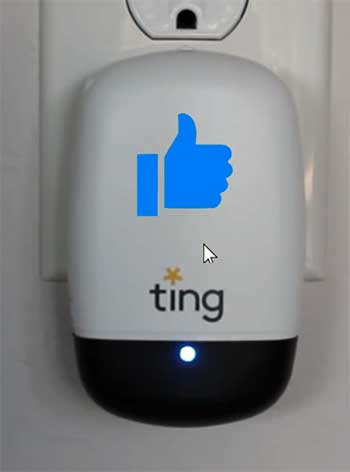
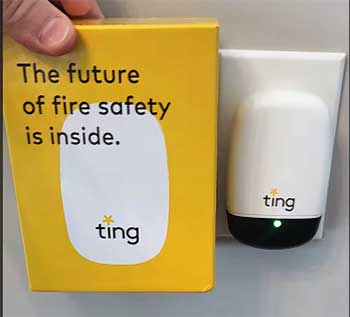
The package arrived a few days later, containing a small white box that looked remarkably like a standard smart plug or a phone charger brick.
The setup was disarmingly simple.
I downloaded the app, created an account, and plugged the sensor into an empty outlet in my hallway, as the instructions recommended picking a “quiet” circuit away from heavy appliances like washing machines. The LED on the device blinked blue, I entered my Wi-Fi password, and… that was it. No electricians, no turning off the main breaker, no complex wiring diagrams.
For the first week, the app sat in “learning mode.” I honestly forgot it was even there. It wasn’t until a stormy Tuesday night that I realized the value of this little plastic brick. My lights flickered, and my internet went down. Almost instantly, my phone buzzed with a notification from Ting:
“Power Outage Detected.” It was faster than my utility company’s text alert. Later that month, I received a “Brownout Warning” notification. I had no idea my voltage had dipped to dangerous levels that could damage my refrigerator compressor. Ting was seeing invisible problems I didn’t know existed.
The real “aha” moment came about four months in. I received a frantic-looking notification about a “Fire Hazard Detected.” My heart dropped. I opened the app, and it didn’t just give me a vague warning; a legitimate human from their Fire Safety Team contacted me within minutes.
They walked me through a troubleshooting process, asking me to isolate circuits. We eventually traced the signal to a specific power strip in my home office that was internally arcing—a cheap plastic strip I had been using for a decade. I unplugged it, and the hazard signal cleared. That $15 power strip could have cost me my home. The fact that this device saw the tiny electrical “noise” of that failing strip from a hallway outlet 30 feet away turned me from a skeptic into a believer.
Also read: My Thoughts On Moen Flo Smart Water Monitor
Pros Of Ting Electrical Monitor
- Whole-Home Monitoring From One Device: The most impressive engineering feat of the Ting monitor is its ability to cover your entire electrical system from a single insertion point. Unlike smoke detectors, which need to be in every room, Ting uses the copper wiring in your walls as a giant antenna. It listens for the specific high-frequency “static” that is created when electricity arcs (jumps) between loose connections or damaged wires. This means you don’t need to buy twenty sensors; just one unit plugged into a central outlet can detect a loose neutral wire in your attic or a fraying lamp cord in the basement. This simplicity makes it accessible for non-technical homeowners who would never install a complex hardwired system.
- Proven Fire Prevention Technology: While many smart home devices are gimmicks, Ting has a verified track record of actually preventing disasters. The technology focuses on “micro-arcing,” which is the precursor to an electrical fire. These tiny sparks don’t generate enough heat to trip a standard breaker or start a fire immediately, but they build up carbon over time until they eventually ignite. Ting detects these patterns weeks or months before a fire starts. The company has documented thousands of cases where they have identified dangerous utility faults, melting meter boxes, and faulty appliances before a single flame appeared. It shifts safety from “reaction” (smoke detectors) to “prevention.”
- Valuable Power Quality Insights: Beyond fire safety, Ting acts as a stethoscope for the quality of power entering your home from the utility grid. It constantly monitors voltage stability. If your power company is sending you 135 volts instead of 120 (a surge), or 90 volts (a brownout), Ting alerts you. This is crucial because poor power quality is a silent killer of expensive electronics. A brownout can burn out the motor in your $2,000 smart refrigerator or fry the power supply in your PC. having this data allows you to hold your utility provider accountable. I have seen users use Ting data logs to force their electric company to fix a loose transformer on the pole outside their house.
- Includes Financial Remediation Credit: One of the strongest value propositions is the service warranty that comes with the subscription. If Ting detects a hazard that requires professional repair, the service typically includes a credit of up to $1,000 to cover the cost of a licensed electrician. This is a massive safety net. It removes the hesitation of “I don’t want to call an electrician because it will be expensive.” If Ting says there is a problem, they back it up with their wallet. This aligns their incentives with yours—they only want to alert you to real problems, or else they lose money paying for service calls.
- Human-In-The-Loop Support: When a serious hazard is detected, you are not just left with a robotic push notification. Ting employs a real Fire Safety Team of electrical engineers and experts. If your sensor flashes red, a real person will often call, text, or email you to guide you through the remediation process. They look at the signal data in real-time while you flip breakers to help pinpoint exactly which circuit is causing the issue. This “concierge” level of service is rare in the smart home world and provides immense comfort during a potentially scary situation.
Cons Of Ting Electrical Monitor
- Ongoing Subscription Model: The biggest drawback for many users is that Ting is not a one-time purchase. While the hardware itself costs around $99 (often including the first year of service), keeping the device active requires a subscription fee of approximately $49 per year afterward. If you stop paying, the device becomes a paperweight. It stops monitoring, stops alerting, and the app becomes useless. For people who are tired of “subscription fatigue” and just want a device they own outright, this recurring cost can be a dealbreaker, even if it is relatively low compared to other home security services.
- Does Not Monitor Energy Usage: There is a common misconception that Ting will help you lower your electric bill by showing you which appliances are using the most power. It does not do this. Unlike the “Sense” energy monitor, Ting cannot tell you that your dryer used 40% of your energy this month. It is strictly a safety and voltage device. It does not track wattage or consumption. If you buy this expecting to see a breakdown of your electricity costs, you will be sorely disappointed. It is a safety tool, not an efficiency tool.
- Reliance On Wi-Fi and Cloud: Because the device relies on complex algorithms to distinguish between a “good” arc (like a vacuum cleaner motor) and a “bad” arc (like a melting wire), it needs to send data to the cloud for processing. This means if your Wi-Fi goes down, your protection is temporarily offline. Furthermore, it requires a stable 2.4GHz connection. If you have a modern mesh router that struggles to separate 2.4GHz and 5GHz bands, you might face connectivity headaches during setup. It is not a standalone local device; it is a cloud-dependent IoT device.
- No Audible Alarm On Device: The Ting sensor itself is silent. It does not have a speaker or a siren. If a fire hazard is detected, or if the power goes out, the alerts come entirely through your phone (app notifications, texts, or calls). If your phone is on “Do Not Disturb” or if you left it in another room, you might miss a critical alert. It does not act like a smoke detector that screams at you to wake up. This reliance on the smartphone ecosystem means it is less effective for elderly users who might not keep their phones on them 24/7.
- Potential For Anxiety and “Ghost” Hunting: While false alarms are rare, they can happen, or the device might detect a “hazard” that is incredibly difficult to locate. Ting might tell you there is a loose connection on “Circuit A,” but finding that specific loose screw behind one of fifteen outlets on that circuit can be a needle-in-a-haystack search. This can lead to a “boy who cried wolf” scenario where you spend hours hunting for a problem you can’t see, causing significant anxiety. Some users find that knowing too much about their voltage fluctuations makes them worry about problems that aren’t actually dangerous.
Maintenance Tips For Ting Electrical Monitor
- Ensure A Dedicated 2.4GHz Connection: The most common technical issue with Ting is Wi-Fi connectivity. The device uses a 2.4GHz radio because it is better at penetrating walls than the faster 5GHz band. Modern mesh routers often combine these bands into one name, which can confuse the Ting sensor. If your device keeps going offline, you may need to go into your router settings and create a dedicated “IoT Guest Network” that is strictly 2.4GHz. Connecting Ting to this stable, dedicated lane will solve 90% of connectivity drops and keep your monitoring active.
- Avoid Power Strips and Extension Cords: For the sensor to “listen” to your home’s wiring effectively, it needs a clean signal path. Plugging the Ting sensor into a surge protector or a cheap extension cord can dampen the high-frequency signals it is trying to detect. The surge protection components can actually filter out the very “noise” Ting needs to hear to save your house. Always plug the sensor directly into a permanent wall outlet. If you must use that outlet for other things, you can use the pass-through outlet (if available) or plug the Ting into the top socket and your power strip into the bottom one.
- Check The LED Status Monthly: Since the device is silent, your only visual cue of its health is the LED ring on the front. Make it a habit to glance at it once a month. A solid green (or sometimes white, depending on the version) light means everything is normal. If you see it pulsing blue, it has lost Wi-Fi and needs to be reconnected. If it is flashing red or green rapidly, it might have detected a fault or an internal error. Catching a disconnected sensor early ensures you don’t go months without protection.
- Keep The App Updated: The “brains” of Ting are in the cloud and the app, not really in the plug itself. The company constantly updates its algorithms to better recognize new types of appliances and reduce false positives. If you turn off auto-updates for your apps, you might be running on an old version that misses out on these improvements. Ensure your smartphone is set to automatically update the Ting app so you always have the latest “fire signatures” downloaded.
- Test With A “Stress Test” Periodically: While you can’t fake an electrical arc (and shouldn’t try!), you can verify the device is seeing your grid activity. Turn on a high-draw appliance like a vacuum cleaner or a hair dryer and open the “Real-Time Meter” in the Ting app. You should see the voltage graph dip slightly or fluctuate. This confirms that the sensor is reading the line effectively and that the data is making it to your phone in real-time. If the graph is flat while you run a vacuum, the sensor might be frozen or disconnected.
Also read: My Thoughts On Eve Aqua Smart Water Controller
Comparison with Other Brands
Comparison with Sense Energy Monitor
Sense is an energy monitor; Ting is a safety monitor. This is the most critical distinction. Sense installs inside your breaker panel (requiring an electrician) and uses CT clamps to read the current. It tells you “Your toaster is on” or “You used $50 of electricity today.” Ting plugs into a wall and tells you “Your wiring is sparking.” Sense has recently added some “Labs” features to detect motor stalls, but it is not a dedicated fire safety device. If you want to save money on your bill, buy Sense. If you want to prevent your house from burning down, buy Ting. They are complementary, not competitors.
Comparison with AFCI Breakers
AFCI (Arc Fault Circuit Interrupter) breakers are the code-mandated standard for new homes. They are installed in your panel and trip off instantly if they detect a dangerous arc. Ting is a “whole home” overlay for older homes. If your house was built before 2008, you likely don’t have AFCI breakers. Retrofitting your panel with them can cost thousands of dollars. Ting offers a similar layer of protection for $99. However, AFCI breakers are active—they cut the power immediately. Ting is passive—it alerts you, and you (or the utility) have to act. An AFCI breaker is faster, but Ting gives you data and covers the whole house without a panel swap.
Comparison with Emporia Vue
Emporia Vue is a budget-friendly energy monitor. Like Sense, it installs in your panel, but it uses many small clamps to monitor individual circuits. Emporia is fantastic for granular energy data but lacks the sophisticated fire-signature algorithms of Ting. Ting is far easier to install. Emporia requires you to take the cover off your 240V panel and work around live wires—a terrifying task for most DIYers. Ting takes 2 minutes and zero tools. Emporia will not call you if your neutral wire is loose at the street; Ting will.
Comparison with Smart Smoke Detectors (Nest Protect)
Nest Protect detects the result of a fire (smoke/CO); Ting detects the cause (arcing). Nest Protect is an essential life-safety device that wakes you up when a fire has already started. Ting tries to stop the fire from starting. You need both. Nest cannot see inside your walls. If a wire is smoldering behind drywall, Nest won’t know until smoke seeps out. Ting can “hear” that wire sizzling long before smoke appears. They work at different stages of the disaster timeline. Do not replace your smoke detectors with Ting; use them together.
Frequently Asked Questions (FAQ)
Yes, Ting works effectively at detecting micro-arcing and power quality issues. There are thousands of documented cases where the device has identified loose neutrals, faulty utility transformers, and dangerous appliances that were silently arcing. The technology is backed by “Whisker Labs,” which specializes in fire safety signal processing, and is trusted by major insurance carriers like State Farm and Nationwide to reduce risk.
The Ting service is typically billed annually, not monthly. After the initial purchase (which usually includes the first year of service), the cost is $49 per year. This breaks down to roughly $4 per month. Some insurance companies offer the device and the service completely for free as long as you maintain your policy with them.
No, Ting does not detect carbon monoxide (CO) or smoke. It is strictly an electrical sensor that monitors voltage and electromagnetic noise in your wiring. It does not have the chemical sensors required to detect gas leaks or combustion fumes. You must maintain separate carbon monoxide detectors and smoke alarms in your home for complete safety.
Ting is developed and owned by Whisker Labs, a technology company based in Germantown, Maryland. Whisker Labs specializes in developing advanced sensor technology for home safety and grid resiliency. They are not owned by an insurance company, though they partner closely with many insurers to distribute their devices.
Conclusion
The Ting Electrical Monitor is a rare example of smart home technology that offers genuine substance over style. It isn’t a flashy gadget that turns your lights pink; it is a serious diagnostic tool that acts as a 24/7 electrician for your home. You should buy this product if you live in an older property or simply worry about the invisible dangers of electricity.
The peace of mind alone—knowing that someone is watching your grid for brownouts and arcs—is worth the yearly subscription. While it doesn’t track energy usage or replace smoke detectors, it fills a critical safety gap that no other consumer device addresses. If you have the chance to get it through your insurer, it is an absolute no-brainer.