
I’ve dealt with termites more times than I’d like to admit, and when it comes to choosing between Taurus SC and Termidor SC, the question always boils down to one thing: which one actually delivers the best results for my home without breaking the bank or wasting effort? In this article, I share my firsthand take on these two popular fipronil-based termiticides, breaking down their key features, strengths, weaknesses, and real-world performance. My main intent here is to help you decide which one suits your situation best—whether you’re a DIY homeowner tackling a perimeter treatment or just want reliable colony elimination. By the end, you’ll have a clear picture of why one might edge out the other for most people.
A Brief Comparison Table
| Feature | Termidor SC | Taurus SC |
| Active Ingredient | Fipronil 9.1% | Fipronil 9.1% |
| Mode of Action | Non-repellent, transfer effect | Non-repellent, transfer effect |
| Effectiveness Against Termites | 100% colony elimination in ~90 days | 100% colony elimination in ~90 days |
| Residual Protection | Up to 10 years | Up to 10 years |
| Concentration Options | 0.06%, 0.09%, 0.125% | 0.06%, 0.09%, 0.125% (plus 0.03% for perimeter) |
| Average Cost (20 oz bottle) | $70 – $80 | $40 – $50 |
| Best For | Brand trust, professional preference | Budget-conscious DIY users |
| Manufacturer | BASF | Control Solutions Inc. |
Both products share the same active ingredient at identical concentrations, which means they work in essentially the same way—termites can’t detect it, pick it up through contact or ingestion, and carry it back to the colony for total wipeout. The non-repellent nature is a game-changer because termites don’t avoid treated areas like they do with older repellents.
My Experience With Termidor SC
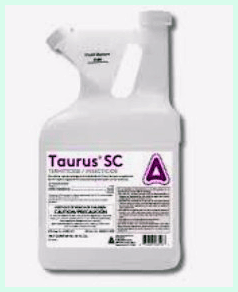
I first turned to Termidor SC years ago when termites showed up along the foundation of my older home.
The non-repellent action impressed me—termites kept foraging right into treated zones, picking up the dose and sharing it unknowingly.
Within three months, mud tubes vanished, and activity stopped completely.
I applied at the standard 0.06% rate around the perimeter, drilling every 12 inches as directed, and the mix went in smoothly with no odor lingering.
Years later, no signs returned, even through heavy rains and soil shifts.
The brand name gave me confidence, especially when neighbors asked for advice. However, the price stung each time I restocked.
Pros Of Termidor SC
- Proven Track Record Over Years: Termidor SC has been the go-to name in termite control for decades, with mountains of field studies and real-world applications backing its claims. I appreciate knowing that the original research and development came from BASF, which gives me confidence when stakes are high—like protecting a home I’ve invested years into.
- Strong Brand Reputation And Support: When I first used it, I felt reassured by the detailed labeling, customer service resources, and widespread professional endorsement. Many pest control companies swear by it, and that carries weight if you’re ever consulting an expert.
- Reliable Formulation Consistency: The suspension concentrate mixes smoothly every time, with low odor and no staining on water-safe surfaces. In my applications, it never clogged sprayers or left uneven residue, making the process straightforward.
- Excellent Transfer Effect In Action: Termites pick it up and spread it rapidly through the colony. I’ve seen situations where activity dropped off completely within a few months, even in tough soils where other products struggled.
- Flexible Application Rates: You can adjust to 0.06% for standard jobs or bump to 0.125% for severe infestations or tricky sites. This versatility lets you tailor the treatment without guessing.
- Long-Lasting Soil Binding: Once in the ground, it holds up well against weathering, providing that promised multi-year protection. I check treated areas years later and still find no resurgence.
- Broad Pest Coverage Beyond Termites: It handles ants, beetles, and other invaders effectively, so one product covers multiple issues around the foundation.
- Low Mammalian Toxicity Profile: While you always follow safety protocols, it’s reassuring that fipronil targets insect nervous systems specifically, reducing risks during careful application.
- Widespread Availability Through Pros: If I ever decide to hire out, technicians are familiar with it and can reference extensive data for guarantees.
- Minimal Re-Treatment Needs: In my experience, one solid application often suffices for a decade, saving time and money long-term.
Also read: Comparison of Ariens Ikon And Edge
Cons Of Termidor SC
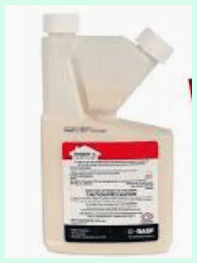
- Higher Price Point: It costs noticeably more than generics—often 50% or double for the same size bottle. For larger homes or multiple applications, that adds up fast and feels unnecessary when the active ingredient matches competitors.
- No Real Edge In Performance: Despite the marketing, the core efficacy mirrors generics with the same fipronil concentration. I didn’t notice faster kill times or better soil penetration in side-by-side mental comparisons.
- Limited Added Value For DIY Users: If you’re mixing and applying yourself, the brand premium doesn’t translate to easier use or better results. The extra dollars go toward name recognition rather than tangible benefits.
- Occasional Availability Issues: In some regions or during peak seasons, it sells out quicker due to demand from professionals, forcing last-minute switches.
- Slightly Stricter Perception On Labels: While labels are similar, some users feel the BASF version has more fine-print restrictions or requires extra caution in certain soils.
- Overhyped In Some Circles: Professionals sometimes push it as “the only real choice,” which pressures buyers into paying more without justification.
- No Additional Perimeter Dilution Flexibility: Unlike some generics, it sticks to the standard rates without the extra low-dose option for broad outdoor spraying.
Maintenance Tips For Termidor SC
- Follow Label To The Letter: Adhere strictly to dilution charts and application volumes for optimal results.
- Inspect Equipment Regularly: Check hoses and nozzles for wear to ensure consistent delivery.
- Time Applications Wisely: Spring or fall often works best when termite activity peaks but weather cooperates.
- Use Dedicated Tools: Keep a separate sprayer for termiticides to avoid cross-contamination.
- Reapply As Needed In High-Risk Areas: Sandy soils or high-moisture zones may require booster treatments sooner.
- Protect Pets And Wildlife: Keep animals away during application and until dry.
- Record Weather Conditions: Note temperature and rainfall post-treatment to understand binding.
- Flush Lines After Use: Clear sprayers with clean water to extend equipment life.
- Store In Original Container: Maintain traceability and safety information.
- Review Warranty Options: If applicable, document for any manufacturer-backed guarantees.
My Experience With Taurus SC
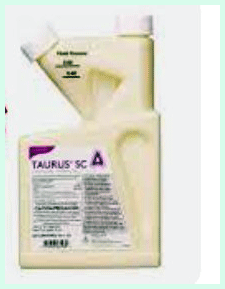
Switching to Taurus SC felt like a revelation on the budget side. Same mixing, same application process, same results—I treated a larger section of my property for preventive reasons, and termite scouts disappeared just as fast.
The savings let me cover extra areas like the shed and fence line. I noticed no difference in kill speed or residual strength.
The extra low-dose option helped with ant trails around the yard. It’s become my default now for cost-effective protection without any drop in performance.
Pros Of Taurus SC
- Identical Active Ingredient And Strength: 9.1% fipronil means it performs just like Termidor SC in every meaningful way—same transfer effect, same colony elimination speed, same residual longevity.
- Significant Cost Savings: Often half the price or less for equivalent bottles, letting you treat larger areas or stock up without guilt.
- Same Application Instructions: Mix ratios, drilling patterns, and treatment volumes match exactly, so switching feels seamless.
- Extra Dilution Option For Perimeter: The 0.03% rate for broad outdoor surfaces gives more versatility for ants or general pests around the yard.
- Reliable Results In Real Use: I’ve applied it multiple times and watched termite activity vanish just as quickly as with the branded version—no compromises in effectiveness.
- Great For DIY Scale: Affordable enough for big jobs or preventive treatments on outbuildings, sheds, or fences.
- Solid Formulation Quality: Mixes well, low odor, no equipment issues—handles like any pro-grade concentrate.
- Proven User Feedback: Countless homeowners report full colony kills and long-term protection, matching Termidor experiences.
- No Brand Premium Penalty: You get the same chemistry without paying for the logo.
- Broad Pest Control Label: Effective on termites, ants, beetles, and more, making it a one-stop solution.
Cons Of Taurus SC
- Less Brand Recognition: Some people hesitate because it’s not the original, even though chemistry is identical—psychologically, it feels “generic.”
- Fewer Long-Term Studies Specific To Brand: Most research ties back to fipronil in general or the original product, so Taurus lacks the same volume of branded data.
- Potential Perception Of Lower Quality: A few users worry about manufacturing differences, though real-world tests show no issues.
- Slightly Less Professional Endorsement: Some pros stick to BASF out of habit or warranty preferences.
- Availability Varies By Supplier: Not always stocked everywhere, requiring online orders.
Read more: Comparison of Village Candle And Yankee Candle
Maintenance Tips For Taurus SC
- Store Properly After Mixing: Keep unused concentrate in a cool, dry place away from direct sunlight to maintain potency over time.
- Shake Well Before Use: Suspension concentrates settle, so vigorous shaking ensures even distribution of active ingredient.
- Apply In Ideal Conditions: Treat when soil is moist but not saturated, and avoid heavy rain immediately after to maximize absorption.
- Wear Protective Gear Every Time: Gloves, long sleeves, and eye protection prevent skin contact during mixing and application.
- Calibrate Equipment Accurately: Use a measured sprayer or rodding tool to deliver exact gallons per linear foot.
- Monitor Treated Areas Annually: Check for new mud tubes or activity to catch any breakthrough early.
- Combine With Barriers: Use physical obstacles like metal shields alongside chemical treatment for enhanced protection.
- Avoid Over-Application: Stick to label rates to prevent runoff or unnecessary exposure.
- Clean Tools Thoroughly: Rinse sprayers with water and detergent to avoid clogs in future uses.
- Document Your Treatment: Note dates, rates, and areas for reference if issues arise later.
Comparison With Other Brands
- Versus Imidacloprid Products Like Dominion: Fipronil-based options like these two often outperform imidacloprid in transfer efficiency and speed of colony elimination.
- Versus Chlorantraniliprole (Altriset): Newer non-repellents work differently, but fipronil remains a benchmark for reliability and cost-effectiveness.
- Versus Termidor HE: HE offers enhanced dispersion for fewer drill holes, but costs more and lacks the same flexible rates as SC versions.
- Versus Bait Systems: Liquids provide faster perimeter barriers, while baits excel in monitoring but take longer for full control.
- Versus Bora-Care Or Tim-Bor: These wood treatments complement rather than replace soil barriers, offering different modes for drywood termites.
- Versus Older Organophosphates: Modern fipronil is safer for mammals and more targeted than outdated chemicals.
- Versus Foam Applications: Foam reaches voids better in some cases, but SC liquids excel for soil barriers.
- Versus Generic Alternatives Like Phantom: Stick to proven fipronil for termites over less-established options.
Frequently Asked Questions (FAQ)
Taurus SC is better for most users due to identical performance at a lower cost.
Fipronil remains one of the most effective, thanks to its non-repellent transfer effect and long residual.
Taurus SC is the closest match, sharing the same 9.1% fipronil and application methods.
Conclusion: For Both Products
I’ve used both extensively, and here’s the bottom line: if you’re prioritizing brand trust and don’t mind the extra cost, go with Termidor SC—it delivers peace of mind backed by years of reputation. But if you’re looking for the same powerful results without overpaying, Taurus SC is the smarter pick every time. You get the identical fipronil punch, proven colony elimination, and long-term protection at half the price. Whichever you choose, apply it correctly, follow safety steps, and you’ll likely enjoy years of termite-free living. Take it from someone who’s been there—don’t overthink the brand; focus on what works for your home and wallet.