
If you are staring at a computer screen right now with eyes that feel like they are filled with sand or shards of glass, I know that specific brand of misery. I have spent years battling chronic dry eye, moving from one bottle to another, hoping for relief that lasts longer than five minutes.
Standing in the pharmacy aisle, squinting at the wall of Systane boxes, is overwhelming. They all look the same, yet the difference between the purple box (Balance) and the white-and-silver box (Complete) is actually huge for your comfort.
My intent with this article is to break down the specific technologies behind Systane Balance and Systane Complete so you can stop guessing and start healing. We will look at how they treat different types of dry eye (yes, there are types), the texture, the blur factor, and the real-world performance to help you decide which one is better for your specific symptoms.
A Brief Comparison Table
| Feature | Systane Balance | Systane Complete |
| Primary Target | Evaporative Dry Eye (Lipid Deficiency / MGD) | All Types (Aqueous, Evaporative, & Mixed) |
| Technology | LipiTech™ System (Restores Lipid Layer) | Nano-Droplet Technology (Tiny oil particles) |
| Key Active Lubricant | Propylene Glycol 0.6% | Propylene Glycol 0.6% |
| Appearance | Milky white emulsion | Milky white emulsion |
| Oil Content | Higher concentration of mineral oil | Mineral oil delivered in nano-sized droplets |
| Blurriness | Significant initial blur (thick & oily) | Moderate initial blur (clears faster) |
| Preservative | POLYQUAD® (0.001%) | POLYQUAD® (0.001%) or Preservative-Free option |
| Best For | People with Meibomian Gland Dysfunction (MGD) | People who don’t know their specific dry eye type |
My Experience With Systane Balance
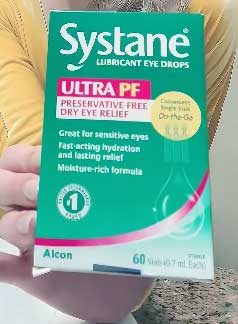
I reached for Systane Balance during a winter where my office heating system was drying me out so badly that I could barely keep my eyes open by 2 PM.
My optometrist took one look at my lash line and told me my oil glands were clogged (MGD) and that my tears were evaporating instantly.
He handed me a sample of Balance.
The first time I used it, I was taken aback by the white color—it looked like skim milk.
I tilted my head back, put a drop in, and immediately my vision went foggy. It was like looking through a steamy shower door.
I panicked for a split second, but then I blinked a few times, and the most incredible sensation washed over my eyes. It felt like a silky, smooth blanket had been pulled over my scratchy corneas. The grit was gone.
The blur lasted about five minutes, which was annoying because I had to sit at my desk doing nothing, but the relief lasted until I got home that evening. I loved that I didn’t have to keep reaching for the bottle. However, I hated the “crusties.” By lunchtime, I’d catch a glimpse of myself in the bathroom mirror and see white flakes dried in the corners of my eyes. It made me look like I had an infection. Despite the mess and the blur, I stuck with it because nothing else solved that specific “burning wind” sensation of MGD. It felt medicinal, like a treatment rather than just a refresher.
Pros Of Systane Balance
- Targeted Relief for Meibomian Gland Dysfunction (MGD):The single biggest advantage of Systane Balance is its specialized focus. Most people don’t realize that 86% of dry eye cases are actually caused by “evaporative” dry eye, meaning your eyelids aren’t producing enough oil to coat your tears, so the water just evaporates. Balance is specifically formulated with the LipiTech system to restore that crucial oil layer. I found that when my eyes felt “watery but dry” (a classic sign of MGD where your eye tries to overcompensate with low-quality tears), Balance was the only drop that actually stopped the cycle. It acts like a seal, locking moisture in rather than just adding water that immediately disappears.
- Higher Oil Content for Severe Cases:If you have severe dryness where your eyelids feel like they are sticking to your eyeballs in the morning, the heavy-duty nature of Balance is a pro. It contains a significant amount of mineral oil. While this sounds heavy, for a chronic sufferer, it feels like a protective blanket. I noticed that on days when the wind was whipping or the air conditioning was blasting directly into my face, Balance provided a physical barrier that lighter drops simply couldn’t offer. It feels substantial, like a lotion for your eye rather than just water.
- Reduces Excessive Tearing:Paradoxically, one of the main symptoms of dry eye is streaming tears. This happens because the eye is irritated and panics, flooding the surface with reflex tears that don’t stick because they lack oil. Because Systane Balance replenishes that lipid (oil) layer, it helps the tears actually adhere to the surface of the eye. I experienced a massive reduction in that embarrassing “crying in public” issue within a few days of using it. By stabilizing the tear film, it tells your tear ducts they can relax, leading to more comfortable, less watery eyes.
- Long-Lasting Lubrication:Due to the thicker, oily formulation, these drops stay on the eye longer than standard artificial tears. With generic saline drops, I often felt the need to reapply every 20 minutes. With Balance, I found I could go 4 to 6 hours between doses. This longevity is crucial for working professionals who can’t step away to put drops in a dozen times a day. The “sticking power” of the lipophilic ingredients means you get more hours of relief per bottle, which eventually helps offset the cost.
- Soothing “Coating” Sensation:There is a distinct textural difference that many users, including myself, find comforting. When you instill a drop of Balance, you can feel it coating the entire surface of the eye. It eliminates friction immediately. If you suffer from that gritty, sandy sensation—where every blink feels like sandpaper—the high viscosity of Balance smoothes out the movement of the eyelid instantly. It provides a glide that lighter formulas often lack.
Cons Of Systane Balance
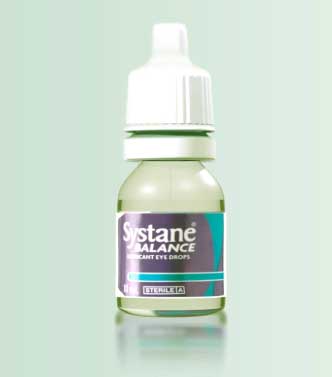
- Significant Visual Blurring:You must be prepared for the blur. Because Systane Balance is an emulsion of mineral oil and water (it looks like milk), it clouds your vision immediately upon application. In my experience, this isn’t just for a blink or two; it can last for 5 to 10 minutes. This makes it very difficult to use if you are in the middle of driving, reading a document, or working on a spreadsheet. You essentially have to take a “vision break” every time you use it. I learned quickly never to put these in right before getting behind the wheel of a car.
- White Residue on Eyelashes:A cosmetic annoyance that drives me crazy is the residue. Because the drops are milky white and oily, they tend to dry on your eyelashes and in the corners of your eyes, leaving white, crusty flakes. It looks like “sleep” or eye boogers. If you use these drops at work, you have to constantly check a mirror to make sure you don’t have white gunk accumulated in your tear ducts. It requires a bit of cleanup that clear drops don’t necessitate.
- Not Preservative-Free:Systane Balance relies on a preservative called POLYQUAD. While this is gentler than older preservatives like BAK (benzalkonium chloride), it is still a chemical preservative. For people with ultra-sensitive eyes or those who use drops more than 4 times a day, even gentle preservatives can eventually cause toxicity or irritation. I found that if I used Balance too aggressively for weeks on end, my eyes would start to feel slightly irritated, not from dryness, but from the preservative load. It limits how frequently you can safely use it long-term.
- Heavy Sensation:While I listed the “coating” as a pro, it can also be a con depending on your preference. Some users find Balance feels “goopy” or slimy. If you are used to thin, water-like drops (like Systane Ultra), Balance can feel surprisingly heavy. It feels like you have something in your eye. For mild dry eye sufferers, this sensation might be more annoying than the dryness itself. It is definitely not a “weightless” product.
- Incompatibility with Contact Lenses:You absolutely cannot use Systane Balance while wearing contact lenses. The mineral oil content will coat the lens, clouding it permanently and potentially ruining the material. You have to remove your contacts, apply the drops, and wait at least 15-20 minutes before putting them back in. This makes it a poor choice for midday relief if you are a contact lens wearer who needs hydration without the hassle of removal.
My Experience With Systane Complete
I switched to Systane Complete (specifically the Preservative-Free version) about a year later when I wanted to get away from preservatives. I also liked the idea of the “nano-droplets” sounding less messy.
The experience was noticeably different. When I put a drop of Complete in, I felt a sharp sting for about three seconds—a “bite” that Balance never gave me. But once the sting faded, the drop felt lighter and spread faster. The blur was there, but it was fleeting; within a minute, I could read my emails again. It felt less like a heavy oil slick and more like a high-tech hydration serum.
The biggest win for me was the convenience. I didn’t have to worry if my eyes were “water dry” or “oil dry” that day; Complete handled both. My eyes felt hydrated and slick, but without the heavy, goopy feeling of Balance. I also noticed significantly less white residue on my lashes. The bottle was a pain to squeeze—I wasted a few drops aiming at my cheek because the pump was stiff—but being able to use it 6 times a day without fear of preservatives gave me huge peace of mind. It became my “daily driver,” while Balance remained my “heavy duty” night-time drop.
Read More: My Thoughts On Aurumeta Tanning Drops
Pros Of Systane Complete
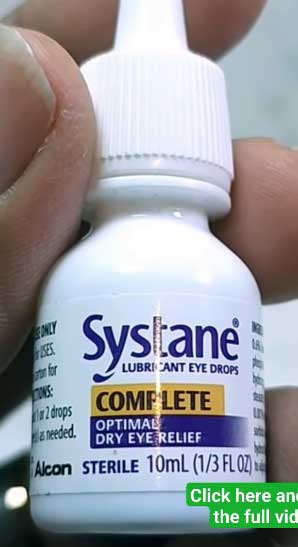
- Comprehensive “All-in-One” Formula:Systane Complete is marketed as the “Swiss Army Knife” of eye drops, and I found this to be its greatest strength. It is designed to treat both aqueous deficiency (lack of water) and evaporative dry eye (lack of oil). If you haven’t been to a specialist and don’t know exactly which type of dry eye you have (or if you have mixed dry eye, which is very common), this takes the guesswork out of the equation. It hydrates and seals. I felt confident using it knowing that regardless of what was triggering my dryness that day, the drop had a mechanism to handle it.
- Nano-Droplet Technology:This is the “cool science” part that actually makes a difference. Systane Complete uses nano-technology to break the mineral oil down into microscopic droplets. This allows the oil to spread much more evenly and quickly across the eye than the larger oil globules in Balance. In my usage, this meant the drop felt smoother and less “gloppy.” It covers the surface area of the eye efficiently without needing a huge amount of fluid, which leads to a more natural feeling of moisture.
- Less Blur Than Balance:While it is still a milky emulsion, the nano-sized droplets mean the blur clears significantly faster than with Balance. I found that I experienced maybe 30 to 60 seconds of slight haziness, and then my vision was crisp again. This makes Systane Complete much more practical for office use or for people who need to get back to their tasks quickly. It strikes a happy medium between the lasting power of an oil drop and the clarity of a water drop.
- Available in Preservative-Free (PF) Version:Unlike Balance, Systane Complete is available in a “Preservative-Free” (PF) Multi-Dose bottle. This is a massive advantage. The PF version uses a special bottle tip that prevents bacteria from entering, eliminating the need for chemical preservatives entirely. This allowed me to use the drops as often as I needed—sometimes 6 or 8 times a day during bad flares—without worrying about preservative toxicity or developing an allergy to the additives. If you have sensitive eyes, the existence of a PF version makes Complete the winner by default.
- 8-Hour Relief Claim:Alcon claims up to 8 hours of relief, and while individual mileage varies, I did find it lasted a long time. It didn’t quite hit the 8-hour mark for me (more like 4-5 hours), but it was still significantly better than standard drops. The nano-lipid matrix creates a robust barrier that withstands blinking and environmental factors. I found I could put these in before a long drive or a movie and not have to fumble for the bottle halfway through.
Cons Of Systane Complete
- Price Point is Higher:Systane Complete, especially the Preservative-Free version, sits at the top of the price tier for over-the-counter eye drops. It is almost always more expensive than Balance. The technology—the nano-emulsion and the specialized PF bottle—costs money to produce. For a tiny 10ml bottle, the price can feel steep, especially if you go through one every two weeks. You are paying a premium for the “all-in-one” convenience and the nano-tech.
- Can Cause Stinging Upon Application:A surprising number of users, myself included, experience a sharp sting when Systane Complete first hits the eye. It isn’t unbearable, but it is a definite “zing.” This seems to be related to the Propylene Glycol concentration or the way the nano-emulsion interacts with salt levels in very dry eyes. While the sting fades after about 10 seconds and is replaced by relief, that initial bite can be discouraging, particularly for children or people with high anxiety about eye drops.
- Milky Texture Can Still Be Off-Putting:Even though the droplets are nano-sized, the liquid is still white and creamy. For people accustomed to clear drops like Visine (which you shouldn’t use, by the way) or Systane Ultra, putting a white fluid in your eye feels unnatural. It can still gather slightly in the corners of the eye, though less so than Balance. If you are expecting a “water-like” experience, you will be disappointed. It is still an oil-based emulsion at its heart.
- Bottle Design Issues (PF Version):The Preservative-Free Multi-Dose bottle has a very specific mechanism (the “PureFlow” technology) that requires a harder squeeze to dispense a drop. This is to keep air out. I found it sometimes difficult to aim. You have to squeeze surprisingly hard, and sometimes nothing comes out, and then suddenly a drop shoots out and misses your eye. For elderly users or those with arthritis in their hands, the stiff mechanism of the PF bottle can be a genuine usability struggle compared to the standard squeeze bottle of Balance.
- Not a Cure for Severe MGD:While Complete covers “all bases,” it is a master of none. If you have severe Meibomian Gland Dysfunction where you have almost zero oil production, Systane Balance (with its higher, non-nano oil content) often works better. Complete is a great maintenance drop, but for heavy-duty repair of the lipid layer, I felt it lacked the “heaviness” required to truly seal a severely compromised tear film. It is excellent for moderate dryness, but maybe not enough for the extreme cases.
Maintenance Tips For Systane Balance & Complete
- ** The “Shake” Rule is Non-Negotiable:**Both of these products are emulsions, meaning they are mixtures of oil and water which naturally separate over time. If you do not shake the bottle vigorously for at least 5-10 seconds before every single use, you are not getting the correct formula. You might get just the water (which won’t help MGD) or a glob of pure oil (which will blur your vision for an hour). I learned this the hard way. Shake it like a polaroid picture every time.
- Proper Drop Technique to Reduce Waste:Because these drops are thicker (and expensive), you don’t want to waste them. The best technique I found is to pull down your lower lid to create a “pocket.” Look up, squeeze one drop into the pocket, and then—this is crucial—close your eyes gently and do not blink. Place your finger over the inner corner of your eye (near the nose) and hold it for minute. This is called punctal occlusion. It stops the drop from draining into your nose and forces it to absorb into the eye. This makes one drop do the work of two.
- Managing the PF Bottle (For Complete):If you are using the Systane Complete PF bottle, the tip is designed to close immediately after the drop leaves to stop backflow. If you find the drop isn’t coming out, do not squeeze with two hands—you’ll shoot a stream. Instead, turn the bottle completely upside down and wait for gravity to bring the liquid to the tip, then apply a firm, steady pressure. If a drop hangs on the tip, do not touch it or wipe it off with a tissue, as that contaminates the sterile barrier. Just shake the bottle once sharply away from you to dislodge the excess.
- Storage and Expiration Awareness:Store these bottles at room temperature. Do not leave them in a hot car; the heat can break the emulsion, causing the oil to separate permanently. Also, check the expiration date. Once you open a bottle of Balance (preserved), it is generally good for 3 to 6 months (check the label). The PF bottles can sometimes last longer, but bacteria can still grow on the tip. I write the “Opened On” date on the box with a sharpie so I know exactly when to toss it. Using expired lipid drops can lead to serious irritation.
- Eyelid Hygiene Integration:Since both drops contain mineral oil, they can accumulate on your eyelid margins over time. I found it helpful to pair these drops with a nightly eyelid hygiene routine. Using a warm compress or an eyelid wipe (like Ocusoft) helps remove the dried oil residue from the drops and prevents your glands from getting blocked by the very product you are using to treat them. It keeps the lashes clean and free of that white crust.
Read More: My Thoughts On LifeCell Glow Self-Tanning Drops
Comparison with other brands
- Systane Balance vs. Refresh Optive Mega-3:Refresh Optive Mega-3 is the direct competitor to Balance/Complete in the lipid category. The main difference is the oil source. Systane uses Mineral Oil, while Refresh Mega-3 uses Flaxseed Oil and Castor Oil. I found that Refresh Mega-3 is even more blurry than Balance and comes in individual vials (preservative-free by default). If you prefer natural oils over mineral oil, Refresh is the way to go. However, Systane Balance tends to last longer on the eye for me. Refresh Mega-3 feels more nourishing but disappears faster.
- Systane Complete vs. Retaine MGD:Retaine MGD is a cult favorite for evaporative dry eye. It uses electrostatic attraction to bind the oil to the eye. Comparison-wise, Retaine MGD is milky white like Balance but comes in single-use vials. It is significantly more expensive than Systane Complete. Retaine feels “lighter” than Balance but “oilier” than Complete. If Systane Complete isn’t helping your MGD enough, Retaine MGD is often the next step up in intensity before going to prescription drops.
- Systane Complete vs. Systane Ultra:Systane Ultra is the “standard” drop. It is clear, watery, and fixes aqueous deficiency (lack of water). It has no oil. If you compare them, Ultra provides zero blur and instant relief, but it evaporates in 10 minutes if you have MGD. Complete provides 4 hours of relief but comes with blur. I keep Ultra in my car for emergencies because it’s easy, but I use Complete at my desk for actual therapy. Do not use Ultra if you have been diagnosed with lipid deficiency; it just won’t work.
- Systane Balance vs. Generic “Lubricant Eye Drops”:Be very careful with store-brand generics (Equate, CVS, Up&Up). While they say “compare to Systane,” many are just basic emulsions that lack the specific LipiTech or Nano-droplet technology. I tried a generic version of Balance, and the separation was terrible—I had to shake it for a minute straight, and it still stung. With lipid drops, the suspension technology matters. I found it worth paying the extra $3 for the name brand to ensure the oil is actually mixing with the water correctly.
Frequently Asked Questions (FAQ)
Systane Complete is generally “better” for the average user because it treats all layers of the tear film and uses nano-technology for less blur. However, Systane Balance is better specifically for people diagnosed with significant Meibomian Gland Dysfunction (MGD) who need a heavier oil barrier.
Yes, it can cause temporary blurriness immediately after application, usually lasting 30 to 60 seconds. This is due to the lipid (oil) content required to prevent tear evaporation. However, the blur is typically less severe and clears faster than with Systane Balance.
No. Systane Balance contains a high concentration of mineral oil which can coat and ruin soft contact lenses. You should remove lenses before applying and wait at least 15 minutes before reinserting them. Systane Complete is also generally recommended for use before or after lenses, not during.
The main difference is the target and technology. Systane Balance is designed specifically for evaporative dry eye (lipid loss) using the LipiTech system. Systane Complete is an all-in-one drop for both aqueous (water) and evaporative dry eye using Nano-droplet technology for better coverage and slightly less blur.
Conclusion
Living with dry eye is a game of management, not just a one-time cure. The choice between these two excellent products comes down to your specific diagnosis and lifestyle.
If you have been told by a doctor that you have Meibomian Gland Dysfunction (MGD) or if your tears run down your face constantly (evaporative dry eye), Systane Balance is your specialist. Its heavy-duty lipid restoration is unmatched for sealing moisture in, provided you can handle a few minutes of blurriness.
If you are looking for a versatile daily drop that covers all bases—perhaps you have mixed dry eye or just general digital eye strain—Systane Complete is the superior modern choice. Its nano-droplet technology offers a better balance of comfort, coverage, and clarity, and the availability of a Preservative-Free version makes it the safer bet for long-term eye health.
My advice? Start with the Systane Complete Preservative-Free. It is the most advanced, safest, and most versatile option. If you find it isn’t “strong” enough to stop the burning, then graduate to the heavier protection of Systane Balance. Your eyes will thank you.