
We have all been there—standing in the middle of a pitch-black living room during a sudden power outage, frantically tapping a dying phone screen for a sliver of light. Or perhaps you have found yourself on a camping trip where the “heavy-duty” flashlight you bought at the gas station barely illuminates the ground in front of your feet. In these moments, lighting isn’t just a convenience; it is a safety necessity. You might have seen the commercials for the Star Patrol Spotlight, an “As Seen on TV” gadget promising to turn night into day with military-grade brightness and versatility. But marketing hype often burns out faster than cheap batteries.
In this review, I am going to walk you through a complete breakdown of the Star Patrol Spotlight. We will strip away the flashy infomercial claims and look at the raw performance, battery life, and build quality. I will share my personal experience using it in real-world conditions, compare it to the heavy hitters in the spotlight market, and provide you with maintenance tips to keep it running for years. If you are on the fence about whether this tactical light is a survival essential or just another drawer-cluttering gadget, this guide is for you.
My Experience With Star Patrol Spotlight
I picked up the Star Patrol Spotlight during a particularly stormy season when my local power grid was feeling temperamental. I admit, I was skeptical. The “As Seen on TV” label usually makes me think of flimsy vegetable choppers, not serious survival gear. However, the promise of a 30,000-candela beam and a built-in power bank was too tempting to pass up, especially since I spend a fair amount of time outdoors.
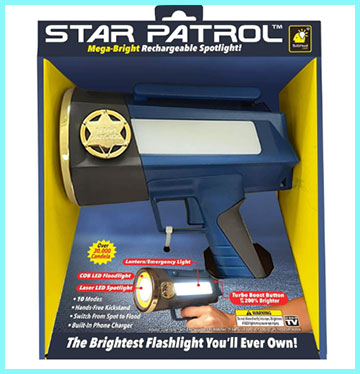
When I first unboxed it, I was surprised by the weight.
It wasn’t heavy in a burdensome way, but it had a density to it that suggested it wasn’t just hollow plastic.
The grip felt secure in my hand, molded with a texture that wouldn’t slip if my hands were wet or gloved.
I plugged it in immediately to get a full charge, which took a few hours via the USB cable—a modern convenience I appreciate over hunting for D-cell batteries.
My first real test came a week later during a weekend camping trip to the mountains.
The darkness out there is absolute; you can’t see your hand in front of your face without help.
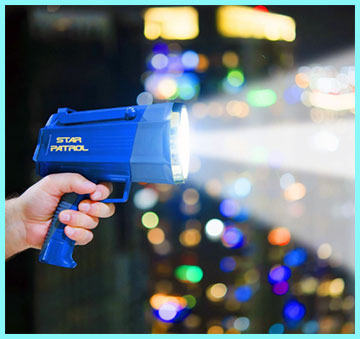
I stepped out of my tent and clicked the Star Patrol into its high spotlight mode. The result was genuinely shocking. It didn’t just light up the path; it punched a hole through the darkness, illuminating a tree line that was easily 300 yards away. The beam was tight and focused, exactly what you want for scanning a perimeter or spotting landmarks in the distance.
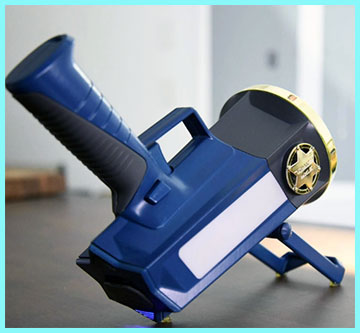
Later that night, I switched to the floodlight mode to set up a late dinner. This is where the kickstand feature became the MVP. I propped the light up on a picnic table, angled it down, and it bathed the entire campsite in a wide, even wash of white light. It wasn’t harsh or blinding like the spotlight beam; it was functional working light. I didn’t have to hold it in my teeth or try to balance it on a rock.
I also tested the emergency features. The SOS mode is intensely bright—almost disorienting if you look directly at it (which you shouldn’t). While I thankfully didn’t need to signal for a rescue, knowing that I had a beacon that could be seen for miles gave me a significant sense of security. I even used the power bank feature to top off my phone, which was hovering around 15%. It’s not a fast charger by any means, but in an emergency, it does the job.
However, it wasn’t all perfect. After about 45 minutes on the highest turbo setting, the body of the light got noticeably warm. It wasn’t burning hot, but it was uncomfortable to hold near the bezel. I also found that the “side light” modes, while useful, can be easy to toggle past accidentally if you are just trying to turn the thing off. But overall, it performed far better than I expected for a consumer-grade spotlight. It felt like a tool, not a toy, and it has since earned a permanent spot in my truck’s emergency kit.
Read More: My Thoughts on Vital Tac Flashlight
Pros Of Star Patrol Spotlight
When analyzing the Star Patrol Spotlight, several features stand out that elevate it above the standard $20 plastic flashlights you find at hardware stores. It is designed to be a multi-functional tool rather than just a light source. Here are the specific benefits that impressed me the most:
- Exceptional Beam Throw and Brightness: The primary job of a spotlight is to see things far away, and this device excels at that. With a rating of 30,000 candelas, the focused beam cuts through fog, light rain, and deep darkness with ease. Unlike standard flashlights that “spill” light everywhere, the Star Patrol keeps the light concentrated, allowing you to identify objects at distances that standard LED torches simply can’t reach. This is invaluable for security purposes; you can check the far end of a large backyard or a fence line without ever leaving your porch. The “Turbo” mode, while a battery drainer, offers a burst of intensity that is blindingly bright, perfect for startling a potential intruder or animal.
- Versatile 2-in-1 Design (Spotlight and Floodlight): Most lights force you to choose between a long-range beam (spotlight) or a wide-area wash (floodlight). The Star Patrol integrates both effectively. The side-mounted COB (Chip on Board) LEDs provide a massive flood of light that is perfect for illuminating a room during a blackout or lighting up a workspace for car repairs. This versatility means you are essentially carrying two different tools in one package. You don’t need to pack a separate lantern for camping; the flood mode, combined with the kickstand, serves that purpose perfectly.
- Integrated Power Bank Capability: In a true emergency, communication is just as important as visibility. The fact that this spotlight includes a USB output port to charge external devices is a massive “pro.” While it won’t charge a tablet or laptop efficiently, it has enough juice to give a dead smartphone a 40-50% charge, which is enough to make emergency calls or check GPS maps. This turns the device from a passive light source into an active survival hub. For hikers or motorists stranded on the side of the road, this feature alone justifies the purchase price.
- Hands-Free Utility with Built-In Kickstand: This seems like a minor design choice, but in practice, it is a game-changer. Trying to fix a flat tire or repair a leaky pipe requires two hands, and holding a flashlight makes those tasks impossible. The integrated kickstand is sturdy and allows you to angle the beam exactly where you need it. It locks into place securely, so the light doesn’t flop over if you bump the table or the ground is uneven. This transforms the light from a handheld unit to a stationary work light instantly.
- Durable and Weather-Resistant Build: The marketing claims “military-grade aluminum,” and while that is a buzzword, the build quality is undeniably tough. The casing feels rigid and can withstand drops on hard surfaces without cracking, unlike cheaper plastic models. It is rated for weather resistance (often IPX4 or similar), meaning it can handle rain and splashing water without shorting out. You don’t have to baby this light; it is built to be thrown in a truck bed, dropped in the dirt, and used in a storm without failing.
Cons Of Star Patrol Spotlight
No product is perfect, and despite the glowing infomercials, the Star Patrol Spotlight has limitations that potential buyers need to be aware of. It is important to look past the hype to see where it might fall short for your specific needs. Here are the drawbacks I discovered during my testing:
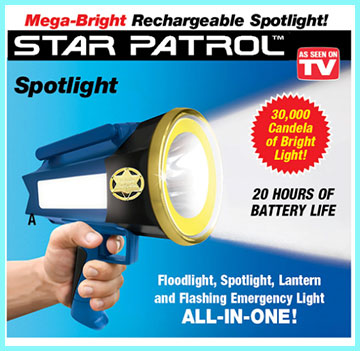
- Battery Life on High Settings is Limited: While the packaging might claim runtimes of 20+ hours, that is almost certainly on the lowest, dimmest setting. When you run the spotlight on its maximum brightness or use the Turbo mode, the battery drains significantly faster—often in under two hours. This is a common issue with high-lumen lithium-ion lights; the physics of creating that much light requires massive energy. If you are planning a long night hike or need continuous bright light for an entire shift, you might find yourself needing a recharge sooner than expected. You cannot simply swap in fresh alkaline batteries; once it dies, you are tethered to a charging cable.
- Confusing Single-Button Interface: To keep the design sleek, the manufacturers opted for a single button to cycle through all the modes (High, Low, Strobe, Flood High, Flood Low, SOS, etc.). This can be incredibly frustrating in a panic situation. If you just want to turn the light off, you often have to click through five or six different flashing and flooding modes to get there. There is no dedicated “off” switch or memory function that returns you to your last used setting. This “cycling” mechanic is a hallmark of cheaper driver circuits and feels clunky compared to premium tactical lights with dedicated switches.
- Bulky Form Factor for casual carry: The Star Patrol is not an Every Day Carry (EDC) flashlight. It is large, with a pistol-grip style handle and a wide bezel that makes it impossible to put in a pocket. It requires a backpack, a glove box, or a dedicated hook to carry. If you are looking for something to clip to your belt while walking the dog, this is overkill and cumbersome. Its size makes it a specific-use tool (emergencies, camping, work) rather than a general-purpose flashlight you keep on your person.
- Long Recharge Time: Because the battery capacity is large (to support the power bank feature), charging the unit from empty to full takes a significant amount of time. Depending on the amperage of the USB wall block you use, it can take 6 to 8 hours to fully replenish. This means if you forget to charge it after a use, it won’t be ready for a quick top-up before you run out the door. It lacks the “fast charging” technology seen in modern smartphones, which can feel agonizingly slow in today’s instant-gratification world.
- Light Temperature is Very “Cool” White: The LED emitters used in this spotlight produce a very harsh, blue-white light (likely around 6500K or higher). While this appears bright to the eye, it can wash out colors and reduce depth perception compared to a “neutral” or “warm” white light. In foggy or smoky conditions, this cool white light tends to reflect back into your eyes (glare) more than a warmer beam would. For nature enthusiasts who want to see the true colors of the woods, the sterile, almost clinical light might be unappealing.
Maintenance Tips For Star Patrol Spotlight
To ensure your Star Patrol Spotlight remains reliable for years, you need to treat it as a piece of electronic equipment rather than just a chunk of plastic and metal. Neglect can kill the battery or ruin the seals. Here are detailed tips to keep your spotlight in fighting shape:
- Manage the Lithium-Ion Battery Health: The most common point of failure for rechargeable lights is the battery dying prematurely due to poor charging habits. Do not leave the light plugged in 24/7; this can degrade the battery chemistry over time. Conversely, do not let the battery sit at 0% for months in storage. If you are keeping this in an emergency kit, pull it out every 3 to 4 months to discharge it slightly and then top it back up to around 80-90%. Lithium batteries prefer to be kept in a “happy medium” state rather than at the extremes of empty or completely full for long periods.
- Keep the Lens and Reflector Clean: The brightness of the spotlight relies entirely on the clarity of the front lens and the reflector cone inside. Fingerprints, dust, and mud splatters can significantly cut down the beam’s throw distance. Use a microfiber cloth (like you would for glasses) and a little bit of water or lens cleaner to gently wipe the lens. Avoid paper towels or rough rags, as the lens is likely plastic or polycarbonate and can scratch easily. Scratches on the lens will diffuse the beam, ruining that tight “spotlight” focus you paid for.
- Check and Lubricate the Seals: If you plan to use this light in the rain, you need to ensure the rubber O-rings and charging port covers are intact. Inspect the rubber flap that covers the USB charging port regularly. If this flap gets torn or doesn’t sit flush, water can get into the electronics and fry the board instantly. If the casing has any screw-off points (like a battery cap), applying a tiny amount of silicone grease to the threads once a year helps keep the water seal tight and prevents the threads from seizing up.
- Store in a Temperature-Controlled Environment: Extreme temperatures are the enemy of batteries and electronics. Avoid leaving the Star Patrol in your car dashboard during the height of summer or the dead of winter if possible. High heat (over 100°F) can cause the battery to swell or leak, and extreme cold can sap the charge temporarily and make the plastic brittle. If you must keep it in a car, store it in the trunk or under a seat where it is insulated from direct sunlight and extreme temperature fluctuations.
- Inspect the Charging Cable and Port: Often, when people think their light is broken, it is actually just a faulty charging cable or a lint-filled port. Periodically check the micro-USB or USB-C port on the light for debris or lint accumulation. Use a can of compressed air or a wooden toothpick to gently clean it out. Ensure the cable you use clicks in firmly; a loose connection can lead to slow charging or heat buildup that could damage the port.
Comparison with Other Brands
The Star Patrol is a strong contender, but it exists in a crowded market. Comparing it to other popular options helps clarify if it is the right specific choice for you. Here is how it stacks up against three major competitors:
- Stanley Fatmax SL10LEDS Rechargeable Spotlight: The Stanley Fatmax is the grandfather of the rechargeable spotlight category and is often found in hardware stores. Comparison: The Stanley is significantly bulkier and heavier than the Star Patrol. It usually features a more ergonomic trigger grip which some users prefer for long periods of holding. However, the Star Patrol generally offers a brighter, whiter beam and more modern features like the USB power bank, which older Fatmax models often lack. The Stanley feels more like a heavy-duty job site tool, while the Star Patrol feels more like a tactical, multi-use survival gadget. If you want pure ruggedness and don’t care about weight, Stanley is great; if you want portability and phone charging, Star Patrol wins.
- Anker Bolder LC90 LED Flashlight: Anker is a giant in the battery and electronics world, and their flashlights are highly rated. Comparison: The Anker LC90 is a traditional tube-style flashlight, not a pistol-grip spotlight. This makes the Anker much easier to carry in a pocket or backpack, but it lacks the massive reflector that gives the Star Patrol its incredible throw distance. The Star Patrol’s kickstand and dedicated floodlight mode make it superior for area lighting (like camping tables), whereas the Anker is strictly a directional beam. Anker’s build quality is often slightly more refined with better anodizing, but it lacks the “do-it-all” versatility of the Star Patrol’s lantern/power bank combo. Choose Anker for walking the dog; choose Star Patrol for stationary lighting and search capabilities.
- Generic “Shadowhawk” or “Tactical” Zoomable Lights (Amazon Brands): You will see thousands of cheap “100,000 Lumen” tactical lights on Amazon that zoom in and out. Comparison: The Star Patrol blows these generic lights out of the water in terms of beam quality. Generic zoomies often have a square, ugly beam when zoomed in and suffer from terrible battery life and flickering issues. The Star Patrol uses a fixed reflector, which physics dictates will always throw light further and cleaner than a zooming lens. While the cheap tactical lights might cost half as much, they rarely deliver even a quarter of the claimed brightness. The Star Patrol offers a more consistent, reliable performance with a better battery ecosystem than the disposable-feeling generic competition.
Also Read: My Thoughts On Smiling Shark Flashlight
Frequently Asked Questions (FAQ)
The charging time varies depending on the power source you use. If you plug it into a high-output wall adapter (like an iPad charger), it typically takes about 4 to 5 hours to reach a full charge. However, if you use a standard low-amp computer USB port or an older phone block, it can take up to 8 hours. The indicator light will usually change color (red to green) to let you know when it is ready.
The Star Patrol is generally rated as water-resistant, not fully waterproof. This means it can handle rain, splashing water, or being dropped in a puddle briefly without issue. However, it is not designed to be submerged underwater for diving or swimming. You should ensure the rubber charging port cover is tightly closed before exposing it to any moisture.
In real-world testing, the beam is effective up to about 300 to 500 yards for clearly identifying large objects. While marketing might claim “visible from miles away,” functional visibility—where you can actually see what you are looking at—is usually around the length of three to four football fields. This is significantly farther than standard household flashlights.
Typically, no; the lithium-ion battery is built into the unit and is not designed to be user-replaceable. This is a trade-off for the sealed, weather-resistant design. Eventually, after several years of use (usually 500+ charge cycles), the battery capacity will diminish, and the entire unit may need to be replaced.
Conclusion
The Star Patrol Spotlight manages to bridge the gap between “As Seen on TV” novelty and legitimate tactical gear. It offers a brightness-to-weight ratio that is genuinely impressive, making it an excellent companion for camping trips, roadside emergencies, and home security. The ability to light up a distant tree line one second and charge your dying phone the next adds a layer of utility that justifies its place in your emergency kit.
While it isn’t perfect—the charging time is slow and the interface can be clunky—it delivers where it counts: turning the dark into day. If you are tired of weak flashlights that leave you guessing what is in the shadows, the Star Patrol is a solid, reliable upgrade that is worth the investment for peace of mind. It’s the kind of tool you hope you never need, but will be incredibly thankful for when the lights go out.