
In a world dominated by flimsy neoprene bags and plastic containers that crack after a month, the Stanley Classic Lunch Box stands out like a relic from a tougher, simpler time. You have likely seen it on job sites, in fishing boats, or perhaps even in your grandfather’s garage, instantly recognizable by its hammered green finish and rugged steel construction. It promises a level of durability that feels almost foreign in our “throwaway” culture, but it also comes with a price tag and a weight that might make you hesitate.
In this review, I am going to break down every aspect of this legendary lunch pail, from its actual storage capacity to how it handles the daily grind of a commute. I will look at whether the lack of insulation is a dealbreaker or a clever design choice, and how it really compares to modern high-tech coolers from brands like Yeti. If you are tired of replacing your lunch bag every year and want something that might actually outlive you, this guide will help you decide if the Stanley is the right investment for your midday meal.
My Experience With The Stanley Classic Lunch Box
I decided to purchase the 10-quart Stanley Classic Lunch Box after a particularly frustrating incident where my soft-sided lunch bag got crushed in the back of my car, turning my sandwich into a sad, flat pancake. I wanted something rigid, something that demanded respect, and honestly, I just loved the vintage aesthetic. I opted for the classic “Hammertone Green” because if you are going to buy a Stanley, you might as well lean into the heritage look.
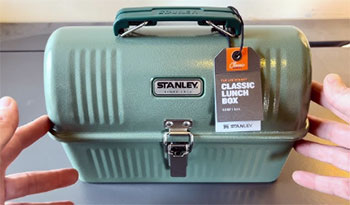
The first thing you notice when you pick it up is the heft.
This is not a lightweight accessory; it feels substantial, made from 0.6mm SPCD steel.
It feels like a tool box, not a lunch box. The latches snap shut with a satisfying, metallic click that lets you know your lunch is practically in a vault.
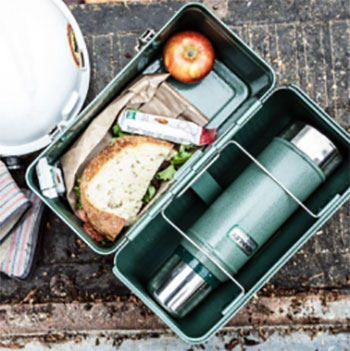
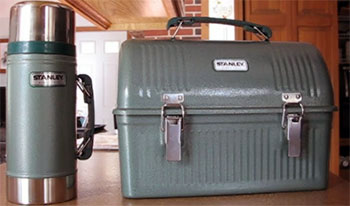
I loved the dome-shaped lid, which houses a clever metal bracket designed to hold a Stanley vacuum bottle. I paired it with my 25oz Classic Thermos, and it snapped right into place, leaving the main compartment wide open for my food containers.
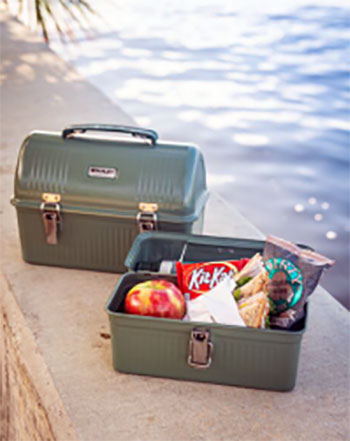
Using it daily brought some interesting revelations. The capacity of the 10-quart version is deceptively large. I could easily fit a large Tupperware container, an apple, a bag of chips, and a soda can with room to spare. The rigidity meant my banana never got bruised, and my chips never got crushed. It felt great to just toss it onto the passenger seat or the floor of the office without worrying about being gentle.
However, the lack of insulation was something I had to adjust to. Unlike modern coolers, this is just a single layer of steel. On a hot summer day, if I left it in the car, the inside would get warm—fast. I quickly learned that this isn’t a cooler; it’s a protective shell. I had to start using a high-quality ice pack if I wanted my yogurt to survive until noon. It also clanks. If you walk around a quiet office, the handle and latches make a bit of noise, announcing your arrival like a cowboy with spurs.
Despite these quirks, I fell in love with the ritual of it. Packing it felt intentional. It became a conversation starter in the break room, with older colleagues reminiscing about their own metal lunch boxes. It forced me to be a bit more organized with my packing, using the thermos for hot soup or cold water and the main bin for solids. It isn’t the most high-tech thermal solution on the market, but in terms of pure protection and style, it won me over completely.
Read More: My Thoughts on Emile Henry Bread Box
Pros Of The Stanley Classic Lunch Box
When evaluating the Stanley Lunch Box, it is clear that its design prioritizes longevity and physical protection above all else. Here are the specific benefits that make it a standout choice for specific users.
- Unmatched Physical Durability: The most obvious advantage is that this thing is built like a tank. Constructed from heavy-duty SPCD steel, it acts as a hard shell that protects your food from physical damage in a way that soft bags simply cannot. You can drop it, kick it, or pile heavy tools on top of it, and your sandwich inside will remain perfectly intact. This makes it ideal for construction workers, landscapers, or anyone who works in a rough environment where a fabric bag would get torn or crushed. It is a “buy it for life” item that will likely last for decades rather than seasons.
- Integrated Thermos Storage: One of the smartest design features is the domed lid with the locking metal bracket. This allows you to securely carry a vacuum bottle (up to 25oz usually) tucked away inside the lid, saving valuable space in the main compartment. It prevents the thermos from rolling around and crushing your other food items during transport. This integration creates a complete “lunch system” where your hydration and your food are locked together in one hand-carry unit. It is a classic design element that maximizes the internal volume efficiency perfectly.
- Easy To Clean And Sanitize: Unlike fabric lunch bags that absorb spills, odors, and stains over time, the smooth steel interior of the Stanley is incredibly hygienic. If a yogurt cup explodes or soup spills, you can simply wipe it out with a wet cloth or rinse it in the sink. There are no seams, zippers, or fabric folds for bacteria and mold to hide in. You can fully sanitize the interior with a disinfectant wipe in seconds, ensuring your food is always in a clean environment. This keeps the lunch box smelling fresh even after years of use, whereas fabric bags often develop a permanent “lunch smell.”
- Classic And Timeless Aesthetic: While functionality is key, the visual appeal of this lunch box is a major “pro” for many buyers. The Hammertone finish and rugged industrial look offer a sense of nostalgia and style that stands out in a sea of generic plastic. It looks professional yet rugged, fitting in just as well in a corporate office as it does on a campsite. Owners often feel a sense of pride in carrying it, and it ages beautifully, with scratches and dents only adding to its character rather than making it look “broken.”
Cons Of The Stanley Classic Lunch Box
It is important to understand that this is a “lunch box” in the traditional sense, not a modern “cooler,” which leads to some significant limitations.
- Zero Thermal Insulation: The biggest drawback for modern users is that this is simply a single-walled metal box with no foam insulation. It will not keep your food cold or hot on its own; in fact, metal conducts heat, so if you leave it in the sun, the inside will heat up like an oven. You are absolutely required to use a high-quality ice pack or a thermos if you want to maintain temperature. This limits its utility for long days in extreme heat unless you pack it strategically with ice. If you are expecting it to perform like a Yeti cooler, you will be sorely disappointed.
- Heavy And Bulky To Carry: Weighing in at nearly 2.5 to 3.7 pounds (depending on the size) empty, this is a heavy piece of gear. Once you load it with a full thermos, an ice pack, and your food, it can easily weigh over 5 or 6 pounds. Carrying this by the handle for a long commute on a train or bus can become tiresome compared to slinging a lightweight bag over your shoulder. The rigid shape also means it doesn’t compress; it takes up the same amount of space in your backpack or car whether it is full or empty. It is not the right choice for minimalists or those who walk long distances to work.
- Prone To Rust And Paint Chipping: While the steel is tough, the paint finish is not invincible. If you bang it against hard surfaces, the paint can chip, exposing the raw steel underneath to moisture. Over time, these exposed spots, as well as the hinges and latches, can develop rust if not dried properly after cleaning. You have to be mindful of keeping it dry and possibly touching up deep scratches if you want to prevent corrosion. It requires a bit more active maintenance than a plastic box that is impervious to water.
- Noise And Rattle: The metal-on-metal construction means this lunch box is not silent. The handle can squeak, the latches click loudly, and the contents can rattle around against the hard steel walls if not packed tightly. If you are walking into a quiet library or meeting room, you will sound like a walking toolbox. Some users find the handle rattle annoying during a walk, often requiring them to hold the handle tight against the lid to dampen the sound.
Maintenance Tips For The Stanley Classic Lunch Box
Because this is a steel product, you cannot just treat it like a piece of plastic. A little bit of care will ensure it lasts for generations.
- Hand Wash And Dry Immediately: You should never put your Stanley Lunch Box in the dishwasher. The high heat and harsh detergents can strip the paint finish and force water into the hinge mechanisms where it can’t escape. Wash it by hand with warm soapy water and a soft sponge. Most importantly, dry it thoroughly with a towel immediately after washing. Leaving it to air dry can lead to water spots and surface rust on the unpainted metal parts like the latches and hinge pins.
- Lubricate Moving Parts: The hinges and handle brackets are metal-on-metal friction points that can squeak or stiffen over time. Once or twice a year, apply a tiny drop of food-safe mineral oil or even a little WD-40 (if you are careful) to the hinge pins. This keeps the action smooth and prevents the metal from grinding down or seizing up. It also adds a protective layer against moisture for those hard-to-reach crevices. Wipe away any excess oil so it doesn’t attract dirt or get on your hands.
- Use Liners To Prevent Scratches: To protect the interior from scratches and to reduce noise, consider adding a liner. You can cut a piece of silicone mat or even a thin cork sheet to place at the bottom of the box. This prevents your glass containers or metal utensils from clanking against the bottom steel. It also makes cleaning up crumbs easier—you just pull out the liner and shake it off. Protecting the interior coating helps prevent rust from forming on the inside floor of the box.
- Address Rust Spots Early: If you notice a chip in the paint or a small spot of rust forming, treat it immediately. Use a fine-grit sandpaper or steel wool to gently buff away the rust. You can then apply a clear nail polish or a matching model paint to seal the exposed steel. Catching these spots early stops the rust from spreading underneath the paint and causing it to bubble. Think of it like car maintenance; a little touch-up paint goes a long way.
Comparison with Other Brands
The lunch box market is divided between the “tough cooler” crowd and the “classic carrier” crowd. Here is how the Stanley stacks up against three of its biggest rivals.
- Yeti Daytrip Lunch Box: This is the modern, high-tech equivalent designed for performance. Comparison: The Yeti is a soft-but-rigid cooler made with high-density fabric and top-tier insulation. Unlike the Stanley, the Yeti is designed specifically to keep food cold for hours without needing a massive ice pack. However, the Yeti is significantly more expensive (often double the price) and holds less volume than the 10qt Stanley. The Yeti is better if your priority is temperature control and water resistance. The Stanley is better if your priority is crush protection, capacity, and that classic vintage look.
- Engel Cooler/Dry Box (13 Qt): Engel makes a hard plastic cooler that is airtight and insulated. Comparison: The Engel is a beast of utility; it is completely waterproof, floats, and keeps food cold for over a day. You can sit on the Engel, and it is sealed with a rubber gasket, unlike the unsealed Stanley. However, the Engel looks like a piece of medical or fishing equipment—it lacks the style and charm of the Stanley. The Stanley is a “lunch box,” while the Engel is a “personal cooler.” If you work on a boat or in the rain, get the Engel. If you work on a job site or office, the Stanley is more appropriate.
- Igloo Playmate (The Boss): The iconic tent-top plastic cooler that everyone knows. Comparison: The Igloo is lightweight, cheap, and has decent insulation compared to the zero insulation of the Stanley. However, the latch mechanism on the Playmate is notorious for breaking or popping open if dropped. The Stanley’s steel latches are vastly superior in terms of security. The Igloo is great for a casual picnic, but it won’t survive a crushing blow like the Stanley will. The Stanley also holds a thermos internally, whereas the Igloo requires you to carry your drink separately.
Also Read: My Thoughts On Chike Coffee Protein
Frequently Asked Questions (FAQ)
No, the classic metal lunch box is single-walled steel and has no thermal insulation properties. It will not keep food cold or hot on its own. You must use a vacuum thermos for hot items and an ice pack for cold items to maintain temperature.
The 10-quart lunch box is designed to fit the Stanley Classic Vacuum Bottle in 25oz (0.75L) or 16oz (0.47L) sizes. The smaller 5.5-quart lunch box fits the 16oz or 20oz mugs. The metal bracket in the lid holds these specific bottles securely in place.
Yes, you can absolutely place the entire lunch box in the refrigerator overnight. Because it is made of metal, it will cool down quickly and help keep your food cold for a short period after you take it out. However, once removed from the fridge, it will warm up to room temperature relatively fast without an ice pack.
It can rust if the protective paint layer is chipped or scratched, exposing the raw steel. The hinges and latches are also susceptible to surface rust if left wet. To prevent this, always dry the box thoroughly after washing and avoid using abrasive scrubbers that damage the finish.
Conclusion
The Stanley Classic Lunch Box is not just a container; it is a statement against the disposable nature of modern goods. It offers a level of physical protection and durability that is virtually unmatched in its category, ensuring your lunch survives the roughest commutes or job sites. While it lacks the thermal insulation of modern coolers, its spacious interior and clever thermos integration make it a versatile system for those willing to pack an ice pack.
If you value heritage, durability, and a product that feels substantial in your hand, this lunch box is absolutely worth the investment. It requires a bit more care than a plastic tub, but it rewards you with a lifetime of service. For the worker, the adventurer, or the style-conscious commuter, the Stanley remains the undisputed king of the lunch hour.