
Switching to a metal cutting board feels like upgrading from a sedan to a tank; you immediately notice the durability, but you are also wary of the trade-offs. You are here because you are tired of scrubbing mold from plastic or oiling wood, and you want to know if stainless steel or titanium is the ultimate kitchen upgrade. In this article, I will compare these two metal titans, breaking down their hygiene benefits, knife impact, and daily usability to help you decide which one deserves a spot on your counter.
A Brief Comparison Table
| Feature | Stainless Steel Cutting Board | Titanium Cutting Board |
| Primary Material | 304 or 316 Food-Grade Stainless Steel | Pure Titanium or Titanium Alloy |
| Knife Friendliness | Low (Very hard on edges) | Medium-High (Softer than steel) |
| Weight | Heavy and substantial | Incredible lightweight |
| Scratch Resistance | Moderate (Will show surface scratches) | High (Self-healing oxide layer) |
| Antibacterial Properties | Passive (Non-porous surface) | Active (Photocatalytic effect) |
| Price Point | Affordable ($20 – $60) | Expensive ($80 – $200+) |
| Noise Level | High (Loud clattering) | Moderate (Duller sound) |
| Maintenance | Dishwasher safe, odor neutralizing | Dishwasher safe, non-reactive |
My Experience With Stainless Steel Cutting Boards
I first bought a stainless steel cutting board after reading a horror story about bacteria living deep inside the grooves of my plastic boards. I wanted something sterile, industrial, and foolproof. When the board arrived, the first thing I noticed was the weight. It felt like a piece of armor. I placed it on my counter, and it looked sleek, matching my appliances perfectly. It gave my kitchen an immediate professional upgrade, at least visually.
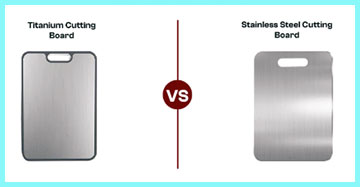
However, the first time I chopped an onion, I realized the sensory experience was vastly different from wood.
The sound was the first shock—a loud, metallic clack every time the knife hit the surface.
It wasn’t just a noise; it was a feeling that vibrated up the handle of my chef’s knife.
It felt harsh. But then came the cleanup.
This is where the stainless steel board absolutely won me over. I simply rinsed it under hot water, and the onion smell vanished instantly. There was no scrubbing, no lingering garlic scent, and no worry about beet juice staining the surface.
I used it religiously for raw meat prep. There is a specific peace of mind that comes from prepping raw chicken on a sheet of steel. I knew that no matter what, I could sanitize it 100%. I could even throw it in the dishwasher on the hottest cycle without it warping or cracking. But over time, I noticed my knives were suffering. I found myself honing my blades before every single meal, which became a chore. The board was winning the war against my cutlery.
Eventually, I relegated the stainless steel board to specific tasks. It became my go-to for rolling out dough—since the cold metal keeps butter from melting—and for seasoning meat, but I stopped doing heavy chopping on it. It is a tool I respect for its hygiene, but I learned to fear it for my Japanese knives.
Read More: My Thoughts On Yamato titanium cutting board
Pros Of Stainless Steel Cutting Boards
When discussing the advantages of stainless steel cutting boards, we are primarily talking about sanitation and longevity, two areas where this material absolutely dominates traditional options.
- Unmatched Hygiene And Sanitation: The single biggest reason to switch to a stainless steel cutting board is hygiene. Unlike wood, which is porous and can absorb meat juices, or plastic, which develops deep grooves where bacteria hide, stainless steel is completely non-porous. This means that when you wash it, you are removing 100% of the contaminants. For anyone who is germ-conscious or prepares a lot of raw poultry and fish, this peace of mind is invaluable. You never have to wonder if you scrubbed hard enough; the surface simply does not hold onto pathogens.
- Odor Neutralization Capabilities: One of the most fascinating features of stainless steel is its chemical ability to neutralize strong odors. If you have ever chopped garlic or onions on a plastic board, you know that the smell can linger for days, eventually transferring to your sliced fruit. Stainless steel binds with sulfur compounds—the stuff that makes garlic and onions smell—and neutralizes them. By simply rubbing your hands on the board while washing it under water, you can even remove the smell from your skin. It acts like a giant “soap bar” of steel for your kitchen odors.
- Extreme Durability And Longevity: A stainless steel board is essentially a lifetime purchase. It will not crack, warp, split, or peel. You cannot break it by dropping it. It is impervious to water damage, unlike wood which rots if left wet, and it won’t melt if you accidentally set a hot pan on it. In fact, it doubles as an excellent trivet for hot pots. This durability makes it incredibly cost-effective in the long run. While you might replace a plastic board every year and a wood board every few years, your stainless steel board will look largely the same ten years from now as it did the day you bought it.
- Low Maintenance And Dishwasher Safety: We all love low-maintenance kitchen tools. Wood boards require oiling, waxing, and careful hand washing. Stainless steel requires none of that. You can toss it in the dishwasher with the rest of your plates, use harsh detergents, or scour it with steel wool if you really wanted to (though not recommended for the finish). It dries instantly and doesn’t need to be propped up to prevent warping. For a busy home cook who hates the ritual of board maintenance, this “set it and forget it” nature is a massive benefit.
- Multi-Functional Kitchen Tool: Beyond cutting, stainless steel boards offer utility that other materials cannot. Because metal conducts temperature efficiently, you can place the board in the freezer for ten minutes and use it as a cold surface for working with pastry or tempering chocolate. The cold surface keeps butter in pie crusts from melting, which is a trick professional pastry chefs use. Conversely, because it is heat resistant, it saves your countertops from scorching hot baking sheets.
Cons Of Stainless Steel Cutting Boards
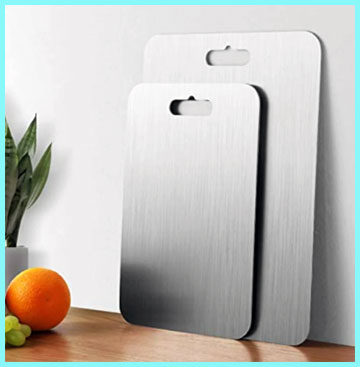
Despite the sanitary benefits, there are significant drawbacks to stainless steel that make it a controversial choice for serious cooking enthusiasts.
- Rapid Destruction Of Knife Edges: This is the most significant disadvantage and the reason many chefs refuse to use steel boards. Knife blades are made of steel.7 When you strike a steel blade against a steel board, you are essentially banging two materials of similar hardness against each other. The board wins. Your knife edge will roll and dull significantly faster than it would on wood or soft plastic. If you own expensive high-carbon steel knives, using them on a stainless steel board is effectively ruining them. You will need to sharpen your knives much more frequently, which wears down the blade over time.
- Unpleasant Acoustic Experience: Cooking is a sensory experience, and sound plays a big role. The sound of a knife hitting a wooden board is a dull, satisfying thud. The sound of a knife hitting stainless steel is a high-pitched, metallic clatter. It can be jarring and loud, especially if you are chopping quickly. If you have sensitive ears or live in a household where you cook late at night while others are sleeping, the noise can be genuinely disruptive. It feels less like cooking and more like industrial work.
- Slippery Surface Hazard: Wood and plastic have a natural texture that grips food slightly, holding an onion in place while you dice it. Stainless steel is incredibly smooth. This means that slippery foods—like tomatoes, skinless chicken breast, or peppers—can slide across the surface while you are trying to cut them. This lack of friction can be dangerous if you are not careful, increasing the risk of the knife slipping and cutting your finger. While some boards come with textured surfaces, they still lack the “grip” of natural grain.
- Surface Scratching And Aesthetics: While the board itself won’t break, it will not stay looking pristine. As you cut, your knife will leave scratches on the polished surface of the steel. Over time, the mirror finish will become a patina of scratches. While this doesn’t affect the function, if you bought the board for its sleek, shiny look, you might be disappointed to see it scuffed up within the first week of use. It is rugged, but it doesn’t hide its battle scars well.
My Experience With Titanium Cutting Boards
After my conflict with the stainless steel board, I heard about titanium. It was marketed as the “holy grail”—lighter than steel, stronger, and crucially, softer on knives. I bit the bullet and ordered one, despite the significantly higher price tag. When I pulled the titanium board out of the box, the first thing that shocked me was the weight. It felt impossibly light compared to the steel slab I was used to. It felt like holding a clipboard rather than a kitchen tool.
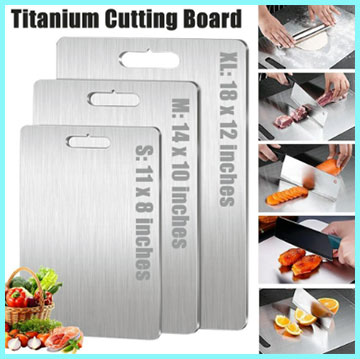
I decided to test it with the same onion test.
I placed it down—most come with silicone feet because the metal is so light it would otherwise slide—and made my first cut.
The sound was different. It wasn’t the dull thud of wood, but it wasn’t the harsh clack of steel either.
It was a muted, lower-toned metallic sound.
It was tolerable.
The cutting feel was distinct.
I could feel that the titanium had a slight “give” or softness compared to the rigid stainless steel.
It didn’t feel like I was destroying my knife edge with every stroke. I spent a week prepping dinners on it, and while my knife did dull faster than it would on end-grain walnut, it held its edge significantly longer than it did on stainless steel.
What really impressed me was the residue factor. Titanium is naturally biocompatible and non-reactive. I cut acidic lemons and tomatoes on it, and there was absolutely no metallic taste transferred to the food, something I occasionally suspected with the stainless steel board. Cleaning it was just as easy—rinse and wipe. However, the surface did scratch. In fact, it scratched very quickly. Titanium is softer than steel, so my knife left visible marks almost immediately. But unlike plastic grooves, these scratches felt shallow and didn’t seem to hold gunk. It felt like a premium, futuristic piece of equipment that solved many of the steel board’s problems, albeit at a cost.
Pros Of Titanium Cutting Boards
Titanium is often touted as the premium alternative to stainless steel, and for good reason. It offers a unique set of properties that address the biggest complaints people have with steel.
- Superior Knife Edge Retention: The primary advantage titanium has over stainless steel is that it is softer. Pure titanium is less hard on the Rockwell scale than the hardened steel used in most quality chef knives. This means that when the knife hits the board, the board takes the damage rather than the blade edge. While it is still not as gentle as soft wood or rubber, it is a massive improvement over stainless steel. You can use this board for daily chopping without feeling like you are actively blunting your tools with every stroke.
- Biocompatible And Non-Toxic Material: Titanium is used in medical implants because the body does not reject it; it is completely non-toxic and chemically inert. This is excellent for cooking. It will not leach any metallic ions into your food, even when you are cutting highly acidic ingredients like citrus or vinegar-based marinades. There is zero risk of rust or corrosion, ever. For people with severe metal allergies (like nickel allergies often triggered by low-grade stainless steel), titanium is the safest metal option available.
- Antibacterial Photocatalytic Effect: This is a science-heavy benefit that is often overlooked. Titanium dioxide, which naturally forms on the surface of titanium, has photocatalytic properties. This means that when exposed to light (UV or even visible light), it creates an oxidizing effect that can help break down bacteria and organic compounds. While you still need to wash the board, this adds an active layer of hygiene that stainless steel (which is passive) does not have. It is arguably the most sanitary material you can bring into your kitchen.
- Incredible Strength-To-Weight Ratio: Titanium is famous for being as strong as steel but 45% lighter. In a kitchen context, this makes the board incredibly easy to handle. You can lift it with two fingers to scrape chopped vegetables into a pot. If you have wrist issues or arthritis, or simply hate lugging around a heavy butcher block or a dense steel slab, the featherlight nature of titanium is a joy to use. It makes the physical act of cooking and cleaning feel less laborious.
- Self-Healing Oxide Layer: While titanium does scratch, it has a unique property where the oxide layer on the surface regenerates instantly upon exposure to air. This protects the board from deep corrosion or pitting in the scratches. The scratches remain visible—titanium boards will develop a unique patina of use—but they do not compromise the structural integrity or the sanitary nature of the board.
Cons Of Titanium Cutting Boards
While titanium is an impressive material, it is not a magic solution. It comes with its own set of frustrations, largely related to cost and physical properties.
- Prohibitive Cost Entry: The elephant in the room is the price. Titanium is difficult to mine and refine, and that cost is passed on to you. A decent-sized titanium cutting board can cost three to five times as much as a stainless steel equivalent. You are paying for the material science. For a cutting board—a simple flat surface—this can feel like an extravagant expense. If you are on a tight budget, it is very hard to justify the price jump when a plastic board costs ten dollars.
- Surface Scratches Easily: Because titanium is softer than your steel knife, it will scratch. In fact, it scratches very easily. If you are a perfectionist who wants your kitchen gear to look brand new forever, a titanium board will drive you crazy. After just a few uses, the surface will be covered in fine lines and cut marks. Unlike wood, which can be sanded down, or plastic, which is cheap to replace, these marks are permanent scars on your expensive investment.
- Flexibility Issues in Thin Boards: To keep costs down, many manufacturers make titanium boards quite thin. Because titanium is strong, it won’t break, but thin sheets can have a bit of flex or “springiness” to them. If the board isn’t supported properly or if it is too thin, it might not feel as solid and grounded as a thick steel or wood board. It can feel a bit flimsy, which is disconcerting when you are wielding a sharp knife.
- Still Louder Than Wood: While it is quieter than stainless steel, titanium is still metal. It is not silent. You will still get a metallic tapping sound as you chop. If you are used to the dampening acoustic absorption of a thick wooden block, titanium will still sound harsh. It lacks the “warmth” of natural materials, both in touch and in sound.
Also Read: My Thoughts On Titan Carve Cutting Board
Frequently Asked Questions (FAQ)
The main cons are the high price, the fact that they scratch easily due to being softer than steel knives, and they still produce a metallic noise during use.
Titanium is arguably the healthiest metal option due to its biocompatibility and antibacterial properties, but wood (specifically bacteria-fighting woods like maple) is often considered the best overall for knife health and safety.
Titanium is generally considered the best metal because it is lighter, non-reactive, and gentler on knife edges compared to stainless steel.
Both are healthy and sanitary, but titanium is slightly better as it is 100% non-reactive and hypoallergenic, whereas some lower-grade stainless steels can leach small amounts of nickel or iron into acidic foods.
Conclusion
If your priority is a board that is indestructible, extremely affordable, and offers the ultimate odor neutralization for things like garlic and onions, the Stainless Steel Cutting Board is your best bet. It is the perfect “utility” board for raw meat prep or messy tasks where you want to prioritize sterilization over knife sharpness.
However, if you are willing to invest in a premium tool that saves your wrist from heavy lifting, spares your knife edges from immediate dulling, and offers the highest level of biocompatible hygiene, the Titanium Cutting Board is the superior choice. It bridges the gap between the sanitation of metal and the usability of softer materials, making it a modern essential for the health-conscious cook.