
You know that sinking feeling when you turn the key or pull the cord, and… nothing happens? It’s usually the gas. Modern fuel degrades faster than ever, absorbing moisture and turning into a gummy mess that clogs carburetors and injectors. That is where fuel additives come in to save the day.
I have spent years wrenching on small engines and storing classic cars, so I have learned the hard way that not all additives do the same job. Today, I am breaking down the battle between Sta-Bil and HEET to help you decide which bottle deserves a spot on your shelf.
A Brief Comparison Table
| Feature | Sta-Bil Storage | HEET (Yellow Bottle) |
| Primary Use | Long-term fuel stabilization & corrosion prevention | Water removal & gas-line antifreeze |
| Active Base | Petroleum distillates (No Alcohol) | Methanol (Alcohol-based) |
| Treat Rate | 1 oz treats 2.5 gallons | 12 oz bottle treats up to 20 gallons |
| Best For | Storage (Winterizing mowers, boats, classic cars) | Cold snaps, removing water, preventing frozen lines |
| Shelf Life | ~2 years after opening (5 years unopened) | Indefinite (if seal is unbroken) |
| Effect on Phase Separation | Delays separation by keeping fuel fresh | Absorbs water to burn it through combustion |
My Experience With Sta-Bil Storage Fuel Stabilizer
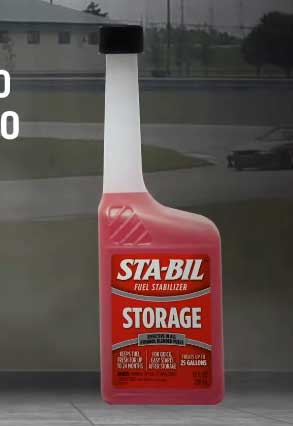
I still remember the winter I neglected my lawn tractor.
I parked it in the shed in late October, thinking, “It’ll be fine,” and walked away.
Fast forward to April, and that engine wouldn’t even cough.
I spent a frustrating Saturday afternoon rebuilding a carburetor that was coated in a green, varnish-like sludge.
That was the last time I stored anything without Sta-Bil.
Since then, Sta-Bil Storage (the red liquid) has been my go-to insurance policy for anything that sits for more than thirty days.
I use it in everything: my backup generator, the snowblower during summer, and my chainsaw.
The peace of mind is undeniable.
I have a 1960s vintage car that sometimes sits for three or four months during the salty road season. I pour the recommended amount into the tank at the gas station, drive it home to ensure the treated fuel reaches the engine, and park it. When I come back months later, it fires up on the first crank as if I just turned it off yesterday.
One specific instance really sold me on it. I had a portable generator stored for nearly eighteen months with a full tank of treated gas. When a power outage hit, I was nervous. I pulled the recoil starter, and it hummed to life instantly. The fuel smelled fresh, not like that rotten varnish smell old gas gets. It is not a magic mechanic in a bottle—it won’t fix a broken part—but as a preventative measure, it has saved me hundreds of dollars in repair bills and countless hours of frustration.
Pros Of Sta-Bil Storage Fuel Stabilizer
- Industry-Standard Corrosion Protection: This is arguably the biggest selling point for long-term storage. When fuel sits, especially ethanol-blended fuel, it attracts moisture from the air.1 This moisture can rust the inside of a steel gas tank or corrode aluminum carburetor bowls.2 Sta-Bil contains specialized chemical corrosion inhibitors that coat these metal surfaces.3 In my usage, I have pulled apart carburetors that had treated fuel sitting in them for a year, and the bowls looked brand new. Without this protection, you often find a white, powdery aluminum oxide corrosion that clogs jets. For anyone living in humid climates or near the coast, this protection is critical because moisture is practically guaranteed to enter your vented fuel system.
- Prevents Gum and Varnish Formation: Gasoline is a complex mixture of chemicals that are volatile.4 Over time, the lighter components evaporate, leaving behind heavier, sticky chains of molecules. This is what we call “varnish.” It glues float needles shut and blocks tiny pilot jets. Sta-Bil works by chemically slowing down this oxidation process.5 I have found that untreated gas can start to smell bad and turn yellow in as little as 30 to 60 days. With this stabilizer, I have kept fuel in a jerry can for over a year, and it retained that sharp, chemical “fresh gas” smell. It ensures that the fuel stays liquid and combustible rather than turning into the thick molasses that ruins small engines.
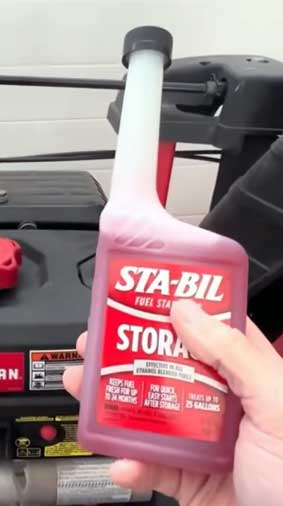
- Effective for Ethanol-Blended Fuels: Most pump gas today is E10 (10% ethanol) or even E15.6 Ethanol is hygroscopic, meaning it loves to absorb water.7 While Sta-Bil Storage isn’t a “water remover” in the same aggressive sense as HEET, it stabilizes the fuel-ethanol blend to prevent phase separation for up to 24 months. Phase separation is a nightmare scenario where the water/ethanol mix drops to the bottom of the tank, leaving low-octane gasoline on top. By keeping the fuel fresh and stable, Sta-Bil delays this process significantly. For modern engines that are forced to run on pump gas, this is a massive benefit, as phase-separated fuel can destroy an engine in minutes by running it lean.
- Versatility Across Engine Types: You don’t need a separate bottle for your weed whacker and your boat.8 I appreciate that I can use the same red bottle for my 2-cycle mix (gas and oil) and my 4-cycle straight gas engines. It is safe for fuel-injected cars, carbureted motorcycles, and even marine engines (though they have a specific marine blue formula, the red storage works fine for general use). This simplifies my shelf. I don’t have to worry about cross-contamination or buying five different products. Whether I am stabilizing a 50:1 mix for a leaf blower or a 20-gallon tank in a classic truck, the chemistry works effectively without harming catalytic converters or oxygen sensors.
- Cost-Effective Insurance: When you look at the price per ounce versus the cost of a repair, the math is overwhelmingly in favor of using it. A large 32-ounce bottle costs relatively little and treats up to 80 gallons of fuel. That breaks down to just pennies per gallon. Compare that to the cost of a small engine repair shop charging you $100+ to clean a carburetor, or the cost of draining and disposing of 10 gallons of bad gas. I look at it as a cheap subscription to a “working engine.” Even if I end up using the fuel faster than expected, I haven’t wasted money because the stabilizers also contain mild cleaners that help maintain the system while it runs.
Cons Of Sta-Bil Storage Fuel Stabilizer
- The Dosing Bottle Can Be Frustrating: While the concept of the “measure-pour” bottle is great, the execution is sometimes messy. The bottle has a second neck that fills up when you squeeze it to measure out an ounce. However, I have found that if you squeeze too hard or tip it too fast, it splashes or leaks down the side of the bottle. You end up with red stabilizer on your hands, and it has a very distinct, chemical odor that is hard to wash off. It also requires you to be fairly precise. If you have a 1-gallon gas can, measuring exactly 0.4 ounces (since 1 oz treats 2.5 gallons) is a bit of a guessing game. I usually just overdose it slightly to be safe, but a better dispensing mechanism would be a huge improvement.
- Does Not “Fix” Already Bad Fuel: This is a common misconception that leads to disappointment. If your gas is already smelling like rotten eggs or has turned dark orange, adding Sta-Bil will not magically turn it back into high-octane premium.9 It is a preservative, not a resurrection serum. I have seen people pour this into a car that has been sitting for five years hoping it will start, and it won’t. You have to add it before the fuel goes bad. Once the chemical degradation has happened, the varnish is there, and no amount of stabilizer will reverse that chemical reaction.10 You still have to drain bad gas, which makes this product strictly proactive, not reactive.
- Limited Shelf Life After Opening: Unlike some additives that last indefinitely, Sta-Bil has a clock that starts ticking once you crack the seal. The company states it is most effective for about two years after opening.11 Over time, the clear red liquid can darken or even develop flakes at the bottom.12 I have had to throw away half-full bottles because I bought the giant jug and didn’t use it fast enough. It feels wasteful. You have to remember to write the date you opened it on the bottle with a marker. If you use expired stabilizer, you are essentially adding ineffective oil to your gas, which offers zero protection against the very varnish you are trying to prevent.
- Doesn’t Remove Large Amounts of Water: While it helps prevent corrosion caused by moisture, it is not a water remover like HEET. If you have a significant amount of water in your tank—say, from a leaky gas cap or a bad batch from the station—Sta-Bil won’t absorb that water and burn it through. The water will still settle at the bottom. In scenarios where water contamination is the primary concern rather than fuel oxidation, this product falls short. You would need to add a separate water remover or drain the tank completely, as Sta-Bil is focused purely on chemical stability.
- Confusion with Product Variants: The brand has expanded so much that it can be confusing for the average user. There is Red (Storage), Blue (Marine), Orange (360 Protection), and now even a Diesel formula.13 I have stood in the aisle at the auto parts store watching people struggle to decide between the Red and the Orange. The Orange bottle claims to release a vapor that protects the tank above the fuel line, which sounds better, but the Red is the classic “storage” formula. This overlap in marketing can make you feel like you bought the “wrong” one if you bought Red for ethanol fuel, even though Red handles ethanol just fine. It creates unnecessary decision fatigue.
Read more: Comparison Of Kendall Oil And Mobil 1
Maintenance Tips For Sta-Bil Storage Fuel Stabilizer
- Run the Engine After Treating: This is the most critical step that many people skip. Simply pouring the stabilizer into the tank is not enough. You must run the engine for at least 5 to 10 minutes afterwards. Why? Because the gas currently sitting in your fuel lines, fuel pump, and carburetor bowl is untreated. If you just pour it in the tank and shut the engine off, that untreated gas in the carb will still rot and clog the jets over winter. I always add the Sta-Bil at the gas station, then the drive home mixes it and ensures the treated fuel has circulated through the entire system, providing protection from the tank to the injector tip.
- Fill the Tank to 95% Capacity: When storing a vehicle or equipment, you should combine the stabilizer with a nearly full tank of gas. Empty space in a gas tank is the enemy. Temperature fluctuations cause the air inside the tank to expand and contract, which draws in damp air from outside. This condensation forms water droplets on the exposed tank walls. By filling the tank almost to the top (leaving just a little room for expansion), you minimize the surface area exposed to air. Sta-Bil works best when it is protecting a full volume of fuel rather than a small puddle at the bottom of a tank that is prone to rapid oxidation.
- Store the Bottle Correctly: As I mentioned regarding the shelf life, how you store the bottle matters. I keep my bottle in a cool, dark cabinet in the garage. Sunlight and extreme heat can degrade the chemical compounds in the stabilizer itself. If you leave the bottle on a window sill or in the bed of a truck in the summer sun, it will lose potency much faster. Also, make sure the cap is screwed on incredibly tight. Oxygen is the enemy of the stabilizer just as it is the enemy of the fuel.14 I always squeeze the bottle slightly before capping to remove a bit of excess air, though that is just my personal habit.
- Check for Sediment Before Use: Before I pour Sta-Bil into any tank, I always hold the bottle up to the light. I am looking for sediment or crystallization. Sometimes, especially with older bottles, you will see little red flakes floating at the bottom.15 If you see this, do not use it. Those solid particles can clog your fuel filter or injector screens. It means the product has oxidized and gone bad. It is better to spend the few dollars on a fresh bottle than to introduce solid contaminants into your fuel system. If the liquid is clear and bright red, you are good to go.
My Experience With HEET Gas-Line Antifreeze
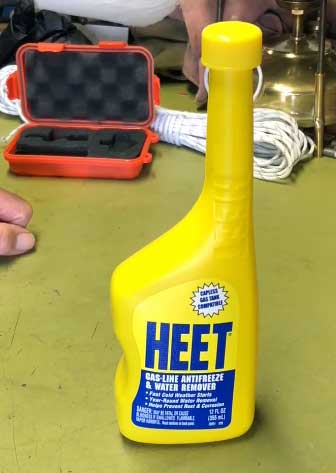
Living in a region where the temperature drops well below freezing, I learned about HEET the hard way during my college years.
I was driving a beat-up sedan that had a habit of sputtering whenever the thermometer dipped into the single digits.
One particularly brutal morning, the car would crank but wouldn’t catch.
I was stranded in a parking lot with the wind howling, convinced my fuel pump had died.
A tow truck driver pulled up, laughed, and handed me a bright yellow bottle. “You got frozen lines, kid,” he said.
I poured it in, waited a few minutes, and the car roared to life. It felt like a magic trick.
Since that day, I always keep a bottle of the yellow HEET in my trunk during winter months. It is not something I use every fill-up like some people do with upper cylinder lubricants, but it is my emergency fix and my preventative measure when a polar vortex is in the forecast. I have also used it when I accidentally bought a tank of “bad gas” from a shady station.
You know the feeling—you fill up, merge onto the highway, and suddenly the engine hesitates or runs rough. That is usually water contamination. Dumping a bottle of HEET in usually clears that stumble up within ten miles as it absorbs the water and helps it pass through the combustion chamber.
I recently used it on my snowblower as well. It was surging, revving up and down on its own, which is a classic sign of water sitting in the carburetor bowl. Instead of tearing the whole carburetor apart in the freezing cold, I drained the tank, added fresh gas with a splash of HEET, and let it run. The surging smoothed out after about five minutes. It saved me from having to do a rebuild with frozen fingers. While I don’t rely on it for long-term storage like I do with Sta-Bil, for immediate water issues or freezing conditions, it is the first tool I grab.
Pros Of HEET Gas-Line Antifreeze
- Rapid Water Removal: This is the primary reason HEET exists, and it excels at it. Water in your fuel tank is heavier than gasoline, so it sinks to the bottom where the fuel pickup is. This water can freeze in the lines or simply prevent the engine from firing because engines can’t burn water. HEET (the yellow bottle) is methanol-based. Methanol is hygroscopic, meaning it absorbs water. It binds to the water molecules, effectively suspending them in the fuel mixture so they can pass through the fuel filter, into the engine, and be vaporized during combustion. I have seen this clear up a rough idle caused by condensation in minutes. If you have ever left your gas cap loose in a rainstorm, this is the cheapest and fastest fix available before you resort to draining the tank.
- Prevents Frozen Fuel Lines: In extreme cold, even a tiny amount of moisture in your fuel line can turn into an ice plug. This stops the flow of fuel completely, leaving you stranded. I view HEET as antifreeze for your gas tank. By bonding with the water, it lowers the freezing point of that moisture significantly. I used to struggle with my truck freezing up when parked outside in -20 degree weather. Since I started tossing a bottle of this in the tank before big freezes, I haven’t had a single issue with fuel starvation. For anyone living in the Rust Belt or Canada, this reliability during winter is worth its weight in gold.
- Safe for Catalytic Converters and Oxygen Sensors: There is often worry about pouring additives into modern cars because the emissions systems are so sensitive. I have used HEET in vehicles ranging from a 1990s pickup to a 2018 crossover with zero “Check Engine” lights appearing. The formula is designed to burn clean. It doesn’t leave behind ash or deposits that would coat the delicate honeycomb structure of a catalytic converter or foul the tip of an O2 sensor. This safety profile makes it a low-risk solution for the average driver who just wants their car to start without worrying about expensive exhaust repairs down the road.
- Incredibly Affordable and Available: You can find this stuff everywhere—gas stations, grocery stores, dollar stores, and auto parts shops. It usually costs only a few dollars per bottle. This accessibility is a huge pro. If you are on a road trip and start experiencing fuel issues, you don’t have to hunt for a specialty speed shop. You can just pull into the next travel stop and grab a bottle. The low price point also means you don’t hesitate to use it. Unlike expensive system cleaners where you might wonder, “Do I really need this?”, with HEET, if you suspect water or cold, you just use it because it costs less than a cup of coffee.
- Simple “One-Shot” Application: There is no measuring cup needed, which I love. The bottle is designed to treat up to 20 gallons, which covers the tank size of most passenger cars and light trucks. You don’t have to calculate ratios or store a half-empty smelly bottle in your trunk. You rip off the seal, pour the entire contents into the tank, and throw the empty bottle in the recycling bin. This simplicity is great for non-car people. I have given bottles to my family members for their emergency kits because the instructions are basically “Pour into tank.” It removes the user error factor that comes with concentrated stabilizers.
Cons Of HEET Gas-Line Antifreeze
- Not a Fuel Stabilizer: This is the biggest confusion I see among consumers. HEET is not Sta-Bil. It contains no antioxidants or corrosion inhibitors designed for long-term storage. If you pour HEET into your lawnmower and leave it for six months, the gas will still oxidize and turn to varnish. In fact, because it is alcohol-based, it might even accelerate the breakdown of the fuel if left for too long in an open-vented system. It is designed to be burned through the engine relatively quickly. I never use this for winterizing my boat or classic car unless I am specifically trying to remove moisture before running the tank dry. It does not protect the fuel’s chemical integrity.
- Methanol Can Be Harsh on Older Rubber: The yellow bottle uses methanol, which is a potent alcohol. In modern cars (built after the 1990s), fuel lines and seals are made of synthetic materials designed to withstand alcohol (since pump gas has ethanol). However, on my vintage cars and older small engines, methanol can dry out rubber gaskets and brittle plastic fuel lines. I have seen old fuel lines crack and leak after heavy use of alcohol additives. If you are driving a classic from the ’60s or ’70s with original rubber components, you need to be careful. You might prefer the red Iso-HEET (Isopropanol) or just avoiding alcohol additives altogether unless necessary.
- Can Lower Fuel Economy Slightly: Alcohol has less energy density than pure gasoline. While one 12-ounce bottle in a 15-gallon tank is a small ratio, if you use it constantly or overdose it (using multiple bottles in a small tank), you might notice a slight dip in gas mileage. It effectively leans out the mixture slightly. I noticed on a long road trip where I used a bottle at every fill-up out of paranoia, my miles per gallon dropped by about 1-2 MPG. It is not massive, but it is real. It is not a performance booster; it is a problem solver. Using it when you don’t need it is just diluting your fuel’s energy content.
- Ineffective Against Phase Separation in E10: While HEET removes water, there is a limit. If your ethanol-blended fuel has already phase-separated (where the water/alcohol layer has dropped to the bottom), adding more alcohol (methanol) usually won’t fix it. In fact, it can contribute to the problem if the saturation point is reached. Once phase separation happens, the fuel is dead. HEET helps prevent the water from freezing or causing hiccups while it is suspended, but it cannot reverse the chemistry of phase-separated gas. You can’t turn “bad” separated gas back into “good” gas just by adding this. At that point, draining the tank is the only real option.
- Toxic and Corrosive Packaging Concerns: The bottles are flimsy. I had a bottle leak in my trunk once because something heavy shifted and crushed it. Methanol is highly toxic—much more so than ethanol. It can cause blindness if ingested and is absorbed through the skin. Cleaning it up was a nightmare, and it stripped the paint off the tool it leaked onto. You have to treat these bottles with respect. Unlike the sturdy, thick plastic jugs of oil or stabilizer, the HEET bottles feel thin. I always keep them in a Ziploc bag or a plastic bin now, never loose in the trunk, just to be safe.
Read more: Comparison Of Free All And Kroil
Maintenance Tips For HEET Gas-Line Antifreeze
- Use Before the Freeze: The best time to use HEET is before the temperature drops, not after your lines are already frozen solid. While it can thaw frozen lines, it takes time and gravity to work its way down to the ice blockage. I always check the weather forecast. If I see a drop to 0°F coming, I add the bottle during my fill-up the day before. This ensures the methanol mixes thoroughly with the fuel and gets into the fuel lines before the car sits overnight. It is much easier to prevent the ice plug than to melt it while you are shivering in the driveway.
- Add Before Filling Up: Just like with Sta-Bil, the mixing process is crucial. Do not pour HEET into a full tank of gas if you can help it. It will just sit on top for a while because it takes time to diffuse. I pull up to the pump, pour the yellow bottle in first, and then squeeze the nozzle to fill the tank with gas. The turbulence of the incoming fuel mixes the additive instantly and evenly. This ensures that the very first drop of fuel your pump pulls in is treated. If you pour it into a stagnant full tank, it might take a drive around the block to get it properly mixed.
- Do Not Overdose Small Engines: The 12-ounce bottle is designed for a 10 to 20-gallon automotive tank. If you are putting this in a snowblower with a 1-gallon tank, do not pour the whole bottle in! That would create a fuel mixture that is mostly alcohol, which will run incredibly hot and lean, potentially melting a piston or scoring a cylinder wall. For small engines, I pour a splash—maybe an ounce or two at most. I usually keep a separate measuring cup or just eyeball a very small amount. It is potent stuff, and “more is better” definitely does not apply here.
- Store Away from Direct Sunlight: Methanol is volatile. I store my extra bottles in a cool, dry shelf in the garage. If you leave them in direct sunlight or in a hot car during the summer, the plastic bottle can degrade or swell. I also make sure they are upright. Since the seals are essentially just foil and a plastic cap, they are prone to leaking if left on their side. I also check the bottles every year. If a bottle looks sucked in or bloated, I dispose of it. Although the shelf life is technically indefinite if sealed, the packaging is the weak link.
Comparison with other brands
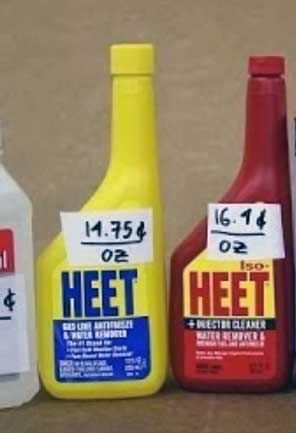
- HEET (Yellow) vs. Iso-HEET (Red): This is the internal battle. The Yellow bottle is Methanol; the Red bottle is Isopropanol (Isopropyl alcohol). I generally prefer the Red Iso-HEET for two reasons. First, Isopropanol absorbs significantly more water per volume than methanol. Second, it is safer for rubber and plastic components. The Red bottle costs a little more, but if I am treating a more expensive vehicle or one with older fuel lines, I spend the extra dollar for the Red. However, for sheer cheap effectiveness in a modern daily driver, the Yellow bottle works just fine. If you have a diesel engine, you must use the Red bottle (or a diesel-specific product), as methanol is not recommended for diesel systems.
- HEET vs. K-100: K-100 is a premium fuel treatment that claims to eliminate water by permanently bonding it to the fuel (emulsification) so it burns. K-100 is significantly more expensive than HEET—often $15-$20 a bottle versus $3. HEET is a demulsifier/solvent that is simple and cheap. K-100 also claims to be a stabilizer and a cetane/octane booster. In my experience, K-100 is a “fix-all” maintenance product, whereas HEET is a specific “surgical strike” against water. If I have a chronic water issue in a boat, I buy K-100. If I just need to get my sedan through a cold snap, I buy HEET.
- HEET vs. STP Water Remover: These products are virtually identical in function. STP Water Remover is also usually methanol-based (check the label, as formulations vary). The main difference I have found is bottle design and brand preference. HEET has become the “Kleenex” of the category—it’s the name everyone knows. I have used the STP version when HEET was sold out, and it worked exactly the same. However, HEET often goes on sale in bulk packs during winter, making it the more economical choice for me. There is no secret chemical advantage to one over the other; it’s largely a commodity chemical (methanol) in different packaging.
Frequently Asked Questions (FAQ)
Sta-Bil Storage is widely considered the best for general long-term storage (up to 24 months) due to its proven track record and availability. However, for marine environments or extreme ethanol issues, Star Tron is a top competitor.
Ideally, draining fuel is better if you can get the tank and carburetor completely dry, as there is nothing left to degrade. However, since dry gaskets can crack and draining is difficult, using a high-quality stabilizer in a full tank is the most practical and safer option for most users.
You should use HEET when you suspect water in your gas tank (symptoms like sputtering or hesitation), or proactively during extremely cold weather (below freezing) to prevent moisture in the fuel lines from turning into ice.
It depends on the goal: use Sta-Bil for storage (winterizing), HEET for water removal/antifreeze, and a cleaner like Sea Foam or Chevron Techron for cleaning injectors and improving performance in a running engine.
Conclusion
When you boil it down, the choice between Sta-Bil and HEET isn’t really a choice at all—it’s about using the right tool for the job. They belong in different parts of your garage for different seasons.
I use Sta-Bil when I am putting something to sleep. It is the blanket I tuck my mower, chainsaw, and classic car in with. It protects the system from the slow, creeping damage of time and oxidation. If the engine isn’t going to run for 30 days or more, it gets the red liquid. It is an investment in ensuring my equipment starts next season without a carburetor rebuild.
I use HEET when I am in the thick of the action. It is the aspirin I take when I have a headache—or in this case, when my car has a frozen fuel line or a tank of watery gas. It is a reactive, immediate solution to cold weather and moisture problems. It lives in the trunk of my daily driver during winter, ready to save the day if the temperatures plummet.
So, don’t try to make one do the job of the other. Stock both. Keep the Sta-Bil on your garage shelf for the end of the season, and keep a bottle of HEET in your trunk for those icy mornings. Your engines will thank you for knowing the difference.