
I used to think all electric toothbrushes were the same—until I actually started using them and realized that small features make a massive difference in your morning routine. If you are standing in the aisle (or browsing online) trying to figure out why the Sonicare ProtectiveClean 6100 costs more than the 5100 when they look almost identical, you are not alone.
I have put both of these handles to the test to see if the upgraded “smart” features and intensity controls of the 6100 are actually useful or just marketing fluff. In this article, I will break down my real-world experience to help you decide which brush belongs on your bathroom counter.
A Brief Comparison Table
| Feature | Sonicare ProtectiveClean 5100 | Sonicare ProtectiveClean 6100 |
| Brushing Modes | 3 (Clean, White, Gum Care) | 3 (Clean, White, Gum Care) |
| Intensity Settings | 1 (Standard High Power) | 3 (Low, Medium, High) |
| Smart Tech | BrushSync (Replacement Reminder Only) | BrushSync (Mode Pairing + Replacement Reminder) |
| Pressure Sensor | Yes (Vibrates handle) | Yes (Vibrates handle) |
| Battery Life | ~2 Weeks (Often lasts longer) | ~2 Weeks (Often lasts longer) |
| Travel Case | Basic Hard Plastic Case | Premium Hard Plastic Case |
| Best For | General users who want options | Sensitive teeth/gums requiring lower power |
My Experience With Sonicare 5100
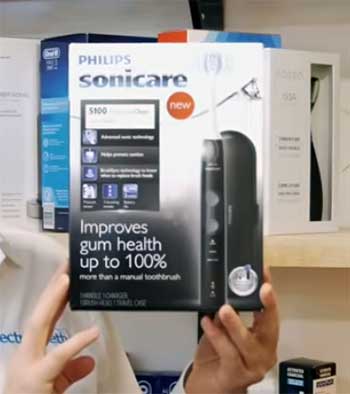
When I first unboxed the Sonicare 5100, it struck me as the “Goldilocks” of the Philips lineup.
It isn’t the bare-bones entry-level model, but it doesn’t have the overwhelming price tag of the DiamondClean series.
Setting it up was effortless. I charged it overnight, popped on the W2 Optimal White brush head, and gave it a spin.
The first thing I noticed was the power.
If you are coming from a manual toothbrush, the 62,000 brush movements per minute feel like a jackhammer initially. It tickles.
I spent most of my time using the standard “Clean” mode, but having the “White” and “Gum Care” options was nice, even if I didn’t use them daily.
The “White” mode adds a little extra polishing time at the end, which I used before big events. The pressure sensor is a lifesaver; whenever I zoned out and pressed too hard, the handle pulsed to warn me, saving my gums from recession. However, I did notice that because it runs at full power all the time, it can be a bit intense if you have a sore tooth or sensitive gums that day.
Read more: Comparison Of Hum And Oral-B
Pros Of Sonicare 5100
- Excellent Value for Features: The 5100 sits in a sweet spot where you get the premium cleaning capability—the same motor as the most expensive models—without paying for Bluetooth apps that you will likely stop using after a week. You get the three critical modes (Clean, White, Gum Care) which cover 99% of dental needs. For the price, it feels like a high-end device that delivers that “just left the dentist” smooth feeling on your teeth every single time.
- Effective Pressure Sensor: I cannot overstate how important the pressure sensor is. Many people scrub their teeth too hard, which destroys enamel. The 5100 has a built-in sensor that detects when you are pushing too firmly and changes the vibration pattern to alert you. It is a passive training tool that taught me to let the bristles do the work rather than scrubbing manually. It is simple, effective, and works reliably without needing to look at a phone screen.
- Reliable Battery Life: Philips advertises a two-week battery life, but in my experience, the 5100 often lasts closer to three or even four weeks on a single charge if you are only brushing twice a day for two minutes. This makes it an incredible travel companion. I have taken it on week-long vacations without even packing the charger, which saves space in my dopp kit. The small battery light indicator gives you plenty of warning before it actually dies.
- BrushSync Replacement Reminder: The handle tracks how long you have used your brush head. This isn’t just a timer; it measures usage time and pressure. When the little light near the bottom turns amber, you know the bristles are worn out and ineffective. It takes the guesswork out of hygiene. I used to keep brush heads for six months because they “looked fine,” but this feature ensures I am actually changing them when they stop cleaning effectively.
Cons Of Sonicare 5100
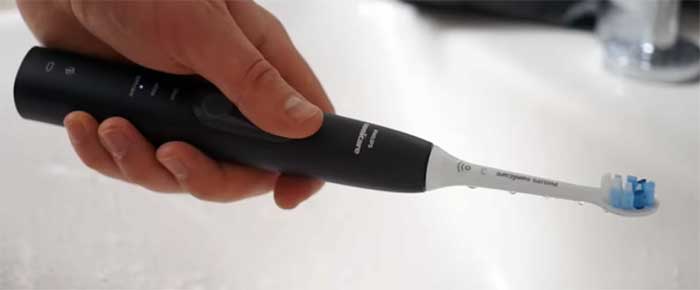
- Single Intensity Setting: This is the biggest drawback compared to the 6100. The 5100 operates at one intensity: High. For most people, this is fine. But if you have receding gums, sensitive teeth, or have had recent dental work, the standard power might feel too aggressive. There is no way to turn it down. You either take the full power or you turn it off. It lacks the nuance required for people with oral pain.
- Slippery Handle Design: While the handle looks sleek and modern, the texture is quite smooth. Once it gets wet and covered in toothpaste foam, it can become a bit slippery in the hand. It lacks the rubberized grip that some of the older, bulkier Sonicare models had. It isn’t a dealbreaker, but you have to keep a firm grip on it, or it might slide out of your hand and rattle loudly against the sink basin.
- Button Placement: The mode selection button is located right below the power button. I found myself accidentally hitting the mode button while brushing, switching from “Clean” to “White” mid-session. It creates a momentary pause in the vibration that is annoying. You have to learn to hold the handle lower down to avoid phantom button presses, which takes a little bit of muscle memory adjustment.
- Durability Concerns: Like many modern electronics, the longevity can be hit or miss. The metal shaft that connects to the brush head is sealed by a rubber gasket. Over time (usually around the 2-year mark), toothpaste gunk can compromise this seal, leading to the internal mechanism getting loose or loud. It is not a device you will likely hand down to your grandchildren; it has a finite lifespan.
Maintenance Tips For Sonicare 5100
- Remove the Head Weekly: This is the most critical tip for longevity. Do not leave the brush head on the handle permanently! Water and toothpaste mixed with saliva trickle down the shaft and pool under the brush head. This creates a gross, moldy paste that can ruin the seal. Once a week, pull the head off, rinse the metal shaft with warm water, and wipe it dry. This prevents the “death rattle” that happens when the internals get gunky.
- Clean the Charger Base: The charging base is a magnet for dust and water spots. Since the brush sits on a small peg, any water dripping off the brush pools in the divot of the charger. Wipe the bottom of your toothbrush handle before placing it on the charger to prevent yellow staining or corrosion on the charging base. A quick wipe with a towel after brushing keeps the plastic looking white and pristine.
- Don’t Push the Head Down Too Hard: When attaching a new brush head, there should be a tiny gap (about 1mm) between the bottom of the head and the handle. Do not try to force it down to be flush. That gap is necessary for the vibration to occur correctly. If you jam it down too tight, you create friction that strains the motor and makes the brush incredibly loud and less effective at cleaning.
My Experience With Sonicare 6100
Switching to the Sonicare 6100 felt like upgrading from a standard sedan to the luxury trim package. Physically, it looks almost identical to the 5100, but the control panel has extra LEDs. The defining feature for me was the intensity control. I have a few teeth that are sensitive to cold, and being able to drop the intensity to “Low” while brushing that quadrant was a game-changer. It allowed me to clean thoroughly without wincing.
The other “magic” trick the 6100 pulls is the BrushSync mode pairing. I popped on a “Gum Care” brush head, and the handle automatically switched the mode to Gum Care and the intensity to Medium. I didn’t have to touch a button. It felt intuitive. While I don’t change brush head types often, seeing the technology work was impressive. The vibration feels just as powerful as the 5100 on the high setting, but the ability to dial it back made the experience much more comfortable and customizable.
Pros Of Sonicare 6100
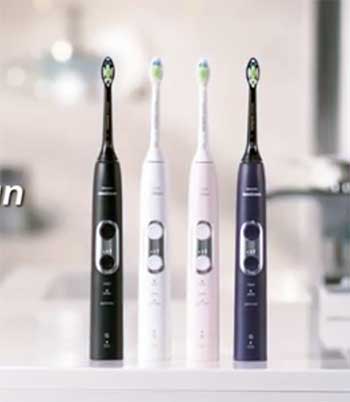
- Customizable Intensity: This is the primary reason to buy the 6100. You get three intensity levels: Low, Medium, and High. If you are new to electric toothbrushes, starting on “Low” helps you get used to the tickling sensation without being overwhelmed. If you have sensitive gums, staying on “Medium” gives you a deep clean without the aggression. It transforms the brush from a “one size fits all” tool into a personalized device.
- BrushSync Mode Pairing: This feature utilizes a microchip in the brush head to communicate with the handle. If you attach a W2 Whitening head, the handle automatically switches to “White” mode. If you attach a G2 Gum Health head, it switches to “Gum Care.” It removes the need to remember which mode goes with which head. It ensures you are using the brush exactly how the engineers designed it for maximum efficacy.
- Premium Aesthetics: While subtle, the 6100 comes in slightly more premium colorways, often with metallic accents on the buttons and base. It looks sharper. The LEDs for the intensity settings add a high-tech look to the interface. If you care about how your toiletries look on your vanity, the 6100 definitely has a more upscale “lifestyle” product vibe than the utilitarian 5100.
- Ramp-Up Feature: The 6100 features “EasyStart,” which slowly increases the power over the first 14 brushing sessions. While the 5100 has this too, combined with the intensity controls of the 6100, it makes the transition from a manual brush incredibly smooth. You barely notice the power increasing day by day until you are fully acclimated to the sonic vibrations.
Cons Of Sonicare 6100
- Price Premium: You are paying a significant markup primarily for the intensity button. If you have healthy teeth and gums and always plan to use the brush on “High” (which is the most effective setting for plaque removal), then the 6100 is a waste of money for you. You are paying for a feature—intensity reduction—that you might never use. The cleaning power on the highest setting is identical to the cheaper 5100.
- Complexity: Sometimes, more buttons mean more confusion. I have had moments where I picked up the brush and realized it was on “Low” intensity because I accidentally bumped the setting the night before, and I wondered why it felt weak. The added LEDs and buttons introduce more variables. If you want a brainless “on/off” experience, the 6100 might feel unnecessarily cluttered with options.
- Same Battery Limitations: Despite the higher model number, the battery technology is the same as the 5100. It is a Lithium-Ion battery that is non-replaceable. Once the battery degrades in 3 to 5 years, the entire handle becomes e-waste. Paying a premium price for a disposable product can be a hard pill to swallow for environmentally conscious consumers or those looking for a “buy it for life” item.
- Expensive Replacement Heads: To fully utilize the “Smart Mode Pairing,” you have to buy the specific Philips BrushSync-enabled heads (with the little WiFi symbol on them). These are significantly more expensive than generic knock-offs. While you can use generic heads on the 6100, you lose the smart pairing feature, which defeats the purpose of buying the more expensive handle in the first place.
Also read: Comparison Of Oral-B Pro 1000 And IO Series 3
Maintenance Tips For Sonicare 6100
- Clean the Button Gaps: Because the 6100 has a split button for mode and intensity, there are more crevices for toothpaste to hide. If toothpaste dries in these gaps, it can make the buttons sticky or hard to press. I recommend using a soft damp cloth or even a Q-tip to clean around the button perimeter once a week. This ensures the tactile “click” remains crisp and responsive.
- Travel Case Ventilation: The travel case is great, but do not put a wet brush inside it and snap it shut for a week. Mold loves dark, damp plastic boxes. After you arrive at your hotel, open the case and let the brush air dry. If you are packing up to go home, dry the handle and head thoroughly with a towel before boxing them up. I wash my travel case in the dishwasher (top rack) occasionally to keep it sterile.
- Descaling: If you live in an area with hard water, white scale can build up around the metal shaft and the bottom of the handle. This can compromise the waterproof seal over time. Use a solution of 50/50 white vinegar and water on a cloth to wipe down the handle monthly. This dissolves the mineral deposits that regular water misses and keeps the rubber seals flexible and watertight.
Comparison with other brands
- Oral-B iO Series: The main rival to Sonicare is Oral-B. The iO series uses a round, oscillating-rotating head rather than the side-to-side sonic vibration of the Philips. In my experience, the Oral-B feels more like a “scrub” and can be a bit louder and harsher on the gums, but some people find it leaves their teeth feeling cleaner. The Sonicare 6100 is much quieter and gentler than an equivalent Oral-B iO, making it better for sensitive users.
- Philips Sonicare 4100: If you are looking at the 5100, you must consider the 4100. The 4100 is the budget king. It has the same motor and the same pressure sensor but only one mode (Clean) and two intensities. If you don’t need “Whitening” or “Gum Care” modes (which are just variations of the timer), the 4100 cleans exactly as well as the 6100 for half the price. It is the pragmatic choice.
- Burst / Quip: These “subscription” brushes are very popular on social media. Compared to the Sonicare 5100/6100, they are generally weaker. They vibrate, but they lack the intense torque and fluid dynamic cleaning power of the Sonicare motor. I found that Quip felt more like a manual toothbrush that vibrated slightly, whereas the Sonicare 6100 felt like a power tool for hygiene. You get what you pay for in terms of raw cleaning power.
Frequently Asked Questions (FAQ)
Is the Sonicare 6100 worth the extra money?
If you have sensitive teeth or gums, yes. The ability to turn the intensity down to “Low” or “Medium” is invaluable for comfort. However, if you just want clean teeth and don’t suffer from sensitivity, the 5100 cleans just as well for less money.
What is the difference between Sonicare 5100 and 6100?
The main differences are intensity control and BrushSync mode pairing. The 6100 has 3 selectable intensities (Low/Med/High), whereas the 5100 runs only on High. The 6100 also automatically changes settings based on the brush head attached; the 5100 does not.
Do dentists recommend Sonicare 5100 or 6100?
Most dentists recommend either model because they both feature a pressure sensor and a timer, which are the two most important features for oral health. They might suggest the 6100 specifically if you have a history of over-brushing or gum recession, as the lower intensity is safer.
How long do these toothbrushes last?
You can generally expect 3 to 5 years of life from these models. The battery is the limiting factor as it cannot be replaced. Proper maintenance (removing the head to clean the shaft) can extend the life by preventing water damage to the internal electronics.
Conclusion
Choosing between the Sonicare 5100 and the Sonicare 6100 comes down to one simple question: How sensitive are your gums?
If you have resilient gums and simply want the best clean possible, save your money and get the Sonicare 5100. It possesses the exact same engine and cleaning power as the top-tier models. The lack of intensity settings isn’t a loss for you because you would likely leave it on “High” anyway to get the maximum plaque removal. It is the smart, value-driven choice that hits all the necessary marks—pressure sensor, timer, and great battery life—without the bloat.
However, if you struggle with gum recession, sensitive teeth, or are upgrading from a manual brush and are afraid the vibration will be too much, the Sonicare 6100 is the safer bet. The ability to drop the intensity to “Low” allows you to ease into the experience and protect your mouth on days when it feels tender. The premium feel and the smart mode pairing are nice bonuses, but that intensity button is the real reason to open your wallet a little wider. It provides a customized cleaning experience that the 5100 simply cannot match.
Would you like me to create a quick reference card for which Sonicare brush head works best with each cleaning mode?