
Walking into a fabric store or browsing Amazon for a sewing machine can feel overwhelming. You see the grey, industrial-looking “Heavy Duty” line from Singer everywhere. They look tough, they promise high speeds, and they are surprisingly affordable.
You have likely narrowed it down to the Singer 4432 and the Singer 4452, but they look nearly identical. Why does one cost more? Is the motor actually different? My goal is to strip away the marketing fluff and give you a sewist’s perspective on which machine actually deserves a spot on your craft table.
A Brief Comparison Table
| Feature | Singer 4432 | Singer 4452 |
| Stitch Applications | 32 Built-in Stitches | 32 Built-in Stitches |
| Sewing Speed | 1,100 Stitches Per Minute (SPM) | 1,100 Stitches Per Minute (SPM) |
| Motor Type | “Heavy Duty” Motor | “Heavy Duty” Motor (Same Specs) |
| Internal Frame | Heavy Duty Metal Frame | Heavy Duty Metal Frame |
| Bonus Accessories | Standard Foot Pack Only | Includes Bonus Heavy Duty Pack (Walking Foot, Non-Stick Foot, Clearance Plate) |
| Needle Threader | Built-in | Built-in |
| Buttonhole | 1-Step Automatic | 1-Step Automatic |
| Best For | General Garment Sewing / Alterations | Heavy Materials (Denim, Leather, Canvas) |
My Experience With Singer 4432
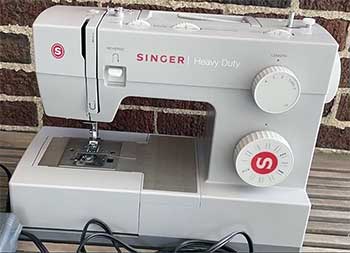
The Singer 4432 was the machine I recommended to my sister when she started getting into cosplay.
I spent a solid month with it to teach her the ropes, and it is a fascinating machine.
It is a “mechanical” machine, meaning there are no computer screens or error codes—just dials and levers.1
This is great because it simplifies the learning curve.
When I first set it up to hem a pair of curtains, the speed took me by surprise. Most domestic machines chug along at 700-800 stitches per minute. The 4432 hits 1,100. It feels like a race car; if you stomp on the pedal, the fabric flies through. It handled medium-weight cotton and polyester beautifully. However, I did notice that “Heavy Duty” is a bit of a marketing term. While it has a metal internal frame (which is great), the outer shell is plastic, and it is not a true industrial machine. It’s a domestic machine on steroids. It chewed through 4 layers of denim reasonably well, but you have to help it over the thick side seams.
Also Read: Comparison Between the Brother CS7000X and Singer 4452
Pros Of Singer 4432
- Speed: This is the machine’s party trick. The 1,100 stitches per minute speed is fantastic for long straight seams, like sewing curtains, bedsheets, or long skirts.2 It saves you genuine time compared to a standard starter machine.
- Intuitive Mechanical Controls: There is something satisfying about turning a physical dial to select a stitch. You don’t have to navigate a digital menu to change stitch width or length. For a beginner, this visual feedback helps you understand how a stitch is formed. The top-drop bobbin with the clear cover is also a lifesaver; you can see exactly when you are running low on thread.
- Metal Internal Frame: Unlike many cheap machines that are plastic through and through, the 4432 has a rigid metal skeleton.3 This adds weight to the machine, which stops it from bouncing around on your table when you are sewing at high speeds. It feels planted.
- Versatile Stitch Options: It comes with 32 stitches, including 6 basic, 7 stretch, and 18 decorative stitches, plus a 1-step buttonhole.4 Truthfully, you will probably only use the straight and zigzag stitches 90% of the time, but having the stretch stitches is vital if you plan to sew t-shirt jersey or knits.
- The Price-to-Performance Ratio: You are getting a lot of motor for your money. It is hard to find another machine in this price bracket that offers this kind of speed and a 1-step buttonhole feature.
Cons Of Singer 4432
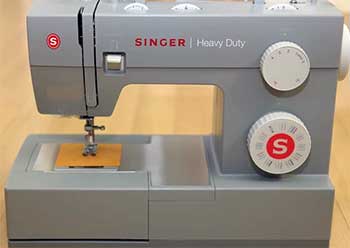
- No “Heavy Duty” Accessories Included: This is the main frustration when comparing it to the 4452. The 4432 does not come with a walking foot or a non-stick foot. If you try to sew sticky vinyl or leather with the standard foot, the fabric will drag and bunch up. You have to buy those feet separately, which can add $30-$50 to the cost later.
- Loud Operation: Because it is a fast mechanical machine with a plastic casing, it is noisy. It clanks and whirs significantly more than a computerized Brother or Janome. If you sew late at night in an apartment with thin walls, your neighbors might hear it.
- Finicky Tension: I found the tension dial to be a bit sensitive. When switching from cotton to denim, I had to play with the tension wheel more than I’d like to get a balanced stitch. It’s not “set it and forget it.”
- Lighting is Dim: The built-in LED light is fairly weak. It casts a shadow right where the needle meets the fabric. I highly recommend buying a cheap adhesive LED strip light to stick on the machine arm, because the stock light isn’t enough for detailed work.
- The “Heavy Duty” Limit: Don’t expect this to sew a leather saddle. It can handle garment-weight leather and hem jeans, but if you try to sew through 8 layers of heavy canvas or hard leather, the motor will groan and the needle might deflect. It is still a domestic motor at the end of the day.
Maintenance Tips For Singer 4432
- Clean the Bobbin Case Often: This machine is a lint magnet. Because it runs fast, it generates more lint than slower machines. Every time you finish a big project, unscrew the needle plate (you’ll need the little screwdriver) and brush out the fuzz from the bobbin area. If you don’t, the lint will pack in and cause the timing to jump.
- Oil the Hook Race: Even though some manuals say “self-lubricating,” I find that putting a single drop of sewing machine oil on the metal hook race (where the bobbin case sits) keeps the machine running much quieter and smoother. Do this once every few months.
- Use the Right Needles: Since the machine has a powerful motor, using a thin needle on thick fabric will cause the needle to bend and strike the throat plate. Always use “Jean/Denim” needles (size 16 or 18) for heavy fabric. A bent needle is the #1 cause of this machine jamming.
- Unthread Before Storing: If you aren’t using it for a while, unthread the top thread. Leaving the thread under tension in the tension discs for months can sometimes weaken the tension spring over time.
- Check the Feed Dogs: Occasionally check the feed dogs (the metal teeth under the needle) for packed lint. If they get clogged, your fabric won’t feed straight. A quick pick with a needle or tweezers clears this out.
My Experience With Singer 4452
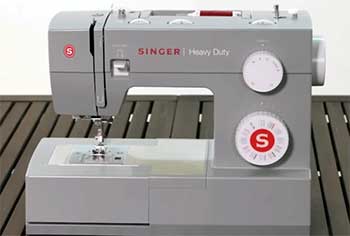
Switching over to the Singer 4452, the first thing I noticed was the color.
It sports a darker, charcoal grey finish compared to the lighter grey of the 4432.
It looks a bit more “serious,” but here is the secret I discovered after opening the casing: mechanically, it is the exact same machine.
The motor, the metal frame, and the stitch count are identical.
However, the experience of using it was vastly different because of one thing: the box of extra feet included in the styrofoam. I tested the 4452 on a project where I was sewing faux leather handles onto a canvas tote bag. On the 4432, this would have been a nightmare of skipped stitches and the leather sticking to the foot. On the 4452, I snapped on the included Non-Stick Foot (the one that looks like white Teflon) and it glided over the sticky leather like it was silk. Later, I used the included Walking Foot to quilt a thick placemat. The walking foot mechanically feeds the top layer of fabric while the feed dogs pull the bottom layer, preventing that annoying “shifting” where your layers don’t match up at the end. While you can buy these accessories for the 4432 separately, having them in the box meant I was ready to tackle difficult projects on day one. It felt like a more complete package.
Pros Of Singer 4452
- The Essential Bonus Accessory Kit: This is the primary reason to buy the 4452 over the 4432. It comes with four specific heavy-duty tools: a Walking Foot (crucial for quilting and thick layers), a Non-Stick Foot (essential for leather/vinyl), a Clearance Plate (helps you get over thick seams on jeans hems), and a pack of Heavy Duty Needles. Buying these separately would cost you significantly more than the price difference between the two machines. If you plan to sew denim or leather, you need these feet. Getting them included saves you the hassle of hunting for compatible parts.
- Excellent Handling of Thick Layers: Thanks to the included Clearance Plate (often called a “hump jumper”), the 4452 excels at hemming jeans. When you reach that thick side seam where the fabric is folded over 4-6 times, you slide the clearance plate under the back of the foot to level it out. This prevents the machine from stalling or breaking a needle. Combined with the 1,100 stitches-per-minute motor, this machine eats through denim hems for breakfast.
- Same High-Speed Performance: Just like its sibling, the 4452 flies. The foot pedal response is snappy. There is no “lag” when you press down. For production sewing—like making 20 tote bags for a craft fair—the speed allows you to finish projects much faster than on a standard computerized machine.
- Durability of the Bed Plate: The stainless steel bed plate on the sewing surface ensures smooth fabric feeding. On cheaper machines, the plastic bed can get scratched by pins or rough fabrics, which eventually snags delicate materials like satin. The steel plate on the 4452 stays smooth and allows heavy canvas to slide across it without friction.
- User-Friendly Threading: Despite looking industrial, it has the same numbered threading path printed right on the top of the machine. You don’t need to memorize a complex manual; you just follow the numbers 1 through 6. The automatic needle threader works well once you get the hang of the angle, saving your eyesight from squinting at the needle eye.
Also Read: Comparison Between Brother 1634DX and 1034DX
Cons Of Singer 4452
- It is Still a Domestic Machine: The “Heavy Duty” branding can be misleading. While the 4452 comes with leather needles and non-stick feet, the motor torque is still limited. If you try to sew thick, stiff saddle leather or multiple layers of marine vinyl, the machine will struggle. It does not have the “punching power” of a true industrial walking-foot machine (like a Juki 1541). It handles garment leather fine, but do not buy this to start a leather holster business.
- No Speed Control Slider: Unlike computerized machines where you can set a “max speed” slider to prevent the machine from running away with you, the 4452 relies entirely on your foot pressure. Because the motor is fast, it can be hard for beginners to maintain a slow, steady crawl for detail work. It tends to want to go fast.
- Plastic Spool Pin: One of the cheapest feeling parts of the machine is the horizontal spool pin. It is plastic and feels like it could snap if you are too rough when packing the machine away. A vertical metal spool pin would have been a nice upgrade for the “4452” model, but sadly it retains the plastic one.
- Noise Level: Like the 4432, the 4452 is loud. The vibration at top speed can rattle scissors on your table. You will want to put a rubber mat or a sturdy table underneath it to dampen the sound, especially if you are using the Walking Foot, which adds its own mechanical clacking noise.
- Limited Decorative Stitches: While it has 32 stitches, if you are looking for fancy alphabet fonts or intricate embroidery patterns, this isn’t the machine for you. It is a utility machine, not a decorative one.
Maintenance Tips For Singer 4452
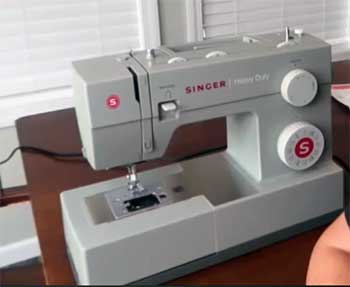
- Lubricate the Walking Foot: The walking foot (the large, chunky attachment) has moving mechanical arms. After extensive use, these plastic-on-plastic or plastic-on-metal joints can get squeaky. A tiny amount of sewing machine oil on the pivot points of the walking foot keeps it moving freely and quiets it down.
- Clean the Tension Discs: Because you will likely be using thicker threads (like upholstery thread) with this machine, the tension discs can gather wax or coating from the thread. Take a piece of un-waxed dental floss and run it back and forth through the top tension channel to “floss” out any buildup. This ensures your stitch quality stays perfect.
- Replace the Needle Often: When sewing heavy materials like canvas or denim, the needle dulls much faster than when sewing cotton. If you hear a “popping” sound as the needle enters the fabric, it is dull. Change the needle every 8 hours of sewing time, or immediately after a heavy project. A dull needle forces the motor to work harder and can damage the timing.
- Vacuum the Motor Vent: The motor on the 4452 is air-cooled. Check the vents on the right side of the machine (near the handwheel). If they are clogged with lint, the motor can overheat during long sewing sessions. Use a vacuum hose to suck the dust out of these vents regularly.
- Don’t Force the Handwheel: If the machine jams on thick fabric, do not force the handwheel. Rock it gently back and forth. Forcing it can strip the plastic gears inside the machine. If it won’t move, cut the threads and clear the jam properly.
Comparison with other brands
- Singer 4452 vs. Singer 4423: The 4423 is the most popular model in this lineup. The difference is simple: stitch count and accessories. The 4423 has 23 stitches and comes with standard feet. The 4452 has 32 stitches and comes with the bonus heavy-duty feet. If you just want a fast machine for straight stitching, the 4423 is cheaper. If you want the walking foot and flexibility, the 4452 is the better bundle.
- Singer 4452 vs. Janome HD3000: The Janome HD3000 is often considered the “step up” from the Singer HD series. The Janome is significantly quieter, has a smoother stitch quality, and feels more refined. However, it costs nearly double the price of the Singer 4452. The Singer 4452 is the best “budget” heavy-duty machine; the Janome is the best “quality” mechanical machine. If budget is tight, the Singer wins. If you want a machine to last 20 years, the Janome wins.
- Singer 4452 vs. Brother ST150HDH: The Brother is a computerized heavy-duty machine. It offers features the Singer lacks, like a start/stop button, speed slider, and auto-lock stitch. However, many sewists prefer the Singer 4452 for heavy work because mechanical machines feel more direct and “torquey” than computerized ones in this price range. The Singer is faster (1,100 spm vs Brother’s 850 spm).
Frequently Asked Questions (FAQ)
The machines are mechanically identical (same motor, same 32 stitches). The Singer 4452 includes a “Bonus Heavy Duty Accessory Kit” (Walking Foot, Non-Stick Foot, Clearance Plate, heavy needles) and is darker grey. The 4432 is lighter grey and only comes with standard feet.
Yes, it can sew garment-weight soft leather (like a leather jacket or bag) if you use the included Non-Stick Foot and a Leather Needle. It cannot sew thick vegetable-tanned leather, saddle leather, or hard holsters.
Yes. Because it includes a Walking Foot (which helps feed layers evenly) and has a Drop Feed lever (to lower the teeth for free-motion quilting), it is a capable budget machine for quilting.
It uses a mix. The internal frame is metal, and the main shaft is metal, but some internal gears are durable plastic (nylon). This is standard for modern domestic machines. It is not an all-metal gear system like vintage 1950s Singers.
It uses Class 15 Transparent (plastic) bobbins. Do not use metal bobbins, as they can wear out the magnetic drop-in bobbin case and mess up the tension.
Conclusion
The choice between the Singer 4432 and Singer 4452 is purely a math problem, not a mechanical one.
If you already own a collection of sewing feet (especially a Walking Foot) from a previous machine, or if you only plan to sew simple cotton garments and curtains, buy the Singer 4432. It gives you the exact same high-speed power and stitch variety for a lower price. It is the practical choice for the generalist sewist.
However, if you are a beginner looking for a “complete” setup, or if you specifically plan to sew denim jeans, canvas bags, or faux leather, the Singer 4452 is the smarter buy. The price difference is usually small ($20-$40), but the value of the included Walking Foot and Non-Stick Foot alone is worth over $50. Buying the 4452 saves you the frustration of realizing you can’t sew that leather handle or denim hem halfway through a project. It is the “Pro Bundle” of the Singer Heavy Duty line, and for most people, that convenience is worth the upgrade.