
I have spent years worrying about what is in my tap water, from heavy metals to forever chemicals. After trying several countertop reverse osmosis systems, I decided to compare SimPure (focusing on the popular Y7P-BW model with UV) and AquaTru (the Classic version) head-to-head. My goal here is to help you figure out which one delivers cleaner, better-tasting water for your family without the hassle of installation, while weighing real-world performance, cost, and everyday use.
Right after setting them up side by side in my kitchen, here is how they stack up on the essentials.
A Brief Comparison Table Simpure Vs Aquatru
| Feature | Simpure Y7P-BW | Aquatru Classic |
| Filtration Stages | 5-stage (including UV sterilization) | 4-stage (RO + pre/post carbon, optional alkaline) |
| Certification | SGS tested against NSF/ANSI 58 | IAPMO certified to NSF/ANSI 42, 53, 58, 401 |
| Pure to Waste Ratio | 4:1 | 4:1 |
| Contaminant Removal | >99% for PFAS, lead, fluoride, microplastics, bacteria/viruses | 83+ contaminants (including PFAS, lead, fluoride, microplastics) |
| Built-in UV | Yes | No (optional on some models) |
| Remineralization | No | Optional (Alkaline version) |
| Dispensing | Auto (6/12/15 oz options) | Manual tap |
| Filter Lifespan | CF/RO: 6 months | Pre-filter: 6 months, VOC: 12 months, RO: 24 months |
| Annual Filter Cost | ~$100-120 | ~$100-130 |
| Price (Unit) | Around $300-350 | Around $400-450 |
| Water Taste | Crisp, pure | Crisp, slightly smoother (with alkaline) |
My Experience With Simpure
I unboxed the SimPure Y7P-BW and loved how compact it felt right away.
It fits easily on my counter without dominating the space. Setup took minutes—just plug it in, fill the tank, and go.
The touch controls for dispensing exact amounts (like 12 ounces for my morning coffee) became a favorite feature quickly.
The water tastes incredibly clean, almost like premium bottled but fresher.
Knowing the UV stage kills bacteria and viruses gave me extra confidence, especially during flu season. The 4:1 efficiency means less wastewater to dump, which feels better for the environment.
That said, the water comes out stripped of minerals, so it is very pure but slightly flat to some people. I noticed the unit hums a bit while filtering, though it never bothered me at night.
Overall, SimPure has become my daily driver for pure, no-fuss water.
Pros Of Simpure
- Efficient Water Use → The 4:1 pure-to-drain ratio stands out among countertop RO systems, saving water and reducing how often I empty waste.
- UV Protection Built-In → That extra stage destroys bacteria, viruses, and microbes, making it ideal if your source water might have biological risks.
- Convenient Dispensing → Touch controls let me select exact volumes automatically—no holding a button, perfect for filling bottles quickly.
- Compact and Stylish → The black-and-white design looks modern and takes minimal counter space, even with the lid open.
- Fast Filtration → It processes water steadily, and the recycling tech keeps efficiency high without slowing down.
- Removes Microplastics Effectively → Tests show over 99% reduction, plus strong performance on PFAS, lead, and fluoride.
- Easy Maintenance Alerts → Lights remind me when filters need changing, so I never guess.
- Affordable Upfront → Generally cheaper than competitors with similar features.
- No Installation Needed → Plug-and-play simplicity suits renters like me perfectly.
- Quiet Enough for Daily Use → The pump noise is minimal and doesn’t disrupt the kitchen.
Cons Of Simpure
- No Remineralization → RO strips minerals, leaving water slightly acidic and flat-tasting for some; I add a pinch of salt occasionally.
- Filters Last Shorter → Combined CF/RO needs replacement every 6 months, increasing long-term costs compared to longer-lasting membranes.
- Plastic Construction → While BPA-free, it’s all plastic—no glass carafe option if you worry about plastic contact.
- Limited Certifications → SGS testing is solid but not full NSF like some rivals, so I rely more on third-party reports.
- Room Temperature Only → No hot or cold dispensing; just ambient water.
- Waste Tank Management → Though efficient, you still dump concentrate regularly.
- Occasional Noise → The pump hums during cycles, noticeable in quiet rooms.
- No App Connectivity → Basic indicators only—no smart tracking.
- Height Consideration → Needs clearance for the lid; measure your cabinets first.
- Potential Durability Issues → Some users report units failing after months, though mine has held up well.
Maintenance Tips For Simpure
- Replace Filters on Schedule → Change the combined CF/RO cartridge every 6 months or when the indicator lights up to maintain flow and purity.
- Flush After Replacement → Run a full cycle and discard the first batch to clear any carbon fines or residue.
- Clean Tanks Regularly → Wipe the feed and waste tanks weekly with mild soap; avoid abrasives to prevent scratches.
- Empty Waste Promptly → Dump concentrate after each cycle to avoid buildup that could affect the pump.
- Check Indicators Daily → Lights alert for low water or filter needs—don’t ignore them.
- Descale if Needed → In hard water areas, use vinegar solution periodically on external parts.
- Store Properly → If unused for weeks, empty and dry tanks to prevent mold.
- Use Filtered Source → Fill with pre-filtered tap if possible to extend filter life.
- Monitor TDS → Occasional checks ensure the system performs as expected.
- Keep Vents Clear → Ensure airflow around the unit for cooling.
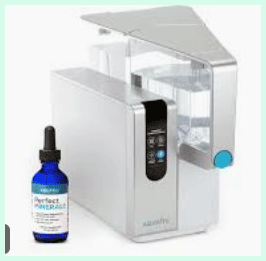
My Experience With Aquatru

Switching to the AquaTru Classic felt familiar yet different. The design is sleek, and the digital display showing filter life is handy.
Dispensing requires holding the tap, which works fine but feels less convenient than SimPure’s auto pour.
The taste is outstanding—smooth and refreshing. I tried the alkaline version briefly and appreciated the mineral boost; it makes the water less acidic and more balanced.
Independent certifications gave me peace of mind that it truly removes dozens of contaminants, including PFAS and microplastics.
It filters reliably, and the tank holds plenty for my family’s needs. Emptying the waste tank is simple, though I do it more often than I’d like.
AquaTru shines when you want proven, certified performance with the option for healthier mineral-added water.
Pros Of Aquatru
- Top-Tier Certification → Full NSF/ANSI standards across multiple categories provide unmatched proof of contaminant removal.
- Excellent Contaminant Reduction → Lab tests confirm it tackles 83+ impurities, including PFAS, lead, fluoride, and microplastics effectively.
- Longer RO Membrane Life → Up to 24 months, cutting replacement frequency and costs.
- Optional Alkaline Minerals → Adds back healthy minerals for better taste and pH balance.
- User-Friendly Display → Shows filter status and water levels clearly.
- Proven Track Record → Years on the market with strong independent reviews and lab data.
- Efficient Ratio → 4:1 waste means less water down the drain than traditional RO.
- Easy Tank Cleaning → Removable tanks make sanitizing straightforward.
- Great Taste → Consistently crisp and clean, especially with the alkaline filter.
- Reliable Dispensing → Quick flow from the tap for filling pots or glasses.
Also read: Comparison of Merach And Yosuda Rowing Machine
Cons Of Aquatru
- Manual Dispensing → You hold the button the whole time—annoying for larger volumes.
- Higher Upfront Cost → Typically pricier than similar units.
- No Built-In UV → Relies on RO alone for microbes; add-on needed for extra protection.
- Plastic Tanks → Purified water sits in plastic (BPA-free, but some prefer glass).
- Wastewater Still Present → Though efficient, emptying the concentrate tank is routine.
- Hard Water Limitation → Not ideal over 10 gpg; scale can shorten membrane life.
- Noise During Operation → Pump can be audible in small spaces.
- Filter Costs Add Up → Multiple filters at different intervals require tracking.
- Slower for Large Batches → Filters one tank at a time.
- Occasional Leaks Reported → Some users mention spout or tank issues over time.
Maintenance Tips For Aquatru
- Follow Replacement Timeline → Pre-filter every 6 months, VOC 12 months, RO up to 24 months—mark dates on filters.
- Run Flush Cycles → After new filters, discard two full tanks to activate them properly.
- Sanitize Tanks → Use the descaling kit or vinegar monthly for clean tanks and no odors.
- Empty Waste Tank Fully → Always dump concentrate completely to protect the pump.
- Reset Indicators → After changes, reset the display to track accurately.
- Clean Spout → Wipe the dispenser regularly to avoid buildup.
- Avoid Hard Water Overload → Soften source if above 10 gpg to prevent scale on membrane.
- Store Tanks Dry → When not in use, dry thoroughly to prevent bacterial growth.
- Check for Leaks → Inspect seals during cleaning.
- Use Genuine Filters → Stick to official ones for best fit and performance.
Comparison With Other Brands
- Versus Bluevua → SimPure edges out with built-in UV standard, while Bluevua often requires add-ons; both have glass options in some models, but SimPure feels more efficient daily.
- Versus Waterdrop → SimPure’s auto dispensing beats Waterdrop’s manual in convenience, though Waterdrop offers hot/cold in premium models.
- Versus RKIN → SimPure is more affordable and efficient than RKIN’s zero-waste claims, but RKIN adds remineralization and hydrogen.
- Versus APEC Countertop → SimPure’s UV and better ratio outperform basic APEC models.
- Versus Sans → SimPure provides true RO purity versus Sans’ non-RO approach.
- Versus iSpring → SimPure wins on no-install ease over iSpring’s sometimes plumbed options.
- Versus Frizzlife → SimPure’s contaminant removal is broader.
- Versus NU Aqua → Similar features, but SimPure’s alerts are more user-friendly.
- Versus ZeroWater → SimPure handles more contaminants long-term than pitcher-style ZeroWater.
- Versus Brita/BERKEY → Far superior RO filtration over basic carbon.
For AquaTru:
- Versus Bluevua → AquaTru has stronger certifications; Bluevua competes on price and glass carafe.
- Versus Waterdrop → AquaTru’s proven labs beat Waterdrop’s claims in some tests.
- Versus RKIN → AquaTru is simpler and cheaper than RKIN’s advanced features.
- Versus APEC → Better efficiency and certification.
- Versus Sans → True RO advantage.
- Versus iSpring → Easier setup.
- Versus Frizzlife → Broader reduction.
- Versus NU Aqua → Longer membrane life.
- Versus ZeroWater → More comprehensive.
- Versus Brita/BERKEY → Superior contaminant removal.
Read more: Comparison of Force Of Select Midea And hOmeLabs Dehumidifier
Frequently Asked Questions (FAQ)
AquaTru often tops lists for its full NSF certifications and proven performance, though SimPure is a close contender for value and UV features.
Yes, tests show over 99% removal.
AquaTru generally wins on certifications and reliability, while Bluevua offers competitive pricing and design.
Conclusion: For Simpure And Aquatru
After months of using both, I can say neither is perfect, but each excels in its way. If you want maximum proven purity and don’t mind manual dispensing, go with AquaTru—you’ll feel confident knowing it’s certified to handle tough contaminants. But if convenience, UV protection, and auto features matter more to you, SimPure delivers fantastic value and daily ease. Whichever you choose, you’ll ditch bottled water for good and enjoy cleaner hydration. What matters most to you—certifications or convenience? Let your needs guide the decision.