
If you are reading this at 3 AM while bouncing a screaming baby who just won’t settle, I want you to know that I see you, and I have been exactly where you are. The sheer exhaustion of dealing with a colicky infant or a baby with Cow’s Milk Protein Allergy (CMPA) is something only another parent can truly understand.
I remember standing in the formula aisle, bleary-eyed, staring at the purple can of Similac Alimentum and the gold-and-yellow tin of Enfamil Nutramigen, wondering which one would finally bring peace to our house.
My intent with this article is to guide you through the specific differences between these two leading hypoallergenic formulas so you can make a confident choice without wasting money on trial and error. We will look at the ingredients, the smell (yes, it matters), the price, and real-world performance to help you decide which one is better for your little one.
A Brief Comparison Table
| Feature | Similac Alimentum | Enfamil Nutramigen |
| Primary Protein | Casein Hydrolysate (Extensively Hydrolyzed) | Casein Hydrolysate (Extensively Hydrolyzed) |
| Carbohydrate Source (Powder) | Corn Maltodextrin, Sugar | Corn Syrup Solids, Modified Corn Starch |
| Carbohydrate Source (Liquid) | Sucrose, Modified Tapioca Starch (Corn-Free) | Corn Syrup Solids |
| Probiotics/Prebiotics | 2′-FL HMO (Prebiotic) | LGG (Lactobacillus rhamnosus GG) Probiotic |
| Claimed Relief Time | Starts reducing colic in 24 hours | Starts reducing colic in 48 hours |
| Palm Oil | Contains Palm Olein (in some versions) | Contains Palm Olein |
| Taste/Smell Profile | Distinct “savory” or “potato/cheese” smell | Metallic, bitter, or “burnt milk” smell |
| Best For | Babies with corn sensitivity (RTF version) | Building tolerance to cow’s milk faster |
My Experience With Similac Alimentum
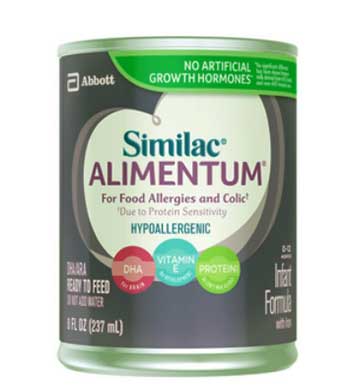
I still remember the exact moment we decided to switch to Similac Alimentum.
It was a Tuesday evening, and my son had been crying for what felt like six hours straight.
We had tried the “gentle” formulas, the gas drops, and the bicycle legs, but nothing worked.
My pediatrician suggested Alimentum, specifically the Ready-to-Feed version, because she suspected a corn sensitivity on top of the milk protein allergy.
I ran to the store, grabbed the purple bottle, and poured it into his bottle without even warming it up because I was so desperate for silence.
The first thing that hit me was the smell. It didn’t smell like milk; it smelled exactly like liquid mashed potatoes or a savory cheese soup. It was jarring. I hesitated for a second, wondering if my baby would actually drink something that smelled like dinner rather than dessert. To my surprise, he guzzled it down. He didn’t pull away or gag. It seemed like the savory profile didn’t bother him one bit.
The relief was almost immediate. The marketing claims say “starts working in 24 hours,” but for us, it was more like 12. That night was the first time in weeks that he slept for a four-hour stretch without waking up screaming in pain. The thick consistency of the liquid also helped keep his meals down. He has always been a “happy spitter,” but on the thin standard formulas, he was losing half his meal. The Alimentum Ready-to-Feed was viscous enough to stay in his stomach, which meant he was actually gaining weight and not just soaking his bibs.
However, living with Alimentum did require some adjustments. The stains are no joke. I ruined my favorite white nursing tank top because I didn’t treat a spit-up spot immediately. The formula has a beige-yellow tint that sets into fabric like concrete. I learned very quickly to keep an enzymatic stain remover spray in every room of the house. Also, the cost was a shock to our monthly budget. We were spending nearly $400 a month on formula alone. But honestly, every time I looked at my happy, sleeping baby, I knew I would pay double that just to keep the peace. It wasn’t perfect—the smell never really grew on me—but it was the tool that finally fixed our colic nightmare.
Pros Of Similac Alimentum
- Corn-Free Formulation in Ready-to-Feed (RTF):One of the most significant advantages I found with Similac Alimentum is specifically within its Ready-to-Feed liquid version.1 Unlike many other hypoallergenic formulas on the market that rely heavily on corn maltodextrin or corn syrup solids as a carbohydrate source, the liquid version of Alimentum uses modified tapioca starch and sucrose.2 This is a massive game-changer for parents who suspect their baby might have a sensitivity to corn in addition to the dairy protein issue. When I was troubleshooting my baby’s digestive issues, eliminating corn was a crucial step, and having a major brand offer a convenient liquid option that excluded corn made my life infinitely easier. It provided a safety net that ensured I wasn’t accidentally triggering another reaction while trying to solve the first one.
- Inclusion of 2′-FL HMO for Immune Support:Similac has done an excellent job integrating 2′-FL Human Milk Oligosaccharide (HMO) into the Alimentum formula.3 This ingredient is a prebiotic found naturally in significant quantities in breast milk, and it plays a vital role in feeding the good bacteria in a baby’s gut. Since babies with CMPA often have inflamed or sensitive digestive tracts, having an immune-nourishing ingredient like 2′-FL HMO is critical.4 I felt better knowing that even though I wasn’t breastfeeding, my baby was getting a component that closely mimicked the immune benefits of breast milk. It helps bridge the gap between medical necessity and optimal nutrition, ensuring the immune system gets the support it needs to fight off other bugs while the gut heals.
- Rapid Relief of Colic Symptoms:The speed at which this formula works is honestly impressive. Similac claims that Alimentum starts reducing excessive crying due to protein sensitivity within 24 hours, and in my observation, this wasn’t just marketing fluff.5 For parents who are at their breaking point with a crying infant, the difference between 24 hours and 48 hours is an eternity. I noticed a visible calmness settle over my baby relatively quickly after the switch. The hydrolyzed casein protein is broken down enough that the body doesn’t recognize it as an allergen, allowing the inflammation to subside almost immediately, which leads to a happier baby and significantly more sleep for the parents.6
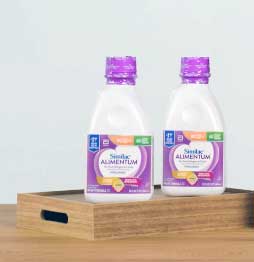
- Thicker Consistency in Ready-to-Feed:Another pro that often flies under the radar is the texture of the Ready-to-Feed liquid. It tends to be slightly thicker than the Nutramigen liquid or even the Alimentum powder when mixed. For babies who suffer from reflux—which often goes hand-in-hand with milk protein allergies—this slightly viscosity helps keep the liquid down. I found that I didn’t need to add as much thickener (like oatmeal or gelmix) because the formula itself had a bit more “heft” to it. This reduction in spit-up volume was a welcome relief, as it meant fewer outfit changes and less laundry, which is a small but meaningful victory when you are overwhelmed with a new baby.
- Widely Available and Insurance Friendly:In my experience, Alimentum seems to be slightly easier to find in stock at local grocery stores and pharmacies compared to some niche competitors. Furthermore, Abbott (the maker of Similac) has robust programs for insurance reimbursement. Many parents don’t realize that hypoallergenic formula can sometimes be covered by health insurance as a “medical food.” Alimentum is a standard prescription for pediatricians, and because of its long-standing reputation, I found the paperwork process to be somewhat streamlined. Knowing I could run to almost any Target or CVS at midnight and likely find a bottle of the Ready-to-Feed gave me a sense of security that is hard to price.
Cons Of Similac Alimentum
- The Distinct and Pungent Smell:I cannot stress this enough: you have to prepare yourself for the smell. Similac Alimentum has a very unique odor that is vastly different from standard milk-based formulas. While regular formula smells like sweet milk, Alimentum smells savory, often described by parents (including myself) as resembling old cheese, potato water, or even hamster food. The first time I opened a bottle, I actually checked the expiration date because I thought it had gone bad. This smell translates to the baby’s breath and, unfortunately, their spit-up. If your baby spits up on your shoulder, you will smell like a cheesy potato for the rest of the day. It is something you eventually go nose-blind to, but the initial shock is a definite drawback for many caregivers.
- Sugar Content in Ready-to-Feed:While I praised the Ready-to-Feed for being corn-free, the trade-off is that it uses sucrose (table sugar) as a carbohydrate source to make the hydrolyzed protein palatable.7 Hydrolyzed casein is naturally extremely bitter, so masking that taste is necessary, but some parents are uncomfortable with giving sucrose to a newborn. I had to weigh the pros and cons of corn syrup solids versus sucrose. While the sugar content isn’t harmful in the context of the formula’s total nutrition, it does make the formula quite sweet. I worried that this might give my baby a “sweet tooth” or make transitioning to savory solids later a bit harder, although the medical necessity of the formula outweighed this concern at the time.
- Powder vs. Liquid Ingredient Discrepancy:A major frustration I encountered is that the powder and the liquid versions of Alimentum are not identical in ingredients. As I mentioned, the liquid is corn-free, but the powder does contain corn maltodextrin.8 This inconsistency can be a nightmare for parents who start on the liquid (often given as samples at the pediatrician’s office) and then switch to the powder to save money, only to see their baby’s symptoms return because of the corn. I find this lack of consistency across the brand confusing and potentially problematic for parents who aren’t reading the fine print on every single can. You really have to treat the powder and the RTF as two separate products.
- Potential for Staining Fabrics:This might sound trivial until it happens to your favorite heirloom blanket, but Alimentum stains are notoriously difficult to remove. The formula has a beige-brownish tint, and once it dries on a onesie or a burp cloth, it sets in a way that regular detergent often struggles to lift. I ruined several white outfits before I realized I needed to pre-treat every single spit-up spot with an enzymatic cleaner immediately. The distinct color seems to come from the hydrolyzed proteins and the iron fortification, and it leaves a yellowish cast that marks your baby’s clothes as “Alimentum clothes.” It adds an extra layer of laundry management to an already busy schedule.
- High Cost Per Ounce:There is no getting around the fact that Alimentum is significantly more expensive than standard formula. The extensive processing required to break down the casein proteins into tiny, non-allergenic peptides is costly, and that cost is passed on to the consumer. The Ready-to-Feed liquid, which is the superior version in my opinion due to the corn-free aspect, is particularly pricey. When your baby hits a growth spurt and is drinking 30+ ounces a day, the weekly cost can be shocking—comparable to a second car payment or rent in some places. While it is cheaper than amino acid-based formulas, it is still a heavy financial burden for many families.
Read more: Comparison Of Bubs Goat Milk Formula And Kendamil
My Experience With Nutramigen
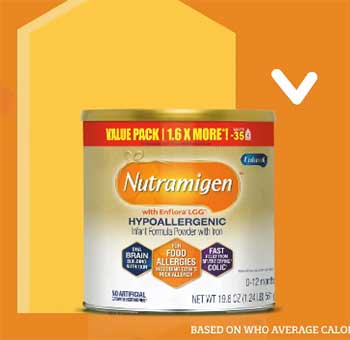
Our journey with Nutramigen began a few months later when we were trying to address some persistent eczema that just wouldn’t clear up.
Our doctor spoke highly of the LGG probiotic in Nutramigen, explaining that it could help “teach” my son’s immune system to stop overreacting to allergens.
I was sold on the science, so we bought a can of the powder to give it a shot.
Opening the can was a different sensory experience than Alimentum.
While Alimentum smells savory, Nutramigen smells distinctly metallic and bitter. It reminded me of burnt popcorn or old pennies. I made the mistake of tasting a drop on my finger, and I immediately felt bad for my baby. It was incredibly bitter. Unsurprisingly, the transition was rough. My son took one sip, made a face of absolute betrayal, and pushed the bottle away with his tongue. It took about four days of “cutting” the formula—mixing 75% old formula with 25% Nutramigen, then 50/50—to get him to accept a full bottle without a fight.
Once he was fully on it, though, the results were fascinating. His skin, which had been rough and red like sandpaper on his cheeks, cleared up within a week. It was like magic. The probiotics were clearly doing their job in healing his gut-skin connection. He also seemed to have very regular, comfortable bowel movements, which was a huge plus after months of constipation and strain.
The downside for us was the consistency. Nutramigen powder mixes up very thin, almost like water. My son’s reflux flared up significantly. We could hear the liquid sloshing in his tummy, and he would often gulp comfortably only to have wet burps minutes later. I had to start adding a thickener to every bottle, which added an extra step to our 3 AM feeds. Also, the smell permeated everything. Our silicone bottle nipples started smelling like Nutramigen permanently, even after running them through the dishwasher. I eventually had to replace all our plastic bottles with glass ones because I couldn’t stand the lingering metallic odor. Despite the smell and the thinness, it was the “skin saver” for us, and it felt like we were actively treating his allergy rather than just managing it.
Pros Of Nutramigen
- LGG Probiotic for Tolerance Building:The absolute standout feature of Enfamil Nutramigen is the inclusion of the probiotic Lactobacillus rhamnosus GG (LGG).9 This isn’t just a buzzword; it is the most extensively studied probiotic for allergy management.10 I found the science behind this incredibly compelling. The idea is that the LGG probiotic helps to accelerate the development of tolerance to cow’s milk protein. Studies sponsored by Enfamil suggest that babies on Nutramigen with LGG might be able to return to consuming regular milk proteins sooner than those on other formulas without it.11 As a parent, the goal is always to get your kid back to a “normal” diet eventually, and using a product that actively works toward that goal rather than just masking symptoms felt like a proactive strategy.
- Extensive Clinical Backing:Nutramigen is often referred to as the “gold standard” in the medical community because it has been around for over 75 years and has mountains of clinical data supporting it. When my pediatrician recommended it, she didn’t just say “try this,” she pulled out charts showing its efficacy. It is clinically proven to manage colic due to cow’s milk allergy effectively.12 Knowing that I was using a product that has been rigorously tested gave me peace of mind. It feels less like a commercial food product and more like a therapeutic intervention. This heritage of trust is why so many doctors reach for Nutramigen as their first line of defense when a baby presents with bloody stool or severe eczema.
- Complete Lactose-Free Formulation:Nutramigen is completely lactose-free, which is beneficial for babies who have secondary lactose intolerance.13 Often, when a baby’s gut is damaged by an allergic reaction to protein, they temporarily lose the ability to digest lactose (the sugar in milk). By removing lactose entirely and using corn syrup solids, Nutramigen gives the gut a total break, allowing the villi in the intestines to heal. I noticed that this helped significantly with the “frothy” poop that can indicate lactose malabsorption. It provides a clean slate for digestion, ensuring that nothing in the formula is triggering gas or bloating while the allergic reaction subsides.
- Hypoallergenic Casein Hydrolysate:Like Alimentum, Nutramigen uses extensively hydrolyzed casein protein.14 The protein is broken down so small that the immune system essentially ignores it.15 For my baby, who had immediate reactions to standard “gentle” formulas (which are usually partially hydrolyzed whey), the extensively hydrolyzed casein in Nutramigen was the key to safety. It stops the allergic cascade. The effectiveness of this protein breakdown is high, meaning it is suitable for the vast majority of babies with CMPA, preventing anaphylaxis and chronic gut inflammation. It is a heavy-duty solution for a heavy-duty problem.
- Enflora LGG Support for Eczema:Beyond just gut health, I found the claims regarding eczema reduction to be very relevant. Many babies with food allergies also suffer from atopic dermatitis. The LGG probiotic in Nutramigen has been shown to help manage these skin manifestations.16 When we used Nutramigen, I did notice that my baby’s skin seemed clearer and less prone to those angry, red dry patches that used to flare up on his cheeks. Treating the allergy from the inside out is the most effective way to handle eczema, and the added probiotic boost seems to give Nutramigen an edge in this specific dermatological department.
Read more: My Thoughts On Bubs Goat Milk Formula
Cons Of Nutramigen
- The Taste is Extremely Bitter:If you thought Alimentum smelled bad, wait until you taste Nutramigen. I took a tiny sip just to know what my baby was experiencing, and it was undeniably bitter with a metallic aftertaste. It is often described as tasting like “burnt milk” or having a chemical tang. This is due to the extensive hydrolysis of the proteins and the lack of table sugar (sucrose) to mask it. Getting an older baby who has already tasted breast milk or standard formula to accept Nutramigen can be a battle of wills. I had to mix it with non-alcoholic vanilla flavoring (approved by my doctor) for the first week just to get my baby to drink it without gagging.
- Corn Syrup Solids as Main Carbohydrate:The first ingredient in Nutramigen powder is corn syrup solids. While this is a safe and easily digestible carbohydrate source for babies, the name “corn syrup” carries a stigma for many parents. It is important to distinguish this from High Fructose Corn Syrup (it is not the same), but it is still a sugar derived from corn. For parents trying to avoid corn-based sugars or who are worried about the high glycemic index, this ingredient list can be a turn-off.17 I personally struggled with the idea that my baby’s primary source of energy was essentially corn sugar, even though I knew medically it was the safest option for his allergy.
- Thinner Consistency Causes Reflux:I found Nutramigen to be significantly thinner than Alimentum or standard formulas. It mixes into a very watery consistency. For a baby with a sensitive stomach, this thin liquid can splash back up the esophagus very easily. We dealt with a lot of “silent reflux” where the baby would gulp and grimace after feeding because the formula was rising back up. I had to use a thickening agent to weigh it down, which added an extra step to bottle preparation. If your baby is a “spitter,” Nutramigen might likely increase the volume of spit-up simply due to fluid dynamics.
- Premium Price Point:Nutramigen is arguably one of the most expensive formulas on the shelf, often priced slightly higher than Alimentum depending on the retailer. The cost of the specialized LGG probiotic and the hydrolysis process makes it a premium product. There were months where I felt like I was spending a mortgage payment on formula. While they offer a rewards program and checks, the base price is steep. It creates a financial strain that adds stress to an already stressful situation of caring for a sick baby. You feel held hostage by the price because you know your baby needs it to thrive.
- Smell is Hard to Remove from Bottles:The metallic, bitter smell of Nutramigen clings to plastic bottles and silicone nipples like nothing else. Even after washing with hot soapy water and running them through the dishwasher, I could still smell that distinct Nutramigen odor in the silicone parts. It permeates the pores of the plastic. I eventually had to switch to glass bottles because the smell retention in plastic was so bad that I worried it was affecting the taste of fresh formula. It requires a rigorous cleaning routine, sometimes involving vinegar soaks, to keep the feeding equipment smelling neutral.
Maintenance Tips
- Strict Adherence to Storage Times:Dealing with hypoallergenic formula requires strict attention to the clock, specifically for the Ready-to-Feed (RTF) versions. Once you crack open that quart bottle of Alimentum or Nutramigen, the clock starts ticking. You generally have exactly 48 hours to use it (check your specific bottle, as some are 24 hours) before it must be discarded. I used a sharpie to write the date and time on the label the second I opened it. There is no “sniff test” with these formulas because they already smell questionable when fresh, so you cannot rely on your nose to tell if it has spoiled. If you are using powder, once you mix a bottle, the standard “one hour” rule applies: if the baby has touched the nipple, you must dump the remainder after one hour because bacteria from their mouth multiplies rapidly in the hydrolyzed protein.
- Mixing Techniques to Avoid Clumping:Both Alimentum and Nutramigen powders are processed differently than regular milk powder, and I found they tend to be “greasier” or stickier. They clump easily. To combat this, I learned to use warm water (not hot, just warm) to help dissolve the powder. If you use cold water straight from the fridge, you will end up with gummy chunks clogging the nipple, which frustrates a hungry baby. I highly recommend using a formula mixing pitcher rather than shaking the bottle. Shaking creates millions of air bubbles, and since these babies are already gassy, you want to minimize air intake. A pitcher mixes the powder smoothly without aerating it.
- Combating the “Permeating” Smell:As I mentioned in the cons, the smell of these formulas will inhabit your silicone bottle nipples and plastic collars. To maintain your gear, I suggest a weekly soak in a solution of 50% water and 50% white vinegar. This helps strip the fatty residues and neutralizes the metallic or cheesy odors. Also, wash the bottles immediately after feeding. Do not let a bottle of Nutramigen sit in the car or on the nightstand for hours; the smell becomes exponentially worse and harder to remove the longer it sits. If you can, invest in glass bottles—they are much easier to maintain and do not hold onto the odors.
- Travel and On-the-Go Maintenance:Traveling with RTF liquid is heavy, but it is the safest bet for maintaining sterility. If you use powder on the go, pre-measure the scoops into a dispenser. Do not try to scoop from the can in a park or car; the powder is very fine and spills easily, and it is expensive waste. I also kept a cooler bag with an ice pack for any pre-mixed bottles. Since these formulas are specialized, you cannot just pop into a random gas station and expect to find them if you run out. Always pack 24 hours’ worth of extra formula in your diaper bag maintenance kit to avoid a crisis.
- Nipple Flow Adjustments:Because Nutramigen is so thin, you might need to maintain a collection of “Slow Flow” or “Preemie” nipples, even as your baby gets older, to prevent them from guzzling it too fast and choking. Conversely, Alimentum RTF is thicker. If you switch between brands, you have to maintain different nipple sizes. I labeled my nipples with a marker on the rim or kept them in separate bins so I wouldn’t accidentally put a fast-flow nipple on a thin Nutramigen bottle, which would result in an instant spit-up disaster.
Comparison with other brands
- Similac Alimentum vs. Gerber Good Start Extensive HA:Gerber Good Start Extensive HA is a strong competitor that often gets overlooked. The main difference is the protein source. While Alimentum and Nutramigen use hydrolyzed casein, Gerber often uses hydrolyzed whey (depending on the specific version, though they have moved toward casein in their extensive line). Gerber claims to have a better taste profile, and in my experience, it is slightly less bitter than Nutramigen. However, it can be harder to find in stores. Gerber also focuses heavily on probiotics (B. lactis), similar to Nutramigen. If your baby rejects the taste of the big two, Gerber is the logical next step to try, but it lacks the massive clinical data footprint that Enfamil and Similac possess.
- Similac Alimentum vs. Generic Brands (Target Up&Up, Walmart Parent’s Choice):The generic “Hypoallergenic” formulas found at Target or Walmart are almost always generic versions of Nutramigen, not Alimentum. If you look at the ingredients, they usually mirror the Nutramigen formula (corn syrup solids, hydrolyzed casein). They are significantly cheaper—sometimes half the price. I tried the Target Up&Up Hypoallergenic and found it to be a very decent substitute for Nutramigen. However, it does not contain the LGG probiotic.18 If you are buying Nutramigen specifically for the LGG gut-healing properties, the generic is not an exact duplicate. But if you just need the hydrolyzed protein, the generic is a fantastic way to save money. Just remember, there is no direct generic equivalent for the corn-free Alimentum Ready-to-Feed.
- Similac Alimentum vs. Amino Acid Formulas (PurAmino / EleCare):It is important to understand where Alimentum and Nutramigen sit on the ladder. They are “extensively hydrolyzed.” If your baby still has blood in their stool or severe pain while on these, the next step up is an Amino Acid formula like PurAmino (Enfamil) or EleCare (Similac). These brands are not just “better”—they are completely different. They contain no milk protein chains at all, just individual amino acids. They are much more expensive and taste even worse. You should only compare Alimentum/Nutramigen to these if the former have failed. Most babies do fine on Alimentum/Nutramigen, but if you see no improvement after 2 weeks, you aren’t looking for a “better” hydrolyzed formula; you need to move up to the amino acid tier.
- Similac Alimentum vs. European Formulas (HiPP HA):Many parents look to Europe for “cleaner” formulas like HiPP HA. The major difference here is that HiPP HA is usually a partially hydrolyzed whey formula (unless you get a specific medical version), which means the protein pieces are larger than in Alimentum or Nutramigen. HiPP HA tastes infinitely better—like actual milk—but it is often not broken down enough for a baby with a true diagnosed CMPA. I see parents try to switch to HiPP HA because they hate the ingredients in Alimentum (corn, sugar), but then their baby has a reaction. Comparison-wise, Alimentum is a medical intervention; HiPP HA (standard) is a gentle formula. Do not swap them expecting the same hypoallergenic protection unless you are sure your baby’s allergy is mild.
- Similac Alimentum vs. Soy Formulas (Similac Isomil / Enfamil ProSobee):Years ago, soy was the go-to for milk allergies. Now, we know that a high percentage (up to 40-50%) of babies with CMPA are also allergic to soy protein. Comparing Alimentum to Soy formulas is risky. Soy formulas are much cheaper and taste better, but they are not technically hypoallergenic in the same way. If you are using Alimentum because of a confirmed allergy, switching to a brand like Isomil is a gamble. However, if the issue is strictly galactosemia (a rare genetic disorder) or ethical veganism, soy wins. But for the purpose of fixing a colicky, allergic gut, Alimentum and Nutramigen are clinically superior to soy brands.
Read more: My Thoughts On Bubs Goat Milk Formula
Frequently Asked Questions (FAQ)
Neither is universally “better”; it depends on your baby’s specific needs. Nutramigen is better for gut healing and tolerance building due to the LGG probiotic.19 Alimentum (specifically Ready-to-Feed) is better for babies with corn sensitivities and those who need a thicker formula for reflux.
“Healthiest” is subjective, but many experts consider formulas with added probiotics (like Nutramigen with LGG) or Human Milk Oligosaccharides (like Alimentum with 2′-FL HMO) to be the most beneficial because they support the immune system and gut microbiome in addition to providing basic nutrition.
Generally, yes, you can switch between them as they are both extensively hydrolyzed casein formulas.20 However, babies may react to the different carbohydrate sources (corn vs. sucrose) or the taste difference, so it is best to transition slowly by mixing them rather than switching cold turkey.
If Nutramigen fails to resolve symptoms, an amino acid-based formula like Enfamil PurAmino or Abbott EleCare is considered “better” in terms of being more hypoallergenic. These are for severe allergies where even hydrolyzed proteins trigger a reaction.
Conclusion
Navigating the world of hypoallergenic formulas is one of the hardest parts of early parenthood. You are tired, worried, and just want your baby to be comfortable.
If your primary concern is corn sensitivity or you want a thicker liquid to help with reflux, I highly recommend starting with Similac Alimentum Ready-to-Feed. It is a robust, effective formula that avoids common corn allergens and works fast.21
If your focus is on healing the gut for the long term and potentially getting your baby back on regular dairy sooner, Enfamil Nutramigen with its LGG probiotic is the scientifically superior choice.22 It is a powerhouse for building tolerance.
Whichever you choose, give it at least two weeks (unless there is an emergency reaction) to see the full benefits. You are doing a great job, and this phase will pass. Good luck!