
We live in an era where health technology is advancing at a breakneck speed, and for the millions of people managing diabetes or pre-diabetes, the holy grail has always been non-invasive glucose monitoring. The idea of checking your blood sugar without the constant pain of finger pricks is incredibly appealing. You might have seen the viral ads for the Sherum TrackPro 2.0 popping up on your social media feeds, showing a sleek, Apple Watch-like device that claims to do exactly that—measure your glucose, blood pressure, and heart rate just by sitting on your wrist. It sounds like a medical revolution for less than a hundred dollars, but if something sounds too good to be true, your alarm bells should be ringing.
In this comprehensive review, I am going to dissect the Sherum TrackPro 2.0 to see if it is a legitimate medical aid or just a sophisticated toy. I will analyze its tracking accuracy, build quality, and whether it can actually replace your traditional glucometer. My goal is to cut through the marketing hype and provide you with the raw data you need to make a safe and informed decision. If you are looking for a cheap pedometer, this might pass, but if you are betting your health on its readings, you need to read every word of this article before you buy.
My Experience With Sherum TrackPro 2.0
As someone who is always on the lookout for the latest health tech, and having family members who struggle with the daily grind of diabetes management, the promise of the Sherum TrackPro 2.0 was irresistible. The marketing videos showed instant, painless readings, and the price point was a fraction of what a continuous glucose monitor (CGM) like a Dexcom costs. I decided to order one, fully aware that “non-invasive” tech is notoriously difficult to perfect, even for tech giants like Apple and Samsung.
The ordering process was straightforward, though the shipping took a bit longer than the standard Amazon Prime delivery I am used to, which was the first hint that this might be drop-shipped from overseas.
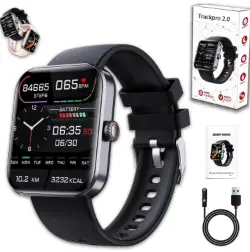
When the box finally arrived, the packaging was decent but generic. Inside, I found the watch, a magnetic charging cable, and a small instruction manual that was clearly translated from another language.
The watch itself looked surprisingly good; it has a hefty feel and a bright screen that mimics the aesthetic of high-end smartwatches very well.
I set it up, which involved downloading a third-party app (H Band, in my case) and syncing it via Bluetooth. The pairing process was a bit finicky, requiring a few restarts, but eventually, I was connected. I immediately navigated to the blood glucose feature. I sat still, tapped the screen, and waited. About 15 seconds later, it gave me a reading: 105 mg/dL. To test the accuracy, I immediately used my standard finger-prick glucometer, which read 108 mg/dL. I was floored. Could it actually be this accurate?
However, my excitement was short-lived. Over the next few days, I conducted a series of rigorous tests. I checked my sugar after fasting, after a heavy pasta dinner, and after a sugary soda. The finger-prick meter showed the expected spikes and drops—shooting up to 160 and dropping down to 90. The Sherum TrackPro 2.0, however, seemed to live in a “safe zone.” No matter what I ate, it consistently gave me readings between 95 and 115. It was as if the watch was running a simulation of a healthy person rather than actually reading my biometrics.
I also tested the blood pressure feature against a medical-grade arm cuff. The results were similar; the watch consistently gave me a “perfect” 120/80 reading, while my actual pressure varied depending on the time of day and stress levels. It became clear that while the hardware is capable of basic things like counting steps and measuring heart rate (which were fairly accurate), the “advanced” medical features were largely algorithmic estimates rather than real-time sensor data. It is a fun gadget for checking the time and seeing notifications, but as a medical device, it left me feeling unsafe and misled.
Read More: My Thoughts On Armitron Smart Watch
Pros Of Sherum TrackPro 2.0
While my experience with the medical accuracy was disappointing, that does not mean the device is entirely without merit. For a specific type of user who is not relying on it for critical health data, there are aspects of the Sherum TrackPro 2.0 that are genuinely impressive for the price. Here are the positives I found during my testing.
- Exceptional Battery Life Compared to Competitors: One area where this watch absolutely destroys premium brands like Apple and Google is battery longevity. Because it is not running a heavy operating system with background apps and GPS constantly pinging, the power consumption is incredibly low. I found that I could easily go 5 to 7 days on a single charge, even with continuous heart rate monitoring turned on. This is a massive convenience for people who hate the ritual of taking their watch off every night to charge it. If you are using it primarily as a watch and a step counter, you might only need to reach for the charging cable once a week, making it a fantastic “set it and forget it” wearable for travel or camping trips where power outlets are scarce.
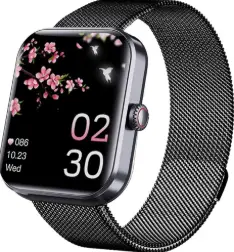
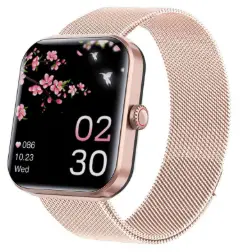
- Sleek and Modern Aesthetic Design: There is no denying that the Sherum TrackPro 2.0 looks much more expensive than it actually is. It features a large, colorful display with slim bezels that closely mimics the design language of the Apple Watch Series 8 or Ultra, depending on the specific model variant you get. The case is usually made of a metal alloy that feels cool to the touch and sturdy, avoiding the cheap “toy” feeling of many budget trackers. It comes with interchangeable straps, allowing you to swap out the silicone band for a leather or metal one to match your outfit. For someone who wants the status symbol look of a smartwatch without paying $400, this device passes the visual test with flying colors.
- Comprehensive Basic Fitness Tracking: If you strip away the dubious medical claims, the core fitness features are actually quite functional. The step counter is consistent and matches up relatively well with other pedometers I tested, usually within a 5-10% margin of error. It includes dozens of workout modes—from running and cycling to more obscure sports—that allow you to log your activity duration and estimated calorie burn. The heart rate monitor, while not medical grade, is responsive enough to show you when your pulse is elevated during a workout versus when you are resting. For the average person just trying to move more and sit less, these basic incentives are often all that is needed to stay motivated.
- Affordability and Accessibility: The most obvious pro is the barrier to entry. Priced often under $100 (and sometimes much less if you find the white-label source), it is accessible to almost everyone. This makes it a low-risk purchase for someone who is curious about smartwatches but isn’t ready to commit to the ecosystem of a major brand. It works with both Android and iOS, meaning you don’t have to switch phones just to use the watch. This universality and low cost make it a popular gift option for kids or older adults who might lose or damage a more expensive device.
Cons Of Sherum TrackPro 2.0
It is vital to be transparent about the limitations of this device, especially because the marketing makes claims that could be dangerous if believed blindly. The cons here are not just minor annoyances; they are fundamental flaws in the product’s core promise.
- Dangerously Inaccurate Glucose and Blood Pressure Readings: This is the single biggest issue and the reason I cannot recommend this to diabetics. The “non-invasive” sensor technology simply does not exist yet in a consumer product of this size and price. The readings appear to be generated by an algorithm that estimates what a “normal” person’s levels should be, rather than measuring your actual interstitial fluid or blood. I found that even when I artificially spiked my blood sugar, the watch didn’t register the change. Relying on this watch to dose insulin or manage hypertension could lead to life-threatening medical errors. It provides a false sense of security that is far worse than having no data at all.
- Lack of FDA Approval or Medical Certification: Unlike devices from Dexcom, Abbott, or even the AFib detection on Apple Watches, the Sherum TrackPro 2.0 has zero regulatory clearance. The FDA has explicitly issued warnings about smartwatches and rings claiming to measure blood glucose without piercing the skin. This means the device has not undergone any rigorous clinical trials to prove its safety or efficacy. You are essentially acting as a beta tester for unregulated hardware. The “medical” data it provides should be considered purely for entertainment, which is a massive disconnect from how it is advertised as a health management tool.
- Clunky and Invasive Companion App: To use the watch, you typically have to download a generic app like H Band, GloryFit, or similar, depending on the specific batch. These apps are often poorly translated, difficult to navigate, and riddled with bugs that cause connection drops. More concerning is the data privacy aspect; these apps often request excessive permissions on your phone, such as access to your contacts, photos, and location, which are not necessary for a simple fitness tracker. There is no clear information on where your health data is stored or who has access to it. The user experience is a constant struggle of re-pairing the device and dealing with an interface that feels like it was designed a decade ago.
- Poor Screen Visibility and Touch Responsiveness: While the screen looks good indoors, it struggles significantly in real-world conditions. The brightness levels are often too low to be legible under direct sunlight, making it difficult to check your stats while on a run or walk outdoors. The touch response can be laggy or imprecise; I often found myself swiping multiple times to get a menu to scroll. The “raise to wake” feature is also hit-or-miss, sometimes lighting up when you don’t want it to and staying dark when you need to check the time. These small friction points add up to a frustrating daily user experience compared to the buttery smooth operation of premium watches.
Maintenance Tips For Sherum TrackPro 2.0
Since this is a budget device, it likely lacks the robust durability of higher-end watches. Treating it with care is essential if you want it to last more than a few months. Here is how to keep it running.
- Keep the Sensor Array Clean and Dry: The back of the watch houses the optical sensors and the metal charging contacts. Sweat, dead skin, and lotion can build up in this area, interfering with the charging connection and the sensor accuracy. You should wipe the back of the watch daily with a soft, microfiber cloth. If you notice the charging cable isn’t snapping on or charging is intermittent, use a Q-tip dipped in a little rubbing alcohol to clean the gold contact points on both the watch and the cable. This simple habit prevents the “corrosion death” that kills many budget smartwatches.
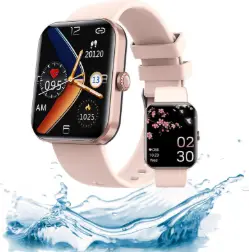
- Avoid Submerging in Water Despite Ratings: The marketing might claim IP67 or IP68 water resistance, but you should take these ratings with a grain of salt. Quality control on these white-label devices varies wildly, and the seals may not be perfect. I strongly advise against swimming, showering, or using the sauna while wearing this watch. Hot water and steam, in particular, can weaken the glue holding the screen in place and allow moisture to enter the internal components. Treat it as “splash-proof” (okay for washing hands or rain) rather than truly waterproof to avoid a short circuit.
- Regular Restarts to Fix Glitches: The software on the Sherum TrackPro 2.0 is prone to freezing or desyncing from the phone app. If you notice that notifications aren’t coming through or the step counter has frozen, a simple restart is usually the fix. Go into the settings menu on the watch and look for the “System” or “Power Off” option. Restarting the device once a week clears the cache and helps maintain a stable Bluetooth connection. Do not let the battery drain completely to zero too often, as this can sometimes cause the internal clock to reset or the battery to lose calibration.
- Protect the Screen from Scratches: The glass used on the face of this watch is not the hardened Gorilla Glass or Sapphire Crystal found on premium devices. It scratches very easily if you brush it against a doorframe or a rough wall. I highly recommend buying a cheap TPU screen protector film—often sold for generic 1.9-inch smartwatches—to add a layer of defense. Because the screen is the primary input method, a deep scratch can interfere with the touch sensitivity. Being mindful of your wrist placement during manual labor or gym workouts will significantly extend the cosmetic life of the device.
Comparison with Other Brands
To understand the true value (or lack thereof) of the Sherum TrackPro 2.0, we need to compare it against established players in the wearable space. Here is how it stacks up against the competition.
- Apple Watch Series 9 / SE: The undisputed king of the smartwatch market, offering FDA-cleared features like ECG and AFib history. Comparison: The Apple Watch is vastly superior in every metric—accuracy, screen quality, app ecosystem, and build durability. However, Apple still does not offer non-invasive blood glucose monitoring; rumors suggest they are working on it, but it is years away. The Sherum claims to do what Apple cannot, but as discussed, the Sherum’s claim is false. If you want legitimate heart health data and seamless iPhone integration, you must save up for the Apple Watch. The Sherum is purely a budget aesthetic clone that mimics the Apple Watch Ultra’s look without the functionality.
- Fitbit Charge 6: A dedicated fitness tracker known for its sleep analytics and reliable heart rate tracking. Comparison: Fitbit offers a much more focused and accurate health experience. While the Charge 6 has a smaller screen and looks less “flashy” than the Sherum, the data it provides is trustworthy and actionable. Fitbit’s app is world-class, offering deep insights into stress and sleep that Sherum’s generic app cannot touch. Fitbit does not claim to measure blood sugar, but it does allow you to log it manually in the app. If your goal is actual health improvement through data, Fitbit is the responsible choice; Sherum is largely for show.
- Amazfit Bip / GTS Series: Amazfit is a legitimate budget brand that offers great value without making fake medical claims. Comparison: This is the direct competitor in terms of price, with Amazfit watches often costing between $50 and $100. Amazfit offers incredible battery life (similar to Sherum) but comes with a stable app (Zepp), good build quality, and accurate GPS tracking. They do not promise glucose monitoring because the tech isn’t there yet. Choosing Amazfit gives you a reliable, honest budget smartwatch experience. Choosing Sherum gives you a device that overpromises and underdelivers. For a budget smartwatch that actually works as advertised, Amazfit is the superior option.
Also Read: My Thoughts On Tikland Smart Watch
Frequently Asked Questions (FAQ)
No, it is not. Independent tests and user reviews consistently show that the glucose readings are estimates based on algorithms, not actual sensor data. It often provides “normal” readings even when blood sugar is dangerously high or low, making it unsafe for diabetes management.
Yes, the watch is compatible with both iOS and Android smartphones. You will need to download the specific companion app mentioned in the manual (usually H Band, GloryFit, or similar) to pair the device and sync your notifications and contacts.
“Sherum” appears to be a dropshipping brand name used to market generic smartwatches manufactured in China. While you will likely receive the product you ordered, customer support, warranty claims, and return policies are often difficult to navigate compared to established retailers like Best Buy or Amazon.
The app typically has a “Private Mode” or “Calibration” setting where you enter your fasting blood sugar value from a finger prick test. The watch then uses this number as a baseline to offset its algorithm. However, this does not make the sensor read real-time fluctuations accurately; it just shifts the random numbers closer to your baseline.
Conclusion
The Sherum TrackPro 2.0 is a masterclass in persuasive marketing, tapping into the deep desire for painless health monitoring. Visually, it is an attractive device that offers basic smartwatch functions like step counting and notification mirroring at an unbeatable price. If you treat it as a cheap, stylish accessory that keeps you vaguely aware of your activity levels, you might be satisfied with the purchase.
However, as a health device, it fails to deliver on its most important promises. The blood glucose and blood pressure monitoring features are dangerously inaccurate and should not be trusted for any medical decisions. For anyone serious about managing their health, investing in a proven device from Fitbit, Apple, or a dedicated medical monitor is the only safe path. Buy it for the look, but do not buy it for the lab results.