
I’ve spent years tweaking my headphone setup, chasing that perfect blend of clarity, warmth, and punch without breaking the bank. When I first tried tube hybrid amps, the Schiit Vali series caught my eye for delivering real tube flavor in a compact, affordable package. This article shares my hands-on take on the Schiit Vali 2 versus the Schiit Vali 3, focusing on which one stands out as the better choice for most users today. I cover key features, sound differences, power delivery, tube options, and practical use to help you decide.
A Brief Comparison Table Vali 2 Vs Vali 3
| Feature | Vali 2 (including 2+/2++) | Vali 3 |
| Plate Voltage | Around 60V | 100V |
| Stock Tube | 6BZ7 or similar (ECC88 compatible in some versions) | 6N3P |
| Compatible Tubes | ECC88/6922, 6N1P, 6CG7, etc. | 6N3P, 5670, 2C51, ECC42, CV4013, WE396A |
| Max Power @ 32 ohms | 1500mW RMS per channel | 1500mW RMS per channel |
| Max Power @ 50 ohms | 1000mW RMS per channel | 1000mW RMS per channel |
| Max Power @ 300 ohms | 400mW RMS per channel | 400mW RMS per channel |
| Max Power @ 600 ohms | 200mW RMS per channel | 200mW RMS per channel |
| Noise Floor | Improved in 2+/2++, but higher than Vali 3 | Lower, better for sensitive IEMs |
| Topology | Hybrid with discrete bipolar output | Coherence current-feedback, fully discrete Class AB |
| Price (approx.) | Around $149 (discontinued/new old stock) | $149-$159 |
My Experience With Schiit Vali 2
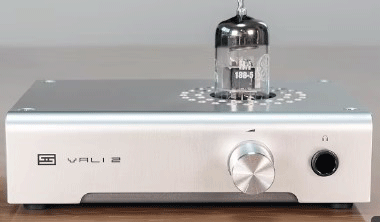
I used the Vali 2 (upgraded to 2+) for over a year in my daily setup.
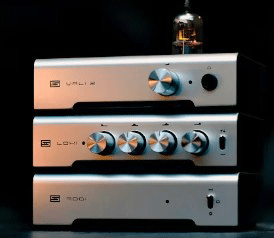
Paired with a Modi DAC and HD 650s, it brought vocals forward with a nice warmth that made jazz and acoustic tracks shine.
Bass had good impact without mud, and highs stayed smooth.
Tube rolling added variety—swapping to a warmer tube softened aggressive rock recordings. It handled planars decently, though not as effortlessly as pure solid-state.
Noise was manageable except with ultra-sensitive IEMs. Overall, it felt like a fun upgrade from basic amps, encouraging longer sessions.
Pros Of Schiit Vali 2
- Affordable entry into tube sound: I picked up my Vali 2 (or the upgraded 2+ version) for a great price back when it was current, and it gave me that warm, engaging tube character without spending a fortune. The slight euphonic glow on vocals and mids made music feel more alive compared to pure solid-state amps.
- Compact and stackable design: At just 5 x 3.5 x 2.75 inches and about a pound, it fit perfectly on my desk next to a Modi DAC. The single tube sticking out looked cool, and it stacked neatly without taking much space.
- Decent power for most headphones: With up to 1500mW into 32 ohms and solid output even at higher impedances, it drove my Sennheiser HD 600s and planars like Hifiman Sundara with authority. No clipping or strain on dynamic drivers.
- Preamp functionality: The RCA outs let me connect to powered speakers or another amp, turning it into a versatile hub for my setup. Volume control worked smoothly for both headphones and line out.
- Tube rolling options (in later versions): The 2+ and 2++ allowed swaps like 6CG7 or adapters for more variety, letting me tweak the sound signature to match my mood or playlist.
- Reliable build quality: Schiit’s aluminum chassis felt sturdy, and the wall-wart power supply kept things simple and cool-running. No issues with hum or interference in my tests.
- Fun and forgiving sound: It added a bit of bloom to bass and smoothed out harsh recordings, which was great for long listening sessions without fatigue.
- Easy to use right out of the box: Plug in the tube, connect, and enjoy—no complicated setup or matching required for the single tube design.
Also read: Comparison of Solidigm P44 Pro And 990 Pro
Cons Of Schiit Vali 2
- Higher noise floor in earlier versions: My original Vali 2 had noticeable hiss with super-sensitive IEMs or low-volume listening, which limited its use for quiet sessions.
- Less refined midrange: Compared to newer designs, the mids sometimes felt recessed or grainy, especially with certain tubes or on complex tracks.
- Limited tube compatibility in base model: The original used a specific 6BZ7, restricting rolling options unless you adapted, which added hassle and cost.
- Boomier low end: Some recordings showed exaggerated bass or tizz in the highs, making it less neutral than I preferred for critical listening.
- Discontinued status: Finding a new one now means hunting used or old stock, with potential wear on tubes or components.
- Not the cleanest measurements: While fun, it didn’t match solid-state purity in distortion or clarity under scrutiny.
- Gain structure issues at times: Low gain felt underpowered for some cans, forcing high gain and potential noise.
Maintenance Tips For Schiit Vali 2
- Handle the tube carefully: Always power off and let it cool before touching—tubes get hot, and dropping one breaks it easily.
- Clean contacts regularly: Dust on the tube pins can cause noise; gently wipe with a soft cloth or use contact cleaner sparingly.
- Check for microphonics: Tap the tube lightly while listening—if you hear ringing, it might need replacing or damping rings.
- Use a good power outlet: Avoid shared power strips with noisy devices to prevent hum in the audio chain.
- Store spare tubes properly: Keep extras in their boxes away from vibration and extreme temps to maintain longevity.
- Monitor for wear: After years, tubes lose emission—swap if sound gets dull or distorted.
- Keep vents clear: Ensure airflow around the chassis so it doesn’t overheat during long sessions.
- Update firmware if applicable: Though none here, check Schiit site for any service bulletins.
My Experience With Schiit Vali 3
Switching to the Vali 3 felt like a clear step up. The higher 100V plate voltage made everything more dynamic and open. With the stock 6N3P, mids gained smoothness and headstage expanded noticeably over my old Vali 2. I tried a GE 5670—clarity jumped, with better separation and less grain. It drove my Arya Stealth and HE6se effortlessly, adding subtle tube magic without veiling details. Low noise let me use it with sensitive cans quietly. Preamp outs integrated perfectly into my speaker setup. It’s become my go-to for its balance of power, refinement, and fun.
Pros Of Schiit Vali 3
- Higher plate voltage delivers superior tube performance : The full 100V on the plate makes the tube operate in a much more linear and dynamic range compared to lower-voltage designs. I notice tighter bass control, wider soundstage, and more effortless transients that feel organic and alive, especially on acoustic or vocal-heavy tracks.
- Impressive power output for the size and price : It pushes 1500mW into 32 ohms and holds strong at 400mW into 300 ohms, driving everything from easy IEMs to demanding planars like my Hifiman Arya without strain. The authority on low-end punch surprises me every time I switch from a solid-state amp.
- Very low noise floor : Background hiss is practically nonexistent, even with sensitive in-ear monitors at low volumes. This makes it versatile for quiet late-night listening or critical sessions where silence between notes matters.
- Excellent tube rolling flexibility : It uses a single 6N3P-compatible tube but opens up to 5670, 2C51, ECC42, CV4013, WE396A, and variants. Swapping brings noticeable changes—clarity jumps with a GE 5670, or warmth increases with certain Russian 6N3P-DR—without needing adapters for most options.
- Refined and musical sound signature : Mids stay sweet and forward, treble details sparkle without harshness, and dynamics bloom naturally. It adds that subtle tube magic—smoothness and body—while keeping resolution high enough for analytical listening.
- Compact, attractive desktop design : The small aluminum chassis in black or silver looks sharp stacked with a DAC, runs reasonably cool, and fits tiny spaces perfectly. The single tube gives it a cool retro vibe without dominating the setup.
- Preamp functionality included : RCA outputs let me connect to powered speakers or another amp, and the volume knob controls both headphone and line out seamlessly. Headphones mute the preamp when plugged in, avoiding hassle.
- Affordable at $149 with no compromises : Schiit kept the price steady despite major upgrades like higher voltage and better topology. It punches way above its weight against pricier hybrids or full tube amps.
- Discrete, thoughtful engineering : The coherence current-feedback design and discrete bipolar output stage provide clean, low-distortion performance while preserving tube character. It feels like a mature product built for real-world use.
Cons Of Schiit Vali 3
- Single tube limits extreme customization : Only one tube means changes affect the whole sound uniformly—no balancing dual tubes for stereo imaging tweaks. Some users miss the variety of dual-triode setups in other amps.
- Stock tube is good but not spectacular : The included 6N3P works fine and sounds balanced, yet many find it a bit plain until rolling something better like a 5670 or 2C51. Initial out-of-box impressions can feel underwhelming if expectations are high.
- Runs warm during extended use : The tube generates noticeable heat after a couple hours, and the chassis gets toasty. Not uncomfortable, but ventilation matters in enclosed spaces or hot climates.
- Gain options could be more flexible : Low gain (0dB) suits sensitive headphones well, high gain (14dB) powers tougher loads, but no intermediate steps. Some headphones sit awkwardly between the two, requiring careful volume adjustment.
- Not purely “tubey” like full tube amps : As a hybrid, it adds subtle tube flavor rather than overwhelming warmth or bloom. If someone craves massive euphonic distortion or vintage OTL character, this might feel too controlled.
- Output impedance varies by gain : Low gain at 0.5 ohms works great for most, but high gain rises to 1.8 ohms, which can slightly affect frequency response with low-impedance multi-driver IEMs.
- No balanced outputs : Sticks to single-ended only, so users with balanced cables or sources need adapters. Fine for desktop use, but limits integration in fully balanced chains.
- Tube availability can be tricky long-term : Good 6N3P/5670 family tubes are still findable, but rare variants like certain Western Electrics get expensive or scarce over time.
- No remote control or extras : Pure analog simplicity—no app, no Bluetooth, no digital features. Great for purists, but some prefer modern conveniences.
Maintenance Tips For Schiit Vali 3
- Always power off and wait for cooling before handling the tube : Tubes get quite warm after running, so give it at least 10-15 minutes to cool completely. Grabbing a hot tube risks burns or cracking the glass.
- Extract and insert tubes gently with a slight twist : Grip the tube base firmly, pull straight up slowly, then twist slightly if it sticks due to the key/notch alignment. Push new ones in until seated—never force it to avoid bending pins.
- Clean tube pins periodically : Oxidation or dust on pins can introduce noise or intermittent contact. Use a soft cloth or isopropyl alcohol on a cotton swab for gentle cleaning—avoid abrasive materials.
- Check for microphonics regularly : Tap the tube lightly (with amp off first) or play music and listen for ringing or feedback. If present, try a different tube or add a simple tube damper ring to reduce vibrations.
- Ensure proper ventilation around the unit : Place it in an open area so heat dissipates freely. Avoid stacking heavy items on top or enclosing it in tight cabinets, as prolonged heat shortens tube life.
- Monitor tube condition over time : After hundreds of hours, emission can drop, leading to duller sound, lower output, or increased distortion. Swap when you notice loss of dynamics or clarity.
- Use a stable, clean power source : Plug directly into a good wall outlet or quality conditioner to minimize hum from noisy lines or shared strips with computers/chargers.
- Store spare tubes safely : Keep extras in their original boxes or protective cases, away from humidity, extreme temperatures, and physical shocks to preserve performance.
- Follow Schiit manual for safe swapping : Their guide emphasizes powering down, muting, and careful handling—stick to it to prevent damage to the socket or tube.
Read more: Comparison of Samsung 980 And 970 EVO Plus SSDs
Comparison With Other Brands
- Vs xDuoo or Little Dot hybrids: Schiit offers better build and lower noise; others sometimes add more warmth but with higher distortion.
- Vs Bottlehead or DarkVoice: Those are full tube OTLs with more pronounced tube magic, but they lack the power and compactness of Vali.
- Vs Schiit Lyr series: Lyr provides more features and power, but at double the price—Vali wins for budget-conscious users.
- Vs Topping or SMSL solid-state: Neutral and measurable perfection there, but no tube euphony; Vali adds character without complexity.
- Vs iFi or FiiO tube amps: Similar price, but Schiit edges in discrete design and tube voltage for better linearity.
- Vs Woo Audio entry models: More premium feel, but Vali delivers comparable fun at fraction of cost.
- Vs Massdrop/ Drop hybrids: Often rebranded; Schiit stands out with in-house topology and support.
Frequently Asked Questions (FAQ)
Many users prefer the GE 5670 (or JAN/5-star versions) for its clarity, openness, and value—often a noticeable upgrade over stock.
The Schiit Magni 3 delivers up to 2W RMS per channel into 32 ohms, with strong performance across impedances.
Conclusion: For Both Products
I’ve enjoyed both the Vali 2 and Vali 3, but if you’re choosing now, go with the Vali 3—it offers superior refinement, lower noise, better dynamics from that higher plate voltage, and more flexible tube options. You get noticeable improvements in clarity and headstage while keeping the engaging tube-hybrid charm. The Vali 2 remains solid if you find a good deal used, especially for casual listening. Either way, you add real character to your setup without complexity. Pick based on your headphones and preferences—you’ll likely love the musicality these bring.