
After years of hauling suitcases across cobblestone streets in Europe and rushing through chaotic airport terminals in Asia, I’ve realized that your luggage can make or break a trip. You are likely here because you’re torn between the legendary reliability of Samsonite and the feature-rich value of Traveler’s Choice.
My goal is to help you decide which brand deserves to be your travel companion. I have tested both extensively, and in this article, I will break down their durability, features, and overall value to see which one truly reigns supreme for your specific travel style.
| Feature | Samsonite | Traveler’s Choice |
| Price Range | Moderate to High ($150 – $600+) | Budget to Moderate ($80 – $300) |
| Warranty | 10-Year Global Limited (Excellent network) | 1 to 10-Year Limited (Model dependent) |
| Shell Material | Curv®, Polycarbonate, Polypropylene | Polycarbonate, Hardshell Composites |
| Wheel Technology | Double Spinner, Aero-Trac™ | Cyclone Spherical, Standard Spinner |
| Handle Comfort | Ergonomic, Multi-stage telescopic | T-Cruiser Handle (ergonomic grip) |
| Best For | Frequent Flyers, Business Travelers | Vacationers, Budget-Conscious Users |
| Durability | High (Worldproof® testing) | Moderate to High (Model dependent) |
| Repair Ease | Global Service Centers available | Parts replacement via mail/online |
My Experience With Samsonite
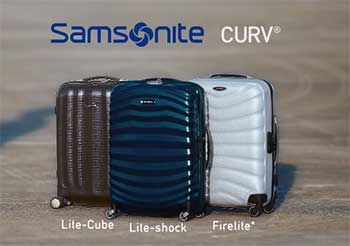
I remember the first time I splurged on a Samsonite.
I was tired of replacing cheap bags every year, so I picked up a Samsonite Omni PC.
It felt like a serious upgrade immediately.
The wheels glided silently across the polished floors of JFK, and I felt a sense of professional pride walking to my gate.
Over the last five years, that bag has been thrown into cargo holds from London to Tokyo.
It has scratches—plenty of them—but the zippers have never snagged, and a wheel has never popped off. It feels like a tank. It is not the flashiest bag on the carousel, but it is undeniably reliable. When I grab my Samsonite, I don’t worry about whether it will survive the trip; I only worry about making my connection.
Read more: My Thoughts on Luhxe Travel Bag
Pros Of Samsonite
- Global Warranty Network: One of the most significant advantages of choosing this brand is its worldwide support system. If a wheel breaks while you are in Paris or a handle snaps in Hong Kong, you can often find an authorized repair center in that same city. Unlike many competitors that require you to ship your bag back to a central warehouse at your own expense, Samsonite allows you to walk into a store or service center in over 100 countries. This peace of mind is invaluable for business travelers who cannot afford downtime. I have had friends get a zipper fixed in Singapore within 24 hours, saving their entire business trip from disaster. The 10-year limited warranty is a standard in the industry, but the accessibility of their service network is what truly sets them apart.
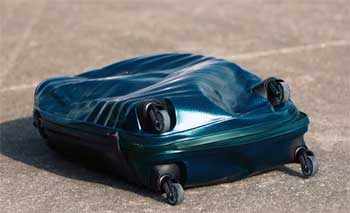
- Proprietary Materials: They invest heavily in material science, which results in suitcases that are incredibly light yet strong. For instance, their Curv® material, found in the high-end Cosmolite and C-Lite series, is made by weaving polypropylene fibers together. This creates a shell that can withstand extreme impact and temperature fluctuations without cracking. I have seen videos of trucks driving over these cases, and they simply pop back into shape. Even their standard polycarbonate lines, like the Freeform, offer a superior strength-to-weight ratio compared to cheaper ABS plastics found in budget brands. This means you can pack more kilos of clothes without worrying about exceeding airline weight limits solely because your empty suitcase is heavy.
- Resale Value and Longevity: Investing in this brand is similar to buying a Toyota; it holds its value and runs for a long time. Because the brand is so ubiquitous and respected, there is actually a market for second-hand Samsonite luggage. If you decide to upgrade later, you can sell your old spinner for a decent price. More importantly, the longevity means the cost-per-use is very low. A $200 suitcase that lasts 10 years cost you $20 a year. A $80 suitcase that breaks after two years costs you $40 a year. In the long run, the durability of their zippers, the reinforcement of their corners, and the quality of their wheel bearings save you money.
- Innovation in Mobility: The wheel systems on their mid-to-high-range bags are often best-in-class. They use double-spinner wheels that are custom-engineered to reduce vibration and noise. On smooth airport floors, the bag feels like it is floating next to you, requiring zero effort to push. Even on carpeted hotel corridors, which are the enemy of spinner wheels, they tend to perform better than average. The “Aero-Trac” suspension wheels found on some premium models even have shock absorbers to handle bumps, reducing the strain on your wrist and arm during long transits.1
Cons Of Samsonite
- High Upfront Cost: There is no getting around the fact that you are paying a premium for the brand name and the marketing machine behind it. For the casual traveler who flies once a year for Thanksgiving, spending $300 to $500 on a suitcase can feel unjustifiable. You can find bags that hold your clothes just as well for a third of the price. If you are on a strict budget, the price tag on their flagship models like the Proxis or C-Lite can be a massive barrier. Even their “budget” lines are often more expensive than the top-tier lines of lesser-known brands.
- Ubiquity on the Carousel: Because they are so popular, everyone has one. If you buy a black or silver Samsonite Winfield or Omni, you are guaranteed to see three other people with the exact same bag on your flight. This makes baggage claim a headache, as you have to meticulously check the tags to ensure you aren’t walking off with a stranger’s laundry. You almost have to buy a bright color or tie a distinct ribbon to the handle to avoid mix-ups. The design, while functional and professional, is rarely unique or head-turning. It screams “corporate traveler,” which might not be the vibe you want for a creative or leisure trip.
- Cosmetic Wear on Hardshells: While the structural integrity of their bags is legendary, the cosmetic finish often leaves much to be desired after a few trips. The high-gloss polycarbonate finishes, which look stunning in the showroom, are magnets for scuffs and scratches.2 After just one trip through a rough baggage handling system, your pristine bag will look like it has been into battle. While this doesn’t affect the usage, it can be annoying to see your expensive purchase look beat-up so quickly. Matte finishes help, but the glossy ones are notorious for showing their age immediately.
- Lack of External Pockets: Most of their popular hardshell options are “clamshell” designs that split right down the middle. This means there are absolutely no external pockets for your laptop, passport, or water bottle. If you need to grab something quickly while in the security line or at the gate, you have to unzip the entire main compartment, which is cumbersome and exposes your packing to everyone around you. While they have started introducing models with front pockets (like the Outline Pro), the vast majority of their core lineup lacks this convenience, which is a feature often found on softer, cheaper bags.
My Experience With Traveler’s Choice
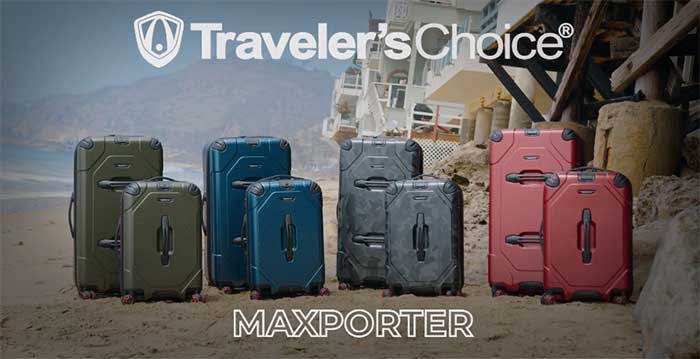
Traveler’s Choice started when I needed a secondary bag for a family vacation and didn’t want to drop another $300. I bought a Traveler’s Choice Tasmania because I was intrigued by the unique T-Cruiser handle and the price point. My first impression was surprise at how many features they packed in. It had a USB port, an expandable zipper that added significant volume, and a handle that felt surprisingly comfortable in the hand. On a trip to Mexico, the bag performed admirably. The “Cyclone” wheels handled the rougher pavement outside the resort better than I expected. However, after about a dozen trips, I started noticing the difference. The telescopic handle developed a bit of a “wobble” that my Samsonite never had, and the interior lining felt a bit thinner. It is a fantastic bag for the money, but it lacks that “indestructible” aura I get from my Samsonite gear.
Pros Of Traveler’s Choice
- Exceptional Value for Money: If you are looking to maximize features per dollar spent, this brand is hard to beat. You can often pick up a two-piece or even three-piece set of Traveler’s Choice luggage for the price of a single Samsonite carry-on. For families traveling with children, where you might need to buy three or four suitcases at once, this cost difference is massive. They offer a “good enough” quality that satisfies 90% of travelers who aren’t flying weekly. You aren’t paying for a massive global advertising campaign; you are paying for the materials and the manufacturing, which keeps the retail price attractive.
- Innovative Handle Designs: One specific feature that has won them many fans is the T-Cruiser handle system.3 Unlike the standard straight telescopic handle, the T-Cruiser is curved ergonomically to fit the natural shape of your hand.4 This design reduces the stress on your wrist when pushing the bag over long distances. It sounds like a gimmick until you use it, but it actually provides better leverage and control, especially when the bag is heavy. This willingness to experiment with ergonomics shows that they are thinking about the user experience, not just copying what everyone else is doing.
- Built-in Tech Features: They were quick to adopt modern conveniences like USB charging ports long before some legacy brands caught up.5 Many of their carry-on models come with a dedicated power bank pocket and an external USB port (and sometimes USB-C).6 This allows you to charge your phone while waiting at the gate without fighting for a wall outlet. For the modern traveler who is glued to their device, this integration is a huge selling point. They also often include other clever organizational features, like shelf dividers or removable packing cubes, included in the price.7
- Cyclone Wheel System: On their higher-end lines, they utilize “Cyclone” spherical wheels. These look different from standard dual-casters; they are wider and offer a lower center of gravity. This design helps prevent the suitcase from tipping over, which is a common annoyance with front-heavy bags. The wider wheel base also handles uneven terrain, like carpet or cracks in the sidewalk, slightly better than thin, standard wheels. It provides a very stable roll that feels substantial and secure.
Read more: My Thoughts on VEVOR Vinyl Cutter
Cons Of Traveler’s Choice
- Inconsistent Build Quality: The biggest issue with this brand is that the quality can vary significantly depending on the specific model you buy. A high-end Traveler’s Choice bag might be fantastic, but their entry-level options sold at discount retailers can feel flimsy. You might encounter zippers that stick, handles that rattle loosely in their housing, or lining that feels like cheap paper. Unlike Samsonite, where there is a baseline of quality you can generally trust across the board, you have to be more careful about which specific Traveler’s Choice model you choose.
- Limited Warranty Service: While they offer warranties ranging from 1 to 10 years, the execution of that warranty is not as seamless as their larger competitors. They generally do not have walk-in service centers. If you have a defect, you typically have to file a claim online, pay for shipping to send the bag (or the defective part) to them, or wait for them to ship a replacement part to you. This DIY approach to repair is fine if you are handy with a screwdriver, but if you need a quick fix before a flight, you are out of luck. The “limited” nature of the warranty also tends to have more exclusions regarding wear and tear.
- Weight: Generally speaking, their bags tend to be slightly heavier than the equivalent size in a premium brand. They often use thicker plastics or heavier frame components to achieve durability, rather than advanced, expensive lightweight composites. An extra pound or two might not seem like much, but when you are lifting the bag into an overhead bin or trying to stay under a strict 7kg carry-on limit on a budget airline, every ounce counts. If you are a light packer, this won’t matter, but for heavy packers, the bag’s starting weight is a disadvantage.
- Long-Term Durability Concerns: While these bags are great for a few years of moderate use, they are rarely “buy it for life” items. The wheels, while innovative, may start to grind or lose their smoothness after extensive mileage. The telescoping handles are often the first point of failure, developing a “sticky” mechanism that refuses to go down or up smoothly. If you are a road warrior traveling 100 days a year, you will likely burn through a Traveler’s Choice bag in two years, whereas a more premium bag might last you five to ten.
Maintenance Tips For Samsonite And Traveler’s Choice
- Cleaning the Hardshell: Both brands utilize polycarbonate or polypropylene shells that are relatively easy to maintain, but they require the right technique to avoid making scratches worse. For general dirt and grime, a simple mixture of warm water and mild dish soap is your best friend. Use a soft microfiber cloth to wipe down the exterior. Never use abrasive sponges or harsh chemicals like bleach, as these can dull the finish and weaken the plastic. For stubborn scuff marks—those black streaks left by rubber conveyor belts—a “magic eraser” sponge is a miracle worker. Gently buff the scuff mark, and it will usually disappear. However, test it on a small, inconspicuous area first, especially if your luggage has a glossy finish, as aggressive scrubbing can affect the shine.
- Wheel Care and Lubrication: The wheels are the workhorses of your luggage and are often the first thing to fail due to neglect. After every trip, take a moment to inspect the wheels for debris. Hair, string, and carpet fibers love to get wrapped around the wheel axles, which increases friction and eventually causes the wheel to seize up or flat-spot. Use a pair of tweezers to pull out any debris you see. Every six months, apply a small drop of silicone-based lubricant to the wheel bearings. Do not use WD-40, as it attracts dirt and can gum up the mechanism over time. A proper silicone spray will keep the wheels spinning silently and smoothly for years.
- Zipper Maintenance: A broken zipper is a death sentence for a suitcase, so keeping them healthy is crucial. If a zipper feels stiff, do not force it. This usually means there is dirt in the teeth or the fabric is caught. You can lubricate the zipper teeth by rubbing a candle (paraffin wax) or a graphite pencil along the teeth. This helps the slider glide effortlessly. Always pack your bag reasonably; overstuffing and forcing the zipper closed puts immense pressure on the coil and the pull-tab. If you have to sit on the bag to close it, you are shortening the life of the zipper significantly. Use the compression straps inside the bag to flatten your clothes before you try to zip the lid shut.
- Storage Between Trips: How you store your luggage when you are not traveling is just as important as how you treat it on the road. Do not store your suitcases in a damp basement or a hot attic. Extreme temperature fluctuations can make the plastic brittle over time, and moisture can lead to mold growing in the lining. Store the luggage in a climate-controlled closet. If you have a set of nesting luggage (carry-on inside the medium, medium inside the large), this is a great way to save space. However, ensure the bags are clean and dry before nesting them. I recommend throwing a dryer sheet or a small packet of silica gel inside each bag while it is stored to keep it smelling fresh and to absorb any residual moisture.
Comparison with other brands
- Vs. Briggs & Riley: When you compare either Samsonite or Traveler’s Choice to Briggs & Riley, you are stepping into a different tier of luxury and service. Briggs & Riley is famous for its “Simple as That” lifetime warranty, which covers absolutely everything, even if the airline destroys your bag. Neither Samsonite nor Traveler’s Choice offers this level of coverage. If you buy a Samsonite, you are getting great quality, but if the airline runs it over, you are likely fighting a claim with the airline, not Samsonite. Briggs & Riley is significantly more expensive than Samsonite—often double the price—and triple the price of Traveler’s Choice. However, for the traveler who wants to buy one bag for the rest of their life, Briggs & Riley is the gold standard that makes Samsonite look like the “mid-range” option and Traveler’s Choice look like the budget pick.
- Vs. American Tourister: It is worth noting that American Tourister is actually owned by Samsonite, serving as their entry-level brand. In this comparison, Traveler’s Choice sits squarely in competition with American Tourister. Traveler’s Choice often beats American Tourister on features, offering things like TSA locks and USB ports on cheaper models where American Tourister might offer basic zippers and no frills. However, American Tourister benefits from Samsonite’s supply chain and basic quality control standards. If you are deciding between Traveler’s Choice and American Tourister, Traveler’s Choice usually offers a more “grown-up” look and better tech features, while American Tourister focuses on bright colors and Disney collaborations for vacationers.
- Vs. Away: Away took the market by storm with its direct-to-consumer model, selling a lifestyle as much as a suitcase. Compared to Samsonite, Away offers a more curated, “Instagrammable” aesthetic and a simpler shopping experience (fewer models to choose from). Samsonite generally offers better durability and wheel technology than Away, as they have decades of manufacturing experience. Traveler’s Choice tries to mimic some of Away’s features (like the battery pack and hard shell look) at a fraction of the price. If you want the Away “look” but don’t want to spend $300, a matte-finish Traveler’s Choice bag is a legitimate alternative, though it won’t feel quite as premium in the finishing details.
- Vs. Delsey Paris: Delsey is the French equivalent of Samsonite and its closest direct rival. They are very similar in price and quality to Samsonite. Delsey often focuses more on style and elegance, with soft-touch finishes and vintage aesthetics (like the Chatelet Air), whereas Samsonite focuses on utilitarian durability and weight reduction. Traveler’s Choice cannot really compete with Delsey on style; Delsey bags simply look more expensive. However, if you compare functionality, a $150 Traveler’s Choice bag might have better internal organization than a base-model $150 Delsey. If your priority is looking chic in Paris, go Delsey. If your priority is getting your gear from A to B safely, Samsonite wins. If your priority is saving money, Traveler’s Choice is the play.
Frequently Asked Questions (FAQ)
Yes, it is a solid mid-range brand that offers excellent value for money. They provide durable hardshell cases with modern features like USB ports and ergonomic handles at a price point significantly lower than premium brands, making them ideal for vacationers and budget-conscious travelers.
In the general consumer market, Samsonite is widely considered to have better overall quality consistency, superior materials (like Curv®), and more reliable wheel systems compared to Traveler’s Choice. For ultra-premium quality, brands like Briggs & Riley or Rimowa rank higher, but Samsonite strikes the best balance of quality and price for most people.
Assuming you mean Traveler’s Choice, yes. They are a reputable company based in California with decades of history.8 They are not a “fly-by-night” cheap import brand; they win industry awards for design and supply luggage to major retailers, making them a trustworthy choice for affordable travel gear.9
Traveler’s Choice is headquartered in Pomona, California, where they handle design, sales, and distribution.10 However, the actual manufacturing of the luggage takes place in their facilities in China, Taiwan, and other parts of Asia, which is standard for the vast majority of luggage brands today.
Conclusion
If you are a frequent flyer, a business traveler, or someone who views luggage as a long-term investment, Samsonite is the better choice for you. The higher upfront cost pays for itself through years of reliable service, a global support network that actually has your back, and a resale value that budget brands cannot match. When I travel for work, I take my Samsonite because I need that absolute certainty that my wheels won’t seize up while I’m running to a connecting flight.
However, if you are a leisure traveler, a student, or a family looking to outfit everyone for a summer vacation without breaking the bank, Traveler’s Choice is the winner. You get 90% of the functionality of the big brands—including cool tech features and ergonomic handles—for 50% of the price. For the occasional trip to the beach or a holiday visit to relatives, a Traveler’s Choice bag will serve you faithfully and look good doing it. It is the smart buy for those who would rather spend their money on the trip itself than on the case that carries their clothes.