
I’ve spent a lot of time testing streaming devices and soundbars in my living room setup, and the Roku Streambar lineup always stands out for combining streaming smarts with decent audio in one compact package. In this article, I share my hands-on thoughts on the Roku Streambar versus the Roku Streambar Pro to help you decide which one suits your needs better. I cover key features, real-world performance, pros and cons, and more from my perspective as someone who uses these daily for movies, shows, and casual listening.
A Brief Comparison Table Roku Streambar Vs Roku Streambar Pro
| Feature | Roku Streambar | Roku Streambar Pro |
| Audio Channels | 2.0 | 2.0 |
| Expandable To | 5.1 (with surrounds and sub) | 5.1 (with surrounds and sub) |
| Built-in Streaming | 4K HDR, Roku OS | 4K HDR, Roku OS |
| Ethernet Port | No | Yes (wired option) |
| Remote Type | Standard Voice Remote | Voice Remote Pro (with headphone jack, shortcuts) |
| Drivers/Speakers | Smaller full-range drivers | Larger full-range drivers |
| Chromecast Built-in | No | Yes |
| Microphone Input | No | Yes |
| Size/Design | More compact | Slightly larger |
| Room Correction | No | Yes |
| DTS Support | Limited | Better DTS handling |
| Current Availability | Still available | Discontinued (but may find used/stock) |
My Experience With Roku Streambar Pro
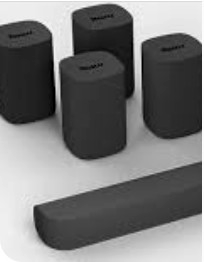
I upgraded to the Pro for my main TV after loving the standard version.
The difference hit immediately—sound felt more enveloping, with clearer highs and mids.
Wired connection stabilized streams during 4K HDR marathons. Room correction adjusted automatically, optimizing for my open living space.
Private listening via headphone jack became essential for sports or late movies. Chromecast added flexibility when friends visited.
Expansion potential tempted me to add a sub, turning it into a mini home theater. Despite discontinuation news, it still receives updates reliably.
Daily reliability impressed—no dropouts, fast app launches. It handled everything from quiet dramas to loud blockbusters gracefully. If you find one, it delivers premium integrated performance.
Pros Of Roku Streambar
- Compact and space-saving design: I love how this one fits perfectly under my smaller TV without taking up much shelf space, making it ideal for bedrooms or apartments where every inch counts.
- Affordable entry into Roku audio: It delivers solid value for the price, giving you both a streaming player and improved sound without breaking the bank compared to buying separate devices.
- Clear dialogue enhancement: Voices come through crisply in movies and shows, which helps a ton during dialogue-heavy scenes where built-in TV speakers often muddle things.
- Easy setup process: Plug it in, connect via HDMI ARC, and you’re streaming in minutes with the familiar Roku interface that I already know well from other devices.
- Reliable wireless streaming: It handles Wi-Fi smoothly for 4K content, and I rarely notice buffering even on busy home networks.
- Free live TV and channels: Access to tons of free content right out of the box adds extra entertainment without subscriptions, which I appreciate for casual viewing.
- Simple remote controls: The included voice remote lets me search quickly and adjust volume without fumbling around.
- HDR support for better visuals: When paired with a compatible TV, colors pop more vividly in supported content.
- Bluetooth connectivity: I can pair my phone easily to play music through it when not streaming shows.
- Low power consumption: It stays cool and doesn’t draw much electricity, which is nice for leaving it on standby.
Also read: Comparison of Voyager Legend And 5200
Cons Of Roku Streambar
- Limited bass response: Without a subwoofer, low-end sounds lack punch, so action scenes or music feel a bit flat compared to fuller systems.
- No wired Ethernet: Reliance on Wi-Fi only can lead to occasional drops in weaker signal areas, which frustrated me during peak streaming times.
- Smaller drivers mean less volume: It doesn’t get as loud as bigger options, so in larger rooms it struggles to fill the space effectively.
- No advanced audio formats full support: DTS content doesn’t play as optimally, leading to downmixing that loses some detail.
- Basic remote without extras: Lacks headphone jack or customizable buttons, so private listening requires workarounds.
- No room correction tuning: Sound stays the same regardless of room acoustics, which can make it inconsistent in different placements.
- Less immersive stereo separation: The compact size limits how wide the soundstage feels, keeping things more centered.
- Potential for future obsolescence: As newer models emerge, software updates might slow over time, though Roku tends to support devices well.
- No Chromecast integration: Limits casting options if you use Android devices frequently.
- Power adapter placement: The cord setup can be awkward behind tight TV stands.
Maintenance Tips For Roku Streambar
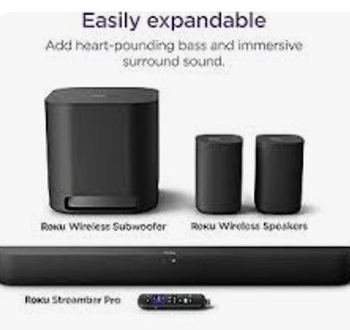
- Keep vents dust-free: Wipe the top and sides regularly with a soft cloth to prevent overheating from blocked airflow.
- Update software monthly: Check for Roku OS updates in settings to maintain performance and security.
- Position away from heat sources: Avoid placing near radiators or direct sunlight to protect internal components.
- Cable management: Secure HDMI and power cords to reduce strain and prevent accidental disconnects.
- Reset when glitches occur: A quick factory reset resolves most interface slowdowns without losing much setup time.
- Clean ports gently: Use compressed air for HDMI and USB ports to remove debris buildup.
- Monitor for firmware notices: Roku pushes audio improvements occasionally, so apply them promptly.
- Avoid moisture exposure: Keep it dry and away from spills to prevent internal damage.
- Test connections yearly: Re-plug cables to ensure solid contact as they can loosen over time.
- Pair accessories carefully: When adding sub or surrounds, follow exact pairing steps to avoid sync issues.
Comparison With Other Brands
- Vs Sonos Beam: Sonos offers superior multi-room audio and voice assistant integration, but costs more and requires additional gear for full expansion.
- Vs Amazon Echo Studio soundbar alternatives: Amazon provides deeper Alexa ecosystem ties and spatial audio, yet Roku wins on neutral streaming platform without ads pushing content.
- Vs Bose Smart Soundbar: Bose delivers richer sound signature and better build quality, though Roku edges out in affordability and simple interface.
- Vs Samsung soundbars: Samsung integrates seamlessly with their TVs for Q-Symphony effects, but Roku stands independent and works universally.
- Vs Vizio soundbars: Vizio often includes more channels out of the box at similar prices, yet Roku provides a cleaner OS experience.
- Vs Yamaha soundbars: Yamaha excels in hi-fi audio fidelity, but Roku combines streaming convenience that Yamaha lacks built-in.
- Vs LG soundbars: LG offers AI room tuning similar to Pro features, while standard Streambar keeps things basic but reliable.
- Vs Polk Audio options: Polk provides stronger bass emphasis, though Roku matches better in value for casual users.
- Vs JBL Bar series: JBL focuses on party modes and louder output, yet Roku prioritizes dialogue clarity over raw power.
- Vs Hisense integrated bars: Hisense bundles with their TVs cheaply, but Roku delivers standalone flexibility across brands.
My Experience With Roku Streambar
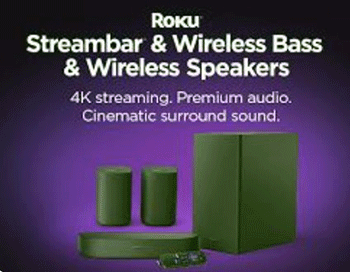
I picked up the standard Streambar a couple years back for my secondary TV in the bedroom.
Right away, the upgrade over stock TV speakers felt massive—dialogue sharpened instantly, and watching late-night shows without subtitles became possible.
Setup took under ten minutes: HDMI ARC connection, Wi-Fi login, and remote pairing.
The Roku interface loads fast, and finding content happens effortlessly with voice search.
Daily use impressed me most. Streaming Netflix or YouTube in 4K looked crisp, and HDR added depth to nature docs.
Bluetooth pairing let me stream Spotify playlists easily during downtime. In a small room, sound filled nicely without needing max volume. Adding a Roku sub later boosted bass noticeably for movies.
Read more: Comparison of Schiit Vali 2 And Vali 3
Pros Of Roku Streambar Pro
- Richer, fuller sound profile: Larger drivers produce more dynamic audio with better separation and depth than the standard model.
- Wired Ethernet for stability: No more Wi-Fi worries—perfect for consistent 4K streaming in my home office setup.
- Voice Remote Pro extras: Headphone jack enables private listening, a game-changer for late nights without disturbing others.
- Room correction feature: Auto-tunes sound to my room’s acoustics, making placement less critical.
- Chromecast built-in: Casting from phone apps works seamlessly alongside Roku features.
- Stronger DTS handling: Plays more formats natively for smoother compatibility with various content.
- Microphone input option: Allows easier expansion or tweaks if needed.
- Cinematic feel in movies: Explosions and music tracks hit harder, elevating action films noticeably.
- Expandable same as standard: Pairs with surrounds and sub for true surround without starting over.
- Premium build perception: Feels sturdier and looks more substantial under the TV.
Cons Of Roku Streambar Pro
- Larger footprint: Takes more space, which crowded my smaller entertainment unit initially.
- Higher original price: Cost more upfront, though deals made it reasonable at times.
- Discontinued status: Harder to find new now, pushing toward used or remaining stock markets.
- Still needs sub for deep bass: Even with improvements, low frequencies benefit from add-on.
- Overkill for small rooms: Extra power wasted in compact spaces where standard suffices.
- Remote batteries drain faster: Extra features like headphone use consume more power.
- No major surround out of box: Expansion costs add up quickly.
- Potential availability issues: As discontinued, warranty support might vary.
- Slightly more complex setup: Extra features require minor tweaks during initial config.
- Heavier unit: Moving it around feels bulkier during cleaning or repositioning.
Maintenance Tips For Roku Streambar Pro
- Dust larger grilles often: Vacuum gently to maintain airflow with bigger surface area.
- Check Ethernet cable regularly: Ensure secure connection to avoid intermittent issues.
- Update remote firmware too: Pair with OS updates for full functionality.
- Calibrate room correction periodically: Re-run if furniture moves for optimal tuning.
- Clean headphone jack: Prevent buildup affecting private listening quality.
- Monitor heat during extended use: Larger drivers generate more warmth.
- Store remote safely: Avoid drops to protect extra buttons.
- Test Chromecast casting monthly: Confirm compatibility with app updates.
- Backup settings before resets: Speeds recovery if needed.
- Pair accessories in order: Follow sequence for seamless surround integration.
Comparison With Other Brands
- Vs Sonos Beam Gen 2: Sonos adds true Dolby Atmos potential, but Roku Pro counters with built-in Ethernet and lower entry cost.
- Vs Bose Smart Ultra: Bose provides advanced processing, yet Roku offers simpler universal streaming.
- Vs Samsung HW-Q series: Samsung excels in TV synergy, while Pro stands alone effectively.
- Vs Vizio Elevate: Vizio rotates drivers for height effects, but Roku focuses on reliable basics.
- Vs Yamaha True X: Yamaha emphasizes audiophile tuning, though Pro wins in smart features.
- Vs JBL Bar 9.1: JBL detaches surrounds, yet Roku integrates streaming better.
- Vs LG S series: LG adds AI enhancements, similar to room correction on Pro.
- Vs Polk Signa: Polk boosts bass focus, while Pro balances dialogue and effects.
- Vs Hisense AX series: Hisense offers budget surround, but Roku provides cleaner OS.
- Vs Denon home bars: Denon delivers pro audio, though Roku matches value for casual use.
Frequently Asked Questions (FAQ)
The Pro has larger drivers for better sound, Ethernet port, advanced remote with headphone jack, room correction, Chromecast, and stronger format support, while the standard is more compact and affordable.
Yes, Roku discontinued the Streambar Pro in 2024, though some stock remains available through retailers or used markets.
The Streambar Pro offers superior audio and features overall, but the standard Streambar wins for smaller spaces, budget, and current availability.
Conclusion: For Both Products
I’ve used both extensively, and each serves a purpose well. If you’re after compact convenience and solid basics without extras, go with the Roku Streambar—it handles everyday streaming and audio upgrades beautifully. For richer sound, stable connections, and premium touches like private listening, the Pro edges ahead, even if harder to source now.
Ultimately, pick based on your room size, budget, and priorities. Either way, you’ll enjoy the seamless Roku experience. What fits your setup best? Let me know your thoughts!