
If you’re looking for a reliable way to keep your older engine running smoother, quieter, and longer, Rislone Engine Treatment is absolutely worth adding to your maintenance routine. I’ve seen it breathe new life into high-mileage vehicles, reducing noise and improving performance without any drama. You should seriously consider buying it if your car has over 100,000 miles or starts showing signs of sludge or lifter tick—it’s a small investment that pays off big time.
My Experience With Rislone Engine Treatment
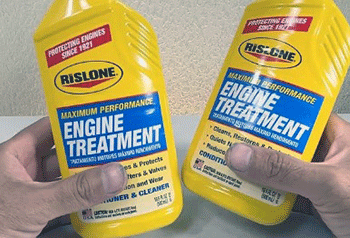
I remember the day I first poured Rislone Engine Treatment into my 2008 Honda Accord like it was yesterday.
The car had around 180,000 miles on it, and honestly, it sounded tired.
There was this annoying lifter tick on cold starts that drove me nuts, especially in the mornings when I was rushing to work.
The engine felt a bit sluggish too, like it was struggling under acceleration, and I noticed it was burning a little oil between changes.
I picked up a bottle of Rislone at my local auto parts store after reading some reviews online. You know how it is—you see all these products claiming to fix everything, and you’re skeptical.
But Rislone had been around forever, and people kept saying it actually worked without the hype. I figured, why not give it a shot? It was cheap enough not to feel like a waste if it didn’t do anything.
I added the whole bottle right after an oil change, replacing about a quart of fresh oil to avoid overfilling.
The instructions were straightforward: just pour it into the crankcase with the engine off, then start driving. At first, I didn’t notice much.
The tick was still there for the first couple of days, and I thought, great, another product that doesn’t live up to the promises.
But then, around 200 miles in, things started changing. The lifter noise quieted down noticeably on startup.
By 500 miles, it was almost gone. The engine ran smoother overall—like the roughness I’d gotten used to just vanished. Acceleration felt peppier, and I swear the idle was steadier.
I even checked my oil consumption over the next few thousand miles, and it dropped significantly. No more topping off every month.
What impressed me most was how gradual it was. Rislone isn’t some aggressive flush that shocks your engine; it cleans slowly and safely.
I popped the valve cover later for unrelated work, and inside looked way cleaner than I expected for the mileage—no heavy sludge buildup like I’d seen in other high-mileage cars I’d owned.
I’ve used it in a couple of vehicles since then, including my current truck with over 250,000 miles. Every time I add it at oil changes, the engine just feels happier.
Quieter, more responsive, and it gives me peace of mind knowing it’s helping prevent varnish and gum from forming.
If your car is starting to show its age, try it yourself—you’ll feel the difference, and your engine will thank you. It’s become a staple in my garage, and I can’t imagine maintaining an older vehicle without it.
Also read: My Thoughts on Valvoline Restore and Protect
Pros Of Rislone Engine Treatment
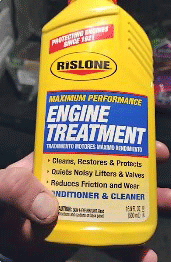
- Effective gradual cleaning: Rislone slowly dissolves varnish, sludge, and gum without risking clogs in oil passages, keeping internal parts like piston rings and valves free for better performance over time.
- Quiets noisy components: It penetrates lifters, valves, and bearings to reduce ticking and tapping sounds, making your engine run much quieter, especially on startup or under load.
- Reduces friction and wear: The penetrating oil and additives create better lubrication, protecting metal surfaces and extending engine life in high-mileage vehicles.
- Improves overall performance: You often notice smoother acceleration, steadier idle, and even slight gains in power as compression evens out from freed-up rings.
- Reduces oil consumption: By cleaning rings and seals, it helps prevent blow-by and burning oil, saving you money on top-offs between changes.
- Compatible with all oils: Works seamlessly with conventional, synthetic, or high-mileage oils in gas or diesel engines, no compatibility worries.
- Easy to use regularly: Safe to add at every oil change for ongoing protection, preventing buildup before it becomes a problem.
- Proven long-term results: Users with 300,000+ miles report cleaner internals and reliable running, backed by decades of real-world use.
- Affordable protection: A single bottle provides noticeable benefits without breaking the bank, making it a smart preventive measure.
Cons Of Rislone Engine Treatment
- Not an instant fix: Results build gradually over hundreds of miles, so you won’t see dramatic changes overnight if your engine is very dirty.
- Potential temporary noise increase: As it loosens deposits, some engines might sound noisier or vibrate more briefly before improving.
- Risk in severely sludged engines: In extremely neglected cases, loosening heavy buildup could clog passages if not followed by an oil change.
- May lower oil pressure slightly: Cleaning can reduce restrictions temporarily, though this usually stabilizes as the engine cleans.
- Requires consistent use: For maximum benefits, you need to add it regularly; one-time use helps but doesn’t prevent future issues.
- No miracle for major wear: It won’t rebuild worn bearings or fix serious mechanical problems—it’s maintenance, not a repair.
- Oil darkens faster: As it suspends contaminants, your oil may look dirty sooner, prompting more frequent changes in dirty engines.
- Overfill risk if careless: You must account for the bottle’s volume when adding to avoid exceeding crankcase capacity.
Maintenance Tips For Rislone Engine Treatment
- Add at every oil change: Pour in one bottle (replacing equivalent oil volume) during fresh changes for consistent cleaning and protection—don’t overfill.
- Drive normally after adding: Allow 100-500 miles of regular driving for it to penetrate and start loosening deposits effectively.
- Monitor oil level closely: Check frequently in the first few hundred miles, as cleaning can affect consumption temporarily.
- Change oil sooner if very dirty: For sludged engines, use double dose and change oil/filter after 100-300 miles to remove suspended gunk.
- Combine with quality oil: Pair with good conventional or synthetic oil to maximize lubrication and cleaning benefits.
- Use in high-mileage vehicles regularly: Add every 3,000-5,000 miles to prevent varnish and keep lifters quiet over time.
- Avoid mixing with thick stabilizers: Stick to Rislone alone or with standard oils to prevent viscosity issues.
- Warm engine before adding: For best mixing, add when engine is warm but off, then idle briefly.
- Store properly: Keep bottles sealed and away from extreme heat to maintain effectiveness.
- Follow dosage precisely: One bottle for 4-6 quarts; adjust for larger engines to avoid dilution.
Comparison With Other Brands
Rislone Versus Seafoam
You and I both know Seafoam shines more as a fuel system cleaner, often sucked through the intake for carbon removal. It works great there, but in the oil, it’s not as focused on long-term sludge dissolution. Rislone penetrates deeper into rings and lifters gradually, providing ongoing protection and quieter operation without the aggressive flush feel. If your issue is oil-related deposits, I find Rislone gives smoother, more sustained results over miles.
Rislone Versus Lucas Oil Stabilizer
Lucas thickens oil to cushion worn parts and quiet noise in really beat-up engines, which helps with oil burning short-term. But it can make cold starts harder and doesn’t clean like Rislone. You get that heavy honey-like feel with Lucas, while Rislone maintains better flow and actively removes varnish without altering viscosity much. For cleaning and prevention, Rislone feels more balanced to me.
Rislone Versus Marvel Mystery Oil
Marvel Mystery Oil is a classic, thinner additive good for upper cylinder lubrication and minor cleaning when added to fuel or oil. It quiets things gently and has that loyal following. Rislone, though, packs more protective additives and excels at sludge removal in the crankcase. You might notice Marvel works faster on light deposits, but Rislone builds cleaner internals over repeated use, especially in higher mileage.
Read more: My Thoughts on Dorman Auto Parts
Frequently Asked Questions (FAQ)
Yes, when used properly, Rislone is beneficial for most engines, especially higher-mileage ones. It cleans sludge gradually, reduces friction, quiets noisy parts, and helps maintain performance without harsh chemicals.
It starts working immediately upon driving, but noticeable improvements like quieter lifters or smoother running often appear within 100-500 miles. Full cleaning benefits build over 1,000-3,000 miles or multiple treatments.
It depends on your needs, but for oil-based cleaning and protection, Rislone stands out for its balanced formula and proven results in high-mileage engines. Many users prefer it over flashier options for reliable, gradual improvement.
It’s a blend of high-quality penetrating lubrication oil, protective additives (including zinc and phosphorus compounds), and special cleaning agents designed to dissolve varnish and sludge safely.
Conclusion
After years of using it myself and seeing the difference in my vehicles, I can confidently say you should buy Rislone Engine Treatment. It delivers real cleaning and protection that keeps engines running strong longer—grab a bottle next oil change, and you’ll wonder why you waited.