
If you have been scrolling through social media, you have likely seen the Retrospec Beaumont. It is the quintessential “aesthetic” bike, evoking images of riding through a European city with a baguette in the basket and the wind in your hair. But beyond the vintage styling and the attractive price tag, is this bike actually a reliable daily driver, or is it just a pretty prop?
As someone who wanted a stylish commuter without spending thousands on a custom build, I put the Beaumont to the test on city streets, potholes, and hills. If you are ready to upgrade your commute with some retro flair, you should buy this product directly from the Retrospec website or Amazon to ensure you get the correct size and warranty support.
My Experience With Retrospec Beaumont City Bike
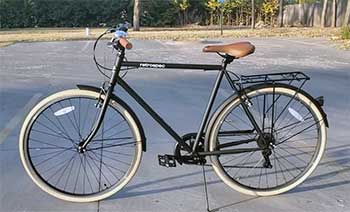
I live in a city that is somewhat bike-friendly but plagued by imperfect pavement.
I wasn’t looking for a carbon-fiber road bike to set speed records; I wanted something that allowed me to sit upright, see traffic, and carry my groceries home without needing a backpack.
The Retrospec Beaumont caught my eye immediately because of its step-through frame (which they call the “Beaumont Step-Thru”) and the classic color options like Matte Olive and Eggshell.
When the box arrived, the sheer size of it was intimidating. Retrospec claims the bike comes “85% assembled,” but that missing 15% is where the challenge lies. If you are handy with a wrench, it is manageable, but I admit I struggled with the front brake calibration. After about an hour of wrestling with the handlebars and pedals, I had it built. The first thing that struck me was the weight. This is a high-tensile steel bike, and you feel every ounce of it when you lift it. If you live in a third-floor walk-up apartment like I do, you need to consider this. Carrying a 30-plus pound bike up narrow stairs is a legitimate workout before you even start riding.
However, once I got it on the road, the weight became less of an issue and more of a feature. The steel frame absorbs road vibration beautifully. I rode over cracked asphalt and small potholes that would have rattled my teeth out on a stiff aluminum road bike, but the Beaumont just rolled over them with a gentle thud. The upright riding position was exactly what I hoped for. I felt dignified, not hunched over. I could easily look over my shoulder to check for cars, and my lower back didn’t ache after a 30-minute ride to the coffee shop.
The 7-speed Shimano drivetrain is operated by a “RevoShift” grip shifter, which works like a throttle on a motorcycle. You twist your wrist to change gears. While it isn’t as snappy as trigger shifters found on high-end mountain bikes, it is incredibly intuitive. I encountered a few steep hills on my commute, and shifting into the lowest gear (the “Granny gear”) made the climb manageable, though I certainly wasn’t breaking any speed limits. The gearing is perfectly adequate for urban environments with moderate elevation changes.
One specific incident really sold me on the bike’s utility. I stopped at a farmer’s market and realized I had bought way too much produce. The included rear rack, which comes standard on the bike, was a lifesaver. I had strapped a milk crate to it (a common modification), and I was able to haul a week’s worth of vegetables home without the bike feeling unstable. The center of gravity is low, and the bike feels planted.
After three months of daily riding, the “new bike” shine has persisted, but I have had to make adjustments. The brakes, which were spongy out of the box, needed tightening after the cables stretched (a normal break-in process). But every time I park it, someone asks me where I got it. It brings a level of joy to commuting that a generic hybrid bike just doesn’t offer. It forces you to slow down and enjoy the journey rather than just rushing to the destination.
Also read: My Thoughts On Ausom Leopard Electric Scooter
Pros Of Retrospec Beaumont City Bike
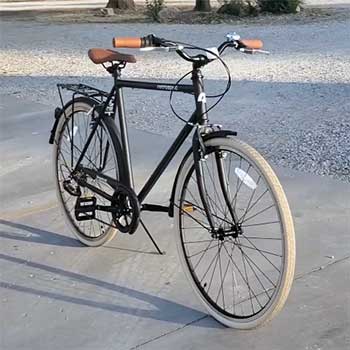
- Unbeatable Aesthetic Appeal: Let’s be honest, the primary reason most people consider the Beaumont is the look. It nails the mid-century European commuter vibe perfectly. From the vegan leather grips and saddle to the muted, matte color palette, it looks significantly more expensive than it actually is. It has a timeless quality that doesn’t scream “sporty” or “aggressive,” making it approachable for casual riders who don’t want to wear Spandex. It is a bike that fits in at a Sunday brunch or a business casual office commute.
- Comprehensive Accessory Package: Most budget bikes are sold “stripped,” meaning you get the frame and wheels, but if you want fenders or a rack, you have to buy them separately and figure out how to install them. The Beaumont comes stock with sturdy metal fenders and a rear rack. In a rainy climate, fenders are non-negotiable to prevent road water from spraying a stripe of mud up your back. The rear rack is rated for decent loads, allowing you to attach panniers or baskets immediately. Getting these included in the base price saves you roughly $60 to $80 in aftermarket accessories.
- Comfortable Upright Geometry: The frame geometry is designed for comfort, not aerodynamics. The handlebars sweep back towards the rider, allowing you to sit with your spine straight and your head up. This position reduces strain on your wrists, shoulders, and lower back, which is a common complaint among new cyclists riding aggressive road bikes. It also improves safety; because you are sitting tall, you are more visible to drivers, and your field of vision is wider, allowing you to spot hazards more easily.
- Durable Steel Frame: While steel is heavy, it is also incredibly real-world durable. Unlike carbon fiber, which can crack upon impact, or thin aluminum, which can dent, high-tensile steel is tough. It can take the abuse of being locked to metal bike racks, tipped over on a sidewalk, or jostled in a garage. Furthermore, steel has natural damping properties. It flexes slightly to absorb high-frequency road vibrations, providing a smoother “gliding” sensation that aluminum frames often lack.
- Versatile Tire Choice: Retrospec equipped this bike with 700x35C Wanda tires. This width is the “Goldilocks” zone for city riding. They are wider than skinny road bike tires (which get stuck in grate cracks and feel harsh) but narrower than mountain bike tires (which are slow and loud). The 35mm width provides a stable contact patch with the ground, giving you confidence when riding over loose gravel, wet leaves, or uneven pavement. The tread pattern channels water away effectively, adding to the all-weather capability.
- Simple Shimano Drivetrain: The bike uses a Shimano Tourney 7-speed rear derailleur and a RevoShift grip shifter. This is widely available, easy-to-service technology. Having 7 gears is the perfect amount for a city bike; it gives you enough range to tackle bridges and hills without the complexity and maintenance headache of a front derailleur (making it a 21-speed). The grip shifter allows you to dump multiple gears at once just by twisting your wrist, which is great when you suddenly hit a red light and need to downshift for the start.
Cons Of Retrospec Beaumont City Bike
- Significant Weight: The trade-off for the durable steel frame and low price is mass. The Beaumont weighs approximately 31 to 33 pounds depending on the frame size. This is heavy. If you have to carry your bike up and down stairs daily, or if you plan on putting it on a roof rack of a tall car, you will struggle. This weight also makes the bike feel sluggish off the line. Acceleration requires more effort than on a lighter aluminum hybrid bike. It is a cruiser, and it demands to be ridden at a leisurely pace.
- Entry-Level Component Quality: To keep the price affordable, Retrospec uses entry-level components. The brake levers and arms are basic alloy, the pedals are plastic, and the bottom bracket is a standard square taper. While these work fine for casual riding, they lack the precision and longevity of higher-end parts. The brake pads, in particular, are somewhat hard and can be noisy or dusty. Heavy users might find themselves needing to replace pedals or brake pads within the first year of ownership as they wear down faster than premium alternatives.
- Assembly and Tuning Required: The “85% assembled” claim can be misleading for total beginners. While the major parts are attached, the bike often arrives with the derailleur slightly out of index and the wheels needing “truing” (straightening). If you assemble it yourself without knowledge of bike mechanics, you might end up with gears that click and skip or brakes that rub against the rim. Many users end up having to pay a local bike shop $50 to $100 to do a safety check and tune-up, which adds to the overall cost.
- Synthetic Leather Contact Points: The saddle and grips are made of a brown synthetic leather to match the retro look. While they look great, they are not breathable. On hot summer days, the vinyl saddle can get very sweaty and uncomfortable, and the grips can become slippery if your hands are perspiring. Additionally, the saddle is somewhat hard. Riders not used to cycling might find it unforgiving on their sit bones until they break it in or swap it out for a gel seat or a genuine leather Brooks saddle.
- Rust Susceptibility: Because the frame and fenders are steel, they are prone to rust if the paint is chipped or if the bike is left outside in the elements. Unlike aluminum which oxidizes but doesn’t rot, steel will rust structurally if neglected. You cannot leave this bike locked up outside your apartment building all winter and expect it to survive. It requires indoor storage or a high-quality cover to maintain its integrity and appearance.
- Not Built for Speed or Distance: If your commute is longer than 5-7 miles one way, or if you want to join a group ride on the weekends, this is the wrong bike. The heavy frame, upright wind-catching position, and rolling resistance make it inefficient for long distances. You will expend significantly more energy keeping this bike moving at 15mph than you would on a dedicated road or fitness bike. It is strictly designed for short to medium-range urban hops.
Maintenance Tips For Retrospec Beaumont City Bike
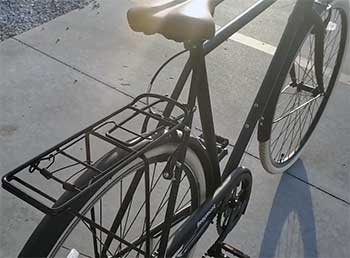
- Fight the Rust: Since the Beaumont is made of steel, moisture is your enemy. If you get caught in the rain, take five minutes to wipe the frame and the chrome parts down with a dry rag when you get home. Pay special attention to the chain and the bolts on the fenders, as these are usually the first places to show orange spots. If you do scratch the paint (which happens when locking it up), use a dab of clear nail polish or matching model paint to seal the metal and prevent rust from spreading under the clear coat.
- Monitor Tire Pressure Weekly: The 700x35C tires need to be kept at the correct pressure, usually between 50 and 75 PSI (check the sidewall of your specific tire). Because the tubes are standard rubber, they lose a tiny bit of air naturally over time. Riding on under-inflated tires makes the bike feel sluggish and heavy, and dramatically increases your risk of a “pinch flat” (where the rim cuts the tube when you hit a bump). A floor pump with a gauge is an essential investment for owning this bike.
- Chain Lubrication is Key: The 7-speed drivetrain is exposed to the elements. City riding kicks up grit, sand, and road salt which sticks to the chain lubricant. Every few weeks (or after every rain ride), run the chain through a rag to wipe off the black gunk, and apply a fresh coat of bicycle chain lube. Do not use WD-40; it is a solvent, not a lubricant, and will strip the protection away. A well-lubed chain shifts smoother and extends the life of your cassette and chainrings.
- Check Bolt Tightness: Steel frames transmit vibration, and over time, this vibration can loosen bolts. Once a month, do a “bolt check.” Check the bolts holding the rear rack, the fenders, the handlebars (stem), and the seat post. A loose rack bolt can shear off if you hit a bump with a heavy load, and a loose fender can rattle annoyingly or rub against the tire. A simple multi-tool is all you need to keep everything snug.
- Brake Cable Adjustment: The linear-pull brakes rely on cables that will stretch during the first few months of use. You will notice that you have to pull the brake lever closer to the handlebar to stop. You can fix this easily using the “barrel adjuster” located where the cable meets the brake lever. Unscrewing this adjuster slightly increases tension on the cable, tightening the brakes. If the barrel adjuster is maxed out, you will need to loosen the anchor bolt at the brake arm and pull more cable through.
- Derailleur Hanger Alignment: The rear derailleur hangs off the side of the bike and is very vulnerable. If the bike tips over on its right side, the metal hanger can bend. This causes the chain to skip gears or fall off. Be very careful when parking the bike to ensure it doesn’t fall drive-side down. If your shifting becomes erratic and standard tuning doesn’t fix it, have a shop check the hanger alignment. It is a soft metal part designed to bend so the frame doesn’t, but it needs to be straight for the gears to work.
Read more: My Experience With Maxshot V1 Electric Scooter
Comparison with Other Brands
- Schwinn Wayfarer:
- Price: The Budget King: The Schwinn Wayfarer is often sold in big-box stores for slightly less than the Retrospec. It is the most direct competitor in terms of style and function.
- Components: Generic vs. Branded: While the Retrospec uses name-brand Kenda tires and Shimano shifters, the Schwinn often uses generic, unbranded components that can be harder to source replacements for. The Schwinn build quality generally feels a bit more “toy-like” compared to the more substantial feel of the Retrospec.
- Sizing: One Size Fits Most: Schwinn usually offers the Wayfarer in one frame size, which can be awkward for very tall or very short riders. Retrospec offers the Beaumont in multiple frame sizes (typically 42cm, 46cm, 50cm, etc.), allowing for a much better fit.
- Electra Loft 7D:
- Frame Material: Aluminum Upgrade: The Electra Loft is constructed from 6061-T6 aluminum alloy. This makes it significantly lighter than the steel Beaumont. If weight is your primary concern, the Electra is the superior machine.
- Price: The Premium Tax: You will pay nearly double the price of the Beaumont for the Electra. You are paying for the lighter weight, the Trek (parent company) engineering, and a higher level of finish on the paint and welds.
- Geometry: Foot-Down Tech: Electra uses a “Flat Foot Technology” which moves the pedals forward, allowing you to put your feet flat on the ground while sitting on the saddle. The Beaumont uses traditional geometry. The Electra is better for nervous riders, but the Beaumont feels more like a “real” bike.
- Sixthreezero EVRYjourney:
- Design: Cruiser Hybrid: The Sixthreezero is much more of a beach cruiser hybrid than a city bike. It has a very wide, swooping frame and massive tires. It is incredibly comfortable but very slow and bulky. The Beaumont is nimbler and narrower, making it better for navigating between cars or storing in a hallway.
- Customization: Configurator: Sixthreezero is famous for their online customizer where you can pick colors and accessories. Retrospec sells pre-configured packages. If you want a teal bike with pink rims, Sixthreezero is your choice. If you want a classic, understated European look, the Beaumont wins.
- Ride Quality: Lounge Chair vs. Bar Stool: Riding the Sixthreezero feels like sitting in a lounge chair; it is very relaxed. The Beaumont feels more like sitting on a bar stool—upright and attentive.
Frequently Asked Questions (FAQ)
It depends on your mechanical skill. It comes partially assembled, but you need to install the front wheel, handlebars, seat, pedals, and fenders. You also need to tune the brakes and derailleur. For a complete novice, it can be frustrating and may take 1-2 hours. If you are not comfortable using wrenches and screwdrivers, it is highly recommended to pay a local bike shop to assemble it for safety.
The Retrospec Beaumont is made of high-tensile steel, so it is on the heavier side. Depending on the size (Small, Medium, or Large) and the installed accessories, it weighs between 31 and 35 pounds. This provides a stable ride but makes it difficult to carry up multiple flights of stairs or lift onto high storage racks.
Yes, but with limitations. The 7-speed Shimano drivetrain provides a decent range of gears. The lowest gear (first gear) is large enough to help you spin up moderate urban hills and bridges. However, it is not a mountain bike. If you live in an incredibly steep city like San Francisco or Seattle, you might find the 7-speed range limiting and heavy on the climbs.
The “Step-Thru” model has a top tube that slopes drastically downward, allowing you to mount the bike without swinging your leg high over the back. This is ideal for riding in skirts, dresses, or tight pants, and is generally easier to mount. The “Diamond” frame has a high, horizontal top tube. It is structurally slightly stiffer and offers a more traditional look, but requires flexibility to mount.
Conclusion
The Retrospec Beaumont City Bike is a triumph of style and value. It democratizes the chic, European cycling lifestyle, making it accessible to anyone with a few hundred dollars. While it carries the weight of its steel frame and requires some initial mechanical attention, the ride quality is smooth, comfortable, and undeniably fun. It transforms a mundane commute into a joyful part of your day. If you want a bike that turns heads and gets you from A to B with a smile, you should buy this product at the official Retrospec website or Amazon to start your two-wheeled adventure.