
If you’ve been struggling with stuffy air, lingering odors, or worries about germs in your home, the REME Halo air purifier could be a game-changer for you. I installed one in my HVAC system a couple of years ago, and it’s made breathing easier and our living space feel fresher. If you’re ready to invest in cleaner air for your family, you should seriously consider buying this product—it’s worth it for the peace of mind alone.
My Experience With The REME Halo Air Purifier
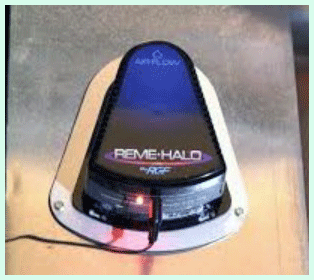
When I first heard about the REME Halo, I was skeptical. Like you, I read tons of reviews and wondered if a whole-home in-duct purifier would really make a difference compared to those portable units I’d tried before.
Those plug-in ones only cleaned one room, and I’d have to move them around, replace filters constantly, and still deal with pet dander or cooking smells lingering everywhere.
But after installing the REME Halo, everything changed. My HVAC tech added it right into the supply plenum of our central air system, and from day one, I noticed the air felt… cleaner.
You know that fresh smell after a rainstorm? That’s what our house started smelling like subtly, without any artificial scents.
We have two dogs, and before, pet odors would build up in the carpets and furniture no matter how much I vacuumed. Within a week or two, those smells faded dramatically.
My wife, who suffers from seasonal allergies, stopped waking up with a stuffy nose as often. Even during pollen season, she breathed easier because the system tackles particulates like pollen and dust by charging them so they clump together and get trapped in our regular filter.
One standout moment was during flu season last year. Our kid brought home a bug from school, and usually, it spreads like wildfire through the house. This time, only he got really sick—the rest of us dodged it or had mild symptoms.
I can’t prove it was solely the REME Halo, but knowing it reduces airborne viruses and bacteria by up to 99% in lab tests gave me confidence it helped.
On the practical side, it’s silent—you don’t hear a thing because it works with your existing HVAC fan. No extra noise, no taking up floor space. I set our thermostat to run the fan on low continuously, and the purifier kicks in seamlessly. Over time, I’ve seen less dust on surfaces, which means less cleaning for me.
Of course, it wasn’t instant magic. It took a few days for odors to clear fully, and I had to get used to that initial “clean” scent some people mention.
But now, our home just feels healthier. If you’re like me and want something that treats the whole house proactively, not just reactively filtering air in one spot, this is it.
I’ve recommended it to friends, and a couple have installed it too—they report similar improvements in air quality and fewer allergy flare-ups.
Overall, my experience has been overwhelmingly positive. It’s not cheap upfront, but seeing how it integrates and performs day in, day out makes me glad I went for it.
Also read: My Thoughts on Keen Smart Vent
Pros Of The REME Halo Air Purifier
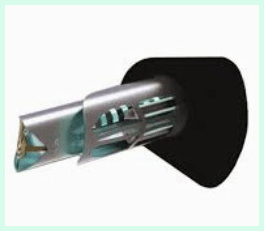
- Whole-Home Coverage: Unlike portable purifiers that only handle one room, this treats every cubic inch of air in your conditioned space—you get consistent purification throughout the house without moving devices around.
- Effective Against Multiple Pollutants: It reduces up to 99% of bacteria, viruses, mold spores, and even some VOCs; I noticed fewer illnesses and better odor control in my own home.
- Low Operating Noise: Completely silent since it uses your HVAC system—no buzzing fans to annoy you like standalone units.
- Reduces Particulates Efficiently: Charges particles so they stick together and get caught easier in your filter; we’ve seen way less dust buildup on furniture.
- Odor Elimination: Neutralizes smells from cooking, pets, or smoke quickly—our kitchen no longer traps grease odors.
- Proactive Purification: Sends out ionized hydro-peroxides to attack contaminants at the source, not just waiting for air to pass through a filter.
- Easy Integration: Installs directly into existing ductwork without major modifications—works with most central HVAC systems.
- Potential Health Benefits: Many users, including me, report fewer allergy symptoms and better breathing, especially in homes with pets or smokers.
- Long-Term Reliability: Once set up, it runs reliably with minimal intervention, providing ongoing protection.
Cons Of The REME Halo Air Purifier
- Upfront Cost: Installation can run $800 to $1,200 depending on your HVAC setup—it’s an investment not everyone is ready for right away.
- Requires Professional Installation: You can’t just plug it in; it needs an HVAC pro to integrate it properly into ducts.
- Cell Replacement Needed: The core cell lasts about 2-3 years and costs around $400 to replace, adding to long-term expenses.
- Potential Initial Odor: Some notice a faint “ozone-like” smell at first (though low levels)—it faded for us but might bother sensitive noses.
- Not For Non-Ducted Homes: If you don’t have central air with ducts, this won’t work—you’d need portable alternatives.
- Ozone Concerns In Older Models: Traditional version produces trace ozone; if you’re sensitive, opt for the LED zero-ozone model.
- Depends On Fan Runtime: For best results, run your HVAC fan more, which could slightly increase energy use.
- No Immediate Filter For Large Particles: Relies on your existing HVAC filter, so upgrade to MERV 11+ for optimal performance.
- Mixed Independent Reviews: While lab tests show high effectiveness, some real-world users debate results—my experience was positive, but yours may vary.
Maintenance Tips For The REME Halo Air Purifier
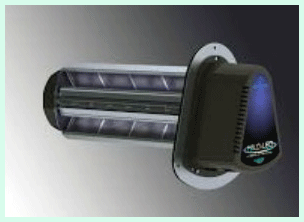
- Run Continuously For Best Results: Keep your HVAC fan on low or set to “on” instead of “auto”—this maximizes purification and extends cell life by avoiding frequent on/off cycles.
- Replace The Cell Timely: Swap out the PHI cell every 2-3 years or 25,000 hours; watch the indicator light or mark your calendar to maintain peak performance.
- Use High-Quality Filters: Pair with MERV 11 or 13 filters in your HVAC—changed regularly—to capture clumped particles effectively.
- Annual Professional Check: Have your HVAC tech inspect during routine maintenance; they can clean any dust buildup and confirm it’s operating correctly.
- Protect From Power Surges: Install a surge protector on your system—fluctuations can damage the unit and shorten lifespan.
- Monitor For Unusual Smells: If a strong odor persists beyond initial setup, check for issues; normal operation has a mild fresh scent.
- Avoid Frequent Cycling: Don’t wire it to turn off completely with the fan—continuous power preserves the cell better.
- Clean Surrounding Area: Keep the installation spot in ducts dust-free during HVAC service for optimal airflow.
- Upgrade To LED If Sensitive: For zero ozone and longer cell life (4-5 years), consider the LED version during replacement.
Comparison With Other Brands
How The REME Halo Stands Up Against The iWave
You might wonder how the REME Halo compares to the iWave, another popular in-duct option. Both attach to your HVAC and purify whole-home air quietly, tackling particulates, microbes, and gases. The iWave uses needlepoint bipolar ionization to charge particles and neutralize pollutants, and it’s often praised for self-cleaning features with no parts to replace. In my view, the REME Halo edges it out with its hydro-peroxide plasma that actively seeks out contaminants on surfaces too, not just in air. Users like me notice stronger odor reduction with REME. The iWave might save on maintenance long-term, but if you want proactive killing of viruses and mold, REME feels more robust.
REME Halo Versus Traditional Portable HEPA Purifiers
Portable HEPA units from brands like Honeywell or Dyson are great for single rooms, trapping 99.97% of particles with filters. But they require constant filter swaps, take up space, and make noise. The REME Halo wins for me because it’s whole-home—no moving units, no noise, and it handles gases and odors that HEPA alone misses. Portables are cheaper upfront, but for comprehensive coverage without hassle, in-duct like REME transforms your entire house.
Facing Off Against Air Scrubber By Aerus
The Air Scrubber uses similar active technology with UV light and catalysts to produce oxidizers. It’s effective against pollutants and integrates into ducts too. Both reduce VOCs and microbes well, but some prefer Air Scrubber for slightly different certification. From my experience, REME Halo provides comparable or better surface purification, and many HVAC pros find it reliable with strong lab-backed virus reduction claims.
REME Halo Compared To Basic UV Lights
Simple UV lights in ducts kill mold on coils but don’t purify circulating air broadly. The REME Halo goes further by generating plasma that travels throughout your home. If coil cleanliness is your only concern, basic UV is cheaper, but for full air and surface treatment, REME is superior—you get odor control and particulate help that plain UV lacks.
Read more: My Thoughts on GreenPan Jewel Pro
Frequently Asked Questions (FAQ)
Yes, they do. Lab tests show up to 99% reduction in bacteria, viruses, mold, and odors. In real homes like mine, users report fresher air, less dust, fewer allergies, and better odor control. Effectiveness shines in ducted systems with good fan runtime.
Most people experience none, but the traditional model produces trace ozone or hydro-peroxide that can cause mild irritation like headaches or sore throat in sensitive individuals. The LED version is zero-ozone and safer. Always consult a doctor if you have respiratory issues.
The cell lasts 2-3 years (25,000 hours) in the standard model, or 4-5 years in the LED version. The unit itself can last longer with proper care and surge protection.
If you’re tired of mediocre air quality and want a set-it-and-forget-it solution that truly improves your home, you should buy the REME Halo air purifier. It’s been a worthwhile addition for my family—cleaner air, fewer worries, and a fresher feel every day. Go for it; you’ll breathe easier knowing you’ve upgraded your indoor environment.