
We have all seen the futuristic selfies on Instagram—celebrities and influencers glowing like Iron Man in the comfort of their own living rooms. LED light therapy has exploded from a dermatologist-exclusive treatment into a must-have home skincare ritual. The promise is enticing: clear acne, erase wrinkles, and calm redness just by wearing a mask for fifteen minutes a day. In your search for a device that doesn’t cost as much as a new iPhone, you have likely been targeted by ads for the Regena Light Mask. It claims to offer professional-grade light therapy with a spectrum of colors for a fraction of the price of big names like Omnilux or Dr. Dennis Gross.
But as with any viral beauty gadget, the line between a hidden gem and a cheap knockoff is often blurry. You might be wondering if a mask that costs significantly less can actually deliver the same results, or if you are just buying a glorified Christmas light display for your face.
In this comprehensive review, I am going to walk you through the reality of the Regena Light Mask. We will strip away the flashy marketing and look at the build quality, the comfort (a huge factor with these masks), and whether those seven different light colors actually do anything for your skin. My goal is to help you decide if this budget-friendly option is a smart entry point into light therapy or if you are better off saving your money for a clinically backed competitor.
If you are considering buying this mask, be cautious about where you purchase it. Many “Regena” branded masks are sold through various pop-up websites with varying levels of customer support. Always double-check return policies before hitting that checkout button.
My Experience With Regena Light Mask
I decided to try the Regena Light Mask because, like many of you, I wanted to tackle a few specific skin concerns without spending $400. I deal with hormonal breakouts along my jawline and some fine lines around my eyes that seem to be getting deeper every year. The idea of a single mask that could switch between Blue light for acne and Red light for anti-aging was incredibly appealing. Most high-end masks only offer red light, so the Regena felt like a “Swiss Army Knife” of skincare.
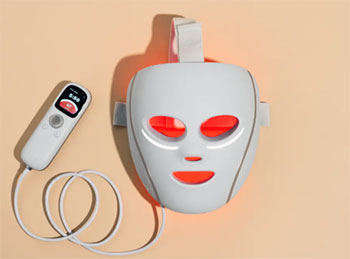
When the package arrived, the unboxing was fairly standard.
The box contained the mask, a USB charging cable, a strap, and a simple instruction manual.
The first thing I noticed when I pulled the mask out was the weight. Unlike the flexible silicone masks that are popular right now, the Regena Light Mask is a rigid, hard plastic shell.
It looks sleek, almost like something from a sci-fi movie, but it feels substantial in your hands.
I charged it up, which took about two hours, and prepped my skin by cleansing and drying it thoroughly. I decided to start with the Red Light setting. Putting the mask on was a bit of a process. The head strap is adjustable, but because the mask is hard and front-heavy, I had to tighten it quite a bit to keep it from sliding down my face.
Here is where the reality of the design hit me. The mask rests heavily on the bridge of the nose. Within three minutes of my first session, I could feel a distinct pressure. It wasn’t painful immediately, but it was uncomfortable enough that I couldn’t really “relax” and watch TV. I found myself lying flat on my back to let gravity hold the mask in place rather than relying on the strap, which relieved the nose pressure slightly.
I used the mask consistently for four weeks, alternating between Red light on even days and Blue light on odd days when I had active breakouts. The interface is touch-sensitive, usually located on the side or top of the mask, allowing you to cycle through the colors (Red, Blue, Green, Yellow, Purple, Cyan, and White). It is admittedly fun to cycle through them, and the lights are very bright—almost too bright. You definitely need to keep your eyes closed, and even then, I found myself wishing the included eye protection was a bit more robust.
In terms of results, I did notice a difference with the Blue light. My active pimples seemed to calm down faster than usual, often flattening out in a day or two rather than lingering for a week. The antibacterial properties of blue LED are well-documented, and this mask seems powerful enough to trigger that effect. However, the anti-aging results from the Red light were harder to quantify. My skin looked slightly brighter immediately after use—a temporary “glow”—but I didn’t see a dramatic reduction in my fine lines during the testing period.
The battery life was another mixed bag. I could get about three or four 15-minute sessions out of a single charge. This isn’t terrible, but it meant I had to remember to plug it in twice a week. If I forgot, I’d be stuck waiting for it to charge right when I wanted to use it.
Ultimately, my experience was defined by a trade-off: I got the versatility of multiple colors and a lower price point, but I paid for it in comfort. The heavy plastic design left temporary red indentations on my nose bridge after every session, which is not exactly the “spa-like” experience I was hoping for. It works, particularly for acne, but it requires a bit of tolerance to wear regularly.
Read More: My Thoughts On Qure LED Mask
Pros Of Regena Light Mask
If you can look past the comfort issues, there are several reasons why this mask has garnered attention. It offers features that usually aren’t found in this price bracket. Here is a breakdown of the specific advantages.
- Versatility of Seven Color Spectrums: The biggest selling point of the Regena Light Mask is undoubtedly the 7-color functionality. Most premium masks lock you into just Red and Near-Infrared light. Regena gives you Red for aging, Blue for acne, Green for pigmentation, Yellow for redness, Purple for dual action, Cyan for soothing, and White for deeper penetration. This allows you to customize your treatment daily based on what your skin needs. If you wake up with a pimple, you can use Blue; if you have a sunburn or rosacea flare-up, you can switch to Yellow. You are essentially getting seven different treatments in one device, which is excellent value for someone with “moody” skin that changes constantly.
- Wireless and Rechargeable Design: Being tethered to a wall outlet is one of the most annoying parts of older beauty devices. The Regena Light Mask is fully wireless, powered by an internal rechargeable battery. This means you are not stuck sitting next to a power socket during your treatment. You can walk around the house (carefully, given the visibility issues), fold laundry, or just lie in bed without a cord tangling around your neck. The USB charging makes it travel-friendly as well, as you don’t need a bulky dedicated power brick—just a standard USB port will do.
- Cost-Effective Entry Point: LED therapy can be prohibitively expensive, with market leaders charging upwards of $400 or $500. Regena is typically positioned at a much lower price point, often found on sale. This makes it accessible for students, young professionals, or skeptics who want to try light therapy without committing half a paycheck. If you are unsure if your skin will even respond to LED light, this is a lower-risk investment to test the waters. You get the core technology—light emitting diodes—without paying the “brand tax” associated with the luxury names.
- Touch-Activated Interface: The ease of use is a significant plus for this device. There are no complicated remotes or apps to download and sync. The controls are usually built directly into the mask or a simple handheld unit. You simply tap the sensor to turn it on and tap again to cycle through the colors. This simplicity removes the friction from your routine; you don’t have to fiddle with settings for five minutes before you start. It is designed for the user who wants a “plug and play” experience.
Cons Of Regena Light Mask
However, the lower price tag comes with significant compromises. There are aspects of the build quality and design that might make you regret not spending more on a premium model.
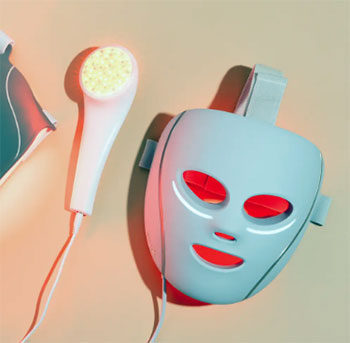
- Uncomfortable Hard Plastic Shell: The rigid design is the single biggest complaint with this mask. Unlike flexible silicone masks that mold to your facial contours, the Regena is a static shape. If your face is wider, narrower, or has different cheekbone structure than the mold, it will not fit well. The entire weight of the mask tends to rest on the bridge of the nose and the top of the ears. After a 15-minute session, many users, myself included, experience painful pressure marks or “dents” on the skin. This discomfort can be a major deterrent to using it consistently, and consistency is the only way LED therapy works.
- Questionable Wavelength Accuracy: In the world of light therapy, specific wavelengths matter (e.g., 633nm for red, 415nm for blue). Premium brands provide clinical reports verifying their bulbs emit these exact wavelengths. Regena, being a more generic manufacturer, often lists these specs, but there is little third-party verification. If the Red light is actually 600nm instead of 633nm, or if the power density (irradiance) is too low, it won’t penetrate the skin deep enough to stimulate collagen. You risk using a device that provides pretty colored lights but lacks the biological punch needed to actually change your skin cells.
- Limited Customer Support and Warranty: Buying from lesser-known brands often means sacrificing after-sales support. Many users have reported difficulties contacting customer service for returns or defective units. Unlike established beauty tech brands that have dedicated support teams and clear warranty policies, the support for Regena can be hit-or-miss. If your battery dies after three months or a strap breaks, you might be out of luck. The lack of a robust guarantee makes the purchase riskier than buying from a major retailer like Sephora or Nordstrom.
- Safety Concerns for Eyes: Because the mask sits slightly away from the face to accommodate different shapes, there can be significant light leakage. The LEDs are very bright, and without a tight seal around the eyes, that light can shine directly into your peripheral vision. While LED light is generally safe, staring directly at bright blue or red light for 15 minutes is not recommended. The included eye guards (often rubber inserts) can be uncomfortable or ineffective for some face shapes. Users with light sensitivity or migraines might find the brightness overwhelming compared to masks that sit flush against the skin.
Maintenance Tips For Regena Light Mask
Since this mask is likely an import with limited warranty support, taking care of it is crucial to ensure it lasts longer than a few months. Proper maintenance will also keep your skin safe from bacteria.
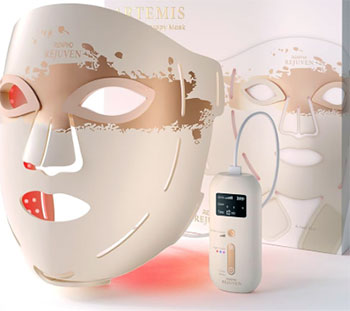
- Sanitize After Every Single Use: The inside of the mask sits in close proximity to your face, and the heat from the lights can cause you to sweat. This creates a warm, humid environment perfect for bacteria, which is ironic if you are using the mask to treat acne. You must wipe down the interior surface with a gentle alcohol wipe or a cloth dampened with soapy water after every session. Pay special attention to the nose pads and the chin rest area where skin contact is most frequent. Do not use harsh chemicals like bleach, as this can cloud the plastic lenses over the LEDs, reducing the light intensity that reaches your skin.
- Manage Battery Charging Cycles: Lithium-ion batteries in budget devices are often the first thing to fail. To prolong the battery life, avoid letting the mask drain completely to 0% before charging. Try to keep the battery between 20% and 80%. Do not leave it plugged in overnight; once the indicator light shows full, unplug it. Overcharging can degrade the battery capacity, leading to a mask that only lasts 5 minutes before dying. If you store the mask for a long period without using it, make sure it has at least a 50% charge so the battery doesn’t go into a deep discharge state.
- Store in a Protective Bag or Box: The hard plastic shell can scratch easily, and scratches over the LED bulbs can diffuse the light. Do not just throw the mask in a drawer with your hairbrush and makeup tools. Keep it in the box it came in or buy a soft velvet drawstring bag to protect it from dust and scratches. Dust accumulation on the bulbs will block the light energy, making the treatment less effective. Additionally, keep it out of direct sunlight, as UV rays can yellow the plastic casing over time.
- Check the Strap Tension: The elastic strap is the weak point of the mechanical design. Over-tightening it to force the mask closer to your face puts stress on the attachment points, which can snap the plastic hooks. Adjust the strap so the mask sits securely but is not digging into your skin. If the strap loses its elasticity (which happens with cheaper elastic), you can easily replace it with a generic Velcro strap from a craft store. Inspect the attachment points regularly for stress cracks.
Comparison with Other Brands
To understand if Regena is the right choice, you have to see what else is out there. The LED mask market is tiered, and Regena sits in a specific spot relative to the competition.
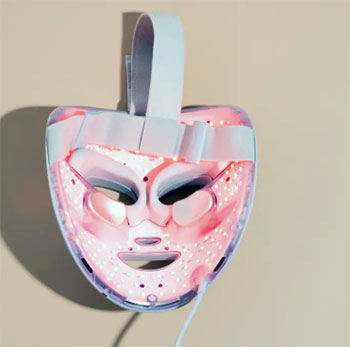
- Omnilux Contour Face: This is widely considered the gold standard for home LED masks. Comparison: Omnilux uses flexible silicone that wraps perfectly around the face, ensuring the lights are at the optimal distance (millimeter-close) from the skin for maximum absorption. Regena is rigid, meaning the lights are further away in some spots, reducing efficacy. Omnilux only offers Red and Near-Infrared light, but these wavelengths are clinically proven and verified. Regena offers 7 colors, but with questionable power. Omnilux is significantly more expensive (often double the price), but it is FDA-cleared and backed by medical studies. If you want guaranteed results and comfort, Omnilux wins; if you want a toy with more colors for less money, Regena is the option.
- Project E Beauty Skin Rejuvenation Photon Mask: This is the most direct competitor to Regena, as it is also a 7-color hard plastic mask. Comparison: Project E Beauty is a slightly more established brand in the “budget” space and often sells on Amazon with Prime shipping. The build quality of Project E is very similar to Regena—heavy and rigid. However, Project E Beauty often includes a wireless remote control unit with a screen, whereas Regena typically has controls on the mask or a simpler remote. Project E tends to have slightly better availability of customer reviews and support. If you are set on a hard 7-color mask, Project E might be a safer bet regarding shipping and returns, though the comfort issues are identical.
- Qure Q-Rejuvalight Pro Facewear: Qure is a newer player that bridges the gap between budget and luxury. Comparison: Qure offers a customizable app that allows you to treat different zones of your face with different lights (e.g., blue on chin, red on forehead). Regena applies one color to the whole face at once. Qure is a hard mask but is designed with a more open structure and is generally lighter than the Regena. Qure is much more expensive than Regena but cheaper than Dr. Dennis Gross. Qure’s clinical claims are stronger than Regena’s. If you want customization and are willing to pay for a “smart” device, Qure is superior to the basic functionality of Regena.
Also Read: My Thoughts On Drx Spectralite FaceWare Pro
Frequently Asked Questions (FAQ)
Yes, for mild to moderate acne, the Blue light setting can be effective. Blue light at the correct wavelength kills Cutibacterium acnes bacteria on the skin’s surface. Many users report a reduction in active breakouts and inflammation with consistent use. However, it is less effective for deep cystic acne, which often requires hormonal or prescription treatments.
While LED light is non-invasive, most dermatologists recommend using it 3 to 5 times per week rather than every day. Overusing the mask doesn’t necessarily speed up results and can sometimes lead to dryness or irritation. Your skin needs time to process the light energy and repair itself. Follow the specific instructions provided with your unit, but starting with 10-15 minutes, 3 times a week, is a safe protocol.
It is generally recommended to apply retinol after your LED session, not before. Retinol can make your skin photosensitive, and while LED is not UV light, combining potent actives with light therapy can sometimes cause irritation in sensitive individuals. Wash your face, do the light treatment on clean skin, and then apply your retinol and moisturizer afterwards for the best and safest results.
The Regena mask is made of rigid plastic and is relatively heavy compared to silicone alternatives. To keep it on your face, the design relies on a nose bridge rest (similar to heavy glasses). Because the strap pulls the mask backward to secure it, the pressure is concentrated on the nose bridge. Lying down during treatment can help alleviate this pressure as gravity holds the mask in place without needing the strap to be tight.
Conclusion
The Regena Light Mask represents the democratization of skincare technology—it makes a treatment that was once exclusive to high-end spas accessible to the average consumer. Its 7-color spectrum offers a fun and versatile approach to skin maintenance, allowing you to tackle everything from pimples to dullness with a single device. For someone on a budget who is curious about light therapy, it is a functional entry point that can deliver mild improvements, particularly for acne.
However, “functional” does not mean “perfect.” The rigid, heavy design is a significant hurdle for comfort, and the lack of clinical verification for its wavelengths keeps it from competing with the big leagues like Omnilux. If you can tolerate the fit and want a multi-purpose tool for occasional breakouts, Regena is a fair buy. But if you are looking for serious anti-aging results and a mask you can wear comfortably while watching Netflix, you might find yourself wishing you had saved up for a flexible silicone alternative.