
I have switched to unrefined salts a few years ago, and the difference in taste and how my body feels surprised me. In this article, I compare Redmond Real Salt and Celtic Sea Salt head-to-head to help you decide which fits your kitchen and health needs best. Both offer great alternatives to processed table salt, but they differ in sourcing, flavor, minerals, and purity—I break it all down analytically based on what I have experienced and learned.
A Brief Comparison Table
| Aspect | Redmond Real Salt | Celtic Sea Salt |
| Source | Ancient underground deposit in Utah, USA | Evaporated ocean water from coastal France |
| Color and Texture | Pinkish/reddish, dry, fine to coarse grains | Grayish, moist, coarse and crunchy |
| Trace Minerals | Over 60 naturally occurring | Over 80 naturally occurring, often higher magnesium |
| Flavor Profile | Subtly sweet, smooth, enhances food naturally | Briny, oceanic, more intense sea taste |
| Purity Concerns | Protected from modern pollution | Potential exposure to microplastics/heavy metals |
| Sodium Content | Slightly lower (~94% NaCl) | Higher (~97% NaCl) |
| Best For | Everyday cooking, subtle seasoning | Finishing dishes, bold flavor boost |
| Price Range | Generally more affordable in bulk | Often premium priced |
My Experience With Redmond Real Salt
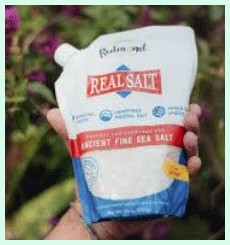
I started with Redmond after ditching table salt—it transformed my cooking. The subtle sweetness makes scrambled eggs pop without extra seasoning.
I add it to water for hydration on active days, and cramps decreased noticeably.
The pink color looks beautiful in a clear shaker on my table. Bulk bags save money, and knowing it’s pollution-free aligns with my clean-eating values.
Sometimes I mix with herbs for custom blends. It became my staple—reliable, tasty, and nourishing.
Also read: Comparison of Baja Gold Sea Salt And Celtic Sea Salt
Pros Of Redmond Real Salt
- Purity from Ancient Source: I love knowing this salt comes from a prehistoric seabed buried deep underground. It stayed shielded by bentonite clay for millions of years, so no modern pollutants like plastics or industrial toxins touch it. That gives me peace of mind compared to ocean-harvested options.
- Balanced Mineral Profile: It contains over 60 trace minerals, including iron that gives it the pink hue, potassium, magnesium, and calcium. These occur in natural ratios, and I notice better hydration when I use it daily—my energy feels steadier without crashes.
- Subtle Sweet Flavor: Unlike harsh table salt, Redmond has a mild sweetness that brings out food’s natural tastes. I sprinkle it on eggs, steaks, or veggies, and it never overpowers—just elevates. Chefs often praise this smoothness for everyday cooking.
- Dry Texture for Versatility: It flows easily from shakers and comes in fine, kosher, or coarse grains. I use the fine version for baking and the coarser for grilling, where it sticks well to meats and creates a nice crust.
- Lower Sodium Percentage: With less than 94% sodium chloride, it provides more room for beneficial minerals in each pinch. That appeals to me when watching sodium but wanting nutrient density.
- Sustainability and Origin: Mined in the USA with responsible practices, it has a smaller carbon footprint than imported salts. Redmond controls the whole process, ensuring no additives or bleaching.
- Natural Iodine Presence: It offers a small amount of naturally occurring iodine, helpful for thyroid support without synthetic additions found in table salt.
- Affordability in Bulk: Large bags make it cost-effective long-term. I stock up and refill shakers—it lasts forever and saves money over boutique brands.
Cons Of Redmond Real Salt
- Less Intense Mineral Variety: While it boasts over 60 minerals, some analyses show Celtic has higher levels of certain ones like magnesium. If I seek maximum electrolyte boost, it sometimes falls short.
- Milder Flavor for Finishing: Its subtle sweetness works wonders in cooking, but on finished dishes like salads or avocados, I miss the bold briny punch that other salts deliver.
- Potential Grit in Coarser Grinds: Occasionally, larger grains feel gritty if not dissolved fully. I prefer the fine grind to avoid that surprise crunch.
- Not as Moist or Crunchy: The dry texture suits shakers perfectly, but it lacks the satisfying moisture and flake of wet salts for certain recipes.
- Limited Natural Iodine Compared to Seaweed Sources: Though it has some, it’s not as rich as ocean-derived salts for heavy iodine needs—I supplement separately sometimes.
- Color Variation: The pinkish hue varies by batch due to iron content, which bothers me if I want consistent aesthetics in presentations.
- Mining Impact Concerns: Although responsible, any mining raises environmental questions for purists preferring solar-evaporated options.
- Availability in Some Areas: In remote spots, it costs more to ship than local sea salts.
Maintenance Tips For Redmond Real Salt
- Store in a Dry Place: Keep it in airtight containers away from humidity to prevent clumping—its dry nature helps, but moisture creeps in over time.
- Use Glass or Ceramic Shakers: Avoid metal ones that react with trace minerals; I use glass for refills to preserve flavor purity.
- Grind Fresh When Needed: For coarser versions, a grinder keeps it fresh—I notice better taste when ground just before use.
- Avoid Direct Heat Exposure: Don’t store near stoves; high heat alters subtle mineral balance slightly.
- Check for Clumps Periodically: If any form, break them gently—natural salts do this without anti-caking agents.
- Pair with Balanced Diet: Use it to enhance mineral intake, but combine with potassium-rich foods for optimal sodium-potassium harmony.
- Clean Tools Regularly: Rinse grinders to prevent mineral buildup that affects flow.
- Buy in Appropriate Sizes: Start small if new, then bulk for freshness—older salt loses nuance.
Read more: Comparison of Enfamil Gentlease Neuropro And Enfamil Gentlease
My Experience With Celtic Sea Salt

I tried Celtic for its hype on minerals—the briny kick amazed on steaks. Moisture adds crunch I love on popcorn. Hydration drinks felt potent.
But clumping annoyed, and ocean concerns made me rotate with Redmond. Great for special dishes.
Pros Of Celtic Sea Salt
- Rich Mineral Content: Often boasts over 80 trace minerals, with higher magnesium and potassium in some analyses. I feel it supports better hydration and muscle recovery after workouts.
- Bold Briny Flavor: That oceanic taste shines as a finishing salt—sprinkled on chocolate or grilled fish, it adds complexity I crave.
- Moist Texture: The natural moisture creates crunchy flakes that burst with flavor, perfect for texture in salads or breads.
- Traditional Harvesting: Hand-raked from clay ponds using ancient Celtic methods preserves nutrients—no machines or chemicals.
- Gray Color from Clay: Minerals from clay bottoms contribute unique elements, believed to aid electrolyte balance.
- Versatile Coarse Grind: Light Grey version works great for grinding fresh or pinching by hand.
- Natural Moisture Retention: Higher water content keeps it “alive” with bioavailable minerals.
- Chef Favorite for Finishing: Many pros use it for that umami boost without
Cons Of Celtic Sea Salt
- Potential Pollution Exposure: From modern oceans, risks microplastics or heavy metals exist—concerns me despite low levels in reputable brands.
- Higher Moisture Leads to Clumping: Needs wood or glass storage; clumps frustrate in humid kitchens.
- Stronger Briny Taste: Overpowers subtle dishes—I use sparingly to avoid fishy notes.
- Coarser and Harder to Dissolve: Not ideal for baking or fine shakers.
- Higher Price Point: Premium harvesting raises cost over mined salts.
- Gray Appearance: Less appealing visually than pink salts for some.
- Variable Batch Quality: Depending on harvest, moisture and minerals fluctuate.
- Higher Sodium Density: Less mineral room per pinch compared to lower-NaCl options.
Maintenance Tips For Celtic Sea Salt
- Store Properly to Manage Moisture: Use non-metal containers in cool, dry spots—prevents excess clumping.
- Stir Occasionally: Break up natural clumps gently.
- Use Wooden Scoops: Avoids reaction with minerals.
- Keep Away from Heat: Preserves delicate moisture balance.
- Grind for Finer Needs: Invest in a good grinder for versatility.
- Monitor Humidity: In damp climates, add rice grains absurdly—no, better airtight.
- Pair Mindfully: Balance strong flavor with milder ingredients.
- Buy Reputable Brands: Ensures consistent quality.
Comparison With Other Brands
- Vs Redmond Real Salt: Celtic wetter and brinier with potentially more minerals, but Redmond purer and subtler.
- Vs Himalayan: Both unrefined, but Celtic from current sea vs ancient mine—flavor more oceanic.
- Vs Table Salt: Far superior minerals and taste—no additives.
- Vs Fleur de Sel: Similar harvesting, but Celtic coarser and more affordable.
- Vs Baja Gold: Both ocean-derived, but Celtic traditional French vs Baja’s claims.
- Vs Maldon: Similar flake, but Celtic mineral-richer.
- Vs Kosher: More processed usually; Celtic natural.
- Vs Sea Salts Generic: Higher quality control in branded Celtic.
Frequently Asked Questions (FAQ)
No single winner exists, as it depends on priorities like purity or minerals. Many consider ancient mined salts like Redmond or Himalayan healthiest for avoiding modern pollutants, while others praise Celtic or Baja Gold for rich electrolytes.
Its sourcing from an ancient, protected underground seabed in Utah makes it special—no exposure to current pollutants, over 60 natural minerals, subtle sweet flavor, and unrefined purity.
Both excellent and similar in minerals from ancient deposits. Redmond often edges in sweeter taste, domestic sourcing, and consistency, while Himalayan varies by mine but offers earthier profile.
Conclusion: For Redmond Real Salt And Celtic Sea Salt
I appreciate both—you might too, depending on your needs. If purity and subtle enhancement matter most, choose Redmond; for bold flavor and potential mineral boost, go Celtic. Try both and see what your palate and body prefer—we deserve salts that nourish and delight.