
If you have spent any time on social media lately, you have likely seen the ads for the Reactive Outdoor 3-Secs Tent. The videos are mesmerizing: a camper throws a bag on the ground, lifts a central hub, and voila—a fully formed tent appears instantly.
For anyone who has ever argued with a partner while trying to thread fiberglass poles through a sleeve in the dark, this promise is incredibly seductive. But is it too good to be true? The outdoor industry is flooded with “instant” tents that end up being flimsy, leaky, or impossible to pack back away.
For those looking to purchase a Reactive Outdoor tent, I recommend buying directly from their official website or their verified Amazon store if available. Be cautious of third-party eBay listings or look-alike sites, as this “spider-leg” instant design is often white-labeled by generic dropshippers.
You want to ensure you get the version with the upgraded 210D Oxford fabric and the valid warranty. In this review, I will break down the reality of this viral tent, separating the marketing magic from the campground truth, to help you decide if this is your next camping upgrade or a regret waiting to happen.
My Experience With The Reactive Outdoor 3 Secs Tent
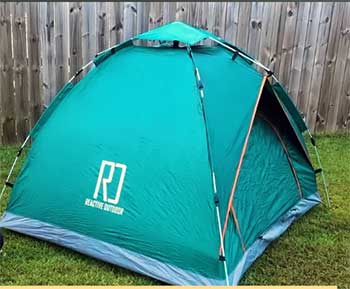
I decided to test the “3 Secs Tent” (the 3-person model) because I often go on solo weekend trips where setting up a complex dome tent feels like a chore.
The package arrived in a long, slender bag—longer than a typical tent bag, which is something to keep in mind if you have a small trunk.
It looks more like a folded camp chair or a yoga mat bag than a traditional tent.
The setup claim is bold, but honestly? It holds up.
I unbuckled the strap, laid the tent flat like a starfish, and lifted the central hydraulic mechanism. It clicked into place with a satisfying “thud,” and the tent was standing.
It genuinely took less than 10 seconds. I didn’t even have to look at instructions. For car camping or festivals where you just want to start drinking a beer immediately, this feature is an absolute game-changer. It feels like a magic trick.
However, the reality of living in it brought some caveats. The first night was clear and mild, and the tent was fantastic. Ventilation was decent with the two doors open. But the second night brought a steady drizzle and a drop in temperature. This is where the design limitations showed up. Because it is essentially a “single-wall” hybrid (the rainfly is integrated or very minimal depending on the model), condensation became an issue. I woke up with the walls feeling damp to the touch.
Furthermore, while the “3-second” setup is great, the takedown requires a specific technique. You have to unlock the hub and fold the “knees” of the poles correctly. It’s not hard, but if you force it, you feel like you might snap a plastic joint. It fits back into the oversized bag easily (a huge plus), but don’t expect it to be a compact backpacking tent. It is strictly for car camping.
In short: It delivers on the speed promise perfectly. But if you are expecting the bombproof weather protection of a North Face or REI tent, you will be disappointed. It is a fair-weather friend that prioritizes convenience over technical performance.
Read more: My Thoughts on Domi Outdoor Living
Pros Of Reactive Outdoor Tents
- Incredible Setup Speed: The “3-second” claim is marketing shorthand, but it is effectively true. The hydraulic spring-loaded mechanism does 90% of the work for you. You don’t need to thread poles, clip hooks, or stake out a complex fly just to get shelter. If you arrive at camp late at night or in the rain, getting a roof over your head this fast is a massive luxury.
- Spacious Interior Height: Unlike traditional dome tents that slope aggressively, the cabin-style shape of the Reactive Outdoor tent offers surprising headroom. The walls are steeper, which means you can sit up comfortably or change clothes without playing Twister. The “Large” models usually fit a queen-sized air mattress, though it takes up nearly all the floor space.
- Great Ventilation (In Fair Weather): The tent features two large D-shaped doors and often mesh windows on all sides. When the weather is nice, you can unzip everything to create a fantastic cross-breeze. It feels more like a screened porch than a stuffy nylon box, which is perfect for hot summer camping or beach trips.
- Beginner-Friendly Design: This is the ultimate “first tent.” It removes the intimidation factor of camping gear. There are no color-coded poles to confuse you and no separate rainfly to put on backward. If you are introducing kids to camping or just have zero patience for gear, the barrier to entry here is non-existent.
- Oversized Carry Bag: A small but significant detail is the storage bag. Most tent bags are impossibly tight, requiring you to fold the tent with factory precision to get it back in. The Reactive Outdoor bag is generous, meaning you can roll the tent up imperfectly and still zip it shut without breaking a sweat or a zipper.
Cons Of Reactive Outdoor Tents
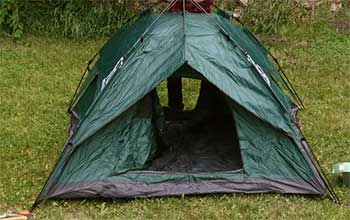
- Condensation Issues: The most common complaint is moisture management. Because the rainfly doesn’t fully cover the tent body (it often sits like a small hat on top), there is no air gap between the cold outside air and the warm inside air. This leads to condensation building up on the inside walls, which can drip on you or your sleeping bag if you touch the sides during a cool night.
- Questionable Wind Stability: The same joints that make the tent pop up so easily are weak points in high winds. In a gentle breeze, it is fine. But in gusts over 20-25 mph, the “knees” of the poles can buckle or collapse inward. It is not designed for exposed ridges or stormy weather; it is strictly for sheltered campsites.
- ** bulky Packed Size**: You cannot backpack with this. Even the 2-person model packs down into a long, heavy cylinder because the poles are permanently attached. It takes up a significant amount of trunk space or roof rack real estate compared to a traditional tent that breaks down into smaller pole segments.
- Waterproofing Limitations: While the fabric is rated 3000mm waterproof, the design relies on exposed zippers and seams. Heavy, driving rain can find its way in through the door zippers if they aren’t covered perfectly by the flaps. Users often recommend applying extra seam sealer and waterproofing spray before your first big trip.
- Durability of Mechanical Parts: If a fiberglass pole snaps on a regular tent, you buy a replacement pole for $10. If a proprietary hub or knuckle breaks on this tent, the whole tent is essentially totaled. Repairing the integrated frame is difficult, and sourcing specific spare parts from the brand can be challenging compared to major outdoor retailers.
Maintenance Tips For Reactive Outdoor Tents
- Dry It Out Immediately: Because of the condensation issues and the folding mechanism, this tent loves to trap moisture. If you pack it away wet, mildew will form in the folds within days. Even if it didn’t rain, set the tent up in your backyard or garage as soon as you get home to let it air dry completely before long-term storage.
- Lubricate the Zippers: The zippers on these tents are decent but can get gritty with dust. To prevent snagging (which is a common failure point), run a piece of beeswax or a specialized zipper lubricant along the teeth every few trips. This keeps the action smooth and prevents you from forcing a stuck zipper and tearing the fabric.
- Check the Joints: Periodically inspect the plastic knuckles and the central hub for stress marks or cracks. If you notice a joint becoming stiff, do not force it. Check if dirt or sand has gotten into the mechanism. A blast of compressed air (like you use for keyboards) can help clear out grit that might be jamming the locking mechanism.
- Use a Footprint: The floor material is standard oxford cloth, but it’s not invincible. Always use a tarp or a specific tent footprint underneath. This protects the floor from rocks and thorns but also adds a crucial layer of moisture protection from damp ground, which helps slightly with the condensation problem.
- Seam Seal for Peace of Mind: For added security, buy a tube of seam sealer (like Seam Grip) and go over the stitching around the floor corners and the rainfly attachment points. Factory taping is okay, but doing this yourself turns a “water-resistant” tent into a truly waterproof one.
Read more: My Thoughts on Gemcore Flooring
Comparison With Other Brands
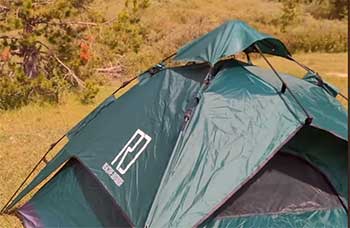
Comparison with Coleman Instant Cabin
The Coleman Instant Cabin is the heavyweight champion of this category. Coleman uses steel poles instead of fiberglass, making it significantly heavier but much more durable in wind. The Coleman fabric is thicker (150D polyester), and the brand has been around for a century, meaning warranty support is easier to access. However, the Coleman is often more expensive and much heavier to carry. If you want durability, go Coleman. If you want lightweight portability, go Reactive.
Comparison with Quechua 2 Seconds (Decathlon)
The Quechua 2 Seconds tent is famous for its “disc” shape when packed. Quechua opens even faster (literally you throw it in the air), but folding it back up requires learning a specific color-coded buckle system that confuses many first-timers. The Quechua has better wind resistance due to its low, aerodynamic dome shape, whereas the Reactive Outdoor is a tall cabin that catches wind. Quechua is generally cheaper and has better waterproofing engineering (double-skin design), but the round packed shape is awkward to carry.
Comparison with Gazelle Tents
Gazelle Tents are the premium “hub” tents. They use a similar pop-out technology but are built like tanks. Gazelle uses all-metal hubs and massive YKK zippers, making them bombproof compared to the plastic components of Reactive Outdoor. However, a Gazelle tent costs 2-3 times as much and weighs over 30 lbs. The Reactive Outdoor tent is essentially a budget-friendly, lightweight version of a Gazelle. If you camp every weekend, invest in the Gazelle. for occasional trips, Reactive is sufficient.
Frequently Asked Questions (FAQ)
No. Currently, Reactive Outdoor focuses on ground tents (“3 Secs” and “Cabin” models). If you see “Roof Top Tent” associated with the brand, it is likely a misunderstanding or a third-party listing using keywords incorrectly. They do not manufacture hard-shell or soft-shell roof top tents.
It is “water-resistant” enough for light to moderate rain. It has a 3000mm hydrostatic head rating, which is good, but the design lacks a full-coverage rainfly. In a severe storm with sideways rain, you may experience leaks around the zippers or misting through the walls.
Once you take it out of the bag, yes. The actual act of lifting the hub and locking it takes about 3 to 5 seconds. However, you still need to spend another 5-10 minutes staking it down and securing the guy lines, which you must do to prevent it from blowing away.
The 3 Secs Tent is a dome-hybrid shape that uses a “spider leg” mechanism. The 2-Step Cabin Tent (often their newer model) is boxier with vertical walls, offering more usable interior space but usually a larger packed size.
Conclusion
After analyzing the specs and user feedback, my verdict is that the Reactive Outdoor Tent is a solid choice for fair-weather car campers, festival-goers, and families who value convenience above all else. It delivers on its promise of instant setup, saving you time and frustration at the campsite.
However, it is not a technical tent. If you are expecting to camp in high winds, heavy storms, or hike miles into the backcountry, you should look elsewhere. But for a relaxing weekend at a state park? It’s a fun, easy-to-use shelter that lets you skip the setup struggle and get straight to the campfire.