
If you’re standing on the edge, wondering if you should pull the trigger on a set of Predator New Mutant X-AT tires, let me make it easy for you. Just do it. I was in your exact shoes, skeptical about a brand that isn’t one of the “big three,” but I took the plunge.
After thousands of miles, I can tell you these tires are one of the best-kept secrets in the truck world. They offer that aggressive, trail-ready look you want, combined with on-road manners that genuinely shocked me, all at a price that leaves money in your pocket.
My Experience With The Predator New Mutant X-AT
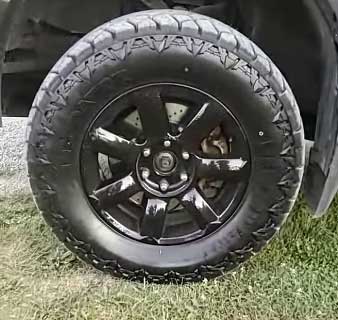
My journey with the Predator New Mutant X-ATs started where most do: on the internet, staring at a shopping cart with a set of BFGoodrich KO2s or Nitto Ridge Grapplers, watching the total climb to an eye-watering amount.
I drive a 2018 Ford F-150 that serves as my daily driver during the week and my weekend warrior for camping and fishing trips.
The stock highway tires were quiet but useless in mud and looked, frankly, boring.
I needed that aggressive stance, that “I can go anywhere” look, but I couldn’t justify spending a small fortune, especially when I knew I wasn’t a hardcore rock crawler. I just needed something that could handle a muddy trail, a gravel road, and the occasional snow flurry without sounding like a freight train on the highway.
That’s when I stumbled upon the Predator New Mutant X-AT. The name alone sounded aggressive, but it was the tread pattern and the price that hooked me. It looked like a perfect hybrid—a true “X-AT” (Extreme All-Terrain), bridging the gap between a standard All-Terrain and a full-blown Mud-Terrain. I read a few forum posts, and the consensus was “surprisingly good for the price.” I decided to take the risk.
When they arrived, I was immediately impressed. The tread blocks were deep, the shoulder lugs were massive, and they had that awesome dual-sidewall design. I spent a good twenty minutes with the tire tech deciding which side to face out—the more “traditional” aggressive side or the wilder, more stylized “mutant” side. I went with the mutant side; it just looked meaner.
The first drive was the real test. I braced myself for the “wub-wub-wub” hum of a mud tire, but it… never really came. Yes, it was louder than my old highway tires—you can’t add that much rubber and void space without some noise—but it was a low, tolerable hum, not an obnoxious roar. On the highway, they felt stable and solid. But the real “wow” moment came two weeks later on a fishing trip.
A recent rainstorm had turned the last mile of the access road into a sloppy, muddy mess. In my old tires, I would have stopped, turned around, and gone home. With the Predators, I put the truck in 4-High, felt the lugs bite, and just… drove right through. The tires cleared the mud instantly, and I never once felt like I was going to get stuck. That right there, that confidence, was worth every penny.
Pros Of The Predator New Mutant X-AT
After putting these tires through their paces, from scorching hot pavement in the summer to slick, muddy trails in the fall, I’ve found a lot to love. For anyone on the fence, here’s the breakdown of what makes these tires a serious contender.
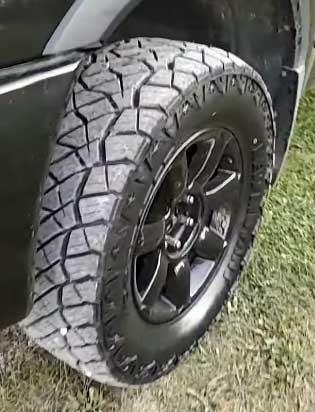
- Aggressive Aesthetics That Turn Heads: Let’s be honest, half the reason you’re looking at these tires is how they look. And they do not disappoint. The tread pattern is deeply grooved and complex, looking more like a hybrid Mud-Terrain tire than a simple All-Terrain. The “X” pattern in the tread is distinctive, and the shoulder lugs are massive, staggered blocks that scream “off-road.” They completely transform the look of a truck. My F-150 went from a standard pickup to something that looks like it’s ready for an adventure, even when it’s just parked at the grocery store. It’s an instant upgrade to your vehicle’s “tough” factor.
- The Dual Sidewall Is A Game-Changer: This is a feature usually reserved for premium, expensive tires, and I love it. One side has a more traditional, “classic” aggressive look with bold lettering. The other side—the “mutant” side—has these stylized, almost reptilian-looking lugs that crawl down the sidewall. You get to choose your truck’s personality. I went with the mutant side, and it gets comments all the time. It’s a simple thing, but having that choice makes the tires feel more custom and personal to your build.
- Surprisingly Civilized On-Road Manners: This was the biggest shock for me. I fully expected to sacrifice ride quality and silence for the aggressive look. While they are firmer than the OEM tires, they are not harsh. On the highway, they track straight and feel incredibly stable, even at 75 mph. The “pitch variation” in the tread pattern genuinely seems to work. You get a low hum, but it’s not the deafening roar of a true mud tire. I can easily have a conversation or listen to a podcast without cranking the volume. They handle rain-soaked roads with confidence, too. The deep grooves do a great job of channeling water and resisting hydroplaning, which is a huge plus for a daily driver.1
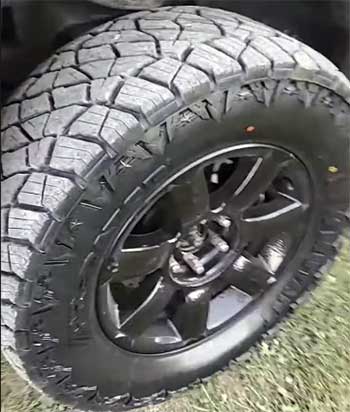
- Tenacious Off-Road Traction: This is where the “X-AT” name earns its keep. These tires are not just for show. In loose gravel and on dirt roads, they feel planted and sure-footed, giving you the confidence to carry a bit more speed. In mud, those deep voids and staggered shoulder lugs work like shovels, biting in and flinging the mud out to keep the tread clear. I’ve aired them down to 20 psi for some beach driving, and they created a wide, stable footprint that floated right over the soft sand. They give my truck 90% of the capability of a full-blown MT tire, with none of the on-road drawbacks.
- The Incredible Value Proposition: This is the bottom line. When I was shopping, a set of these Predators was nearly 30-40% cheaper than the big-name competitors I was considering. That is a massive saving. I’ve now run them for over 15,000 miles, and the tread wear is minimal and even. They are holding up beautifully. You are getting a tire that looks the part, performs admirably both on and off the road, and has features like a dual sidewall, all for a budget-friendly price. It feels less like a compromise and more like a smart choice.
Also read: My Thoughts on Matrixx Water Softener
Cons Of The Predator New Mutant X-AT
Now, I’m not going to tell you they’re perfect. No tire is. As much as I’ve been impressed, there are definite trade-offs you need to be aware of before you buy. I believe in being transparent, so here are the downsides I’ve experienced or noted.
- The Noise Is Still A Factor: I know I listed “surprisingly civilized” as a pro, but let’s be clear: “civilized” is relative to other aggressive tires. These are not quiet tires. Compared to the highway tires that came on my truck, the difference in cabin noise is significant. It’s a low-frequency hum that is always present. While I don’t mind it—I actually kind of like the sound—my wife mentions it almost every time she rides in the truck. Furthermore, as they’ve worn, I’ve noticed the hum has gotten slightly louder. If you are coming from a luxury SUV or you value a whisper-quiet ride above all else, these will probably annoy you.
- Weight And Fuel Economy Hit: These tires are heavy. All that aggressive tread, extra-ply sidewalls, and deep rubber add up to a lot of unsprung weight. The first casualty of this weight is your fuel economy. I religiously track my MPG, and I saw an immediate drop of about 1.5 to 2 miles per gallon after installing them. That adds up over the life of the tires. The second casualty is acceleration. My truck feels just a little more sluggish off the line. It’s not dramatic, but it’s noticeable. This is a price you pay for any heavy-duty, aggressive tire, but it’s a con nonetheless.
- Questionable Severe Winter Performance: This is a big one. My tires do not have the Three-Peak Mountain Snowflake (3PMSF) symbol.The 3PMSF RatingThat little mountain-and-snowflake logo is a certification that the tire meets a minimum performance standard in severe snow. Without it, you are essentially driving on a tire that is “all-season” at best. The hard rubber compound that gives these tires such good tread life on the highway gets very hard and slick in freezing temperatures.My Experience In Light SnowWe had one light snowfall, about two inches, and they did… okay. The deep lugs could find traction in the fresh powder. But as soon as I hit a patch of packed snow or, worse, ice, they were slippery. They simply don’t have the dense network of “sipes” (the tiny slits in the tread blocks) that dedicated winter tires or 3PMSF-rated all-terrains have to provide biting edges on ice. If you live somewhere that gets serious, consistent snow and ice, these cannot be your only set of tires. You will absolutely need a dedicated set of winter tires.
- Balancing Can Be A Challenge: When I had them mounted, my tire tech remarked on how much weight they required to balance. One of the four tires, in particular, needed a significant number of weights. This isn’t a huge deal if you use a good shop, but it can be a sign of minor inconsistencies in manufacturing. It also means that as the tire wears, it might be more prone to going out of balance, which can cause vibrations and uneven wear. I’ve had to have them re-balanced once already, which is more than I’m used to.
- Warranty Ambiguity: The warranty situation is a bit confusing. When I bought them, the retailer listed a “No Mileage Warranty.” However, the official Predator website does mention a 50,000-mile warranty on certain sizes.2 This ambiguity is frustrating. It’s not as clear-cut as the 50,000-mile warranty you get stitched onto every BFG KO2. I’m operating under the assumption that if I have a problem, it might be a hassle to get it resolved. This lack of a clear, strong warranty is probably the biggest risk you take when opting for a value-oriented brand over an established giant.
Maintenance Tips For The Predator New Mutant X-AT
Buying these tires is just the first step; taking care of them is how you’ll get your money’s worth. I’ve been meticulous with mine because I want them to last, and I’ve learned a few things along the way. If you want to avoid that “cupping” and “roaring” noise that plagues neglected aggressive tires, you need to follow these tips.
- Rotation Is Not A Suggestion, It’s A Command: I cannot stress this enough. You must rotate these tires. Because of the aggressive tread blocks and wide voids, they are highly susceptible to developing irregular wear patterns, especially on the steer axle. This is what’s known as “cupping” or “scalloping.” You’ll see the edge of each tread block wear down faster than the back, creating a saw-tooth pattern. Once this happens, the tires will get incredibly loud and ride terribly, and you can’t reverse it.My Rotation ScheduleI rotate mine every 3,000 to 5,000 miles, without fail. I do it every time I get an oil change, and sometimes I’ll even do it in between if I’ve done a lot of highway driving or towing. I use a cross-rotation pattern (front-to-back, and cross the drive axle tires to the front) to ensure every tire wears differently. This is the single most important thing you can do to maximize their life and keep them quiet. The manufacturer’s warranty (if you can get it) even requires proof of rotation every 5,000 miles, so keep your receipts!
- Find Your Perfect Air Pressure: Do not use the “max psi” number on the tire’s sidewall. That is not the recommended driving pressure. The right pressure for your truck will depend on your specific vehicle (F-150, 4Runner, Wrangler, etc.) and the tire’s load range. When I first got them, the shop inflated them to 40 psi, and they felt… squishy. The truck felt like it was wandering in the lane, and the sidewalls looked like they were bulging too much.The Chalk TestI did the “chalk test” to find the right pressure. I drew a thick line of chalk across the entire tread of the tire and drove forward about 20 feet on a flat, even surface. When I checked, the chalk was worn off in the middle but not on the edges. This meant the pressure was too high (over-inflated). I aired them down to 35 psi, and the chalk wore off evenly across the entire tread. This was the perfect pressure for daily driving. It gave me the best contact patch, which means even wear, better handling, and proper heat distribution. I run them at 35 psi cold, and they are perfect. When I tow my boat, I bump the rear tires up to 45 psi to handle the extra tongue weight.
- Keep Them Clean: This is more than just for looks. Those massive voids and sipes are designed to clear mud, rocks, and water.3 If they get clogged with dried, caked-on mud and small stones, they can’t do their job. This not only reduces your traction off-road, but the trapped rocks can actually drill into the tread and cause damage. After every single off-road trip, I spend 10 minutes with a pressure washer (or a screwdriver, if I have to) and clean the tread out. I inspect the sidewalls for any cuts or gouges and make sure I haven’t picked up any nails. A clean tire is a happy, effective tire.
- Alignment, Alignment, Alignment: An aggressive tire will amplify any existing problems in your suspension or alignment. If your alignment is even slightly out of spec, these tires will wear unevenly and quickly. That “cupping” I mentioned? A bad alignment will cause it, fast. When I had the tires installed, I also paid for a full four-wheel alignment. It’s a small investment that protects the much larger investment of the tires. I plan to have my alignment checked once a year, or after any particularly hard off-road hit, just to be safe. It’s cheap insurance.
Comparison With Other Brands
When I was shopping, I had my “big three” list: the Predator X-AT (the budget option), the BFG KO2 (the icon), and the Nitto Ridge Grappler (the direct competitor). Here’s how I see them stacking up now that I’ve owned the Predators.
Against The King: BFGoodrich All-Terrain T/A KO2
- The BFG KO2: This tire is an icon for a reason. It’s been the go-to all-terrain for decades. Its main selling point is its proven durability and its 3PMSF (Three-Peak Mountain Snowflake) rating.
- Performance: Where the KO2 wins is in severe snow performance and its reputation for being nearly indestructible. If I lived in Colorado, the KO2’s 3PMSF rating would be a massive selling point that the Predator just doesn’t have.
- Where The Predator Wins: The Predator X-AT, in my opinion, has a more aggressive and modern look. The KO2’s design is classic but a bit dated. More importantly, the Predator is significantly cheaper. I’ve also heard from many KO2 owners that their tires are notoriously difficult to balance and that their wet-weather performance can be lackluster, especially as they wear. My Predators have been fantastic in the rain.
Against The Hybrid: Nitto Ridge Grappler
- The Nitto Ridge Grappler: This is the tire that created the modern “hybrid-terrain” category, and it’s the Predator’s most direct competitor. Both have aggressive looks and dual-sidewall designs.
- Performance: The Ridge Grappler is a top-tier tire with a massive, loyal following. It’s known for being surprisingly quiet and smooth for its aggression. Nitto’s quality control is top-notch, and you’re less likely to run into the balancing issues I’ve seen with my Predators.
- Where The Predator Wins: Price. It’s that simple. The Predator New Mutant X-AT offers a very similar package—aggressive hybrid design, dual sidewall, good on-road manners—for a fraction of the cost. When I compared them side-by-side, the Nitto felt like a slightly more refined, premium product. But was it 30-40% “more” premium? For my money, no. The Predator gets me 95% of the way there for a 100% better price.
Against The Value Champ: Falken Wildpeak A/T3W
- The Falken Wildpeak A/T3W: This is the other king of the “value” AT market. It’s famous for offering incredible performance—including a 3PMSF rating—at a great price.
- Performance: Honestly, if your priority is all-weather, on-road performance, the Falken is probably the better tire. It’s 3PMSF-rated, it’s known for having incredible wet and snow traction, and it comes with a 55,000-mile warranty.
- Where The Predator Wins: Aesthetics and aggression. The Falken A/T3W is a fantastic tire, but it looks like a traditional all-terrain. It’s not as aggressive as the Predator. The New Mutant X-AT is for the person who wants the look of a mud tire, that extreme hybrid design, without the full on-road sacrifice. The Predator is a “show” tire that can also “go.” The Falken is a “go” tire that is more subdued. It’s a question of priorities: do you want better all-weather performance (Falken) or a more aggressive look (Predator)?
Read more: Comparison Of Leatherman Free T2 And Victorinox
Frequently Asked Questions (FAQ)
Yes, I absolutely believe they are. They are a “high-value” tire. This means you are getting an excellent set of features—like an aggressive design, dual sidewalls, and good hybrid performance—for a price that is significantly lower than the big-name brands. They aren’t “premium” tires, so you might encounter minor balancing issues or a bit more road noise, but for the money, their performance is outstanding.
This depends heavily on your maintenance. Because they are an aggressive, softer-compound tire, they will wear faster if you don’t rotate them. However, Predator offers a 50,000-mile (or 80,000 km in some markets) limited treadwear warranty on many P-Metric and LT sizes.4 Based on my own wear (minimal after 15,000 miles) and reports from other users, I fully expect to get 40,000 to 50,000 miles out of my set, which is excellent for such an aggressive tire.
Yes, as a brand, Predator (owned by Tireco, Inc.) makes good, reliable tires for the segment it serves. They specialize in aggressive, off-road-oriented designs for trucks, Jeeps, and SUVs. They’ve found a sweet spot by offering the “look” and “capability” that enthusiasts want, but at a price point that is accessible to the average driver. They are a legitimate and solid “value” brand.
Predator Tires is a private-label specialty brand. They are owned and distributed by Tireco, Inc., which is a large and well-established US-based tire distributor that has been in the business since 1972. Tireco also owns other brands like Milestar and Westlake. So, while you may not have heard of “Predator,” they are backed by a major, long-standing company in the tire industry.
Conclusion
So, is the Predator New Mutant X-AT worth it? After all my analysis, my real-world driving, and my initial skepticism, my answer is a resounding yes. This tire is for the 90% of us who want our trucks to look mean and be capable of tackling a tough trail, but who also spend most of our time on paved roads.
You get the aggressive look you crave and the off-road confidence you need, without the deafening roar or the astronomical price tag of its competitors. Don’t let the “value” price fool you; this is a seriously capable tire. Stop overthinking it and just buy them. You won’t be disappointed.