
We live in an age where a dead phone battery feels less like an inconvenience and more like a severing of a lifeline. Whether you are navigating a hiking trail, waiting out a hurricane, or just stuck in an airport with no available outlets, the fear of that black screen is universal. You have likely seen the ads for the Patriot Power Cell—usually accompanied by dramatic music and warnings about grid failures—promising to keep you connected when the lights go out. It is marketed not just as a charger, but as a survival tool, a rugged, solar-powered safety net that fits in your pocket.
In this comprehensive review, I am going to walk you through the reality of the Patriot Power Cell, specifically the popular CX model that is aggressively marketed to outdoor enthusiasts and preppers. I will break down the actual solar charging capabilities (versus the marketing hype), the durability of its rubberized shell, and whether it justifies the premium price tag compared to the generic solar banks flooding Amazon. Whether you are building a “go-bag” or just want a backup for your next camping trip, this guide is designed to help you decide if this patriotic gadget is a lifesaver or just a slow-charging novelty.
My Experience With Patriot Power Cell
I decided to pick up the Patriot Power Cell CX after a particularly nasty storm knocked out power in my neighborhood for two days. Sitting in the dark with a dying phone and no way to check the weather reports was a wake-up call. I wanted something that felt more substantial than the fragile plastic power bank I used for travel—something that could take a beating and, theoretically, recharge itself if the outage lasted longer than my battery reserves.
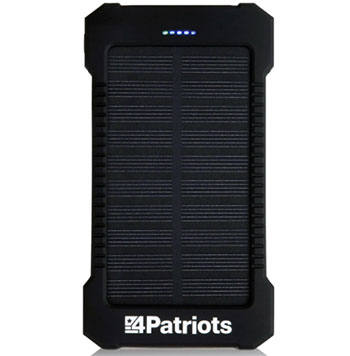
When the package arrived, the branding was intense.
It definitely leans into the “survivalist” aesthetic.
Taking the unit out of the box, the first thing I noticed was the build quality.
It is dense. The rubberized exterior gives it a grippy, rugged feel that immediately separates it from the slick, shiny electronics I am used to.
It feels like a tool you would toss into a toolbox, not a delicate accessory you have to baby.
I appreciated the reinforced corners; it looks like it could survive a drop onto concrete, which is a reassuring feature for an emergency device.
I decided to test it on a weekend camping trip to see if the “solar” aspect held up in the real world. I fully charged it via the wall outlet before leaving, as the manual suggested. On the first night, it charged my iPhone 12 from 20% to full without breaking a sweat, using about one of the four LED indicator lights worth of power. The charging speed was decent—not “fast charging” like a modern USB-C PD wall brick, but standard USB speeds. It took about two hours to top my phone off.
The real test came the next day. I drained the power bank down to one bar and set it out on a picnic table in direct sunlight to recharge. I let it sit there for six hours while we hiked. When I came back, I expected to see at least two or three bars. Instead, it was still sitting at one bar. The little green “solar” light was on, indicating it was receiving energy, but the needle hadn’t moved significantly. This was my first reality check: the solar panel on any device this size is incredibly small. It is a trickle charger, meant for emergencies, not a magical infinite power source.
However, the durability claims were tested unintentionally when I knocked it off the table into a muddy puddle. I fished it out, rinsed it off with a water bottle, and shook it dry. The rubber seals over the USB ports held tight. I plugged my phone in (after drying the port thoroughly), and it started charging immediately. That level of water resistance is where this device actually shines. It survived a clumsy accident that would have fried my standard Anker battery.
Another feature I found myself using more than expected was the integrated flashlight. It is surprisingly bright—much brighter than the flash on a smartphone. We used it to navigate to the campsite bathroom in the middle of the night, and the “SOS” strobe mode gave me a sense of security, knowing I could signal for help if I got lost.
Overall, my experience was mixed but positive in the areas that mattered for survival. As a daily charger, it is bulky and slow. But as a piece of survival gear that sits in a glovebox or a bug-out bag, its ability to hold a charge for months and withstand water and impact makes it a reliable backup. Just don’t expect the sun to fill it up in an afternoon.
Read More: My Thoughts On Ampere Time 12V 100Ah LiFePO4 Lithium Battery
Pros Of Patriot Power Cell
When evaluating the Patriot Power Cell against the sea of generic power banks, you have to look at it through the lens of preparedness rather than pure tech specs. It offers specific advantages for rough environments that standard chargers simply cannot match.
- Rugged IP67 Water and Dust Resistance: The most significant advantage of this unit is its survivability. Most power banks are delicate lithium-ion sandwiches that die if they get wet or dusty. The Patriot Power Cell is rated IP67, which means it can be submerged in water up to a meter deep for 30 minutes and is completely sealed against dust ingress. During a hurricane, flood, or rainstorm—exactly when you need emergency power—this durability is non-negotiable. You don’t have to worry about bagging it or protecting it from the elements; it is designed to exist in the same wet, dirty environment you are trying to survive in.
- Bright, Multi-Mode LED Flashlight: While many power banks have a tiny, dim LED added as an afterthought, this unit features a dual-LED panel on the back that acts as a legitimate light source. It is bright enough to light up a small room or a tent, essentially replacing the need to carry a separate flashlight in your kit. It also includes an SOS strobe mode. If you are stranded on the side of the road or lost in the woods, this flashing signal can be seen from a significant distance. By combining a battery and a light, it saves weight and space in your emergency bag, serving two critical survival functions in one brick.
- Passive Solar “Trickle” Charging: While the solar charging speed is slow (which we will discuss in the cons), the fact that it exists is still a pro for long-term storage. If you leave this device on the dashboard of your car or a sunny windowsill, the solar panel will slowly top off the battery, countering the natural self-discharge that all lithium batteries suffer from. This means that when you reach for it six months later in an emergency, it is more likely to be full than a standard battery that has been sitting in a dark drawer losing power. It acts as a battery maintainer, ensuring readiness without you having to constantly remember to plug it into a wall.
- Dual USB Outputs for Multi-Device Charging: In an emergency, you often need to charge more than one thing—perhaps your phone and a rechargeable radio, or your spouse’s phone simultaneously. The Patriot Power Cell includes two USB-A ports (and often a USB-C on newer models) that allow for pass-through or simultaneous charging. This is crucial for keeping a family connected. You don’t have to fight over who gets the charger first. The 8,000 mAh capacity is generally enough to charge two standard smartphones from 0% to nearly full, meaning one unit can get two people back online in a crisis.
Cons Of Patriot Power Cell
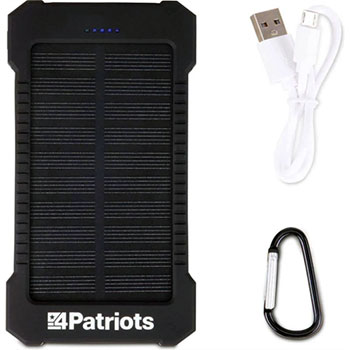
Despite the aggressive marketing, there are technological limitations to this device that might disappoint users expecting a miracle energy source. It is important to have realistic expectations before spending the money.
- Extremely Slow Solar Charging Speed: The marketing often implies “free energy from the sun” whenever you want it, but physics disagrees. The solar panel on the front of the device is roughly 5 inches by 2.5 inches. At best, in perfect, cloudless mid-day sun, this panel generates about 200-300 milliamps of current. With an 8,000 mAh battery, it would take roughly 40 to 50 hours of direct peak sunlight to charge the battery from 0% to 100%. That translates to about a week of leaving it outside all day. If you drain the battery at night, you cannot expect to recharge it fully the next day just by walking around with it clipped to your backpack.
- Relatively Low Battery Capacity for the Size: The unit is physically bulky due to the rubber armor and solar panel, but the internal battery is typically only 8,000 mAh. For context, a modern sleek Anker power bank of the same physical size might hold 20,000 mAh. You are trading capacity for durability. 8,000 mAh will charge a modern flagship phone (like an iPhone 14 Pro Max or Samsung S23 Ultra) about 1.5 to 2 times. It is not a bottomless pit of power. For a weekend trip, it is fine, but for a week-long blackout, one unit will run dry within 24 hours if you are using your phone heavily.
- Premium “Prepper” Pricing: You are paying a significant markup for the brand name and the rugged casing. Generic solar power banks with identical specs (8,000 mAh, IP67, flashlight) can be found on Amazon for $20 to $30. The Patriot Power Cell often sells for significantly more, especially if bought singly rather than in a bundle. While Patriot offers a US-based satisfaction guarantee and charitable donations to veteran causes, from a strictly hardware perspective, you are paying a “marketing tax.” If you are budget-conscious, you can get more milliamp-hours per dollar elsewhere.
- Rubber Port Covers Can Be Fussy: The waterproofing relies entirely on the thick rubber flap covering the USB ports being pressed down perfectly. If you have short fingernails, prying this flap open can be frustrating. Conversely, if the flap gets warped or doesn’t seat correctly after use, the water resistance is compromised. Over time, rubber can degrade or tear if pulled too hard. If that flap rips off, your rugged waterproof battery becomes just a regular battery that is vulnerable to rain.
Maintenance Tips For Patriot Power Cell
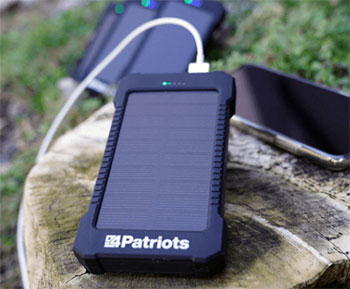
To ensure this device actually works when the zombie apocalypse (or just a power outage) hits, you need to treat it differently than a standard phone charger. Lithium-ion batteries and solar panels require specific care to last.
- Cycle the Battery Every 3-6 Months: The worst thing you can do to a lithium battery is let it sit at 0% or 100% for years. If you buy this for an emergency kit, do not just throw it in a bag and forget it. Every few months, take it out, use it to charge your phone to drain it partially, and then recharge it to about 80-90%. This keeps the electrons flowing and prevents the internal chemistry from degrading. A battery left at 0% for a year may never accept a charge again, turning your survival tool into a paperweight.
- Keep the Solar Panel Clean and Clear: The efficiency of the solar panel is already low; dust, fingerprints, and mud make it worse. Wipe the panel face with a damp microfiber cloth regularly. Do not use harsh chemicals or abrasive scrubbers, as scratching the plastic coating over the solar cells will permanently reduce their light absorption. If you are using it outdoors, ensure leaves or shadows aren’t covering even a small corner of the panel, as shading one cell can drop the output of the entire panel significantly.
- Avoid Extreme Heat Storage: There is a temptation to keep this device on the dashboard of your car so it is always charging. Do not do this. The interior of a car in summer can reach 140°F+ (60°C+). High heat destroys lithium-ion batteries, reducing their capacity and potentially causing them to swell or catch fire. While the Patriot Power Cell is rugged, it is not immune to thermodynamics. Store it in the glove box or under the seat (out of direct sun) and only put it on the dash while you are driving with the AC on.
- Inspect the USB Ports for Corrosion: If you do use the device in wet conditions, ensure the ports are dry before storing. Moisture trapped behind the rubber flap can corrode the metal contacts of the USB port over time. If you drop it in saltwater (ocean), rinse it with fresh water immediately and let it air dry with the flaps open for 24 hours. Salt corrosion will destroy the charging contacts faster than anything else.
Comparison with Other Brands
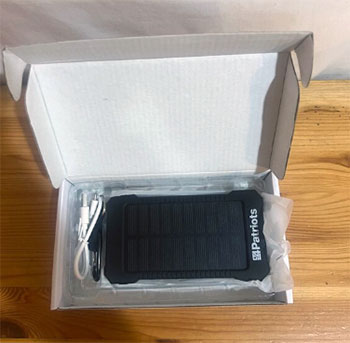
The Patriot Power Cell is not the only rugged solar charger on the block. To see if it is the right value for you, we need to stack it up against the direct competition.
- Blavor Solar Power Bank (The Amazon Best-Seller): This is the unit you will most likely see when searching for alternatives. Comparison details: The Blavor usually boasts a higher capacity (10,000 mAh or 20,000 mAh) for a lower price point than the Patriot. It often includes Qi wireless charging, a feature the standard Patriot CX lacks. However, the build quality of the Patriot generally feels denser and the rubber armor feels thicker. The Blavor feels more “plasticky.” If you want features and value, Blavor wins. If you want the peace of mind of a US-based company with a strong warranty and simpler, rugged construction, Patriot wins.
- Anker PowerCore Solar (The Tech Standard): Anker is the gold standard for charging technology. Comparison details: Anker’s solar bank is usually more expensive than generics but offers superior efficiency. Anker’s internal circuitry is better at handling power management, meaning you get more “real” charge out of the same 10,000 mAh rating. The solar panel on the Anker is slightly higher quality, though still slow. Anker does not market to the “prepper” crowd, so it lacks the SOS strobe or the aggressive tactical look. If you care about charging speed and battery safety above all else, Anker is the superior technological choice.
- Goal Zero Flip / Venture Series (The Outdoor Pro): Goal Zero is the brand found at REI and high-end outdoor shops. Comparison details: Goal Zero products are significantly more expensive and often modular. Their “Venture” banks are incredibly durable but often do not have built-in solar panels; they are designed to be paired with separate, larger deployable panels (Nomad series). This is actually a better system: a separate large panel charges a battery in hours, not days. The Patriot Power Cell is an all-in-one compromise. If you are building a serious off-grid power system, Goal Zero is the professional route. If you just want a pocketable “just in case” device, Patriot is more convenient.
Also Read: My Thoughts On Powerextra Hero 11 Battery Charger
Frequently Asked Questions (FAQ)
It takes a very long time. Expect roughly 40 to 50 hours of direct sunlight to fully charge the battery from empty. This means in real-world conditions, it could take 3 to 5 days of leaving it outside. Solar charging should be viewed as an emergency backup or a way to maintain the battery level, not the primary way to recharge it daily.
It is rated IP67 water-resistant. This means it can withstand being submerged in water up to 1 meter (about 3.3 feet) deep for up to 30 minutes, provided the rubber seal over the ports is closed tightly. It is safe for rain, splashes, and accidental drops in puddles, but it is not designed for underwater use or prolonged swimming.
The standard CX model has a capacity of 8,000 mAh. In practical terms, this is enough to charge a standard smartphone (like an iPhone or Samsung Galaxy) about two times fully. It can charge a tablet roughly 50-70%.
Yes, you can. The battery capacity (8,000 mAh / ~30 Watt-hours) is well below the TSA limit of 100 Watt-hours for carry-on lithium batteries. However, you must pack it in your carry-on luggage. Loose lithium batteries and power banks are prohibited in checked luggage due to fire risk in the cargo hold.
Conclusion
The Patriot Power Cell is a polarizing device. If you judge it strictly as a piece of technology, it is overpriced and slow compared to the cutting-edge chargers from brands like Anker. However, if you judge it as a piece of survival insurance, it succeeds. It is built like a tank, simple to use, and offers the psychological comfort of knowing you have a light and a power source that—given enough time—can harvest energy from the sun.
If you are a serious backpacker or tech enthusiast, look elsewhere for lighter or faster options. But for the average homeowner looking to toss a reliable, waterproof backup battery into their hurricane kit or glovebox, the Patriot Power Cell is a solid, durable choice that will be ready when the grid isn’t. Just remember: charge it at the wall before the storm hits, and thank the sun for the top-up later.