
If you have scrolled through fitness feeds lately, you have probably seen athletes with strange gadgets in their mouths, looking like they are Bane from The Dark Knight. This is the world of Respiratory Muscle Training (RMT), a method designed to strengthen your diaphragm and intercostal muscles.
While high-tech devices like the Airofit cost hundreds of dollars, the OxyBio Breathing Trainer (often found under similar names like OxyFit) pops up as the affordable, analog alternative. It promises to boost your stamina and lower your heart rate without an app or a battery. But is a simple plastic valve really enough to change your physiology?
In this review, I am testing this budget-friendly device to see if it is a legitimate training tool or just a glorified straw. For those ready to buy, I strongly recommend purchasing through a platform with buyer protection like Amazon or eBay, as direct shipping from the brand’s site has had reported delays.
My Experience With The OxyBio Breathing Trainer
I went into this skeptical. I am a runner who usually hits a wall around mile four, gasping for air while my legs still feel fine.
I wanted to see if “lung day” was actually a thing I needed to add to my routine.
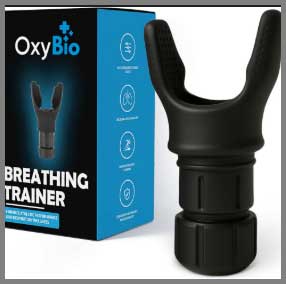
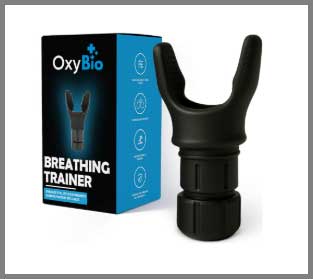
The OxyBio is incredibly simple. It is a small, silicone-and-plastic device that fits in the palm of your hand.
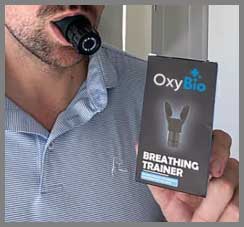
There are no buttons, no Bluetooth syncing, and no charging cables. You just put it in your mouth and breathe.
The first session was… humbling. I set the resistance dial to “medium,” assuming my cardio background would carry me through.
I was wrong. It felt like trying to breathe through a coffee stirrer while someone sat on my chest. The resistance forces you to consciously engage your diaphragm (belly breathing) because shallow chest breathing just doesn’t generate enough force to pull air through the valve.
I committed to using it for 10 minutes a day, usually while watching TV or before a workout. The sensation is distinct; you feel a physical “burn” in your solar plexus, similar to the fatigue you get in your abs after a plank. It is definitely a workout.
By week three, I noticed a subtle but real shift in my running. On my usual route, I wasn’t fighting for breath on the uphill sections anymore. My breathing felt controlled and rhythmic rather than panicked. It didn’t turn me into an Olympic athlete overnight, but it removed the “air hunger” panic that usually spikes my heart rate. The device essentially taught my body to remain calm under respiratory stress.
However, the user experience is raw. It’s drooly. There is no way around it—you will produce a lot of saliva, and without an app to distract you, you are very aware of the plastic taste. But for a device that costs a fraction of the smart competitors, it did the job it promised: it made my lungs stronger.
Also read: My Thoughts on Snow Diamond Teeth Whitening Kit
Pros Of OxyBio Breathing Trainer
If you strip away the marketing fluff of the expensive brands, the mechanics of resistance training are simple, and OxyBio nails the basics.
- Zero Tech Hassle: In an era where even our water bottles need firmware updates, the OxyBio is refreshingly “dumb.” It has no battery to die and no app to crash. You can throw it in your gym bag and it will work 10 years from now. This makes it perfect for hikers or travelers who don’t want to carry another charger.
- Effective Diaphragm Activation: The resistance mechanism is crude but effective. It forces you to bypass shallow “panic breathing” (upper chest) and switch to deep diaphragmatic breathing. If you don’t use your diaphragm, you simply cannot get enough air through the device. It is an instant biofeedback tool for correcting breathing posture.
- Dual Resistance (Inhale and Exhale): Many cheap breathing straws only restrict inhalation. The OxyBio allows you to train both inspiratory muscles (breathing in) and expiratory muscles (breathing out). This is crucial because stronger exhalation helps you clear CO2 faster during intense exercise, delaying muscle acidosis (the burning feeling).
- Extremely Durable: The unit is made of thick silicone and hard plastic. You could drop this on the concrete, step on it, or toss it in a backpack, and it would survive. Compared to delicate digital spirometers, this is a tank.
- Cost-Effective Entry to RMT: Respiratory training is a niche field. Spending $300 on an Airofit is a big ask if you aren’t sure you’ll stick with it. The OxyBio sits at a price point (usually $30-$50) that makes it a low-risk experiment. If you use it for a month and quit, you haven’t lost a fortune.
Cons Of OxyBio Breathing Trainer
Because it is a budget device, it lacks the polish and guidance of the premium tier.
- No Data or Feedback: This is the biggest trade-off. You have no idea if you are improving objectively. There is no “lung capacity score” or progress chart. You have to rely entirely on how you feel. For data nerds who need to see a graph going up to stay motivated, this device will feel boring very quickly.
- Saliva Management Is Messy: Unlike some medical devices that have a catch-chamber, the OxyBio is a straight-through tube. Condensation and saliva build up quickly and can drip out the end or back into your mouth. You absolutely need to have a towel handy, and you need to wash it after every single session to prevent odors.
- Uncomfortable Mouthpiece: The silicone mouthpiece is “one size fits all,” which usually means “fits nobody perfectly.” It is quite large and can tire out your jaw muscles (masseters) before your lungs actually get tired. You have to bite down to keep it in place, which can be annoying during longer sessions.
- Confusing Resistance Markings: The dials on the side control the airflow, but they aren’t always clearly labeled with resistance levels (like “Level 1” to “Level 10”). It is more of a “twist it until it feels hard” approach. This makes it difficult to track progressive overload accurately since you might accidentally set it slightly differently each time.
- Shipping and Customer Service Issues: As noted in the intro, the brand has struggled with logistics. Many users report long wait times when ordering direct. It is much safer to buy from a third-party retailer that holds stock rather than waiting for a drop-shipment that might take weeks.
Maintenance Tips For OxyBio Breathing Trainer
Since this device lives in your mouth, hygiene is non-negotiable. Here is how to keep it safe and functional.
- The Daily Rinse: Immediately after use, rinse the device with warm water. Do not let the saliva dry inside the valves, or it will become a breeding ground for bacteria and start to smell like a gym locker. Shake it out vigorously and let it air dry on a paper towel.
- Weekly Deep Clean: Once a week, submerge the unit in a bowl of warm water with a mild dish soap or a denture cleaning tablet. Let it soak for 15 minutes. This breaks down any biofilm that the daily rinse missed.
- Do Not Boil It: Unless the packaging specifically says “medical grade autoclavable,” avoid boiling water. High heat can warp the plastic valves or degrade the silicone seals, ruining the resistance accuracy. Warm soapy water is sufficient.
- Check the Valves: Periodically look inside the device to ensure the little flaps or ball bearings (depending on the specific model iteration) are moving freely. Sometimes dried mucus or dust can jam the valve, making the resistance feel impossibly hard or deceptively easy.
- Store in a Breathable Bag: Do not seal it in a plastic Ziploc bag while it is damp; it will grow mold. Keep it in a mesh bag or a ventilated case so moisture can escape between sessions.
Comparison with Other Brands
The market is flooded with breathing trainers. Here is where OxyBio fits in.
- OxyBio vs. Airofit Pro: This is “David vs. Goliath.” Airofit ($299+) connects to your phone, measures your actual lung capacity, and guides you through video games to train your breath. If you need gamification and data to stay consistent, Airofit is miles better. However, if you just want the raw resistance training and don’t care about an app, OxyBio gives you the same physical workout for 1/10th of the price.
- OxyBio vs. The Breather: The Breather is a medical device often used for COPD or stroke recovery. It is very similar to OxyBio but has a more “clinical” design and clearer resistance settings (numbered dials). If you are buying this for medical recovery (e.g., after pneumonia), get The Breather. It is more standardized. If you are an athlete looking for rugged durability, OxyBio is usually the fitter choice.
- OxyBio vs. Bas Rutten O2 Trainer: The O2 Trainer (designed by the UFC legend) uses exchangeable caps with different hole sizes to change resistance, whereas OxyBio uses an adjustable dial. OxyBio is more convenient because you don’t have to carry around loose plastic caps in your pocket. You can adjust the OxyBio mid-workout with a simple twist, which you cannot do with the O2 Trainer.
Also read: My Thoughts on Timeless Vanilla Teeth Whitening Pen
Frequently Asked Questions (FAQ)
Yes, the mechanism is scientifically sound. It utilizes Respiratory Muscle Training (RMT). Just as dumbbells strengthen your biceps, breathing against resistance strengthens your diaphragm and intercostals. Studies consistently show RMT can improve endurance and reduce the perception of breathlessness during exercise.
Technically yes, but it is not recommended for beginners. It restricts airflow significantly, which can cause dizziness or tripping if you aren’t used to it. It is best used as a static training tool (sitting on the couch) separate from your running workouts. Think of it like lifting weights: you squat in the gym to run faster on the track; you don’t squat while running on the track.
Most users report feeling a difference in 3 to 4 weeks of consistent use (5-10 minutes daily). You may notice you are less “winded” climbing stairs or that your recovery time after a sprint is faster.
Generally yes, but if you have a history of collapsed lung, asthma, or high blood pressure, you should consult a doctor first. The intense pressure created in the chest cavity during these exercises can be contraindicated for certain medical conditions.
Conclusion
The OxyBio Breathing Trainer is a utilitarian tool for a specific job. It is not flashy, it is not “smart,” and it is a bit gross to use. But it is also an incredibly effective way to hack your endurance without running extra miles. It forces you to learn how to breathe correctly, engaging the diaphragm in a way most of us have forgotten how to do.
If you are a runner, cyclist, or swimmer looking for that extra 5% performance boost and you don’t want to spend $300 on a gadget, this is a solid investment. Start with 5 minutes a day on the lowest setting, and prioritize buying from a reputable third-party seller to ensure you actually receive the product.