
If you’re tired of layering up like a marshmallow just to stay warm, do yourself a favor and grab an Ororo heated vest this season. I promise you’ll wonder how you ever survived winter without it. Lightweight, ridiculously warm, and actually stylish – it’s the one piece of gear I reach for every single cold day.
My Experience With Ororo Heated Vest
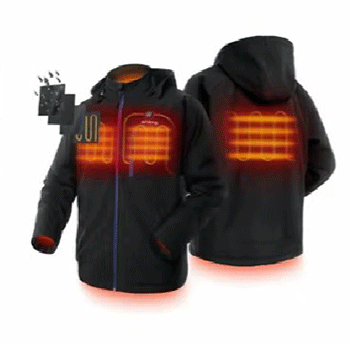
Picture this: it’s 28°F, windy, and I’m standing on the sidelines of my kid’s Saturday morning soccer game.
Two years ago I would have been miserable, stomping my feet, hands jammed in my pockets, counting the minutes until I could run back to the car.
Last weekend? I was in jeans and the Ororo vest, sipping coffee like it was a spring day.
I bought my first Ororo (the Men’s Classic in black) in late 2022 after a particularly brutal ice-fishing trip where I nearly lost feeling in my core.
Since then it’s been with me dog walking at 5 a.m., shoveling snow, commuting on the motorcycle when the temperature drops, even wearing it under a suit jacket for outdoor evening events.
I now own three: the classic, the lightweight women’s version for my wife, and the new 4-zone model with arm heat.
The first time I hit that power button and felt warmth spread across my chest and back in seconds, I actually laughed out loud. It’s that good.
On high, it feels like someone laid a heating pad across your core. On medium (my daily setting), it takes the bite out of the air without ever making me sweat.
Low is perfect for all-day wear indoors when the office thermostat is stuck at “penguin-friendly.”
Battery life surprised me the most. Ororo claims up to 10 hours on low, and they’re not lying. I regularly get 9–10 hours on low with the included 7.2V battery, 6–7 hours on medium, and about 3.5 hours on high.
I bought a second battery for $40 and rotate them – never once have I been left freezing mid-day.
The fit runs true-to-size for me (6’1″, 195 lbs, athletic build – Large fits perfectly with room for a hoodie underneath).
The shell repels light rain and snow way better than expected, and after three seasons of hard use, my original vest still looks almost new. That’s saying something because I’m rough on gear.
Read more: My Thoughts on Barefoot Vitality Shoes
Pros Of Ororo Heated Vest
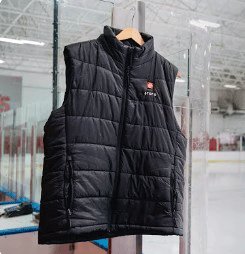
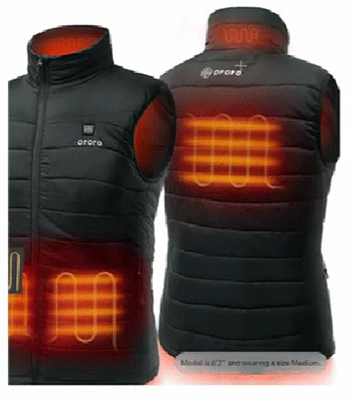
- Instant Core Warmth You Control: Three (or four, depending on model) carbon-fiber heating zones and three temperature settings mean you decide exactly how warm you want to be – no more guessing with layers.
- Battery Life That Actually Delivers: 8–10 hours on low is real-world truth, not marketing fluff. I forget to charge it for days and it still works when I need it.
- Lightweight and Non-Bulky: At just over a pound, you barely notice you’re wearing it under a jacket or even by itself on milder days.
- Machine Washable (Yes, Really): Remove the battery, zip it up, turn inside out, cold gentle cycle – I’ve washed mine 30+ times with zero issues.
- Wind and Water Resistant Shell: Light rain and snow bead up and roll off. I’ve worn it in downpours with just a shell over it and stayed dry.
- Stylish Enough for Daily Wear: Looks like a normal puffer vest. I wear mine to the office, on dates, everywhere – nobody knows it’s “special” unless I tell them.
- Safe Auto Shut-Off: 3-hour auto-off on high/medium prevents you from cooking yourself if you fall asleep wearing it (guilty).
- Heats Your Neck Too: Most models have a collar zone – absolute game-changer when the wind hits your throat.
- Affordable Replacement Parts: Extra batteries, chargers, even new heating elements available directly from Ororo if something ever fails.
Cons Of Ororo Heated Vest
- Battery Pocket Placement Bothers Some People: On men’s models it’s lower left inside – fine for me, but my wife hates it on the women’s cut and keeps the battery in her jeans pocket with the cable tucked.
- No Hand-Warming Pockets on Basic Models: Some competitors put heating elements in the hand pockets. Ororo only does that on their priciest 4-zone versions.
- Zipper Can Snag If You’re Not Careful: Cheap zipper feel on older models – improved in 2024/2025 versions, but my 2022 vest still occasionally catches the fabric.
- Runs Slightly Large for Very Slim Builds: My skinny teenage son swims in a Medium – size down if you’re narrow-shouldered.
- Charging Port Cover Is Fiddly: Tiny rubber flap you have to line up perfectly or risk water getting in (hasn’t happened to me, but I baby it).
- No Built-In Hood: Some rival brands include a heated hood – Ororo makes you buy their heated hoodie separately if you want that.
Maintenance Tips For Ororo Heated Vest
- Always Remove the Battery Before Washing: Sounds obvious, but I know two people who fried theirs by forgetting. Store the battery at room temperature – never in the freezing car overnight.
- Wash Inside Out on Cold Gentle Only: Use a mesh laundry bag if you’re paranoid. I don’t and it’s been fine for years, but your mileage may vary.
- Air Dry Only – Never the Dryer: Hang it up or lay flat. Heat kills the heating elements and shrinks the insulation. Takes about 12 hours to dry fully.
- Charge Battery Every 3–4 Months in Off-Season: Lithium batteries hate being stored at 0%. I keep mine at 60% in a drawer May through October.
- Clean the Charging Port Regularly: Dog hair and pocket lint love that little barrel plug. I use a toothpick and compressed air once a month.
- Store Flat or Hanging – Never Folded Tight: Keeps the wiring from developing permanent creases that can break over time.
- Test It Once a Month Year-Round: Takes 30 seconds to plug in and make sure all zones still heat evenly. Caught a bad collar zone early once and got free replacement.
- Use the Included Stuff Sack for Travel: Prevents the wires from getting crushed in your suitcase – I learned this the hard way after a flight mangled my first one.
- Replace Battery Every 2–3 Years: They still work after that, but capacity drops to ~60%. $40–50 for a new one is cheaper than a new vest.
Comparison with Other Brands
Ororo vs Gobi Heat
Gobi feels more premium – thicker fabric, heated hand pockets on every model, and slightly better battery life. But you pay for it: Gobi costs 50–80% more than Ororo for similar specs. I own both now, and 9 times out of 10 I grab the Ororo because it’s lighter and plenty warm enough. Gobi wins if you live in Minnesota and need max heat and hand warmth.
Ororo vs Milwaukee Heated Gear
Milwaukee is built like a tank and runs off the same M12 batteries you already own if you have their tools. Insanely durable – construction guys swear by them. Downside? They weigh almost twice as much and look like workwear. Ororo wins for daily civilian life.
Ororo vs Mobile Warming
Mobile Warming has 7.4V batteries (slightly hotter) and often includes back + chest + arms + hands on mid-tier models. Feels more even. But their quality control is spottier – I returned two with dead zones. Ororo’s consistency keeps me coming back.
Ororo vs Venture Heat
Venture uses thicker heating wires that you can sometimes feel if you’re wearing just a t-shirt underneath. Ororo’s carbon fiber is invisible. Venture batteries die faster in real-world testing too.
Ororo vs Bosch Heated Clothing
Bosch is basically rebranded Mobile Warming at a higher price with blue accents. Same pros and cons as above.
Also read: My Thoughts on Emma Relief
Frequently Asked Questions (FAQ)
Depends on your budget and needs. If you want maximum heat, heated hand pockets, and don’t mind spending $250+, get Gobi. If you want 90% of the performance for half the price and lighter weight, Ororo wins every time for me.
My 2022 model is still going strong in 2025 after hundreds of uses and 30+ washes. Heating elements have lifetime warranty against defects – batteries last 2–4 years depending on care.
Designed in Minnesota, manufactured in China – same as literally every other heated apparel brand including the “premium” ones.
With proper care (air dry, charge occasionally in summer, don’t crush the wires), expect 5–8 years of heavy use. I’m on year three with zero degradation.
Conclusion
Three winters in, my Ororo heated vest is still the best $120 I’ve ever spent on clothing – period. It’s not perfect, but the warmth-to-price ratio is unbeatable. If you spend any time outdoors in cold weather, stop suffering and buy one today. Your future warm self will thank you every single time you push that power button.