
If you’re looking for a high-quality, transparent, and ethically sourced cat food that actually makes a difference in your cat’s coat, energy, and overall health, Open Farm is absolutely worth every penny. In this honest review, I’ll share my real experience after feeding it to my two cats for over a year, break down the genuine pros and cons, and help you decide if it’s the right choice for your feline friend.
My Experience With Open Farm Cat Food
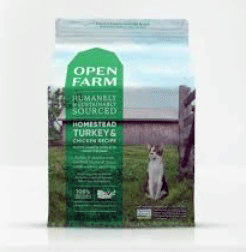
I still remember the first time I opened a bag of Open Farm’s Grass-Fed Beef recipe.
The smell hit me immediately—not the usual heavy, processed odor I was used to with mainstream brands, but a clean, almost fresh meaty aroma that actually smelled like real food.
My cats, Milo (a picky 8-year-old tabby) and Luna (a 4-year-old rescue who usually sniffs and walks away from anything new), both came running the second I poured it into their bowls.
Within the first two weeks I noticed visible changes. Luna’s coat, which had always been a little dull despite regular brushing, started looking noticeably glossier.
Milo, who sometimes had soft stools on other foods, produced much firmer, smaller stools almost immediately. I was honestly shocked at how quickly their digestion improved.
I’ve rotated through several of their recipes now—Grass-Fed Beef & Ancient Grains, Wild-Caught Salmon, Homestead Turkey, and even their Freeze-Dried Raw toppers—and my cats have never gotten bored.
They still get excited every mealtime, which is something I never thought I’d see with a “healthy” food.
One of the biggest wins for me personally has been the peace of mind. Every bag has a traceable lot code you can enter on their website, showing exactly which farm the meat came from, who raised the animals, and even the harvest date of the veggies.
Knowing my cats are eating humanely raised, antibiotic-free meat from family farms instead of mystery meat from factory farms feels incredibly good as a pet parent.
The only minor hiccup early on was the transition. Because Open Farm is so high in fresh meat and low in fillers, I had to mix it gradually over 10–12 days instead of the usual 7.
Once we got past that, though, everything has been smooth sailing. Both cats maintain a healthy weight, have great energy, and their breath is noticeably better than it was on previous brands.
I’ve recommended Open Farm to friends whose cats had chronic diarrhea or dull coats, and almost everyone reports similar improvements. For me, switching to Open Farm wasn’t just about “better” food—it’s become the standard I compare every other brand against now.
Also read: My Thoughts on FlavCity Protein Powder
Pros Of Open Farm Cat Food
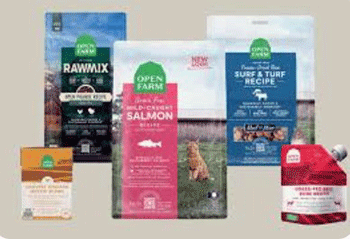
- Ethically sourced ingredients you can actually trace : Every bag includes a lot code that lets you see the exact farm, harvest dates, and more on their website—transparency I’ve never seen with any other brand.
- High-quality animal proteins as the first ingredients : Whether it’s grass-fed beef, wild-caught salmon, or free-range turkey, real meat is always the #1 ingredient, not meat meal or by-products.
- Noticeable improvements in coat and digestion : Almost every cat I know who switched (including mine) developed shinier coats, smaller/firmer stools, and more consistent energy levels within weeks.
- No artificial preservatives, colors, or flavors : They avoid all the questionable additives that many conventional brands still use.
- Humanely raised and antibiotic-free meats : Animals are raised without antibiotics or hormones, and Open Farm partners with certified humane farms.
- Variety of recipes for different needs : They offer grain-inclusive, grain-free, freeze-dried raw toppers, and even stew-style wet food, so you can rotate flavors easily.
- Gentle on sensitive stomachs : Many owners with cats prone to vomiting or diarrhea report much better tolerance compared to mainstream brands.
- Strong commitment to sustainability : Recyclable packaging, carbon-neutral shipping options, and support for regenerative farming practices.
Cons Of Open Farm Cat Food
- Higher price point compared to supermarket brands : You’re definitely paying a premium for the quality and transparency—expect to spend 2–3x more than national brands like Purina or Iams.
- Transition period can be longer : Because it’s so high in fresh meat and low in fillers, some cats need 10–14 days of gradual mixing to avoid loose stools.
- Not every cat loves every recipe : While my two cats eat everything, some picky eaters turn their noses up at certain flavors (especially the grain-free options).
- Limited availability in physical stores : You’ll mostly find it online or in specialty pet stores—hard to grab a bag last-minute at a big-box retailer.
- Smaller kibble size in some recipes : The grain-free lines have slightly smaller pieces that some cats (especially big males) seem to inhale too quickly.
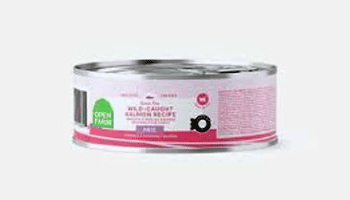
- Wet food options are more expensive per ounce : The pouches and trays are high quality but cost noticeably more than brands like Fancy Feast.
Maintenance Tips For Open Farm Cat Food
- Transition slowly over 10–14 days : Start by mixing 25% Open Farm with 75% of your current food for 3–4 days, then gradually increase the Open Farm portion to avoid digestive upset.
- Store the bag properly : Keep the bag sealed in a cool, dry place or transfer kibble to an airtight container—once opened, use within 6–8 weeks for maximum freshness.
- Measure portions carefully : Follow the feeding guidelines on the bag but adjust based on your cat’s age, weight, and activity level—overfeeding can happen quickly with calorie-dense formulas.
- Rotate proteins every few months : Switching between beef, turkey, salmon, etc., provides nutritional variety and keeps cats interested in their meals.
- Add warm water to dry kibble : A splash of warm water makes the kibble more aromatic and easier to chew, especially for older cats or those with dental issues.
- Use freeze-dried raw as a topper sparingly : A small sprinkle (1–2 teaspoons per meal) adds extra flavor and nutrients without overwhelming their system.
- Monitor weight monthly : Weigh your cat every 4 weeks and adjust portions if you notice any gain or loss—Open Farm is nutrient-dense so it doesn’t take much to overfeed.
- Clean bowls daily : Rinse and wash food bowls every day to prevent bacterial buildup, especially important with high-protein foods.
Comparison With Other Brands
Open Farm Vs. Orijen
Orijen is another premium brand with very high protein and biologically appropriate formulas. However, Open Farm wins on transparency—you can literally see the exact farm your meat came from, while Orijen doesn’t offer that level of traceability. Orijen tends to have larger kibble sizes, which some cats prefer, but Open Farm’s recipes feel gentler on sensitive stomachs in my experience. Price-wise, they’re very close, but I personally find Open Farm’s ethical sourcing story more compelling.
Open Farm Vs. Acana
Acana is made by the same company as Orijen and shares many similarities. The main difference is that Acana uses slightly more plant ingredients and is a bit lower in protein. Open Farm still edges it out for me because of the traceable supply chain and the cleaner ingredient lists. Cats with allergies seem to do slightly better on Open Farm than Acana in my circle of friends.
Open Farm Vs. Wellness Core
Wellness Core is a solid mid-premium option that’s easier to find in stores and usually cheaper. However, it uses more meat meals and fewer fresh meats compared to Open Farm. I’ve seen more reports of cats developing allergies or loose stools on Wellness Core than on Open Farm, and the lack of traceability is a big downside for me.
Open Farm Vs. Royal Canin Veterinary Diets
Royal Canin is often prescribed by vets for specific medical conditions, but for everyday healthy cats, Open Farm blows it out of the water in terms of ingredient quality and ethical sourcing. Royal Canin uses a lot of by-products and grains that aren’t as species-appropriate. If your cat doesn’t have a medical condition requiring a prescription diet, I’d choose Open Farm every time.
Open Farm Vs. Stella & Chewy’s
Stella & Chewy’s is fantastic for raw and freeze-dried, but their kibble line isn’t as extensive as Open Farm’s. Open Farm offers more variety in dry food and has wet options too. Stella & Chewy’s raw patties are amazing toppers, but as a complete diet, I find Open Farm more practical and budget-friendly for daily feeding.
Read more: My Thoughts on Nutrish Dog Food
Frequently Asked Questions (FAQ)
Many veterinarians do recommend Open Farm, especially for cats with food sensitivities, dull coats, or chronic digestive issues. It’s not as commonly prescribed as prescription brands for specific medical conditions, but holistic and integrative vets frequently suggest it for general wellness.
There isn’t one single “healthiest” brand because it depends on your cat’s individual needs, but Open Farm consistently ranks among the top choices due to its high-quality proteins, traceable sourcing, and minimal fillers. Other strong contenders include Orijen, Acana, Ziwi Peak, and Tiki Cat.
Open Farm is not a veterinary prescription brand, so it doesn’t carry a “vet approved” label in the same way Royal Canin or Hill’s does. However, it meets or exceeds AAFCO nutritional standards and is widely supported by both conventional and holistic veterinarians for healthy cats.
Conclusion
After feeding Open Farm to my cats for over a year, I can confidently say it’s one of the best decisions I’ve made for their health and happiness. The visible improvements in coat quality, digestion, and energy, combined with the peace of mind from knowing exactly where their food comes from, make it worth the higher price for me. If you’re ready to upgrade your cat’s nutrition and give them food they’ll actually get excited about, Open Farm is absolutely worth trying—you and your cat will both be glad you did.