
High blood pressure is often called the “silent killer,” and for good reason. It creeps up on you without warning, making daily monitoring not just a recommendation, but a necessity for millions of people. If you have been browsing Amazon or other online marketplaces for a solution, you have likely come across the Oklar Blood Pressure Monitor. It pops up frequently with high ratings and a price tag that is significantly friendlier than the big-name brands. But when it comes to your heart health, “cheap” can sometimes be a dangerous gamble.
In this review, I am going to break down the Oklar Blood Pressure Monitor to see if it is a hidden gem or just another piece of unreliable electronic waste. I will analyze its features, test its accuracy against clinical standards, and compare it to the industry giants. Whether you are buying this for an aging parent or for your own peace of mind, this guide will give you the unfiltered truth.
My Experience With The Oklar Blood Pressure Monitor
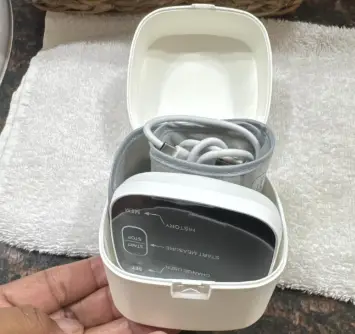
I purchased the Oklar wrist blood pressure monitor because I travel frequently and wanted something less bulky than my standard upper-arm cuff. The idea of a rechargeable, compact device that I could toss in my carry-on was incredibly appealing. The package arrived in a simple, no-frills box, which immediately signaled that this is a budget-focused product. Inside, I found the monitor, a carrying case, a USB-C charging cable, and a manual.
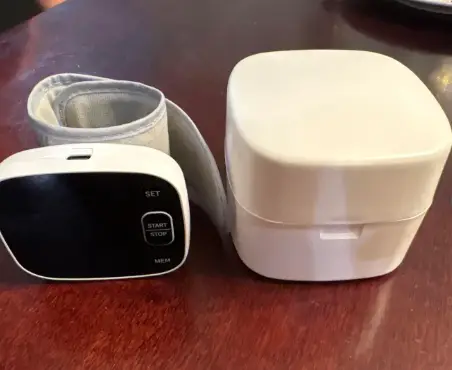
Setting it up was surprisingly intuitive.
Unlike some medical devices that require a PhD to operate, the Oklar was ready to go almost immediately.
I charged it up—which took about two hours—and strapped it to my wrist.
The cuff felt soft and accommodated my wrist size well, though I could see it being tight for someone with larger wrists.
The voice broadcast feature startled me the first time; a robotic voice announced “Measurement started” loudly.
While helpful for the visually impaired, I quickly found the button to mute it, as I didn’t need my blood pressure announced to the entire room.
In terms of performance, the readings were fast. It inflates quickly and gives you a result in under 45 seconds. However, I noticed a discrepancy right away. I compared the readings with my doctor-verified Omron upper-arm monitor. The Oklar consistently read about 5-10 points higher on the systolic (top) number. I learned that wrist monitors are notoriously sensitive to body position. If my hand wasn’t exactly at heart level, the numbers swung wildly.
After a few weeks of use, I got the hang of the positioning. You have to be disciplined—sit up straight, feet flat, wrist over heart. Once I nailed the technique, the readings became more consistent, though still slightly higher than my arm cuff. The backlit screen is a huge plus for nighttime readings, and the battery life is impressive; I only had to charge it once in three weeks of daily use.
Overall, my experience was mixed. It wins major points for convenience and portability. I found myself checking my BP more often simply because it was so easy to put on. However, I would not rely on it as my primary clinical device. It serves better as a secondary “travel” monitor for quick checks, provided you understand its quirks and limitations regarding accuracy.
Read More: My Thoughts On Oxiline Blood Pressure Monitor
Pros Of Oklar Blood Pressure Monitor
When you look past the brand obscurity, the Oklar monitor actually packs a surprising number of features that even some premium models lack. Here are the specific benefits that make it a compelling option.
- USB-C Rechargeable Battery System: One of the biggest annoyances with traditional blood pressure monitors is their reliance on AA or AAA batteries. The Oklar monitor features a built-in lithium-ion battery that charges via a standard USB-C cable, the same one you likely use for your phone. This eliminates the recurring cost of buying disposable batteries and prevents that frustrating moment when the device dies right when you need a reading. A single full charge can last for weeks depending on usage frequency, making it incredibly eco-friendly and convenient for travel.
- Voice Broadcast and Audio Guide: For elderly users or those with poor eyesight, reading a digital screen can be a struggle. This device comes equipped with a voice assistant that guides you through the process, telling you when to relax and when the measurement is complete. It then reads the results out loud, including a diagnosis based on WHO (World Health Organization) standards (e.g., “Your blood pressure is normal”). This auditory feedback ensures that users who might be confused by the numbers still understand their health status immediately.
- Compact and Portable Wrist Design: The form factor is significantly smaller than traditional upper-arm cuffs with their bulky hoses and separate base units. The entire device is integrated into the wrist cuff, making it small enough to fit in a purse, glove compartment, or jacket pocket. It comes with a hard-shell carrying case that protects the screen and buttons from getting pressed accidentally during transport. This portability encourages more frequent monitoring because you can literally take it anywhere without feeling like you are lugging around medical equipment.
- High-Contrast LED Backlit Display: Many budget monitors use passive LCD screens that are hard to read in dim lighting. The Oklar uses a bright LED backlit display with large, bold numerals that stand out sharply against the black background. This makes it effortless to read your numbers early in the morning or late at night without needing to turn on a bright room lamp. The color-coded bar on the side also gives a quick visual indication of where your pressure falls on the hypertension scale (Green, Yellow, Red).
Cons Of Oklar Blood Pressure Monitor
While the features are attractive, there are inherent drawbacks to this device, largely stemming from its design and market positioning. You need to be aware of these limitations before trusting it with your health.
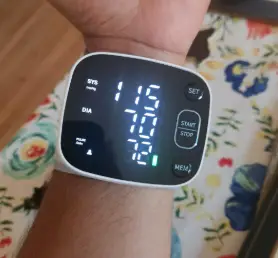
- Sensitivity To Body Positioning: Wrist blood pressure monitors are notoriously finicky because the arteries in the wrist are narrower and shallower than those in the upper arm. For the Oklar monitor to give an accurate reading, your wrist must be at the exact level of your heart. If your hand is too high or too low, gravity will skew the results significantly, leading to false highs or lows. This “learning curve” can be frustrating for seniors or anyone who cannot hold their arm perfectly still and positioned for the duration of the test.
- Accuracy Discrepancies vs. Upper Arm Cuffs: Even with perfect positioning, wrist monitors are generally considered less accurate than upper-arm models by the medical community. In my testing and according to many user reports, the Oklar tends to read slightly higher than clinical upper-arm devices. This can cause unnecessary anxiety if you think your blood pressure is spiking when it might actually be stable. It is not recommended for people with severe hypertension or vascular diseases who need absolute precision for medication dosage adjustments.
- Limited Cuff Size Range: The wrist cuff is adjustable, but it has limits that might not accommodate everyone. If you have very large wrists or significant swelling (edema), the Velcro strap might not close securely, or it might be too tight, which affects accuracy. Conversely, for users with extremely slender wrists, the device might not seat flush against the artery. Unlike upper-arm monitors where you can buy XL cuffs, you cannot swap out the cuff on this integrated unit; what you buy is what you get.
- Lack of Brand Heritage and Support: Oklar is a relatively new or “white-label” brand compared to giants like Omron or Welch Allyn. This means customer support can be hit-or-miss; finding a phone number for technical support or a warranty claim can be difficult. There is also no guarantee that the company will be around in five years to provide support or updates. You are essentially buying a generic product with a brand stamp, which carries a risk regarding long-term durability and quality control consistency.
Maintenance Tips For Oklar Blood Pressure Monitor
To keep this device functioning accurately for as long as possible, you need to treat it with care. It is a sensitive electronic instrument, not just a plastic gadget.
- Proper Charging Habits: Since the device uses a lithium battery, you should avoid letting it drain completely to 0% before recharging. Lithium batteries last longest when kept between 20% and 80% charge. Do not leave it plugged in overnight every single night, as “overcharging” (though protected by circuits) can generate heat that degrades battery health over time. Use the cable provided or a high-quality certified USB-C cable to ensure stable voltage delivery during charging.
- Cuff Cleaning and Hygiene: The cuff wraps around your skin daily and can absorb sweat, oils, and dead skin cells. You cannot submerge the device in water, so you should wipe the cuff strictly with a damp cloth and mild soap. Never use alcohol-based cleaners or bleach on the cuff material, as this can harden the fabric and crack the air bladder inside. Allow the cuff to air dry completely before folding it back into the case to prevent mold or odors from developing.
- Calibration Checks: All digital blood pressure monitors drift in accuracy over time as sensors age. You should take your Oklar monitor to your doctor’s office at least once a year to compare it against their manual sphygmomanometer. Run a test on the Oklar immediately after the nurse takes your pressure manually. If the variance is consistently more than 10 points, the device may be reaching the end of its useful life, as these consumer units typically cannot be re-calibrated by the user.
- Storage Environment: Extreme temperatures and humidity are the enemies of the pressure sensors inside the unit. Do not leave the monitor in your car, where temperatures can spike in summer or freeze in winter. Store it in its protective case in a room-temperature environment, away from direct sunlight. Avoid storing it in the bathroom where steam from showers can penetrate the casing and corrode the internal electronics.
Comparison with Other Brands
To understand where Oklar fits in the market, we need to compare it to the “Gold Standard” and other budget options. Here is how it stacks up.
- Omron Gold Wrist Blood Pressure Monitor: Omron is the most recommended brand by cardiologists worldwide. Comparison: The Omron Gold is clinically validated with stricter accuracy protocols than the Oklar. It features “Heart Zone Guidance,” which actually lights up to tell you when your wrist is at the correct level, solving the biggest positioning issue. However, the Omron Gold is typically 2-3 times the price of the Oklar. Oklar offers a better display (backlit vs. standard LCD on some Omron models) and USB-C charging, whereas some Omron models still use AAA batteries. If budget is no issue and accuracy is paramount, Omron wins; for value and features, Oklar competes well.
- Greater Goods Wi-Fi Blood Pressure Monitor: Greater Goods is known for its excellent design and app integration. Comparison: The Greater Goods monitor focuses heavily on data tracking, automatically syncing your results to a smartphone app via Wi-Fi. Oklar is a standalone device; it stores memory locally on the unit but usually does not have a companion app for tracking trends on your phone. Oklar is much simpler to use for seniors who don’t want to fiddle with Bluetooth pairing or Wi-Fi passwords. Greater Goods offers better customer support and a more “premium” feel, but Oklar is more “plug-and-play” for the non-tech-savvy user.
- Generic “Drugstore” Brands (CVS/Walgreens): These are the store-brand monitors you see on the shelf. Comparison: Most store-brand monitors are manufactured by the same OEM factories that make devices like Oklar. The Oklar typically offers better specs (rechargeable battery, voice broadcast) for a lower price because there is no retail markup. Store brands have the advantage of an easy return policy—you can just walk back into the store if it breaks. With Oklar, you are dealing with online returns which can be a hassle. However, strictly feature-for-feature, Oklar usually outperforms the basic store models which often lack backlighting and voice features.
Also Read: My Thoughts On Qardio Blood Pressure Monitor
Frequently Asked Questions (FAQ)
Consumer digital monitors like the Oklar generally cannot be recalibrated by the user. If you suspect it is inaccurate, you should test it against a doctor’s manual reading. If the deviation is significant and the device is under warranty, the manufacturer typically replaces the unit rather than recalibrating it.
Most Oklar models have an irregular heartbeat detector that will flash a symbol if it detects an arrhythmia during the reading. However, if you have a condition like Atrial Fibrillation (Afib), digital wrist monitors are often less accurate than upper-arm monitors or manual checks. You should consult your cardiologist before relying on a wrist monitor if you have a known heart rhythm disorder.
This is a common phenomenon; blood pressure in the wrist can be higher due to the narrower arteries and the wrist being further from the heart. Also, if your wrist is lower than your heart level during the test, gravity will increase the pressure reading. Always ensure your wrist is held exactly at heart level (center of the chest) to minimize this discrepancy.
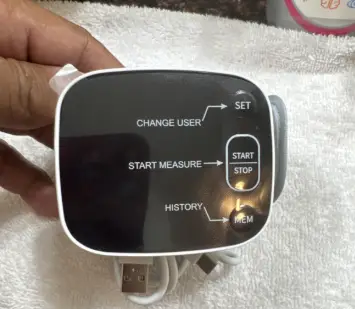
Yes, most Oklar monitors feature a “Dual User” mode. You can toggle between User A and User B, and the device will store the measurement history (usually 120 readings) separately for each person. This prevents your data from getting mixed up with your spouse’s, allowing for accurate averaging of your respective trends.
Conclusion
The Oklar Blood Pressure Monitor is a classic example of modern consumer electronics: it offers high-end features like USB-C charging, voice guidance, and a beautiful display at a budget-friendly price point. For the average person who wants a convenient, portable way to keep a general eye on their blood pressure, it is a fantastic tool. The ease of use means you are likely to check your BP more often, which is a victory in itself.
However, it is not a replacement for a clinical-grade upper-arm monitor if you have serious medical needs. The inherent limitations of wrist-based monitoring mean you must be hyper-aware of your body positioning to get accurate data. If you are looking for a primary device for managing diagnosed hypertension, I would recommend spending the extra money on an Omron upper-arm cuff. But as a secondary travel companion or a preventative tool for healthy adults, the Oklar is absolutely worth the investment.