
If you are a pet owner, you know the specific panic that sets in when you see your dog furiously scratching behind their ear. You part the fur, and there it is: a flea. Your instinct might be to reach for the “nuclear option”—those heavy-duty chemical treatments that smell like a science lab and come with a terrifying list of side effects. But what if you could handle the problem with something that smells like a spa and comes from plants?
That is the promise of Natural Care Flea and Tick Spray. It claims to kill pests on contact using the power of peppermint and clove oil, offering a safe haven for those of us trying to detoxify our homes. I believe you should buy this product if you are dealing with a mild infestation or need a preventative maintenance spray for your home and furniture, but you must be extremely cautious if you share your home with cats.
My Experience With Natural Care Flea and Tick Spray
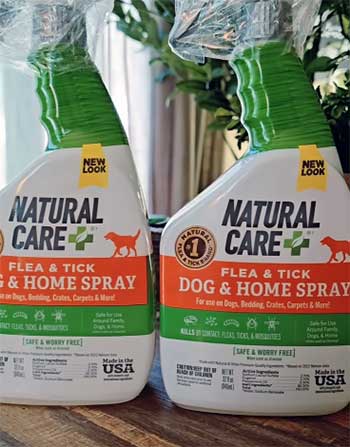
I started my journey with Natural Care Flea and Tick Spray the way most people do: out of guilt.
I had been using a popular chemical spot-on treatment for my Golden Retriever, Cooper, for years.
But after reading a horror story online about neurological side effects, I decided I wanted to go “clean.”
I wanted something I could spray freely around my living room without worrying that I was poisoning the air my family breathes.
I picked up a bottle at my local big-box store.
The price was undeniably attractive—significantly cheaper than the fancy “boutique” natural brands I had seen on Instagram.
The bottle itself felt sturdy, and the design was simple and earthy, reinforcing that “natural” vibe I was chasing.
The first time I used it, I made a rookie mistake: I didn’t test it first. I sprayed it liberally on Cooper’s bedding and then, feeling confident, gave him a few spritzes on his back legs where I had seen him chewing. The scent hit me instantly. It wasn’t a bad smell—it was like being punched in the nose by a candy cane factory. It is incredibly potent peppermint with a heavy undertone of clove. If you have a sensitive nose, this might be a dealbreaker right there.
Cooper sneezed immediately. He didn’t seem in pain, but he was definitely annoyed by the strong odor. I rubbed it into his coat as directed. To my surprise and relief, I actually saw a flea drop off his leg within minutes. It wasn’t jumping; it was struggling. I was impressed. The “kill on contact” claim seemed to be true.
However, the real test came over the next few days. I used the spray on my fabric sofa and the rug in the hallway. This is where the product truly shined for me. It freshened up the room (once the initial intensity faded) and seemed to keep the pests at bay. I stopped seeing them on the furniture entirely.
But it wasn’t all perfect. About a week in, I noticed Cooper’s fur felt a bit sticky or tacky in the areas I had sprayed heavily. It wasn’t the soft, shiny coat I was used to. I realized that the essential oils, while natural, can leave a residue if you don’t brush them out or if you overapply.
I also had a scare when my sister visited with her cat. I had to frantically read the label and realized that while some versions say “safe for cats,” the essential oil concentration is something to be very careful with. I ended up ventilating the house for an hour before letting the cat inside, just to be safe.
Ultimately, my experience was positive but guarded. It works, absolutely. But it is not a “spray and forget” product like the chemical ones. It requires active management—you have to apply it more often, you have to deal with the smell, and you have to be mindful of the oily residue. It felt less like a medical treatment and more like a heavy-duty herbal tool. For the peace of mind of avoiding harsh toxins, though, I found the trade-off worth it for my specific situation.
Pros Of Natural Care Flea and Tick Spray

- Effective “Kill on Contact” Mechanism: The most significant advantage of this spray is that you get immediate visual confirmation that it is working. Unlike oral medications that require the flea to bite your pet to die, the eugenol (clove extract) in this formula attacks the flea’s nervous system on contact. If you spot a flea on your dog or on the carpet, a direct spray will immobilize and kill it within seconds. This makes it an incredibly satisfying tool for spot treatments when you are actively hunting down pests. It gives you a sense of control that passive treatments do not.
- Versatile “Whole Home” Application: Unlike spot-on pipettes that can only be used on the animal’s skin, this spray is a multi-purpose weapon. You can use it directly on your dog (12 weeks or older), but you can also use it on pet bedding, pillows, blankets, carpets, and rugs. This is crucial because 95% of a flea infestation lives in your environment, not on your pet. Having one bottle that can treat the dog and the sofa he sleeps on saves you from buying multiple expensive products. It effectively acts as a fumigator for your furniture without the toxic cloud.
- No Harsh Chemicals or Pyrethroids: For pet owners concerned about the long-term health effects of synthetic pesticides like fipronil, imidacloprid, or permethrin, this formula is a breath of fresh air. It relies entirely on plant-based active ingredients—specifically peppermint oil and eugenol. This means you aren’t introducing potential carcinogens or neurotoxins into your home environment. It is generally safe to use around children (once dry), and you don’t have the anxiety of washing your hands immediately after touching your dog, as you might with traditional chemical treatments.
- Strong Repellent Properties: Beyond just killing, the peppermint oil acts as a powerful deterrent. Fleas, ticks, and even mosquitoes despise the scent of peppermint. By spraying your dog’s legs and underbelly before a walk in the woods, you are creating an invisible scent barrier. Many users report a significant drop in the number of ticks their dogs pick up on hikes when using this spray as a pre-walk ritual. It essentially cloaks your dog in a smell that signals “stay away” to pests.
- Affordable and Accessible: In the world of “natural” pet care, prices can often be astronomical. Natural Care has positioned itself as a budget-friendly option available at major retailers like Walmart, Amazon, and Chewy. You don’t have to go to a specialty holistic vet to find it. A 14oz bottle often costs less than a single dose of a premium oral flea medication. This low barrier to entry makes it easy for pet owners to try a natural approach without feeling like they are making a massive financial gamble.
Also read: My Thoughts on Qunol Magnesium Citrate
Cons Of Natural Care Flea and Tick Spray
- Overpowering Scent Profile: While “peppermint and clove” sounds pleasant in theory, the reality is a nose-clearingly strong odor. The concentration of essential oils required to kill insects is high, and for the first 30 to 60 minutes after application, your entire house will smell like a very intense apothecary. For people with asthma, migraines, or general sensitivity to fragrances, this can be physically uncomfortable. It is not a subtle background scent; it is a dominant, room-filling aroma that some users find nauseating.
- Potential Toxicity to Cats: This is the most critical warning. Essential oils, particularly clove (eugenol) and peppermint, can be toxic to cats if their liver cannot process the compounds. Cats lack a specific liver enzyme (glucuronyl transferase) needed to break down these phenols. Even if you buy the “Dog” version, using it in a house with cats carries risk if the cat licks the dog or lays on wet bedding. There are reports of cats drooling, becoming lethargic, or having tremors after exposure. You must be hyper-vigilant and never, ever use the dog-specific formula on a cat.
- Residue and Coat Texture Issues: Because this is an oil-based product, it behaves like oil. If you spray it too liberally on your pet, their fur can become greasy, sticky, or tacky. It doesn’t evaporate cleanly like an alcohol-based spray might. This can attract dirt and dust, making your dog look grimy faster. On furniture, while it claims to be non-staining, the oil content can leave temporary dark spots on light fabrics like linen or beige carpets until it fully dries or is washed out.
- Short Duration of Effectiveness: Unlike chemical spot-on treatments that work for 30 days, natural sprays have a very short half-life. The repellent effect only lasts as long as the scent is potent—often just 12 to 24 hours. To maintain protection, you have to reapply it almost daily, or every time your dog goes outside. This high-maintenance routine is difficult for busy pet owners to sustain. If you forget for two days, your protection is effectively gone, leaving your pet vulnerable again.
- Sprayer Mechanism Failure: A frequent complaint among long-term users is the quality of the bottle hardware. The nozzle tends to clog or break before the bottle is empty. Because the formula contains oils, they can congeal in the tube if stored in a cool place, leading to a sputtering spray or a complete blockage. This often forces users to pour the liquid into a generic spray bottle, which is messy and inconvenient. Leakage during shipping is also a common grievance in online reviews.
Maintenance Tips For Natural Care Flea and Tick Spray
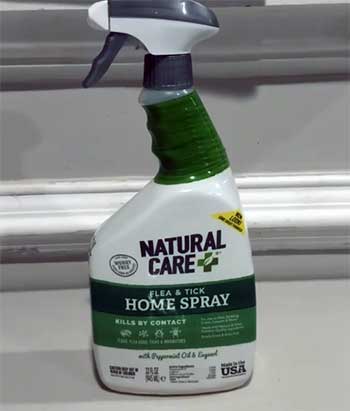
- Shake Vigorously Before Every Use: The formula is a suspension of water, emulsifiers, and essential oils. If the bottle sits for even an hour, the oils will separate and float to the top. If you spray without shaking, you might get a burst of pure water (ineffective) or a burst of pure essential oil (potentially irritating or toxic). Give the bottle a hard shake for at least 10 seconds before you pull the trigger to ensure a safe, even mixture is dispensed.
- The “Rub In” Technique: Do not just mist the top of your dog’s coat and walk away. Fleas live close to the skin, hidden under the fur. To make the spray effective, you must spray it against the lay of the hair (from tail to head) and then physically massage it into the skin with your hands (wear gloves if you have sensitive skin). This ensures the active ingredients actually reach the pests rather than just sitting on top of the fur where they will evaporate.
- Create a “Drying Zone”: After treating your pet or your furniture, you must allow the product to dry completely—usually about 30 to 60 minutes—before letting pets groom themselves or letting children sit on the sofa. During this wet phase, the oils are most transferable and most potent. Keep your dog occupied with a chew toy or a walk while they air dry to prevent them from licking the wet spray off their fur, which could cause stomach upset.
- Patch Test Your Furniture: Before you go to town spraying your expensive beige sectional or your antique rug, do a spot test. Spray a small amount on an unseen area (like the back of the sofa leg) and wait 24 hours. While the product is generally non-staining, different fabrics and dyes react differently to essential oils. This simple step can save you from ruining a piece of furniture with a permanent oil shadow.
- Store at Room Temperature: Extreme temperatures are the enemy of this product. Freezing can break the emulsion, making the oils separate permanently. High heat can degrade the potency of the peppermint oil. Store the bottle in a pantry or cupboard inside your climate-controlled home. Do not leave it in the garage or in your car, especially during summer or winter months, as this will render the spray ineffective or clog the nozzle.
- Vacuum Before and After: To maximize the effectiveness of the spray on carpets, vacuum first. This vibration stimulates flea pupae (cocoons) to hatch, making them vulnerable to the spray. Vacuuming also lifts the carpet fibers, allowing the spray to penetrate deeper. After spraying and letting it dry, vacuum again a day later to remove the dead fleas and any eggs that were dried out by the formula.
Comparison with Other Brands
- Comparison with Wondercide: Wondercide is the heavy hitter in the natural flea space and acts as the “premium” counterpart to Natural Care. Wondercide primarily uses cedarwood oil in their original formula or lemongrass/rosemary blends, whereas Natural Care relies heavily on peppermint and clove. Wondercide offers four distinct scents, giving you options if you hate mint. Natural Care pretty much only smells like peppermint and clove. Wondercide is generally marketed as safer and gentler, often citing that it contains no clove (eugenol) in some formulas, which some cat owners prefer. Wondercide is significantly more expensive, often double the price per ounce compared to Natural Care. If budget is no issue and you want scent variety or are very worried about clove oil, buy Wondercide. If you want a cost-effective solution that hits hard with peppermint, Natural Care is the better value.
- Comparison with Vet’s Best: Vet’s Best is the most direct competitor to Natural Care. In fact, if you look at the ingredient labels, they are nearly identical. Both use the Peppermint Oil + Eugenol (Clove) combination as their primary mechanism. The concentrations are very similar. Vet’s Best has a wider array of specialized products, including yard sprays, shampoos, and “spot-on” tubes that mimic chemical treatments. Users often find them interchangeable in terms of killing power. However, Vet’s Best tends to have a slightly better spray nozzle design that breaks less often. These two are practically twins. Buy whichever one is on sale or cheaper at your local store. There is very little functional difference between the liquid inside the bottles.
- Comparison with Frontline / Advantage (Chemical Sprays): This is the “Natural vs. Synthetic” debate. Frontline Spray (Fipronil) lasts for 30 days and survives swimming. Natural Care lasts 24 hours and washes off in water. There is no contest in terms of duration. Frontline is a pesticide that enters the oil glands. Natural Care sits on the surface. If you are terrified of chemicals, Natural Care wins. Frontline is “one and done” for the month. Natural Care is a daily chore. If you have a severe infestation, Natural Care might not be enough to break the cycle alone. You might need the chemical strength of Frontline to get to baseline, then use Natural Care for maintenance. For prevention, Natural Care is a safer daily option.
- Comparison with DIY Essential Oil Mixes: Many people try to make their own flea spray using oils bought at a health food store. While the ingredients are similar, the emulsification in Natural Care is superior. In a DIY mix, the oils often separate rapidly, leading to “hot spots” where you might accidentally burn your dog’s skin with pure essential oil. Natural Care is formulated with stabilizers to ensure the concentration is consistent in every spray (provided you shake it). It is safer and more reliable than playing chemist in your kitchen, which can easily lead to toxicity if you miscalculate the dilution ratios.
Read more: My Thoughts on Healthy Heart Support Plus
Frequently Asked Questions (FAQ)
You must exercise extreme caution. While the brand makes a specific “for cats” version, it still uses essential oils that can be risky. Never use the dog version on a cat, as the concentration of clove (eugenol) is too high and can be toxic. Even with the cat version, watch your cat closely for drooling or lethargy. Many veterinarians recommend avoiding essential oil products for cats entirely due to their sensitive livers.
Yes, the eugenol in the formula helps to dehydrate and kill flea eggs on contact. However, it is most effective against adult fleas. To truly stop the life cycle, you must combine the spray with frequent vacuuming, as the spray cannot penetrate deep into carpet pads where eggs often hide.
Yes, the “Home & Dog” version is designed for upholstery, carpets, and bedding. It is generally non-staining, but because it contains oils, you should always test a small, hidden spot first. Avoid using it on fine silks, leather, or suede, as the oils can leave permanent marks on these delicate materials.
For active infestations, you may need to apply it daily. For prevention, spraying your dog before they go on a walk or into the woods is recommended. Since it does not enter the bloodstream and works topically, its effectiveness fades as the scent dissipates—usually within 24 hours.
Conclusion
Natural Care Flea and Tick Spray is a potent, aromatic weapon for the eco-conscious pet owner. It bridges the gap between doing nothing and using harsh pesticides, offering a “middle ground” that is effective if you are willing to put in the work.
It is not a magic wand; it requires daily application and a tolerance for strong smells. But if you are committed to a chemical-free home, it is one of the most affordable and accessible tools you can buy. Just remember: shake the bottle well, watch your cat like a hawk, and prepare for your house to smell like Christmas all year round.