
If you are tired of sitting on a bulky leather brick that throws your spine out of alignment, you have likely stumbled into the world of minimalist wallets. The choice often comes down to the viral sensation, The Ridge, and its scrappy, stylish competitor, Mountain Voyage Co. My intent with this article is to strip away the marketing hype and give you a raw, hands-on comparison so you can decide if the Ridge’s premium price tag is justified or if Mountain Voyage offers the same utility for a fraction of the cost. We will look at durability, aesthetics, and daily usability to help you pick the right pocket companion.
A Brief Comparison Table
| Feature | Mountain Voyage Co. | Ridge Wallet |
| Price Point | Affordable ($40 – $60 range) | Premium ($95 – $150+ range) |
| Primary Material | Aluminum with Wood/Carbon Fiber Accents | Aluminum, Titanium, Carbon Fiber |
| Card Capacity | 1 – 15 cards | 1 – 12 cards (officially stated) |
| Warranty | Limited (varies by seller/site) | Lifetime Warranty |
| Weight Feel | Lightweight, slightly warmer feel (wood) | Dense, industrial, sturdy |
| Money Clip | Integrated or Money Clip/Strap combo | Modular (Clip or Strap options) |
| Aesthetic | Natural, rustic, warm | Tactical, sleek, modern |
| Scratch Resistance | Good (Wood hides scratches well) | Fair (Metal shows wear over time) |
My Experience With Mountain Voyage
I picked up the Mountain Voyage walnut edition because I wanted to see if I could get the “Ridge experience” without eating ramen for a week. The unboxing was surprisingly nice—clean packaging, good presentation. When I first held it, the warmth of the wood was the first thing I noticed. It didn’t feel like a piece of tactical machinery; it felt like a piece of furniture.
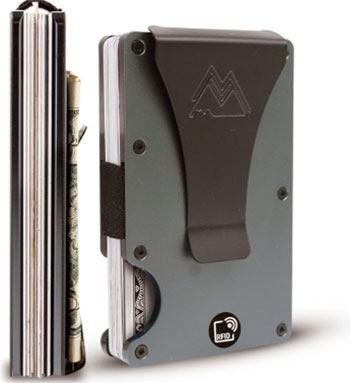
I loaded it up with my usual 8 cards.
The elastic was tight—maybe a little too tight at first.
Getting the cards in required some force.
But over the first week, it broke in nicely. I loved the look of it.
I got compliments on the wood grain when I pulled it out at a coffee shop. It looks distinct.
However, about three months in, I had my “uh oh” moment. I reached into my pocket and felt something sharp.
One of the screws on the bottom right corner had backed out about halfway.
I was lucky I didn’t lose it. I had to go home, find my eyeglass repair kit, and tighten it down. I put a tiny drop of superglue on the threads (risky, I know) to keep it there. Since then, it has been fine, but that moment shook my confidence in it slightly. I find myself checking the screws habitually now. Despite that, for the $40 I paid, I have zero regrets. It does the job, looks great, and I don’t feel precious about tossing it onto my nightstand.
Read More: Comparison Of Bankrate And NerdWallet
Pros Of Mountain Voyage
- Incredible Value For Money: When you look at the landscape of minimalist carry, the price gap between competitors is the first thing that smacks you in the face. Mountain Voyage offers a nearly identical form factor to the market leader for roughly half, sometimes a third, of the price. If you are someone who is hesitant to drop three figures on a piece of metal to hold your credit cards, this is the most compelling argument for Mountain Voyage. You are paying for the product, not the millions of dollars in YouTube sponsorships and ad spend. For a student, a young professional on a budget, or simply a pragmatist who hates the “brand tax,” Mountain Voyage delivers the core functionality of a rigid wallet—RFID blocking, slim profile, and card protection—without making your bank account weep. The savings here can literally pay for the contents of the wallet itself, which is a logic that is hard to argue with.
- Unique Natural Aesthetics: The standout feature that truly differentiates Mountain Voyage from the sea of tactical, matte-black clones is their use of natural wood elements. While Ridge and others lean heavily into the “military-grade” sci-fi aesthetic, Mountain Voyage incorporates walnut, bamboo, and other wood accents that soften the look. This creates a really nice juxtaposition between the cold industrial aluminum body and the warm, organic texture of the wood. It feels less like a piece of tactical gear and more like a gentleman’s accessory. If your style leans more towards flannel, leather boots, and cabin vibes rather than techwear and cargo pants, the Mountain Voyage wallet fits that aesthetic much better. The wood also has a practical benefit; it tends to hide minor scuffs and wear patterns better than flat anodized aluminum, developing a bit of a patina over time rather than just looking scratched.
- Hybrid Material Construction: Beyond just looking good, the construction choices on the Mountain Voyage feel surprisingly premium for the price point. They often mix aluminum inner plates with these wood or carbon fiber outer shells. This hybrid approach keeps the wallet lightweight while adding a tactile dimension that is missing from solid metal wallets. When you pull it out of your pocket, your thumb rests on the textured wood or fiber rather than slick metal, which actually improves grip. I have found that in cold weather, a solid metal wallet can feel like an ice cube in your hand, but the wood overlay on the Mountain Voyage provides a bit of thermal insulation, making it more pleasant to handle on a freezing morning. It is a subtle detail, but one that adds to the daily quality of life when you are using the object multiple times a day.
- Generous Card Capacity: Mountain Voyage claims a capacity that rivals and sometimes exceeds the practical limits of other minimalist wallets. Holding up to 15 cards, the elastic webbing they use is robust and stretchy enough to accommodate a “George Costanza” level of hoarding if you absolutely must. In my testing, the elastic felt snappy and did not lose its rebound immediately after being stuffed full. This flexibility is crucial because our carry needs change; some days you need just an ID and a credit card, and other days you need insurance cards, business cards, and gift cards. The wallet adapts to the load without leaving the cards loose to rattle around. The tension remains consistent, which gives you peace of mind that your cards aren’t going to slide out onto the sidewalk when you pull the wallet out of your pocket.
- Versatile Money Clip Options: Many budget wallets force you into one configuration, but Mountain Voyage typically provides options or a design that accommodates both a strap and a clip effectively. The metal money clip included on many of their models is sturdy and has good retention. It can hold a few folded bills tightly without them slipping out. If you are someone who still carries cash (rare these days, I know), having a reliable clip that doesn’t add massive bulk is essential. The placement of the clip on the Mountain Voyage allows for easy access to cash without blocking the card fan mechanism too much. It strikes a good balance between the “cash is king” crowd and the “cashless society” reality, ensuring that when you do end up with change from a taco truck, you have a place to put it.
Cons Of Mountain Voyage
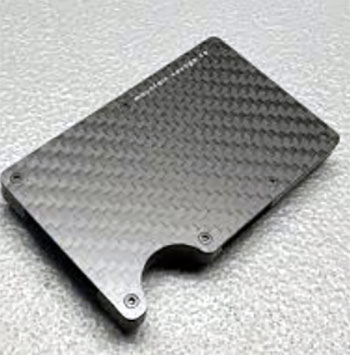
- Elastic Longevity Concerns: The Achilles’ heel of almost every sandwich-style wallet is the elastic band that holds the plates together, and this is where the lower price point of the Mountain Voyage can sometimes show. While the elastic is good initially, some long-term users have reported that it can start to fray or lose its “snap” faster than the premium competition. If the elastic goes, the wallet is essentially useless. Unlike Ridge, which has a very robust ecosystem of replacement parts and a warranty team that will ship you new screws and elastic without blinking, the support network for Mountain Voyage is less legendary. You might find yourself having to buy a whole new wallet a few years down the line if the fabric gives out, whereas a higher-end brand might just service the one you have. It is the classic “buy nice or buy twice” dilemma playing out in real-time.
- Screw Quality And Fit: To hold those wood and metal plates together, Mountain Voyage uses tiny screws, and this is a common failure point for budget-friendly clones. I have noticed that the screws can back out over time due to the friction of taking the wallet in and out of a pocket and the vibration of daily movement. While this happens to Ridge wallets too, the thread locker (loctite) used on the cheaper models seems to be less consistent or non-existent. You absolutely need to keep an eye on these screws. There is nothing more frustrating than reaching into your pocket and finding a loose metal plate because a microscopic screw decided to abandon ship. You might need to perform your own maintenance with a tiny screwdriver and some Loctite Blue to ensure it stays rock solid, which is a bit of hassle for a product that should just work out of the box.
- Finish Durability On Metal Parts: While the wood accents age well, the painted or anodized metal frames on the Mountain Voyage can sometimes scratch or chip more easily than the higher-grade coatings found on more expensive alternatives. If you keep your wallet in the same pocket as your keys (a cardinal sin of minimalist carry, but we all do it), you are going to see silver streaks appearing on the black aluminum edges pretty quickly. The finish is decent, but it is not the nearly indestructible ceramic or powder coat you might find elsewhere. Over time, the wallet can start to look a bit “beat up” in a way that looks like damage rather than character. If you are a perfectionist who hates seeing wear and tear on your gear, this softer metal finish might annoy you after six months of hard use.
- Card Access Can Be Tricky: This is a criticism of the form factor in general, but it applies heavily here. The “push and pinch” method to fan out your cards is not always smooth on the Mountain Voyage. Sometimes the inner plates are slightly rough or the finish causes friction, making the cards stick together rather than fanning out beautifully. You might find yourself fumbling at the checkout counter, trying to pry your debit card out from between your ID and your library card. It lacks the “buttery smooth” polish of a wallet where every internal surface has been machined to perfection. There is a breaking-in period where the cards glide easier, but out of the box, it can feel a bit stiff and clumsy compared to a well-oiled leather bifold or a precision-engineered premium slider.
- Brand Perception And Resale: Let’s be honest, for some people, the logo matters. Mountain Voyage is seen as the “alternative” or the “dupe” by brand snobs. It doesn’t carry the same weight in the EDC (Everyday Carry) community as the original innovator. If you are someone who likes to trade gear or sell your old carry items to fund new ones, the resale value of a Mountain Voyage wallet is negligible. It is a commodity item. A beat-up Ridge wallet might still fetch $40 on eBay; a used Mountain Voyage is worth almost nothing. You are buying this to use it into the ground, not as an asset that retains value. It is a tool, not a flex, and for those who view their pocket dump as a status symbol, that distinction matters.
My Experience With Ridge Wallet
I bit the bullet and bought a Ridge (Gunmetal Aluminum) about two years ago. I wanted to see what the hype was about. The first thing that struck me was the weight—or lack thereof. It felt incredibly dense but light. The mechanism was stiff out of the box. I hated it for the first three days. I couldn’t get my AMEX out quickly enough.
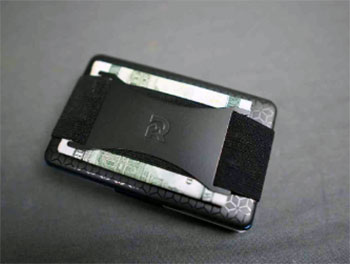
But then, the muscle memory clicked. The “push, pinch, grab” motion became second nature. Now, I can deploy a card faster than I ever could with a bifold. What really won me over was the durability. I am hard on my gear. I work in a shop environment sometimes, and I drop things. My Ridge has hit concrete floors more times than I can count. The corners have some silver showing where the anodization chipped, but the structure is perfect. The elastic hasn’t sagged a millimeter in two years.
The cash strap, however, annoys me. I eventually took it off entirely and just carry a separate money clip if I need cash, or just loose bills. The wallet is so much cleaner without the strap catching on my pocket liner. It is a commitment to a minimalist lifestyle. It forced me to stop carrying old receipts and business cards I never use. It decluttered my life in a micro-way, which I appreciate.
Pros Of Ridge Wallet
- Legendary Durability And Build Quality: When you pick up a Ridge Wallet, especially the titanium or carbon fiber models, you immediately understand where the money went. It feels dense, precise, and virtually indestructible. The aluminum used is 6061-T6 aerospace-grade, and the anodization is deep and hard. I have dropped my Ridge on concrete, kicked it across parking lots, and sat on it on rocky hiking trails, and it barely shrugs. This is a wallet designed to outlive you. It is the “Nokia 3310” of the wallet world. The tolerances are incredibly tight; there is no rattle, no uneven gaps, and the edges are chamfered perfectly so they don’t dig into your leg or cut your fingers. It is a masterclass in industrial design that proves you can make a simple object feel like a luxury good through sheer manufacturing excellence.
- The Lifetime Warranty: This is the trump card. Ridge offers a lifetime warranty that they actually honor. If the elastic snaps, the screws strip, or the metal plate cracks (unlikely), they will fix it or replace it. I have dealt with their customer service, and it is refreshing to deal with a company that stands behind a product so completely. You are not just buying a wallet; you are buying a subscription to having a functioning wallet for the rest of your life for a one-time fee. When you factor this in, the $95+ price tag starts to look a lot more like an investment. You could buy five cheap wallets over the next 20 years, or you could buy one Ridge. For those who value “buy it for life” (BIFL) philosophy, this warranty alone justifies the premium.
- Massive Ecosystem And Customization: The Ridge is the iPhone of wallets. Because it is the market leader, there is an endless array of accessories and customization options available. You can swap out the faceplates for different colors or materials. You can switch between a cash strap and a money clip depending on your mood. You can buy AirTag holders that integrate seamlessly into the design so you never lose your wallet. There are even third-party accessories made specifically for the Ridge. This modularity allows you to keep the wallet fresh. If you get bored of the black aluminum, you don’t have to buy a new wallet; you can just buy a Damascus steel faceplate kit. The ability to tailor the wallet to your exact specific needs and aesthetic preferences is a huge advantage for the tinkerer and the individualist.
- RFID Blocking Peace Of Mind: While most metal wallets offer this, Ridge has built their brand reputation on security. Their dual-track design creates a Faraday cage that effectively blocks RFID-skimming devices from stealing your credit card information. In an era of digital theft, knowing that your cards are sitting inside an electromagnetically shielded vault in your pocket is a nice psychological benefit. They have tested this extensively, and it works. While the actual risk of RFID theft is debated, for travelers or people living in dense urban environments, removing that variable of risk entirely is worth paying for. It is passive security that requires zero effort from you once the cards are inside.
- Compact And Ergonomic Profile: The Ridge defines the category size. It is barely larger than the credit cards it holds. This frees up massive amounts of pocket space. If you are used to carrying a traditional bifold, switching to a Ridge feels like you have lost weight. It fits in a front pocket easily, which is better for your back and safer from pickpockets. The thumb indentation is perfectly placed to allow you to push the cards up. Despite being a rigid block, the rounded corners prevent it from being uncomfortable. It disappears in your pocket until you need it. The transition to front-pocket carry is a lifestyle change that many people never go back from, and the Ridge is the perfect vehicle for that transition.
Cons Of Ridge Wallet
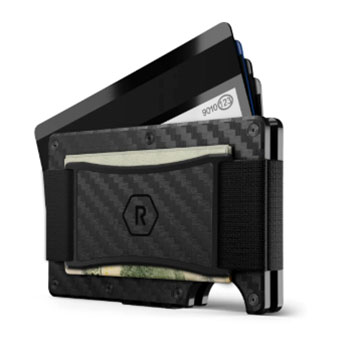
- The High Price Tag: There is no dancing around it—spending over $100 on a wallet feels wrong to a lot of people. It is two pieces of metal and an elastic band. The profit margins must be astronomical. For the average consumer, the value proposition is hard to swallow when you see functional clones on Amazon for $20. You are paying heavily for the brand name, the marketing budget, and that warranty. If you are on a tight budget, that $95 could go towards groceries or bills. It is a luxury item, not a necessity. You have to really want the brand and the assurance of quality to pull the trigger, otherwise, you will always feel a twinge of “buyer’s remorse” thinking about what else you could have bought with that money.
- The “Scratch” Factor: Metal on plastic is a harsh relationship. One of the biggest complaints about the Ridge (and all metal wallets) is that the cards rub against the inner metal plates and against each other. Over time, this friction will scratch the magnetic strips and the faces of your beautiful credit cards. If you get a piece of grit or sand inside the wallet, it acts like sandpaper, grinding your cards every time you slide them in or out. While Ridge has improved the inner coating, it is still a physical reality of the design. If you cherish the pristine look of your limited edition credit cards, a metal sandwich wallet might ruin them. You have to accept that your cards are going to look “used” very quickly.
- The Learning Curve: Using a Ridge wallet takes practice. It is not intuitive. You can’t just flip it open and see everything. You have to push the cards up, pinch the bottom to fan them out, and then select the one you want. If you are in a rush at a turnstile or a checkout, this can be fumbly and awkward at first. I have definitely stood in line trying to jam a card back in while people behind me sighed impatiently. It takes a few weeks to build the muscle memory to do it smoothly. Until then, you might feel like you have downgraded your user experience compared to a simple leather flap.
- Difficult To Carry Cash: While they offer a money clip or strap, let’s be real: this wallet hates cash. Folding bills twice (into quarters) to make them fit is a hassle. The bills add significant bulk and ruin the slim profile. Pulling a single bill out of the tightly clamped strap without pulling them all out is an art form. If you deal with cash regularly—say you are a server or you work in a cash-heavy business—the Ridge is going to frustrate you. It is designed for a cashless world. The cash carrying capability feels like an afterthought, a concession to a dying era rather than a core feature.
- Can Be Uncomfortable Depending On Carry Style: While I praised the ergonomics, a rigid block of metal is still a rigid block of metal. If you wear tight jeans or sit in certain positions, the Ridge can dig into your thigh in a way that soft leather never would. It doesn’t conform to your body. It sits there like a rock. If you put it in your back pocket (don’t do this), it is like sitting on a coaster. You are forced to become a front-pocket carrier, and even then, if the wallet turns sideways, it can look like a weird rectangular tumor on your leg. It requires you to adapt to it, rather than it adapting to you.
Comparison With Other Brands
- Ekster: If Ridge is the rugged jeep, Ekster is the luxury sedan. Ekster uses a trigger mechanism to fan cards out automatically. It is way cooler to use and faster than the Ridge or Mountain Voyage. However, it has moving parts. Moving parts break. I have seen Ekster mechanisms fail after a year of grit and lint getting inside. Mountain Voyage and Ridge are just elastic and plates; there is less to go wrong. If you want speed and “fidget factor,” go Ekster. If you want reliability, stick to the sandwich style.
- Dango: Dango wallets are for the people who think the Ridge isn’t tactical enough. They are leather/metal hybrids that often include multi-tools, bottle openers, and jagged edges. They are bulkier and more aggressive looking. Compared to Mountain Voyage, Dango is much more expensive and complex. Compared to Ridge, Dango is less streamlined. If you want a wallet that can also saw through a seatbelt, get a Dango. If you just want to carry cards, it is overkill.
- Trayvax: Trayvax makes skeletonized metal and leather wallets that are practically indestructible. They are even more industrial than Ridge. The aesthetic is very “Mad Max.” They are often adjustable and very high quality, made in the USA. However, they are awkward to use compared to the simple block shape of Mountain Voyage or Ridge. They have flaps and weird closure loops. They are great for outdoorsmen, but maybe not for a suit and tie.
Also Read: Comparison Of NerdWallet And WalletHub
Frequently Asked Questions (FAQ)
“Better” is subjective. For speed of access, the Ekster Parliament is superior due to its card-ejector button. For luxury materials and craftsmanship at a lower price point, The Frenchie Co. or Bellroy offer better leather alternatives. For pure durability, Ridge is hard to beat.
Gen Z relies heavily on digital wallets like Apple Pay, Google Wallet, and Venmo. They carry fewer physical cards and almost no cash, making the traditional bulky wallet obsolete. A phone case with a card slot often suffices for their ID and one backup card.
Mountain Voyage wallets are designed to hold between 1 and 15 cards. The elastic expands to accommodate the load, though using it with 15 cards might make access difficult and stretch the elastic closer to its limit.
They primarily use Phone Case Wallets (like MagSafe wallets), Digital Wallets on their smartphones, or ultra-minimalist card holders like the Ridge or Mountain Voyage. The “Phone, Keys, Wallet” checklist has largely shortened to just “Phone and Keys.”
Conclusion
If you are looking for a stylish, functional entry into the world of minimalist wallets and you appreciate the warmth of natural materials, Mountain Voyage Co. is the undeniable value winner. It gives you 90% of the functionality of the big players for 40% of the price. It looks fantastic, holds your cards securely, and saves you money that you can actually put inside the wallet. It is the perfect choice for the pragmatist.
However, if you are a “Buy It For Life” believer who wants the absolute best build quality, a foolproof warranty, and a massive ecosystem of accessories, the Ridge Wallet is the champion for a reason. It is a piece of industrial art that will likely outlast your need for credit cards. You pay a premium for that peace of mind, but for many, the reliability and the status are worth the entry fee.
If you are new to this style, buy the Mountain Voyage to see if you even like rigid wallets. If you wear it out in three years, you can upgrade to a Ridge then. But you might just find that the wood-grain underdog is all the wallet you ever need.