
You are likely here because the air in your home feels heavy, or maybe your allergies are flaring up the moment you walk through the door. You want a solution that actually works, but you are stuck between two very different philosophies.
You have the Molekule, which looks like a piece of modern art and claims to destroy pollutants with light, and the Air Doctor, which looks like a hospital appliance and promises to trap everything with brute force. My goal is to help you decide if you need the sophisticated science of the Molekule or the raw power of the Air Doctor. Below, I’ll share my hands-on experience to help you pick the right lung-saver for your home.
A Brief Comparison Table
| Feature | Molekule (Air Pro) | Air Doctor (AD3000) |
| Core Technology | PECO (Photo Electrochemical Oxidation) | UltraHEPA + Carbon + Ionizer |
| Filtration Claim | Destroys pollutants (VOCs, viruses) at molecular level | Traps particles down to 0.003 microns |
| Design Aesthetic | Cylindrical, Aluminum, Modern | Boxy, White Plastic, Utilitarian |
| Smart Connectivity | Built-in WiFi & App (Standard) | WiFi available on newer “connected” models only |
| Filter Replacement | Every 6 months (PECO-Filter) | 6 months (Carbon) / 12 months (HEPA) |
| Noise Level | Quiet on low, “Whoosh” sound on high | Silent on low, Loud wind tunnel on Turbo |
| Primary Strength | Volatile Organic Compounds (VOCs), Mold, Viruses | Dust, Pollen, Pet Dander, Smoke |
| Sensor Type | PM 1.0, PM 2.5, PM 10 | PM 2.5 (Particle Sensor) |
My Experience With Molekule
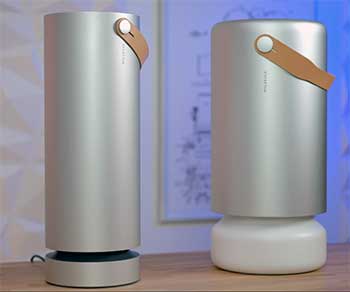
When I unboxed the Molekule Air Pro, I honestly hesitated to turn it on because it looked so good just sitting there.
It doesn’t look like an appliance; it looks like a high-end speaker or a piece of decor.
I placed it in my living room, plugged it in, and the setup process was surprisingly seamless.
The app connected immediately, and the device started a “calibration” phase.
The most distinct feature is the blue light that glows from inside—this is the UV-A light activating the PECO catalyst. It creates a futuristic ambiance, although you can dim it if you want to sleep.
Over the first week, I noticed a difference in how the room smelled. I live in an older building that sometimes has that “musty” scent, especially on rainy days. After running the Molekule on Auto-Protect mode for 48 hours, that underlying staleness vanished. It didn’t just smell like “nothing”; it smelled crisp. However, it’s not a magic vacuum for dust. While it definitely cleared the air of invisible irritants—my morning congestion cleared up significantly—I noticed it didn’t pull visible dog hair out of the air as aggressively as high-airflow fans do. It feels like a precision instrument designed for chemicals and microscopic nasties rather than a brute-force dust collector. It runs quietly in the background, ramping up only when I burn toast in the kitchen, which proves the sensor is actually paying attention.
Read more: Comparison Of Air Doctor And Dyson
Pros Of Molekule
- Aesthetic and Build Quality: You cannot discuss Molekule without acknowledging that it is arguably the best-looking air purifier on the market. The brushed aluminum shell and the vegan leather handle make it feel premium. It is designed to be seen, not hidden behind a sofa. For people who care about interior design, this is a massive pro. It occupies a small footprint (it’s a cylinder), so it fits easily into corners without dominating the floor space. The 360-degree air intake means you don’t have to worry about pointing it in a specific direction; it pulls air from everywhere.1
- PECO Technology for VOCs and Viruses: The Photo Electrochemical Oxidation (PECO) tech is the main selling point.2 Unlike standard HEPA filters that just trap particles, the Molekule is designed to destroy them.3 This is particularly effective for organic pollutants like mold spores, bacteria, viruses, and VOCs (gases from paint, furniture, or cleaning products). If you are sensitive to chemicals or worried about airborne illness, this “destruction” method offers peace of mind that pollutants aren’t just sitting alive on a filter surface.4 I noticed a significant reduction in cooking odors and chemical smells (like nail polish remover) that usually linger for hours.
- Smart Home Integration: The Molekule app is genuinely useful. It gives you a breakdown of your indoor air quality over time, tracking different particle sizes (PM1.0, PM2.5, and PM10). It tells you exactly how “clean” or “dirty” your air is in real-time. You can control the fan speed remotely, check filter status as a precise percentage (not just a dummy light), and set schedules. Being able to turn the purifier up to “Boost” mode while I’m driving home so the air is scrubbed by the time I walk in is a feature I used constantly.
- Quiet Operation on Standard Modes: On its lower and “Standard” settings, the Molekule is incredibly unobtrusive. It emits a pink noise—a smooth, consistent hum that is easy to tune out or sleep through. It doesn’t have the mechanical whining or rattling that some cheaper plastic purifiers develop over time. The “Silent” mode is truly silent, making it perfect for a nursery or a light sleeper’s bedroom.
- Ozone-Free Certification: Many electronic air cleaners (especially older ionizers) produce ozone as a byproduct, which is a lung irritant. Molekule has worked hard to ensure their PECO process does not generate harmful ozone levels, and they have the certifications to prove it.5 This makes it safe to run 24/7 without worrying that the solution to your pollution is creating a new problem.
Cons Of Molekule
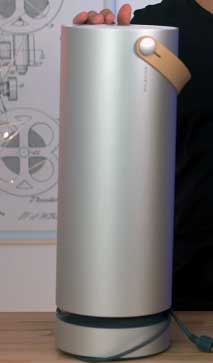
- The Price of Ownership: This is a luxury product with a luxury price tag. The initial unit is expensive, but the recurring cost is where it really hits your wallet. The PECO-Filters need to be replaced roughly every six months, and they are proprietary.6 You cannot buy a generic knock-off filter on Amazon for $20; you have to buy the official Molekule ones. Over the course of five years, you will spend a significant amount of money just keeping the machine running. You are paying for the R&D behind the technology, but for budget-conscious households, this is a tough pill to swallow.
- Lower Single-Pass Efficiency: If you look at independent lab tests for “CADR” (Clean Air Delivery Rate), Molekule often scores lower than HEPA machines that cost half as much. This means it takes longer to clear a room of smoke or heavy dust. Because the air has to pass through the filter slowly enough for the light to react with the catalyst, the fan doesn’t blast air as hard as a traditional purifier. If you burn a steak and fill the kitchen with smoke, the Molekule will eventually clear it, but it might take 45 minutes whereas a high-powered HEPA unit might do it in 15.
- Initial “Break-In” Smell: When I first turned on the Molekule, it emitted a distinct, slightly plastic-like or “wet dog” odor for the first 24 to 48 hours. This is a known phenomenon with the PECO filters off-gassing or initializing. It goes away completely, but it is ironic that an air purifier makes the room smell funny for the first two days. If you are extremely sensitive to smells, this initial period can be off-putting.
- Dependence on the App: While there is a touch screen on the top of the device, the deep functionality is locked in the app. If you have connectivity issues or if your Wi-Fi is spotty, you lose some of the granular control. The touchscreen interface on the device itself is minimalist—sometimes too minimalist.7 Swipe gestures can occasionally be finicky if your hands are dry, requiring a few taps to register the change in fan speed.
- Light Pollution: The blue UV light inside is essential for the technology to work. While you can turn the light off (or dim it) via the app, some users report that turning the light off reduces the effectiveness of the PECO destruction (turning it into just a passive filter). If you need a pitch-black room to sleep but want the full “virus-killing” power active, you might find the glow annoying. It functions as a nightlight whether you want it to or not.
Maintenance Tips For Molekule
- Stick to the Filter Schedule: Molekule simplifies this by tracking the filter life in the app, but you must not ignore it.8 The PECO technology relies on the catalyst coating on the filter.9 Once that coating is depleted or covered in dust, the efficiency drops. Do not try to vacuum the filter and reuse it for another six months; the “destruction” capability will be gone. Subscription services are available to automate this, which I recommend so you don’t forget.
- Vacuum the Shell Intake: The 360-degree intake holes at the bottom of the aluminum shell can attract large dust bunnies and pet hair. Once a month, take a soft brush attachment on your vacuum cleaner and gently run it around the base of the unit. This ensures that airflow remains unobstructed and keeps the unit looking pristine. If the holes get clogged, the fan has to work harder, which can shorten the motor’s life.
- Clean the Particle Sensor: If you notice the Molekule is constantly running on “high” even when the air seems clean, or if it stays on “low” when you are frying bacon, the sensor might be dirty. There is usually a small opening for the sensor on the side or back. Use a can of compressed air to gently blow out any dust that might be blinding the laser sensor. This keeps the “Auto-Protect” mode accurate.
- Wipe the Touchscreen: Fingerprints build up quickly on the glossy top display. Use a microfiber cloth—slightly dampened with water only—to wipe it down. Do not use Windex or harsh chemicals on the screen or the aluminum body, as this can damage the finish or the oleophobic coating on the display.
- Reset the Filter Indicator: After you physically change the filter, you often have to manually tell the software that the change has occurred. Depending on the model, this might be a long press on the device or a button in the app. If you don’t do this, the device will continue to think it has a dirty filter and may throttle performance or annoy you with notifications.
My Experience With Air Doctor (AD3000)
If the Molekule is the “Apple” of air purifiers—sleek, minimalist, and expensive—the Air Doctor AD3000 is the “industrial workhorse.” When I pulled it out of the box, the difference in philosophy was immediate. It is big, white, boxy, and made of plastic. It looks like something you would find in a dentist’s waiting room rather than an art gallery.
But the moment I turned it on, I understood the hype. This machine moves a lot of air. I tested the AD3000 during a week of poor air quality due to nearby wildfires. While my other purifiers struggled to keep the PM2.5 levels down, the Air Doctor’s sensor light turned red (indicating dirty air) and the fan kicked into high gear.
Within 15 minutes, the light turned blue, and the air in my 400-square-foot living room felt noticeably lighter. The “Auto-Mode” is aggressive; it doesn’t wait for the air to get terrible before it ramps up. It detects cooking smoke almost instantly. It feels less like a passive background device and more like an active security guard for your lungs.
Pros Of Air Doctor
- UltraHEPA Filtration: Standard HEPA filters capture particles down to 0.3 microns. Air Doctor claims their “UltraHEPA” captures particles down to 0.003 microns. While this sounds like marketing fluff, in practice, it means it is exceptionally good at trapping ultra-fine smoke and soot that standard filters might miss. If you live in a wildfire zone or have severe allergies to fine dust, this higher standard of filtration is a tangible benefit.
- Sealed System: This is a feature often overlooked but vital. The Air Doctor is a “sealed system,” meaning dirty air cannot bypass the filter and leak out through cracks in the casing. Every cubic inch of air that leaves the machine has been forced through the filters. This prevents the “leakage” issue that plagues cheaper units where dust simply circulates around the filter.
- Pre-Filter Efficiency: The outer carbon filter doubles as a pre-filter for large debris like dog hair and lint. Because it is on the outside, you can easily see when it’s dirty. I found I could simply vacuum this outer sheet every two weeks to keep airflow high, which significantly extends the life of the expensive inner HEPA filter.
- Powerful Airflow (CADR): The Clean Air Delivery Rate (CADR) on the Air Doctor is impressive. It circulates the air in a room much faster than the Molekule. If you burn dinner or blow out a candle, the Air Doctor clears the smell in minutes, whereas the Molekule takes its time destroying the particles.
- Quiet on Low: Despite its size, on the lowest setting, it is virtually silent. It is great for sleeping if you don’t need the white noise. However, be warned: on “Turbo” mode, it sounds like a jet engine (more on that below).
Cons Of Air Doctor
- Utilitarian Design: There is no way around it—it is ugly. It is a large white plastic box that stands out in a room. Unlike the Molekule, which blends in, you will likely try to hide the Air Doctor behind a chair, which sadly reduces its efficiency.
- Loud on High Speed: When the particle sensor detects dust and kicks the fan to “High” or “Turbo,” it is loud. It registers around 60+ decibels, which is loud enough to interrupt a conversation or force you to turn up the TV volume. It chooses performance over silence.
- Lack of Smart Features (Base Model): Unless you pay extra for the specific “WiFi/Connected” model, the standard AD3000 is dumb. No app, no remote control, no history tracking. You have to walk over to the unit to change settings. In a world of smart homes, this feels a bit dated for the price.
- Plastic Build Quality: For a unit that often costs over $500 (when not on sale), the plastic casing feels a bit hollow. It doesn’t have the premium, weighted feel of the aluminum Molekule. The buttons are
- simple membrane switches that feel functional but cheap.
Read more: My Thoughts on Chubby Cable Screen Protector
Maintenance Tips For Air Doctor
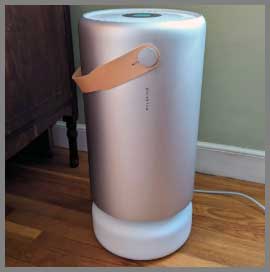
- Vacuum the Carbon Filter: The black charcoal filter is the first line of defense. Every 2 weeks, run your vacuum cleaner’s brush attachment over it. This pulls off the layer of gray dust and pet hair. If you don’t do this, the machine suffocates, airflow drops, and the motor strains.
- The “Sensor” Clean: There is a small door on the side of the unit housing the air quality sensor. Dust can get trapped here, causing the light to stay stuck on “Red” (dirty) even when the air is clean. Vacuum this little port once a month to keep the Auto-Mode accurate.
- Don’t Wash the HEPA: Unlike some older filters, the UltraHEPA filter is paper-based. Do not try to wash it with water. It will ruin the filter immediately.
- Check the Ionizer: The Air Doctor has an optional Ionizer (the “Ion” button). While generally safe, some people find that turning it off extends the life of the filter slightly as it prevents the charged particles from clumping too aggressively on the intake screen. I generally leave it off unless I need to clear a strong odor quickly.
Comparison with other brands
- Air Doctor vs. IQAir: IQAir is the “gold standard” of medical filtration. The IQAir HealthPro Plus is better built, has even more filter media, and costs significantly more. The Air Doctor is essentially a “budget IQAir.” It gives you 90% of the performance of an IQAir for 50% of the price. If you have life-threatening asthma, get IQAir. For everyone else, Air Doctor is sufficient.
- Air Doctor vs. Dyson: Dyson wins on features (fan, heat, app, cool screen). Air Doctor wins on raw purification. A Dyson is a fan that purifies; Air Doctor is a purifier that moves air. The Air Doctor will clean a room much faster than a Dyson, but the Dyson looks better doing it.
- Air Doctor vs. Coway Airmega: The Coway Airmega 400 is the direct rival. The Coway is arguably better looking (it looks like a piece of furniture) and has similar performance. However, Air Doctor’s “UltraHEPA” marketing and frequent “Buy One Get One” sales often make it a better value proposition if you need to buy multiple units for a whole house.
Frequently Asked Questions (FAQ)
It depends on the pollutant. For particulate matter (dust, smoke, pollen), HEPA (Air Doctor) is faster and more effective. For biologicals and chemicals (viruses, mold spores, VOCs, formaldehyde), Molekule’s PECO technology is theoretically superior because it destroys the pollutant rather than just trapping it.
On low speeds, it is silent. On high/turbo speeds, it is very loud—much louder than the Molekule. It functions like a white noise machine on medium, but a wind tunnel on high.
Molekule: PECO-Filter every 6 months.
Air Doctor: Carbon/Gas Trap filter every 6 months; UltraHEPA filter every 12 months.
Note: Air Doctor generally has lower annual maintenance costs because the expensive HEPA part lasts a full year.
Air Doctor. The high airflow and visible pre-filter make it much better at sucking floating dog/cat hair out of the air before it settles. Molekule does not have enough suction power to effectively control pet hair.
Molekule is certified ozone-free. Air Doctor has an optional Ionizer function. If you leave the Ionizer off, it produces zero ozone. Even with it on, it meets California CARB safety standards, but ozone-sensitive individuals should leave the Ion function disabled.
Conclusion
The battle between Molekule and Air Doctor is a battle between Science vs. Brute Force.
If you are an allergy sufferer dealing with dust, pet dander, pollen, or wildfire smoke, buy the Air Doctor. It moves more air, traps more physical particles, and offers better value for money. It is a utilitarian tool that scrubs the air clean through sheer power and high-grade filtration. It is the best choice for “visible” pollution.
However, if your primary concerns are viruses, mold toxicity, city smog (VOCs), or chemical sensitivities—or if you simply value design and silence—buy the Molekule. It creates a healthier baseline environment by destroying the invisible pollutants that HEPA filters can miss. It is less of a “vacuum for the air” and more of a “sanitizer for the air.” It costs more to own, but for the design-conscious or the health-optimized home, the technology justifies the price.