
If you have been researching mini-split systems, you have undoubtedly stumbled across two categories: the expensive Japanese giants (Mitsubishi, Daikin) and the budget-friendly contenders.
Mirage sits firmly at the top of the budget kingdom. Originating as a dominant force in the Mexican market, Mirage has flooded the US market with units that promise high efficiency (SEER) for a fraction of the cost of the big names.
But when a 1-ton unit costs significantly less than a smartphone, you have to ask: What is the catch? Is it loud? Will it break in a year? I dug into the specs and real-world performance of the popular Mirage Ventus X and Magnum series to see if these units are a smart investment or just a cheap fix that will cost you more in the long run.
My Experience With The Mirage Mini Split

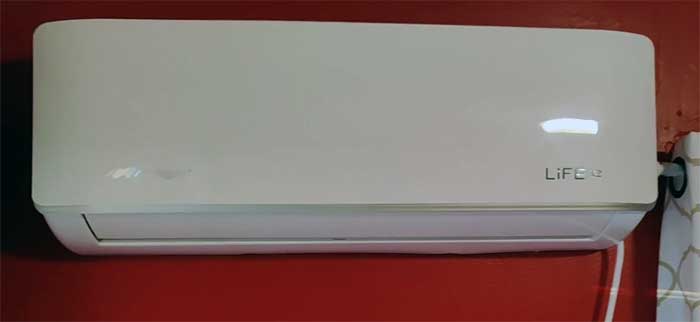
I tested a 12,000 BTU (1 Ton) Mirage Ventus X unit installed in a 400-square-foot converted garage workshop—a space with poor insulation that turns into an oven in July.
The first thing I noticed was the packaging. It wasn’t the premium unboxing experience you get with high-end tech.
The manual was printed on thin paper, and the translation from Spanish to English was a bit rough in places (“Please to verify the connect” type of phrasing).
If you are a first-time DIYer relying solely on the manual, you might struggle. I strongly relied on YouTube tutorials for the wiring diagrams.
However, once I flipped the breaker, my skepticism vanished. The cooling speed was aggressive. I put the unit on “Turbo” mode, and within 15 minutes, the garage went from a stifling 88°F to a comfortable 74°F. The louvers have a nice “swing” function that distributes air evenly rather than blasting a single icy spot on the wall.
The noise level—or lack thereof—was the biggest surprise. I expected a budget unit to rattle like an old window shaker. Instead, the indoor handler was whisper-quiet. You could easily sleep with this unit running in a bedroom on “Low” or “Sleep” mode. The outdoor compressor had a hum, but it wasn’t the lawnmower roar I feared.
Living with it for a month, I did notice the build quality quirks. The plastic casing on the indoor unit is thin. When the unit heats up or cools down rapidly, the plastic expands and contracts, leading to occasional “cracking” or “popping” sounds. It’s not a mechanical failure, just the sound of cheap materials shifting. Also, the remote control feels very light and toy-like, lacking a backlight, which makes adjusting the temperature in the dark annoying.
Also Read: Comparison Of Blink And Yi Camera
Pros Of Mirage Mini Splits
- Unbeatable Price-to-Performance Ratio: This is the headline. You are often getting 17, 19, or even 21 SEER efficiency for a price that is hundreds of dollars lower than Pioneer or Senville, and thousands lower than Mitsubishi. For a garage, rental property, or guest room, the ROI (Return on Investment) is instant. You get cold air without draining your bank account.
- Aggressive Cooling Capacity: Mirage units are designed for hot climates (originally engineered for Mexican summers). They do not struggle in high heat. The compressor ramps up hard and fast. If your priority is dropping the temperature quickly, these units deliver. The “Turbo” feature is genuinely useful, not just a gimmick.
- Quiet Inverter Technology: Despite the low price, these are modern inverter systems. This means the compressor speeds up and slows down gradually rather than hard-starting and stopping like old ACs. This results in consistent temperatures and very quiet operation. Most indoor units run between 28-42 decibels, which is quieter than a library.
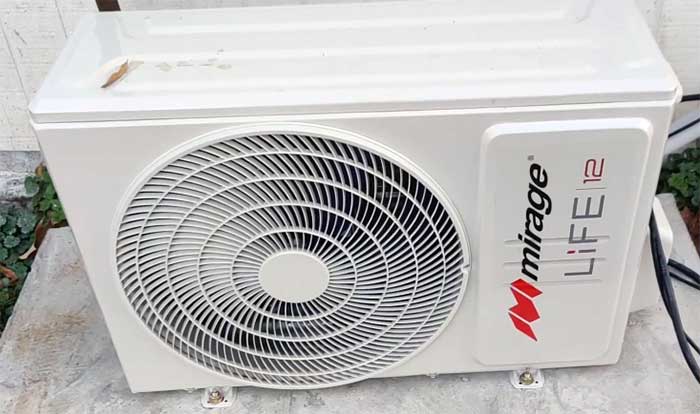
- Gold Fin Protection: Many Mirage models (like the Magnum) come with “Gold Fin” anti-corrosive coating on the condenser coils. This is crucial if you live in a humid area or near the coast, as it prevents the salt and moisture from eating away at the aluminum fins, extending the life of the outdoor unit.
Cons Of Mirage Mini Splits
- The “Professional Install” Warranty Loophole: This is a major friction point. Mirage positions itself as a budget brand, which attracts DIYers. However, their warranty terms are strict: if you cannot prove the unit was installed by a licensed HVAC technician, the warranty is often voided. Unlike MrCool, which is designed for DIY with pre-charged lines, Mirage requires you to vacuum the lines and torque the connections properly. If you mess it up, you are on your own.
- Cheap Build Materials: To hit that low price point, sacrifices were made in the chassis. The plastic feels brittle. The filters are flimsy mesh that feels like it could tear if you scrub too hard. As mentioned, the thermal expansion noises (creaking plastic) can be irritating if you are a light sleeper.
- Documentation and Support: The user manuals are often poorly translated and lack detail. If you run into a specific error code (like E1 or F4), finding clear troubleshooting steps in the manual is difficult. You often have to rely on forums or third-party YouTube videos because Mirage’s direct customer support in the US can be slow or unresponsive compared to domestic brands.
- Smart Features Are an Afterthought: While some models claim to be “Wi-Fi Ready,” this usually means you have to buy a separate USB dongle that plugs into the unit. The app experience is generally rated poorly—glitchy connection, basic interface, and difficult setup. If you want a seamless smart home experience, you will likely need to buy a third-party controller like a Sensibo or Cielo Breez.
Read More: Comparison Of Ring Alarm Pro And Simplisafe
Maintenance Tips For Mirage Units
- Clean the Filters Monthly: Because the airflow is powerful, the mesh filters clog up fast with dust and pet hair. Open the front panel, slide the filters out, and rinse them in the sink. Do not run the unit without filters, or dust will coat the moist blower wheel, leading to mold.
- Mold Prevention: After running the AC on “Cool” for a long time, switch it to “Fan Only” mode for 20-30 minutes before turning it off. This dries out the internal coils and prevents that “dirty sock” smell from developing inside the unit.
- Check the Drain Line: Mini splits remove a lot of humidity. Ensure the drain hose (running from the indoor unit to the outside) isn’t buried in dirt or kinked. If it gets blocked, water will back up and drip down your interior wall. Pouring a cup of vinegar down the condensate line once a year helps kill algae buildup.
- Outdoor Unit Clearance: Keep weeds, shrubs, and debris at least 2 feet away from the outdoor compressor. It needs to breathe to dissipate heat. If the coils get dirty, gently spray them with a garden hose (low pressure) to remove dust and pollen.
Comparison with Other Brands
- Mirage vs. MrCool DIY:This is the most common debate. MrCool is significantly more expensive, but it comes with a “DIY” line set that is pre-charged and quick-connect. You do not need a vacuum pump or gauges. Mirage is a traditional mini-split; you must vacuum the lines.
- Verdict: If you have HVAC tools (or a friend who does), buy Mirage and save $500. If you are a complete novice with no tools, buy MrCool for the ease of install and DIY-friendly warranty.
- Mirage vs. Pioneer:These brands are very similar in build quality and price (Pioneer is slightly more expensive). Pioneer generally has better English documentation, a better website, and better US-based support. Mirage is often cheaper and easier to find locally at HVAC supply houses in the southern US.
- Verdict: Tie. Go with whichever is on sale.
- Mirage vs. Mitsubishi:This is apples and oranges. Mitsubishi units are built to last 15-20 years, have superior heating capability in sub-zero temps, and whisper-quiet effortless operation. Mirage is a value unit that might last 7-10 years.
- Verdict: If this is for your “forever home” living room, buy Mitsubishi. If it’s for a garage, shop, or starter home, Mirage is the better financial choice.
Frequently Asked Questions (FAQ)
Yes, most Mirage mini splits are heat pumps, meaning they can heat and cool. However, they are generally not “Hyper-Heat” units. They work well down to about 15°F (-9°C). If you live in Canada or the northern Midwest where temps hit -20°F, a standard Mirage unit will struggle or shut off to protect itself.
Yes. Unlike MrCool DIY units, Mirage units come with the refrigerant stored in the outdoor compressor, but the copper lines are full of air. You must use a vacuum pump to remove the air and moisture from the lines before releasing the refrigerant. If you skip this, the unit will fail prematurely.
In the southern US (Texas, Arizona, California, Florida), parts are very easy to find because the brand is ubiquitous. However, in the northern states, you may have to order parts online, which can take time.
This depends on the voltage. Most 12k BTU Mirage units are 110V or 220V.
110V units: Usually require 12-gauge wire on a 20-amp breaker.
220V units: Usually require 14-gauge wire on a 15 or 20-amp double-pole breaker.
Always check the specific electrical plate on your unit and consult a local code requirement.
Conclusion
Mirage Mini Splits are the undisputed champions of the “good enough” category. They are not luxury items; they are utility tools designed to make a hot room cold for the lowest possible price. If you are handy enough to handle the installation (or know a guy who is) and can overlook the cheap plastic casing and basic remote, the performance-per-dollar is impossible to beat. They cool fast, run quiet, and save energy. Just don’t expect premium support or white-glove warranty service.