
We all have marks on our skin that tell a story—a tumble off a bike in childhood, a surgical procedure we had to endure, or the lingering reminders of adolescent acne. While these scars are evidence of healing, they can sometimes affect our confidence, making us feel self-conscious about exposing our skin. In the crowded aisle of skincare products, Mederma has established itself as a household name, often being the first recommendation from pharmacists and friends alike. You see the purple and white box everywhere, promising to soften, smooth, and reduce the appearance of old and new scars. But does it actually deliver on these promises, or is it just good marketing?
In this comprehensive review, I am going to peel back the layers of Mederma Advanced Scar Gel. I will analyze its active ingredients, share a detailed account of what it is actually like to use on a daily basis, and compare it against other heavy hitters in the scar treatment game. Whether you are dealing with a fresh surgical incision or trying to fade an old burn mark, this guide will help you decide if Mederma is the right tool for your skin recovery journey.
My Experience With Mederma Scar Cream
I decided to try Mederma after a minor surgery on my forearm left me with a jagged, red scar that just refused to fade. I was about six months post-op, and while the wound was fully healed, the scar was raised, angry-looking, and occasionally itchy. I had read mixed things online—some people called it a miracle in a tube, while others said it did absolutely nothing—so I went in with managed expectations. I picked up the Mederma Advanced Scar Gel, primarily because the “once daily” application appeal to my lazy side; I knew I wouldn’t stick to a regimen that required applying a cream three or four times a day.
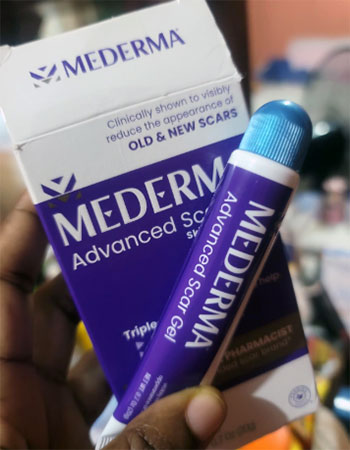
The tube itself is small but dense. When I first squeezed the gel out, I was surprised by the texture.
It is not a cream in the traditional sense; it is a clear, water-based gel that feels cool to the touch.
It has a distinct floral, almost medicinal scent that dissipates relatively quickly, but it is definitely noticeable when you first apply it.
I started my routine by applying a thin layer every night after my shower.
The instructions say to massage it in until it is gone, so I spent about two minutes rubbing the scar in circular motions.
For the first three weeks, I saw absolutely zero difference.
In fact, if anything, my scar looked a bit redder immediately after application, which I learned was a common reaction to the onion extract in the formula. It also had a tendency to peel or flake off if I applied too much. It looked like dried glue or dead skin, which was not a great look. I realized I was being too heavy-handed and cut the amount down to a pea-sized drop, which solved the peeling issue.
Around the six-week mark, I started to notice a shift. The texture of the scar, which had been ropy and hard, began to soften. It felt less like a foreign object on my arm and more like skin. The redness took much longer to subside, but by month three, the angry crimson color had faded to a lighter pink that blended much better with my surrounding skin tone. It didn’t make the scar disappear—it is definitely still there—but it flattened it out significantly.
The most annoying part of the experience was the “itch phase.” About two weeks in, my scar became incredibly itchy. I almost stopped using the product, thinking I was allergic, but after reading forums, I found out this can be a sign of the remodeling process. I stuck with it, and the itching eventually stopped. Overall, Mederma required a lot of patience. It is not an overnight fix, and there were days I felt like I was wasting my time. But looking back at photos from day one versus day ninety, the improvement is undeniable. It took the “edge” off the scar, making it something I don’t feel the need to hide under long sleeves anymore.
Read More: My Thoughts On BioCorneum Scar Gel
Pros Of Mederma Scar Cream
When evaluating Mederma against other options, several distinct advantages make it a top contender for scar management. Here is a detailed breakdown of the specific benefits I found during my analysis.
- Convenience of Once-Daily Application: One of the most significant selling points of the “Advanced” version of Mederma is the 1x daily usage. Most competitor products, especially older formulations and silicone sheets, require multiple applications throughout the day or wearing a sticky sheet for 12-24 hours. For busy professionals or forgetful individuals, just having to apply it once (preferably at night) drastically increases the likelihood of compliance. Consistency is the single most important factor in scar healing, so a product that is easy to stick with often yields better results simply because the user actually uses it. This “set it and forget it” approach fits seamlessly into a bedtime routine without requiring you to carry a tube around in your pocket all day.
- Effective on Multiple Scar Types: Mederma is not a “one-trick pony” limited to just one kind of injury. It is clinically shown to be effective on a wide range of scars, including acne scars, surgery scars, burns, and cuts. The active ingredient, Cepalin (onion bulb extract), works to reduce inflammation and regulate collagen production, which is the underlying mechanism for most scar formation. This versatility makes it a great “all-purpose” skin repair tool to have in your medicine cabinet. Whether you are trying to fade dark spots left behind by a breakout or flatten a raised scar from a C-section, the mechanism of action remains relevant and effective.
- Water-Based, Non-Greasy Formula: Unlike oil-based treatments that sit on top of the skin and can stain your clothes, Mederma is an oil-free gel. It absorbs completely into the skin within a few minutes, leaving a matte finish. This is a huge advantage for facial application, as it won’t clog pores or cause new acne breakouts, which is a common fear for people treating acne scars. You can apply makeup over it once it dries without it sliding off or looking patchy. It also means you don’t have to worry about grease marks on your expensive silk blouses or bedsheets immediately after applying it.
- Widely Available and Cost-Effective: You do not need a prescription or a visit to a specialty dermatologist to get your hands on this product. It is available at virtually every drugstore, grocery store, and online retailer, often at a mid-range price point that is accessible for most people. When you calculate the cost per day—since a small tube lasts a very long time due to the small amount needed—it is actually quite economical compared to expensive laser treatments or silicone sheeting systems. The accessibility means you can start treating your scar immediately after the wound closes, rather than waiting weeks for a doctor’s appointment.
Cons Of Mederma Scar Cream
Despite its popularity, Mederma is not a perfect product, and there are several downsides that might make it unsuitable for certain users. Here are the limitations and negatives you need to be aware of.
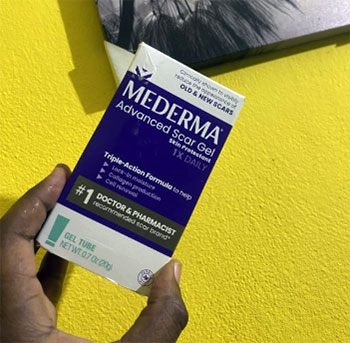
- Significant Time Investment Required: If you are looking for instant gratification, this product will disappoint you. The manufacturer explicitly states that for new scars, you need to use it for at least 8 weeks, and for old scars, it can take 3 to 6 months of daily use. Many users give up after a month because they don’t see dramatic changes, leading to the perception that the product “doesn’t work.” You are essentially signing up for a long-term relationship with this tube of gel. If you miss a week or stop too early, you likely won’t see the full benefits, making the time you did spend feel wasted.
- Potential for Skin Irritation and Peeling: The active ingredient, onion extract, can be irritating to sensitive skin. A common complaint is that the gel causes itching, redness, or a stinging sensation upon application. Additionally, the gel formulation has a tendency to “pill” or flake off if you apply too much or if you try to layer other skincare products on top of it too quickly. This flaking can look like dandruff or peeling skin, which is unsightly, especially if the scar is in a visible area like your face or neck. Finding the right balance of how much product to use requires a bit of trial and error.
- Not Effective for All Scar Types: While it covers a broad range, it struggles with certain difficult scar types like deep pits (ice pick scars) or very aggressive keloids. For indented, atrophic scars where collagen has been lost, a topical cream can only do so much to “fill in” the depression compared to professional fillers or microneedling. Similarly, for severe keloids that are actively growing, a simple botanical gel is often not strong enough to halt the overproduction of scar tissue without medical intervention like steroid injections. It is a topical improvement agent, not a surgical eraser.
- Distinct Smell and Texture: The scent of Mederma is often described as “onion-like” or medicinal floral, which some users find off-putting. While the smell fades, it is definitely present during application. Furthermore, the “tightening” sensation as the gel dries can feel uncomfortable for some people, almost like dried egg whites on the skin. This sensation can be particularly annoying if the scar is located on a joint or an area of high movement, like a knee or elbow, where the dried film might crack or feel restrictive.
Maintenance Tips For Mederma Scar Cream
Using Mederma isn’t just about slapping it on and hoping for the best; the technique and surrounding care routine matter immensely. Here are detailed tips to ensure you get the absolute maximum results from your treatment.
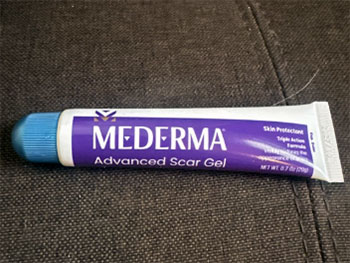
- Mastering the Massage Technique: The application instructions emphasize massaging the gel into the scar, and this isn’t just to help it dry. The physical action of massaging scar tissue helps to break down the collagen fibers that have clumped together to form the hard, raised ridge of the scar. You should apply firm (but not painful) pressure with your thumb or fingertips, moving in circular motions and then cross-friction (going across the scar, not just along it). This mechanical stimulation combined with the active ingredients increases blood flow to the area and helps flatten the tissue faster than just letting the gel sit on the surface. Spend at least 60 seconds massaging the area during every application.
- Sun Protection is Non-Negotiable: UV rays are the enemy of scar healing; they cause hyperpigmentation, turning the scar dark brown or red and making it permanently more visible. When using Mederma, the new skin forming is highly sensitive to the sun. You must apply a high SPF (30 or higher) sunscreen over the dried Mederma gel if the scar is exposed to daylight. Some versions of Mederma come with SPF included, but if you are using the standard gel, you need to add this step. Covering the scar with clothing or a bandage when you are outside for long periods is even better to prevent that dreaded darkening.
- Proper Skin Prep: For the gel to absorb effectively, the “canvas” needs to be clean. Oils, sweat, and dead skin cells can create a barrier that prevents the Cepalin from penetrating deep into the dermis. Wash the scar area with mild soap and warm water and pat it completely dry before applying the gel. Do not apply it over an open wound or a scab that hasn’t fallen off yet; doing so can trap bacteria and actually delay the healing process. Wait until the wound is fully closed—no oozing, no bleeding—before you start your Mederma regimen.
- Managing the “Pilling” Effect: As mentioned in the cons, the gel can flake if over-applied. The trick is to use a very thin layer; you want the scar to look shiny for a moment and then matte as it absorbs. If you still see a glob of gel sitting on top of the skin after 3 minutes, you have used too much. If you plan to apply makeup or moisturizer over it, wait at least 5 to 10 minutes for the Mederma to fully set and dry. When applying products on top, use a patting motion rather than a rubbing motion to avoid rolling the dried gel off your skin.
Comparison with Other Brands
The scar treatment market is competitive, and knowing how Mederma stacks up against its rivals can save you money and time. Here is a comparison with three major alternative brands.

- Bio-Oil Skincare Oil: This is probably the biggest competitor in terms of brand recognition. Bio-Oil relies on a blend of vitamins and plant extracts in an oil base (PurCellin Oil) rather than a water-based gel. Comparison: Bio-Oil is significantly greasier and takes much longer to absorb, making it less ideal for daytime use on the face. However, Bio-Oil is often preferred for large areas like stretch marks on the stomach or thighs because the oil spreads easily and keeps the skin hydrated for longer. Mederma dries faster and is better for spot treatment on specific scars. If your main concern is dryness and itchiness over a large area, Bio-Oil wins; if you want a targeted, mess-free treatment for a specific cut or surgical scar, Mederma is superior.
- ScarAway (Silicone Scar Sheets): This brand uses a completely different mechanism of action: medical-grade silicone sheeting. Silicone sheets work by occluding the scar (covering it) to hydrate it and providing physical pressure to flatten raised areas. Comparison: Clinical studies generally show that silicone is the “gold standard” for keloids and hypertrophic (raised) scars, often outperforming onion extract gels like Mederma. However, ScarAway sheets are “fiddly”; they can peel off in the shower, lose their stickiness, and are visible on the skin. Mederma is invisible and easier to use on joints or the face where a sheet would look awkward. For a severe, raised surgical scar, ScarAway might be more effective; for a flat, discolored scar or for ease of use, Mederma is the better choice.
- Cicatricure Face & Body Scar Gel: This is a direct competitor that also utilizes onion extract but markets itself with a broader blend of ingredients including chamomile and bergamot. Comparison: The biggest difference is the application frequency. Cicatricure recommends applying the product four times daily, whereas Mederma Advanced is a once-daily formula. This makes Mederma significantly more convenient for the average person. Price-wise, Cicatricure is often slightly cheaper per ounce, but the need to use it 4x a day means you burn through the tube much faster. Some users prefer the scent of Cicatricure (which is more floral/perfumed) over Mederma, but the hassle of 4x daily application usually tips the scale in favor of Mederma for long-term compliance.
Also Read: My Thoughts On StriVectin SD Cream
Frequently Asked Questions (FAQ)
Results vary by individual, but typically you can expect to see noticeable improvement after 8 weeks of daily use for new scars. For older scars, the process is slower, often taking 3 to 6 months of consistent application. Patience is key; do not expect overnight miracles.
No, no topical product can completely “remove” a scar as if it never happened. Mederma is designed to improve the appearance of the scar, making it softer, flatter, and less discolored so it blends in better with the surrounding skin. It helps fade the scar, but it will not erase it entirely.
Yes, Mederma Advanced Scar Gel is non-comedogenic and water-based, making it safe for facial use on acne scars. However, because the face is sensitive, it is recommended to do a small patch test behind your ear first to ensure you don’t react to the onion extract. Be careful not to get it in your eyes.
Mederma can help soften and reduce the discomfort of keloid scars, but it is rarely enough to flatten a large, active keloid on its own. Silicone sheets (like ScarAway) or dermatologist treatments (like steroid injections) are generally considered more effective for aggressive keloid scarring. Mederma is better suited for general hypertrophic (raised) scars or discoloration.
Conclusion
Mederma Advanced Scar Gel sits in a sweet spot between affordability, convenience, and effectiveness. While it isn’t a magic eraser that will delete your scars overnight, it is a clinically backed tool that—when used with discipline—can significantly improve the texture and color of damaged skin. Its water-based, once-daily formula solves the biggest problem with scar treatment: sticking to the routine.
If you have a fresh surgical scar, a nasty burn mark, or lingering acne spots and you are willing to commit to a few months of consistent care, Mederma is absolutely worth the investment. It requires patience and realistic expectations, but for many, the result is a scar that becomes a whisper rather than a shout, allowing you to move forward with confidence.