
If you suffer from chronic shoulder pain, you know the nightly battle of trying to find a comfortable position. You toss, you turn, and you eventually settle for a precarious stack of pillows that inevitably collapses by 2:00 AM, leaving you waking up in agony. Whether it is a rotator cuff injury, arthritis, or just the wear and tear of being a side sleeper, the search for relief can feel endless. You might have seen ads for the MedCline Shoulder Relief System, a massive three-part pillow setup that looks more like medical equipment than bedding. It promises to take the pressure off your downside arm completely, but with a price tag significantly higher than your average body pillow, skepticism is only natural.
In this comprehensive review, I am going to walk you through exactly what it is like to sleep with this system. I will break down the engineering behind the “arm pocket,” analyze the quality of the foam, and compare it to other orthopedic pillows on the market. We will look at the real-world practicality of having such a large device in your bed and whether the pain relief justifies the cost and the bulk. By the end of this guide, you will have a clear answer on whether the MedCline is the sleep solution you have been praying for or just another expensive gimmick.
My Experience With MedCline Shoulder Relief System
I have been a dedicated side sleeper my entire life, but a few years ago, I developed a nagging pain in my right shoulder that slowly morphed into a rotator cuff issue. Sleeping became a nightmare; lying on my right side was impossible due to the sharp pain, and lying on my left side eventually made that shoulder sore too. I tried stacking standard pillows, using a generic wedge, and even hugging a body pillow, but nothing relieved the pressure of my body weight crushing my shoulder joint all night.
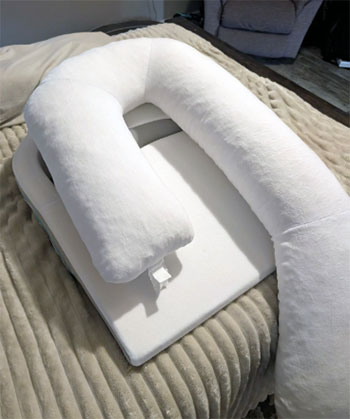
When the MedCline box arrived, I was initially intimidated by the sheer size of it.
It comes compressed, but once expanded, it is a beast.
The system consists of three parts: a large wedge with a hole in it, a smaller insert pillow, and a J-shaped body pillow.
Setting it up took a few minutes of wrestling the covers on, which are snug.
The first night, I felt ridiculous, like I was building a fort rather than going to bed.
The “aha” moment happened as soon as I slid my arm into the patented pocket.
Unlike a normal wedge where you are just propped up, the MedCline allows your arm to pass through the wedge so your torso weight is supported by your ribs, not your shoulder blade. For the first time in months, my right shoulder was “floating” rather than being ground into the mattress. It was a sensation of weightlessness that I hadn’t felt in years.
However, the first week wasn’t pure bliss. There is definitely a physical adjustment period. The incline is set at roughly 10 degrees, which isn’t steep, but it is different from lying flat. I found myself sliding down a bit during the night until I figured out how to hug the body pillow correctly to anchor myself. The body pillow is heavy and filled with shredded memory foam, which is great for support but hard to move if you want to switch sides in the middle of the night.
By week three, my body had adapted to the new position. The morning stiffness that used to plague me was reduced by about 80%. I wasn’t waking up wincing anymore. The ear pocket on the top pillow was a nice touch I hadn’t expected to care about, but it really does prevent your ear from getting crushed.
Is it perfect? No. It takes up half a queen-sized bed, effectively building a wall between you and your partner. It is also cumbersome to wash because stripping the cases off the complex shapes is a workout. But regarding the primary goal—stopping the shoulder pain—it delivered where every other pillow failed. It is not just a pillow; it is a mechanical fix for a mechanical problem.
Read More: My Thoughts On CozyPlayer Ultra Pain Relief Cooling Pillow
Pros Of MedCline Shoulder Relief System
When analyzing the MedCline against other orthopedic solutions, several distinct engineering advantages stand out. Here are the specific benefits that make this system unique in the market.
- Patented Arm Pocket Technology: The most significant advantage is the structural design that physically removes pressure from the downside arm. Generic wedge pillows just elevate your head, which often causes you to slide down and puts more pressure on the shoulder joint. MedCline’s gap allows your arm to drop through, transferring your body weight to your torso and latissimus dorsi muscle instead of the rotator cuff. This creates a neutral joint position that promotes blood flow and healing while you sleep, something no standard pillow can replicate. You are essentially suspended in a way that mimics zero-gravity for that specific joint.
- Medical-Grade Materials: The foam density and quality are noticeably higher than the cheap egg-crate foam found in big-box store wedges. The base wedge is made of a dense, supportive foam that does not collapse under adult body weight even after months of use. The body pillow is filled with adjustable shredded memory foam, allowing you to add or remove filling to get the perfect neck height. This durability ensures that the specific therapeutic angle (10 degrees) remains consistent night after night. You aren’t just paying for the shape; you are paying for materials that won’t flatten out in three weeks.
- Comprehensive Full-Body Support: This is not just a shoulder pillow; it is a full sleep system that aligns the hips and spine as well. The J-shaped body pillow runs the full length of your body, allowing you to tuck it between your knees. This aligns your hips and prevents the lower back torque that often happens when side sleeping. By preventing you from rolling onto your back or stomach, it keeps you in the optimal “neutral” posture all night. This makes it effective for people who have concurrent back or hip issues alongside their shoulder pain.
- Generous Trial and Return Policy: Recognizing that this is a specialized medical device that takes time to get used to, the company offers a solid safety net. They typically offer a 60-night trial period, which is crucial because the “break-in” period for your body can be two to three weeks. This allows you to test it in your own home without the risk of being stuck with a $200+ foam block if it doesn’t work for you. Their customer service also includes “sleep specialists” who can guide you on positioning if you are struggling during the first few weeks. Knowing you can return it lowers the barrier to entry for such an expensive item.
Cons Of MedCline Shoulder Relief System

Despite the effective pain relief, there are significant logistical and comfort drawbacks that potential buyers need to accept. It is a lifestyle change, not just a pillow change.
- Massive Footprint on the Bed: The sheer size of this system cannot be overstated; it dominates the sleeping space. It takes up roughly half the width of a queen-sized bed, effectively turning a shared bed into two separate zones. If you enjoy cuddling with a partner or have pets that sleep with you, this system creates a physical barrier that makes intimacy difficult. You cannot easily push it aside in the morning; it is heavy and awkward to store. For those with smaller beds (Full or Twin), it essentially leaves no room for anything else.
- Steep Learning Curve: This is not a product you can just unwrap and sleep perfectly on the first night. Your body needs to adjust to the inclined position and the specific arm placement. Many users report back pain or hip soreness during the first two weeks as their muscles adapt to the new alignment. You have to actively “learn” how to enter the pillow, positioning your elbow and shoulder correctly in the pocket. If you are an impatient sleeper who tosses and turns, the restrictive nature of the system might feel claustrophobic at first.
- High Price Point: The cost is significantly higher than almost any other pillow solution on the market. Paying over $200 for a set of foam pillows can feel exorbitant, especially if you are on a fixed income or unsure if it will work. While FSA/HSA funds can often be used, it is still a major investment compared to a $40 standard wedge. You are paying for the patent and the specialized manufacturing, but for many, the price is a hard pill to swallow. Replacement cases and parts are also priced at a premium.
- Complex Maintenance: Keeping the system clean is more labor-intensive than washing standard bedsheets. Taking the covers off the intricate shapes of the wedge and body pillow involves wrestling with zippers and tight fabric. Putting them back on after washing is even harder and can leave you sweating. The foam cores themselves cannot be washed, so if you spill something on the wedge, it is difficult to clean deeply. This hassle might discourage you from washing the cases as often as you should.
Maintenance Tips For MedCline Shoulder Relief System
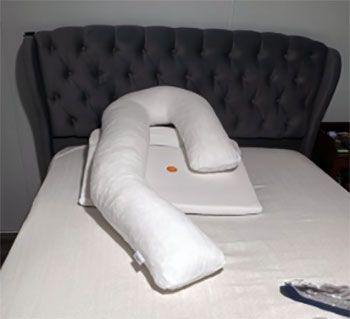
To protect your investment and ensure the system stays hygienic and supportive, proper care is essential. Here is how to maintain your MedCline effectively.
- Mastering the Cover Change: The first time you take the covers off, pay close attention to how they are oriented. The cases are form-fitted, and putting them back on backward will cause the fabric to bunch and feel uncomfortable. Wash the removable covers in cold water on a gentle cycle to prevent shrinking, as they are already a very tight fit. Air drying is recommended, or tumble dry on the absolute lowest heat setting. If you shrink the covers, getting them back on the foam wedge is nearly impossible without tearing the zipper.
- Fluffing the Body Pillow: The shredded memory foam in the body pillow will compress and clump over time, losing its loft. Once a week, you should vigorously shake and fluff the body pillow to redistribute the foam. You can also toss the body pillow (without the wedge!) into the dryer on a “no heat” or “air fluff” cycle with a couple of tennis balls. This re-expands the foam cells and restores the support for your neck and knees. Keeping the loft high is crucial for maintaining the correct neck alignment.
- Spot Cleaning the Foam: Since you cannot soak the foam wedge, immediate action is required for spills or sweat buildup. Use a clean cloth dampened with a mild detergent and water solution to blot—never rub—any stains on the foam. Allow the foam to air dry completely in a well-ventilated area before putting the cover back on. Trapping moisture inside the foam by covering it too soon can lead to mold and mildew growth. Consider using a fabric refresher spray occasionally if you notice any stale odors developing in the foam itself.
- Managing Foam Memory: Over years of use, even high-quality foam can develop a “set” or depression where you lay. To prolong the life of the wedge, try to ensure you are not sitting on the thin edges when getting in and out of bed. Rotate the insert pillow (the small one inside the gap) occasionally if it starts to flatten out. If you find the body pillow is becoming too flat, MedCline sells extra shredded foam that you can add to the pillow to stuff it back to its original firmness. Treating the foam gently will extend the lifespan of the system significantly.
Comparison with Other Brands
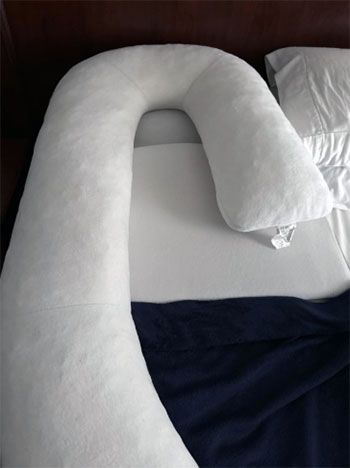
The MedCline is unique, but there are other wedge and body pillow options. Here is how it stacks up against the competition.
- Brentwood Home Crystal Cove Wedge Pillow: This is a luxury wedge pillow designed for back support and reflux. Comparison: The Crystal Cove is a solid, high-quality wedge with a layer of cooling gel memory foam, making it very comfortable for back sleepers. However, it lacks the “arm pocket,” which is the critical feature for shoulder pain. If you try to side-sleep on the Brentwood wedge, you will slide down, and your shoulder will still be compressed against the incline. Brentwood is better for reading in bed or simple acid reflux, but for rotator cuff relief, MedCline is superior due to the pocket. MedCline forces a specific position; Brentwood is more of a general-purpose lifestyle pillow.
- Sleep Number V-Curve Body Pillow: A popular contoured body pillow meant to support side sleepers. Comparison: The V-Curve is excellent for hugging and provides good knee support, similar to the body pillow component of the MedCline. However, it does not provide the incline or the gap for the shoulder. You are still lying flat on the mattress, meaning your body weight is still crushing your shoulder. The Sleep Number pillow is much cheaper and less intrusive, but it offers “comfort” rather than “mechanical relief.” If you just need something to hug, get the V-Curve; if you have a medical shoulder issue, you need the MedCline.
- Generic Amazon Wedge Pillows: There are hundreds of cheap foam wedges available for $30-$50. Comparison: These are typically simple triangular blocks of foam. They are often too hard or too soft and almost always lack the arm tunnel. Trying to cut a hole in a generic wedge (a common DIY attempt) usually fails because the foam lacks the structural integrity to hold up around the hole. Generic wedges are fine for mild snoring or reflux, but for side sleepers, they usually cause more shoulder pain because they increase the pressure on the joint. MedCline justifies its price by being a patented medical device, whereas generics are just foam shapes.
Also Read: My Thoughts On Dreamers Relief Pillow
Frequently Asked Questions (FAQ)
MedCline typically comes in Small/Medium and Large/Extra Large. The sizing is based primarily on your height. Generally, if you are 5’9″ or shorter, the Small/Medium is the recommended size. If you are 5’10” or taller, you should opt for the Large. Choosing the wrong size can lead to the arm pocket being too high or too low for your torso, making the system ineffective.
Yes, the MedCline Shoulder Relief System is eligible for purchase using Health Savings Account (HSA) and Flexible Spending Account (FSA) funds. It is classified as a medical device for pain relief. You can usually use your FSA/HSA card directly at checkout on their website. If you are buying from a third-party retailer like Amazon, you may need to submit the receipt for reimbursement, so check your plan’s specific rules.
Most users require a “break-in” period of roughly 14 to 30 days. During the first few nights, it is common to feel awkward or experience some stiffness in the hips or back as your body adjusts to the inclined side-sleeping position. The company encourages sticking with it for at least 30 days to allow your muscles to adapt to the new alignment.
Yes, it is specifically designed to aid people with rotator cuff tears, tendonitis, and post-surgical recovery. By allowing the arm to drop through the pocket, it removes the compression force that usually aggravates rotator cuff injuries during side sleeping. Many users report a significant reduction in night pain, allowing them to sleep through the night without waking up from a sharp throb in the shoulder.
Conclusion
The MedCline Shoulder Relief System is an aggressive solution to an aggressive problem. It is big, expensive, and requires a genuine commitment to adapt your sleeping style. However, for those suffering from chronic shoulder pain, rotator cuff injuries, or arthritis, it offers a mechanical advantage that no standard pillow can match. The patented arm pocket isn’t just a gimmick; it effectively neutralizes the crushing weight of your torso, providing the “zero gravity” relief your shoulder joint is screaming for.
If you are just looking for a little extra comfort, this is likely overkill. But if pain is waking you up every night and affecting your quality of life, the MedCline is absolutely worth the investment. It transforms the bed from a place of torture back into a place of rest. Just be prepared to give up half your mattress and spend a few weeks wrestling with the foam—your shoulder will thank you for it.