
Choosing between the Leatherman Surge and the Leatherman Signal isn’t just about picking a tool; it is about defining your mission. I have spent months rotating these two multi-tools in my everyday carry setup, using them for everything from fixing leaky pipes to starting campfires. If you want raw, unadulterated power for heavy mechanical work, the Surge is your beast. However, if you need a lightweight companion for the trail that packs specific survival essentials, the Signal calls your name. I am here to walk you through exactly how they perform when the rubber meets the road.
A Brief Comparison Table
| Feature | Leatherman Surge | Leatherman Signal |
| Primary Use Case | Heavy-duty trade work, DIY, Mechanics | Camping, Hiking, Survival, Outdoors |
| Weight | 12.5 oz (354 g) | 7.5 oz (212.6 g) |
| Closed Length | 4.5 in (11.5 cm) | 4.5 in (11.43 cm) |
| Number of Tools | 21 Tools | 19 Tools |
| Blade Length | 3.1 in (7.87 cm) | 2.73 in (6.93 cm) |
| Blade Type | 420HC Straight & 420HC Serrated (Separate) | 420HC Combo Knife (Partially Serrated) |
| Unique Feature | Blade Exchanger (T-Shank), Giant Scissors | Ferro Rod, Whistle, Hammer, Sharpener |
| Bit Driver | Large Bit Driver | Standard Bit Driver |
| Pliers | Heavy-duty, largest in class | Standard Needlenose |
My Experience With Leatherman Surge
When I first strapped the Leatherman Surge to my belt, I felt listing to one side. I am not exaggerating when I say this tool is a tank. It is widely regarded as one of the largest and most robust multi-tools Leatherman produces, often described as a “Super Tool 300 with scissors.” My time with it has been defined by a sense of absolute confidence. There was never a moment where I looked at a rusted bolt or a thick wire and worried if the Surge could handle it. It feels like a portable toolbox rather than a pocket knife.
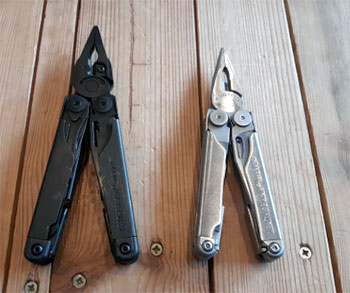
The first thing I fell in love with was the outside-accessible scissors.
Most multi-tool scissors are an afterthought—tiny, flimsy things barely capable of cutting a loose thread.
The Surge scissors are massive, spring-action shears that I have used to cut through heavy cardboard, blister packs, and even thin sheet metal.
However, the weight is a constant presence. Carrying 12.5 ounces on your hip every day is noticeable.
I found that I couldn’t just clip it into a pocket of gym shorts or light slacks; this tool requires a sturdy belt and the included sheath. It is not an “invisibility” carry.
The T-shank blade exchanger is the standout feature for me. Being able to swap out the saw for a diamond file, or even a standard Bosch jigsaw blade, adds a level of versatility that no other tool in this lineup offers. I used it to trim a piece of molding using a wood blade I bought at a hardware store, and it worked flawlessly.
Using the pliers feels like using a dedicated pair of Lineman’s pliers. The leverage you get is incredible because the handles are so long and wide. It doesn’t dig into your palms when you squeeze hard, which is a major plus during prolonged use.
Read More: Comparison Of Hapstone And TSProf
Pros Of Leatherman Surge
- Unmatched Heavy-Duty Performance: The sheer strength of the Leatherman Surge is its defining characteristic. When you hold it, you immediately understand that this tool is built for abuse. The plier head is significantly larger and beefier than what you find on the Wave+ or the Signal. This translates to real-world torque. I have used these pliers to crank down on rusted nuts that would have twisted the frame of a lesser tool. The wire cutters are replaceable, which is essential for a tool of this caliber, as you are likely to be cutting hard wire, fencing, or coat hangers. If you are in the trades—plumbing, electrical, or construction—this durability isn’t just a luxury; it is a requirement. You don’t have to baby the Surge; you can throw it in a toolbox, drop it on concrete, and use it as a makeshift hammer (even though you shouldn’t), and it keeps ticking.
- Blade Exchanger System (T-Shank Adapter): This feature alone makes the Surge unique in the Leatherman lineup. The ability to swap out the saw/file slot with any standard T-shank jigsaw blade is a game-changer for versatility. If you are a contractor, you can carry metal-cutting blades, wood-cutting blades, or even specialized grout removal blades. It effectively turns your multi-tool into a manual jigsaw. I found this incredibly useful when I needed a specific file grit that didn’t come standard on the tool. Instead of being stuck with the factory file, I could just pop in a hardware store replacement. This also means that when your saw blade eventually dulls, you don’t have to send the whole tool in for warranty repair or try to sharpen it; you just buy a pack of blades for a few dollars and replace it yourself.
- Massive Outside-Accessible Scissors: For many users, myself included, the scissors on the Surge are the primary reason to buy it. They are huge, accessible without opening the tool, and incredibly sharp. Unlike the tiny scissors found on the Wave or Signal, which are fiddly and weak, the Surge scissors provide full-hand leverage. I have used them to cut through denim, leather, and zip ties with zero hesitation. The spring action is strong and responsive. Having them on the outside means you can deploy them instantly, which is perfect for quick tasks like opening packages or trimming materials on a job site. It eliminates the frustration of digging with your fingernails to pull out a small tool.
- Comprehensive Locking Mechanism: Every single tool on the Leatherman Surge locks. This includes the main blades, the saws, and even the smaller internal tools like the can opener and bit driver. This might sound like a standard safety feature, but on a heavy-duty tool, it is critical. When you are applying serious pressure to a screwdriver or reaming a hole with the awl, the last thing you want is for the tool to fold back onto your fingers. The locking mechanism is the all-locking style found on the Super Tool series, which is robust and unlikely to disengage accidentally. It provides a solid “clunk” when engaged, giving you tactile feedback that the tool is safe to use. This inspires confidence when you are working in tight spaces or applying force in awkward angles.
Cons Of Leatherman Surge
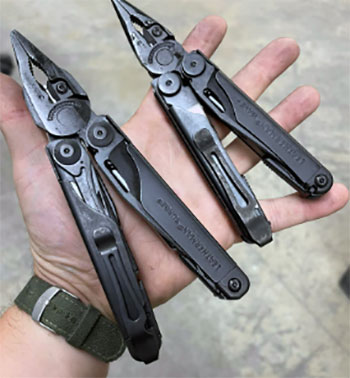
- Excessive Weight And Bulk: The biggest drawback of the Surge is undeniable: it is heavy. Weighing in at 12.5 ounces (over three-quarters of a pound), it is a brick. For many casual users or backpackers, this weight is a dealbreaker. If you are counting grams for a hiking trip, the Surge is the first thing you will leave behind. It drags down your pants if you try to pocket carry it without a belt clip (which is sold separately or requires a specific lanyard ring attachment). Even on a belt, you feel it. It can dig into your side when you sit down in a car or a tight chair. It is not an “Everyday Carry” (EDC) for the office worker; it is an EDC for the job site. This bulk makes it less likely that you will just “have it on you” casually, which defeats the purpose of a multi-tool if you leave it in the truck because it is too heavy.
- Stiffness During Break-In Period: Out of the box, the Leatherman Surge can be incredibly stiff. Opening the butterfly handles to access the pliers often requires two hands and a bit of muscle. The inner tools can also be clumped together, meaning when you try to pull out the screwdriver, the awl and can opener might come out with it. While this eventually loosens up with use and oil, the initial experience can be frustrating. I spent the first week simply opening and closing it while watching TV just to get the pivot points to relax. Compared to the free-swinging nature of some magnetic tools or lighter models, the Surge feels tight and industrial, requiring a dedicated “break-in” period before it feels smooth.
- Lack Of Included Pocket Clip: Given its size, Leatherman assumes most people will sheath carry the Surge, so they do not always include a pocket clip in the box (depending on the retail package). If you prefer pocket carry, you often have to buy the clip and lanyard ring separately. For a tool at this price point, having to purchase a small piece of metal to carry it the way you want feels like a hidden tax. Furthermore, because the tool is so heavy, the pocket clip can sometimes feel inadequate, allowing the tool to swing around in your pocket or drag the hem of your pocket down significantly. It really demands a sheath, which isn’t everyone’s stylistic preference.
- Overkill For Simple Tasks: Sometimes, having too much tool is a disadvantage. If you just need to tighten a screw on your sunglasses or slice an apple, the Surge feels clumsy. The blade is thick and robust, which is great for prying but terrible for fine slicing. It acts more like a wedge than a knife in food prep. Pulling out a 12.5-ounce tool to snip a loose thread on a shirt feels ridiculous. It lacks the finesse of the smaller tools like the Skeletool or the Signal. You lose a sense of agility. You aren’t going to be whittling a masterpiece with this; your hand will get tired from the weight of the handle long before the blade dulls. It is an industrial instrument, not a precision scalpel.
My Experience With Leatherman Signal
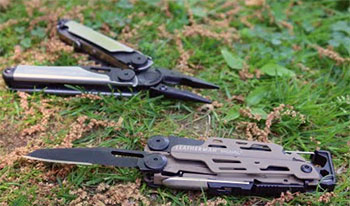
Transitioning to the Leatherman Signal was like taking off work boots and putting on trail runners. It immediately felt different—purposeful, vibrant, and significantly lighter. I picked up the Signal specifically for camping trips where every ounce in my pack matters, and it did not disappoint. The aesthetic is distinct; my unit has the coyote tan accents, and it looks more like outdoor gear than a mechanic’s tool.
The first thing I tested was the “survival” gimmickry. I was skeptical about the ferrocerium rod and the whistle. I took it to the backyard fire pit, scraped the coating off the rod using the back of the saw (as instructed), and struck it. It threw a decent shower of sparks. It is small, yes, and I wouldn’t want it to be my only fire source in a blizzard, but as a backup integrated into the tool? It works.
The hammer surface on the pommel (the butt end of the tool) is something I used more than I expected. It is perfect for tapping in tent stakes. You aren’t going to frame a house with it, but for pounding plastic or light metal stakes into hard ground, it saves you from searching for a rock.
Carrying the Signal is easy. The built-in carabiner allows me to clip it onto a belt loop or the outside of my backpack instantly. The pocket clip is also standard and works well because the tool is light enough (7.5 oz) not to drag my pants down.
However, I did miss the plain edge blade. The Signal comes with a combo blade (half serrated, half straight).5 While this is “versatile,” I find serrations annoying for carving wood or clean slicing. It feels like a compromise.
Pros Of Leatherman Signal
- Purpose-Built Outdoor Features: The Leatherman Signal is unique because it integrates tools that no other Leatherman offers in a single package. The inclusion of a ferrocerium rod (fire starter) and a safety whistle directly into the frame makes it a true survivalist tool. In a pinch, having a way to start a fire and signal for help attached to your pliers is a massive psychological and practical advantage. I found the whistle to be piercingly loud, certainly enough to alert someone nearby in a forest. Additionally, the diamond-coated sharpener is removable and allows you to touch up the blade in the field. This self-sufficiency is the core philosophy of the Signal. It is designed so that if you are stranded, you have the basics to maintain your tool, make fire, and make noise.
- Ideally Weighted For Carry: At 7.5 ounces, the Signal occupies a sweet spot. It is substantial enough to feel high-quality but light enough to forget you are wearing it. This is crucial for hikers and backpackers who count grams. Compared to the Surge, carrying the Signal is a breeze. The chassis has skeletonized cutouts to shave weight without sacrificing too much structural integrity. This makes it an excellent candidate for EDC (Everyday Carry) even if you aren’t in the woods. You get full-size pliers and a decent blade in a package that fits comfortably in a jeans pocket or clipped to a backpack strap via the integrated carabiner.
- Integrated Hammer And Carabiner: One of the most underrated features of the Signal is the hammer surface. Located on the end of the tool when closed, this textured metal block is perfect for hammering tent pegs, smashing garlic, or closing paint cans. Most multi-tools require you to use the side of the pliers as a hammer, which damages the tool. The Signal invites you to hit things with it. Furthermore, the built-in carabiner is part of the frame, not an add-on. This allows for diverse carry options—clip it to a bag, a belt loop, or hang it from a ridge line in your tent. It also doubles as a bottle opener, keeping the design efficient and multi-functional.
- Visual Design And Ergonomics: The Signal just looks cool, and that matters for enjoyment of use. It comes in various colors (Aqua, Cobalt, Coyote, etc.), which makes it easier to find if you drop it in the grass compared to the standard silver stainless steel of the Surge. Ergonomically, the tool feels good in the hand. The lock releases are easy to access, and the blade is accessible with one hand from the outside. The focus on “active” use is apparent. It feels like a modern tool for a modern adventurer, moving away from the purely industrial look of the legacy Leatherman tools.
Cons Of Leatherman Signal
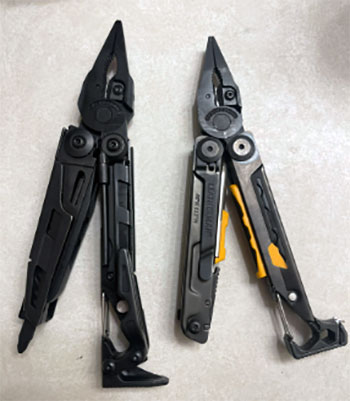
- The Combo Blade Compromise: The Signal comes standard with a combo blade—partially serrated and partially straight edge. For many knife enthusiasts, this is a major negative. The serrations take up the “belly” of the blade, which is the most useful part for slicing and carving. This leaves you with a very small section of plain edge for precise work. Sharpening serrations is also much harder than sharpening a straight edge. While serrations are good for cutting rope (a survival task), they hinder general camp chores like food prep or whittling feather sticks for a fire. You cannot swap this blade out easily like you can on the Surge; you are stuck with the combo edge unless you perform aftermarket modifications.
- Plastic Parts And Durability Concerns: To achieve its specific feature set and weight, the Signal incorporates plastic parts, specifically the whistle and the housing for the ferro rod. While the plastic is high quality, it is still a potential failure point that doesn’t exist on the all-steel Surge. If you lose the ferro rod/whistle unit (which clips in), you have a hole in your tool until you buy a replacement. Additionally, the mechanism that holds the sharpener can feel a bit loose over time. It doesn’t have that “bomb-proof” feeling of the Surge. It feels like gear, whereas the Surge feels like a tool.
- Less Versatile Tool Selection: While it has “19 tools,” some of them are quite niche. If you are not in a survival situation, the whistle and ferro rod are essentially dead weight. You lose out on more practical daily tools like a large file, scissors (the Signal has no scissors!), or a dedicated serrated blade. The lack of scissors is a huge omission for a general-purpose tool. I constantly found myself reaching for scissors to cut fishing line or open food packets, only to remember the Signal doesn’t have them. You have to use the knife for everything, which isn’t always the safest or most precise option.
- Light-Duty Pliers: The pliers on the Signal are adequate, but they are not the heavy-duty version found on the Surge or Super Tool 300. They are closer to the Rebar or Wave specifications. While they have replaceable wire cutters, the leverage is shorter, and the frame has more flex. If you try to crank on a heavy bolt, you can feel the handles flexing slightly. It is not designed for heavy mechanical repair. If your “survival” situation involves fixing a broken axle on a jeep, the Signal might struggle where the Surge would excel. It is designed for light camp tasks, not heavy torque.
Also Read: Comparison Of Lansky And Work Sharp Knife Sharpener
Frequently Asked Questions (FAQ)
The military does not have one standard issue, but the Leatherman Super Tool 300 and the Leatherman MUT (Military Utility Tool) are very common. The MUT is specifically designed for maintaining AR-15/M16 rifles. The Surge is also popular among mechanics in the service due to its durability.
Yes, if you are an outdoors enthusiast. If you hike, camp, or backpack, the Signal replaces several separate items (knife, fire starter, sharpener, hammer) in one lightweight package. However, for urban EDC or trades, other models like the Wave+ or Surge offer better value and tool selection.
The Surge is the largest and heaviest of the “standard” multi-tools. Compared to the Wave+, it is bigger, stronger, and has the T-shank exchanger. Compared to the Super Tool 300, the Surge adds outside-accessible scissors and one-handed opening blades, making it more modern and versatile but slightly more complex.
There is no single “best,” but the Leatherman Wave+ is generally considered the best all-rounder for most people due to its balance of size, tools, and price. The Surge is the best for heavy-duty work, and the Signal is the best for dedicated outdoor/camping use.
Conclusion
Deciding between these two comes down to the environment where you spend your time.
For the Leatherman Surge, I recommend this to tradespeople, mechanics, DIYers, and homeowners who need a toolbox on their belt. If you don’t mind the weight and you need a tool that can cut hard wire, saw through lumber, and handle high-torque tasks without breaking, the Surge is the only choice. It is a professional-grade instrument that prioritizes function and durability above all else. It is the tool you want when things are genuinely broken and need fixing.
For the Leatherman Signal, I recommend this to hikers, campers, backpackers, and outdoor adventurers. If you count ounces and want a tool that integrates specifically with your lifestyle—offering fire starting, hammering, and carabiner carry—the Signal is fantastic. It is not the best “fix-it” tool for a house, but it is the best “survival” companion for the woods. It captures the spirit of adventure in a way the industrial Surge does not.