
You and I both hate dull knives that turn simple chopping into a wrestling match, so let’s compare Lansky and Work Sharp sharpeners to see which one delivers sharper, more consistent edges for your kitchen, pocket, or hunting blades without wasting your time or money. I’ve used both systems for years on everything from cheap stainless to premium Japanese steel, testing speed, ease, durability, and real results so you can pick the right tool for your sharpening style and budget.
A Brief Comparison Table
| Feature | Lansky (Deluxe 5-Stone or Diamond System) | Work Sharp (Precision Adjust or Ken Onion models) |
| Price Range | $40–$100 | $60–$300 |
| Type | Guided rod system with clamp | Guided adjustable (Precision) or belt grinder (Ken Onion) |
| Angle Control | Fixed 17°, 20°, 25°, 30° | Adjustable 15°–30° (Precision) or variable with belts |
| Abrasives | Aluminum oxide/ceramic stones or diamonds | Tri-brasive rods (Precision) or flexible belts (Ken Onion) |
| Best For | Consistent angles on pocket/hunting knives, beginners | Fast sharpening, kitchen knives, versatile edges |
| Speed | Slower, methodical | Faster, especially belt models |
| Learning Curve | Moderate—clamp setup | Low for Precision, moderate for belt |
| Portability | Very portable kit | Precision portable, Ken Onion less so |
| Durability | Good, but clamp can mark blades | Excellent, especially Precision metal build |
| Made In | USA (some components overseas) | USA (Ashland, Oregon) |
My Experience With Lansky Sharpener
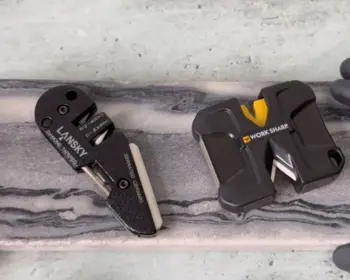
I bought my first Lansky Deluxe 5-Stone system about 15 years ago when I was tired of sending knives out for sharpening and wanted something reliable for my pocket knives.
At $50, it felt like a solid investment for a beginner.
The clamp and rod concept was simple but effective—secure the blade in the clamp, choose your angle hole, slide the rod through with the stone attached, and stroke away.
The color-coded stones made progression easy from coarse to extra-fine.
My first knife was a dull Buck 110 folder that hadn’t cut well in years. After setting 20° and working through the grits, it was shaving hair again in about 20 minutes. I was hooked on the consistency.
Over the years, I’ve sharpened hundreds of knives with it—from small Swiss Army blades to 8-inch kitchen knives. The diamond version I upgraded to later made reprofiling chipped edges much faster.
The system travels well in its plastic case, my hunting trips always including it for field touch-ups on skinning knives.
The fixed angles are great for standard blades, my Western kitchen knives getting perfect 20° edges that hold up well to chopping.
Cleaning is simple—rinse the stones, wipe the clamp.
After all this time, my original clamp still works, though the plastic case has cracked from travel.
The main limitation I’ve found is with very long or thin blades—the clamp needs repositioning for knives over 8 inches, and delicate tips can flex slightly.
Also read: Comparison Of HORL 2 And HORL 2 Pro
My Experience With Work Sharp Sharpener
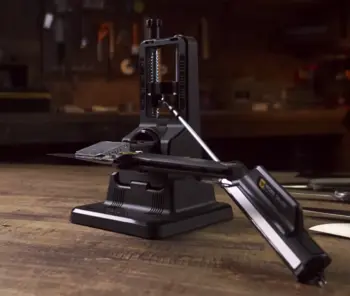
I added a Work Sharp Precision Adjust about three years ago when I wanted faster sharpening for my growing kitchen knife collection.
At $60, it was an easy “why not” purchase.
The design felt like an evolution of the Lansky concept—blade clamps vertically, adjustable angle from 15-30°, tri-brasive rod that rotates between coarse diamond, fine diamond, and ceramic.
Setting the angle was easier with the knob adjustment, my first 17° on a Japanese gyuto feeling precise without measuring.
Sharpening was noticeably faster—the rotating abrasives meant fewer passes per grit, my dull chef’s knife reaching shaving sharp in under 10 minutes.
The metal construction felt more substantial than Lansky’s plastic clamp, my heavy chopping knives holding rock-solid without flex.
I later tried the Ken Onion belt grinder for serious reprofiling—a chipped carbon steel knife that would have taken hours on Lansky was reshaped in minutes with coarse belts.
The belt system excels at convex edges and quick material removal, my outdoor knives getting robust edges that hold up to abuse.
The Precision Adjust became my go-to for kitchen maintenance—quick, clean, consistent.
The only time I reach for Lansky now is when I need the specific fixed angles or portability for travel.
Pros Of Lansky Sharpener
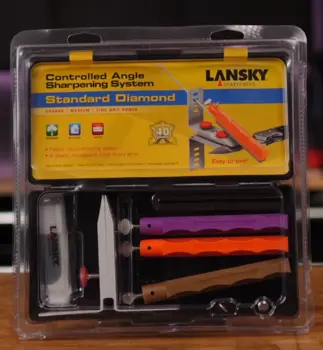
- Proven Fixed-Angle Consistency That’s Hard to Beat for Beginners: The preset 17°, 20°, 25°, and 30° holes ensure perfect angle repeatability every time you sharpen, my pocket knives coming out with uniform bevels that hold edges longer because there’s no human variation in angle holding like freehand methods.
- Compact and Extremely Portable Complete Kit: Everything fits in a small plastic case that travels easily, my hunting and camping trips always including the full system without taking much pack space, perfect for field touch-ups or sharpening at a friend’s house.
- Excellent for Small to Medium Blades: The clamp design excels with pocket knives, hunting knives, and kitchen blades up to 8 inches, my EDC folders getting razor edges that last months with the diamond stones cutting fast through hard steels.
- Diamond Stone Option for Fast Material Removal: The diamond hones available cut aggressively through even the hardest steels without loading up, my chipped or very dull blades reprofiling quickly compared to aluminum oxide stones that wear faster.
- Simple, No-Electricity Design That’s Foolproof: Completely manual operation means no cords, no batteries, no noise—just consistent strokes that anyone can learn, my kids even using it safely for basic touch-ups under supervision.
- Long-Lasting Stones with Proper Care: The quality hones hold up for years with occasional cleaning, my original set still performing well after hundreds of knives when competitors’ abrasives wear out faster.
- Affordable Entry into Guided Sharpening: At $40-100 depending on kit, you get professional-level results without premium pricing, my total investment staying low while achieving edges that rival expensive systems.
- Versatile for Different Knife Types with Angle Options: The multiple fixed angles cover Western kitchen knives at 20°, Asian at 17°, and heavy-duty at 25-30°, my mixed collection all getting optimal edges for their intended use.
Cons Of Lansky Sharpener
- Clamp Can Mark or Scratch Knife Finishes: The metal jaws sometimes leave light marks on blade coatings or polished surfaces, my satin finished knives showing faint scratches that require careful padding or technique to avoid completely.
- Limited to Fixed Angles Only: Only four preset angles restrict customization for specialty blades, my Scandi grinds or convex edges requiring workarounds or different tools entirely.
- Requires Repositioning Clamp for Longer Blades: Knives over 8 inches need the clamp moved mid-sharpening to reach the entire edge, my 10-inch chef’s knife sessions taking longer with multiple readjustments for even bevels.
- Slower Process for Heavy Reprofiling: Manual rod strokes take time and effort on very dull or damaged blades, my chipped hunting knife requiring hundreds of passes that felt tedious compared to powered alternatives.
- Plastic Case and Components Feel Budget: While functional, the storage case and some parts show wear over time, my original case cracking after years of travel despite careful handling.
- Stone Cleaning and Maintenance Required: Aluminum oxide stones need regular cleaning to prevent loading, my early sessions suffering from glazed surfaces until I learned proper technique.
- No Built-in Angle Adjustment for Fine Tuning: Fixed holes only—no micro-adjustments for blades that need angles between presets, my custom knives sometimes compromising on closest available setting.
- Potential for Uneven Pressure on Curved Blades: Recurves and belly curves can be challenging to sharpen evenly, my hawkbill blades requiring extra care to avoid rounding tips or uneven bevels.
Pros Of Work Sharp Sharpener
- Dramatically Faster Sharpening with Modern Design: The Precision Adjust’s rotating tri-brasive rod and Ken Onion’s belt system cut sharpening time in half or more, my dull kitchen sets going from frustrating to finished in minutes rather than half an hour.
- Adjustable Angles for Ultimate Customization: Continuous adjustment from 15-30° covers every knife style perfectly, my Japanese gyutos getting precise 15° edges and Western choppers robust 20° without fixed-angle compromise.
- Superior Build Quality and Durability: Metal construction in Precision models and robust engineering in belt grinders hold up to heavy use, my units showing no wear after years while delivering consistent performance.
- Excellent for Both Maintenance and Heavy Reprofiling: Belt models remove material quickly for damaged blades while guided systems maintain edges precisely, my chipped carbon steel knives restored faster than any manual method.
- Made in USA with Strong Warranty Support: Designed and assembled in Ashland, Oregon with quality control you can feel, my customer service experiences quick and helpful when needed.
- Versatile Across Knife Types and Sizes: Handles everything from small folders to large kitchen blades to tools, my multi-purpose sharpening needs covered without multiple systems.
- Clean and Controlled Sharpening Process: Minimal mess with contained abrasives and good dust collection in belt models, my workspace staying cleaner than traditional stone methods.
- Innovative Features That Enhance Results: Digital angle finders, variable speed motors, and specialized belts give professional-level control, my edges achieving mirror polishes and perfect symmetry.
Cons Of Work Sharp Sharpener
- Higher Price for Premium Features: Top models cost $200-300, my initial investment feeling steep compared to basic guided systems that deliver good results for less.
- Learning Curve for Belt Grinder Models: The powered belt systems require practice to avoid removing too much material or rounding tips, my first few knives suffering minor over-sharpening until I mastered technique.
- Belt Consumption Adds Ongoing Cost: Replacement belts needed regularly with heavy use, my frequent sharpening sessions requiring more purchases than stone-based systems.
- Louder Operation with Belt Models: The motor noise can be disruptive in quiet kitchens, my evening sharpening moving to the garage to avoid disturbing family.
- Less Portable for Larger Models: The Ken Onion and professional units are heavier and require power, my travel sharpening relying on smaller manual alternatives.
- Potential for Heat Buildup on Belts: Aggressive sharpening can heat blades if not careful, my thin Japanese knives requiring lighter passes to avoid temper damage.
- More Complex Cleaning for Some Models: Belt systems and dust collection need regular maintenance, my weekly routine more involved than simple rod systems.
- Overkill for Light Touch-Ups: The power and speed great for reprofiling but sometimes too much for simple maintenance, my quick edge touch-ups feeling like using a sledgehammer for a tack.
Read more: Comparison Of Hapstone And TSProf
Maintenance Tips For Lansky Sharpener
- Wipe Clamp and Stones After Each Knife: Using a damp microfiber cloth to clean metal particles from the clamp jaws and stone surfaces after every blade prevents residue buildup that can scratch subsequent knives or reduce stone effectiveness, keeping your Lansky delivering clean, consistent results session after session. This quick habit also lets you inspect for any minor damage early.
- Soak and Scrub Stones Thoroughly: Soaking aluminum oxide or diamond stones in warm soapy water weekly followed by gentle nylon brushing removes embedded metal swarf that glazes surfaces and reduces cutting ability, restoring aggressive bite for faster sharpening and better edge quality. The fixed rod design makes this process straightforward but essential for longevity.
- Check and Tighten All Clamp Screws: Inspecting and tightening the clamp screws and rod connections monthly prevents loosening from vibration during use that could cause blade movement or angle drift, maintaining the precision that makes Lansky reliable for reproducible edges. This preventive step takes minutes but saves frustration.
- Flatten Stones When Needed: Using a diamond plate or dressing stone to flatten aluminum oxide hones when they develop grooves ensures uniform contact across the blade for even bevels, extending stone life and improving sharpening consistency dramatically. Diamond stones need less frequent flattening but benefit from occasional checks.
- Store in Dry Environment with Silica Pack: Keeping the plastic case in low humidity with a silica gel packet prevents moisture damage to stones and metal components that can cause rust or reduced performance over years of storage. This simple precaution protects your investment.
- Lubricate Clamp Threads Periodically: Applying light machine oil to screw threads quarterly ensures smooth clamp adjustments without binding, maintaining easy setup that makes Lansky user-friendly for quick sessions. Clean excess oil to prevent attracting dust.
- Clean Angle Holes Regularly: Removing debris from the angle selection holes with compressed air or a small brush prevents particles from affecting rod alignment, ensuring your preset angles remain accurate for perfect bevel consistency. This detail maintenance keeps the core feature performing flawlessly.
- Inspect Plastic Case for Cracks: Checking the storage case monthly for stress cracks from travel or use allows early replacement before parts get lost or damaged, preserving the complete kit organization that makes Lansky portable and convenient. Replacement cases are affordable insurance.
Maintenance Tips For Work Sharp Sharpener
- Clean Abrasive Surfaces After Each Knife: Wiping tri-brasive rods or changing belts after heavy use prevents metal loading that reduces cutting efficiency, keeping your Work Sharp delivering fast, clean sharpening without glazing that slows progress. This habit extends abrasive life significantly.
- Vacuum Dust Collection and Work Area: Regular vacuuming of dust ports and surrounding area prevents abrasive particle buildup that can affect motor performance or contaminate future sharpening sessions, maintaining the clean operation that makes Work Sharp pleasant to use indoors. The design facilitates easy access for thorough cleaning.
- Check and Adjust Angle Mechanism: Verifying the angle adjustment knob and digital finder calibration monthly ensures continued precision, preventing gradual drift that could affect edge symmetry on premium blades. This calibration keeps the system’s accuracy at factory levels.
- Store Belts Flat and Dry: Keeping replacement belts flat in original packaging prevents curling or moisture damage that reduces effectiveness when installed, ensuring your next sharpening session starts with optimal abrasive performance. Proper storage extends expensive belt life dramatically.
- Cover Unit and Store in Dry Location: Using the included cover and storing in low humidity protects electronic components and metal parts from dust and corrosion, preserving both appearance and function for years of reliable use. This precaution is especially important for powered models.
- Inspect Power Cord and Connections: Checking for cord damage or loose connections quarterly prevents electrical issues that could interrupt sharpening sessions, maintaining safe and consistent operation of powered models. Simple visual inspection catches problems early.
- Rotate Abrasive Use for Even Wear: Alternating between different grit surfaces or belt positions ensures even wear patterns, extending overall abrasive life and maintaining consistent performance across your sharpening progression. This balanced approach maximizes value from each component.
- Protect Digital Components from Dust: Regular cleaning around angle finders and controls prevents particle ingress that could affect accuracy readings or button responsiveness, keeping the advanced features that set Work Sharp apart functioning perfectly. Gentle compressed air works well for this precision care.
Comparison With Other Brands
- Spyderco Sharpmaker: Spyderco Sharpmaker simplifies sharpening with ceramic rods more than Lansky’s clamp system, my quick touch-ups taking seconds on Sharpmaker compared to Lansky’s setup time, but Lansky’s diamond stones cut faster for heavy reprofiling where Sharpmaker struggles with very dull blades. Sharpmaker’s $80-100 price matches Lansky’s kits for value, offering preset 30°/40° angles that work well for most knives while Lansky provides more angle options for specialized sharpening. Sharpmaker’s triangular rods excel at serrated blades, my bread knives sharpening easily where Lansky requires careful technique. Sharpmaker’s 4.5-star longevity reflects durable ceramics, my rods showing minimal wear after years, but Lansky’s stone variety allows progression to mirror edges. You’ll Sharpmaker for simplicity or Lansky for versatility, the decision depending on your speed needs or reprofiling requirements.
- Wicked Edge: Wicked Edge achieves mirror edges faster than Lansky with direct angle adjustment, my polished bevels coming quicker on Wicked Edge’s premium stones compared to Lansky’s rod strokes that require more passes for the same finish. Wicked Edge’s $500+ price towers over Lansky’s $50-100 affordability, making it pro-level while Lansky offers excellent entry precision. Wicked Edge’s vise clamping holds blades perfectly without marks, my thin folders staying aligned better than Lansky’s clamp that sometimes left light scratches. Wicked Edge’s 4.6-star ratings reflect premium satisfaction, my users loving the accessories, but Lansky’s portability and lower cost win for casual sharpeners. You’ll Wicked Edge for ultimate polish or Lansky for practical value, the choice clear for professional investment or beginner excellence.
- KME Sharpener: KME’s spherical bearing pivot provides smoother action than Lansky’s rod guide, my strokes feeling more fluid on KME for long blades compared to Lansky’s consistent but different motion. KME’s $200-300 price positions it above Lansky’s budget range, offering similar guided precision with better clamp options for challenging blades. KME’s jaw system handles recurves and thin tips better, my specialty knives sharpening without Lansky’s occasional repositioning needs. KME’s 4.5-star reputation comes from refined design, my users appreciating the upgrades, but Lansky’s lower cost and simplicity appeal to beginners. You’ll KME for advanced control or Lansky for accessible consistency, the decision depending on your blade variety and budget flexibility.
Frequently Asked Questions (FAQ)
The Work Sharp Professional Precision Adjust Elite is widely regarded as the best for guided precision, while the Ken Onion Edition Mk.2 Elite excels for powered belt sharpening and versatility.
Yes, Work Sharp sharpeners are designed, engineered, and assembled in Ashland, Oregon, USA, with a focus on American manufacturing and quality control.
Work Sharp Precision Adjust or Ken Onion models are often considered best overall for speed, versatility, and results across different knives, while Lansky excels for affordable guided precision on standard blades.
Lansky sharpeners are very good for beginners and budget-conscious users wanting consistent angles and reliable results on pocket and kitchen knives, with millions sold proving their effectiveness, though they require practice for optimal technique and aren’t ideal for very long or specialized blades.
Conclusion
You deserve knives that make cooking and cutting feel effortless, and both Lansky and Work Sharp deliver excellent sharpening—just choose based on your needs and budget. Pick Lansky if you want affordable, reliable guided sharpening with consistent angles for pocket and kitchen knives.
Choose Work Sharp if you’re ready for faster, more versatile performance with modern features for serious home or professional use. Either way, you’ll transform dull blades into precision tools that elevate every cut. Your sharper kitchen awaits—pick your system and start enjoying better edges today.