
I’ve been using thermal spring water mists for years to calm my reactive, redness-prone skin. In this article I share my real-life experience comparing La Roche-Posay Thermal Spring Water and Avène Thermal Spring Water, two of the most popular choices for sensitive skin. I’ll break down the key differences in composition, feel, effectiveness, price, and more so you can decide which one might suit your skin best.
A Brief Comparison Table
| Feature | La Roche-Posay Thermal Spring Water | Avène Thermal Spring Water |
|---|---|---|
| Main active minerals | High selenium content, bicarbonate, silica | High silica, low mineral content |
| pH level | ~6.8 (slightly acidic) | ~7.5 (neutral to slightly alkaline) |
| Selenium concentration | Highest among thermal waters | Very low to negligible |
| Bottling process | Sterile, no preservatives | Sterile, no preservatives |
| Texture on skin | Very fine, almost powdery mist | Slightly wetter, more droplets |
| Typical price (150–300 ml) | $12–18 | $11–17 |
| Best for | Redness, rosacea, post-procedure care | Very dry, irritated, atopic skin |
| Packaging options | 50 ml, 150 ml, 300 ml, face & body | 50 ml, 150 ml, 300 ml, face & body |
My Experience With La Roche-Posay Thermal Spring Water
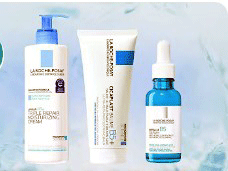
I first grabbed a bottle of La Roche-Posay (LRP) Thermal Spring Water during a bad rosacea flare about four years ago.
My cheeks were hot, stinging, and covered in tiny red bumps. A dermatologist recommended it as a soothing step after cleansing.
The first thing I noticed was the extremely fine mist. It feels almost dry when it lands on the skin — no heavy droplets rolling down my face.
Within seconds my skin felt calmer, less tight, and the burning sensation dropped noticeably. I started using it multiple times a day: after cleansing, before moisturizer, after sun exposure, even as a quick refresh at the office.
Over time I realized the selenium in LRP water seems to make a real difference for redness. My skin stays calmer longer compared with plain water or other brands I’ve tried. I also love that it never leaves a sticky or filmy residue, which is great when layering products.
On the downside, during very humid summer days the mist can feel a bit powdery and take longer to absorb completely. I’ve also noticed that the 50 ml travel size runs out quickly if you’re a heavy sprayer like me.
Overall, LRP has become my go-to when my skin is angry, reactive, or post-treatment (lasers, peels, retinol irritation). It’s reliable and consistent.
Read more: Comparison of Prose And Hairstory
Pros Of La Roche-Posay Thermal Spring Water
- Highest selenium content among thermal waters: Selenium acts as a powerful antioxidant, which helps neutralize free radicals and calm inflammation fast.
- Extremely fine, almost dry mist: Perfect for people who hate feeling wet or sticky after spraying.
- Very effective for redness and rosacea: Many users (myself included) notice visible calming of flushing within minutes.
- Post-procedure hero: Dermatologists often recommend it after lasers, peels, or microneedling because it soothes without clogging pores.
- No preservatives or additives: Pure thermal water straight from the spring, sterile bottled.
- Multiple sizes available: 50 ml travel size, 150 ml standard, 300 ml large, even a face-and-body version.
- Slightly acidic pH (~6.8): Closer to healthy skin pH, which can help maintain the acid mantle.
- Works well under makeup: Dries quickly and doesn’t disturb foundation or concealer.
- Trusted by dermatologists worldwide: Frequently appears in professional recommendations for sensitive skin.
- Minimal scent: Practically odorless, so no fragrance irritation.
Cons Of La Roche-Posay Thermal Water
- Can feel powdery in humid weather: The fine mist sometimes takes longer to absorb fully when the air is very moist.
- Less hydrating for extremely dry skin: The mist evaporates quickly, so it doesn’t deliver as much immediate moisture as Avène.
- Higher price in some regions: Often a few dollars more expensive than Avène for the same volume.
- Small travel size depletes fast: If you spray generously, the 50 ml bottle lasts only about two weeks.
- Not ideal as a standalone hydrator: Works best as a soothing step rather than a primary moisture source.
- Occasional reports of stinging: Rare, but some very reactive skin types feel a mild sting on broken skin.
- Limited scent options: Only one version exists (no scented variants).
My Experience With Avène Thermal Spring Water
Avène entered my routine a couple of years later when I moved to a drier climate and my skin started feeling tight and flaky even after moisturizing. A friend swore by Avène for dehydrated, sensitive skin, so I gave it a try.
The spray is noticeably wetter than LRP — you can actually see and feel tiny droplets on your face. That extra hydration feels wonderful when my barrier is compromised. I use it as the last step in my nighttime routine and wake up with softer, plumper skin.
Avène also shines when my skin is itchy or irritated from harsh weather. The slightly alkaline pH and high silica content seem to help restore comfort fast. I’ve used it on my hands and body after long flights or skiing trips and noticed less tightness.
The mist feels gentler on very dry or eczema-prone skin compared with LRP, but I do find it leaves a faint wet sensation longer. If I’m wearing makeup or in a rush, I sometimes pat it in instead of letting it air-dry.
In short, Avène has become my comfort blanket for dryness and barrier repair, while LRP remains my first choice for active redness and inflammation.
Pros Of Avène Thermal Spring Water
- Higher silica content: Silica helps strengthen the skin barrier and improves hydration retention over time.
- Wetter, more substantial mist: Delivers more immediate hydration, great for tight, dehydrated skin.
- Excellent for atopic and very dry skin: Many eczema sufferers find it more comforting than LRP.
- Neutral to slightly alkaline pH (~7.5): Can balance skin after acidic products (retinols, acids).
- Gentle on compromised barriers: Feels less “active” and more purely soothing.
- Same sterile, preservative-free formula: Pure thermal water just like LRP.
- Multiple convenient sizes: 50 ml, 150 ml, 300 ml, plus body sprays and even a post-shave version.
- Slightly cheaper in most markets: Usually $1–3 less than LRP for the same size.
- Great for travel and gym bags: The wetter mist feels refreshing after workouts or flights.
- Minimal scent: Virtually no fragrance to irritate sensitive noses.
Also read: Comparison of Beautycounter And Rodan and Fields
Cons Of Avène Thermal Spring Water
- Wetter spray can feel sticky: Takes longer to dry, which some people dislike before makeup.
- Lower selenium content: Less antioxidant power against redness and free radicals.
- Not as effective for active rosacea flushing: Many users find LRP calms redness faster.
- Can leave a faint residue: Especially noticeable on oily skin if not patted in.
- Less dermatologist hype: While still widely recommended, LRP often gets more professional endorsements.
- Occasional reports of tightness after drying: Rare, but some very dry skin types feel it pulls slightly.
Maintenance Tips For La Roche-Posay Thermal Spring Water
- Store it in the refrigerator: A cold mist feels incredibly soothing on hot, flushed skin.
- Shake well before each use: Helps distribute the minerals evenly.
- Spray from about 30 cm away: Gives the finest, most even mist.
- Use it as the first step after cleansing: Locks in calm before applying serums or moisturizers.
- Keep a bottle in the fridge and one at your desk: Quick access for midday redness.
- Pat gently instead of rubbing: Prevents irritation on sensitive areas.
- Don’t overuse on very oily skin: Too many sprays can feel powdery or heavy.
- Replace the bottle every 6–12 months: Even though it’s sterile, the nozzle can collect bacteria over time.
Maintenance Tips For Avène Thermal Spring Water
- Keep it at room temperature: The wetter mist feels more refreshing when not icy cold.
- Shake before spraying: Ensures even distribution of silica particles.
- Spray generously on dry patches: Let it sit 1–2 minutes before patting in.
- Use as a hydrating mask: Spray 8–10 times, wait 5 minutes, then pat excess.
- Store upside down: Helps prevent nozzle clogs from mineral buildup.
- Pair with a heavier cream at night: Maximizes the silica’s barrier-repair benefits.
- Clean the nozzle weekly with alcohol wipe: Prevents bacterial growth.
- Avoid spraying directly into eyes: Can cause temporary stinging.
Comparison With Other Brands
- Uriage Thermal Water: More mineral-rich and slightly salty taste; feels heavier than both LRP and Avène. Best for very oily skin that tolerates minerals well.
- Vichy Thermal Water: Contains 15 minerals including iron and manganese; stronger mineral scent. Great for dull skin but can sting broken areas.
- Eau Thermale Jonzac: Organic certification and high silica like Avène. Often cheaper but harder to find outside Europe.
- Evian Facial Spray: Regular mineral water, no thermal benefits. Much cheaper but lacks soothing properties of true thermal waters.
- Caudalie Beauty Elixir: Contains thermal waters plus essential oils and grape extracts. More aromatic and refreshing but not suitable for fragrance-sensitive skin.
- Simple Kind to Skin Soothing Facial Mist: Budget alternative with cucumber and chamomile. Feels nice but no mineral benefits.
- Mario Badescu Facial Spray: Aloe-heavy with rosewater or cucumber. Hydrating but lacks the clinical calming power of LRP or Avène.
Frequently Asked Questions (FAQ)
It depends on your main skin concern. La Roche-Posay works better for redness and rosacea thanks to higher selenium. Avène is usually better for very dry, dehydrated, or atopic skin due to higher silica and wetter hydration.
Not universally — Avène excels at barrier repair and intense dryness, while La Roche-Posay is stronger against inflammation and flushing. Choose based on your primary need.
Yes, La Roche-Posay Thermal Spring Water is 100% pure thermal spring water sourced from the La Roche-Posay spring in France.
Conclusion: For Both Products
I’ve used both thermal waters for years and still keep bottles of each on hand. If your skin struggles mostly with redness, flushing, or post-procedure irritation, I’d pick La Roche-Posay every time. If dryness, tightness, or a damaged barrier is your main issue, Avène usually gives me faster comfort.
Try both if you can — grab the smallest sizes and see which one makes your skin feel happiest. Your skin will tell you the answer better than any article ever could.