
The “Chi-Fi” (Chinese Hi-Fi) audio world is a rabbit hole. One minute you are listening to music on the free earbuds that came with your phone, and the next you are researching impedance graphs at 3 AM. If you have taken even a single step into this hobby, you have likely heard of Knowledge Zenith, or KZ. They are the gatekeepers of budget audiophile gear.
For years, the KZ ZS10 Pro was the undisputed king of the entry-level market—a heavy metal slab of V-shaped fun that cost less than a tank of gas. But time moves fast in audio tech, and KZ finally released a true sequel: the KZ ZS10 Pro 2. Now you are probably wondering: is the sequel just a cash grab, or did they actually fix the flaws of the original? I have spent significant ear-time with both, and the difference is far more than just a number on the box.
A Brief Comparison Table
| Feature | KZ ZS10 Pro | KZ ZS10 Pro 2 |
| Driver Configuration | Hybrid: 1 Dynamic + 4 Balanced Armature (Old Gen) | Hybrid: 1 Super-Linear Dynamic + 4 Balanced Armature (31736 Series) |
| Tuning Options | Fixed Tuning (Standard V-Shape) | 4-Switch Customizable Tuning (DIP Switches) |
| Bass Texture | Boomy, loose, fun mid-bass hump | Tighter, faster, less bleed into mids |
| Treble Quality | Sharp, sometimes sibilant (“The KZ Glare”) | Refined, detailed, smoother extension |
| Impedance | 30Ω | 25-28Ω |
| Sensitivity | 111dB | 108dB |
| Connector Type | 0.75mm 2-Pin (QDC Type C) | 0.75mm 2-Pin (QDC Type C) |
| Best For | Bassheads, EDM, casual high-volume listening | Critical listening, gaming, instrument separation |
My Experience With KZ ZS10 Pro
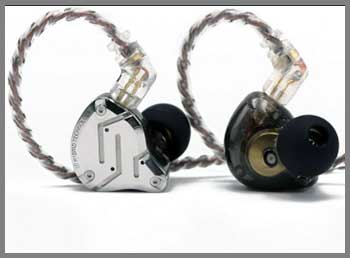
I bought the original KZ ZS10 Pro about three years ago when I first wanted to see what “audiophile” sound was all about without spending hundreds of dollars.
I remember unboxing them and being surprised by the weight of the metal faceplates—they felt cold and premium.
My first track was Daft Punk’s Random Access Memories.
The moment the bass kicked in, I smiled. It was huge.
The sub-bass rumbled in a way my AirPods never could. However, the honeymoon phase faded slightly when I switched to rock music. The cymbals on some tracks were so sharp they felt like ice picks. I remember having to EQ the 8kHz region down just to listen to certain albums comfortably.
They became my daily beaters for the gym and commute because they isolated noise well and the loud V-shape cut through the sound of the train. But they were never my “relaxing at home” pair; they were too aggressive for that. They were like a fun, loud party that you eventually want to leave.
Also Read: My Thought on Rythflo Bluetooth Headphones
Pros Of KZ ZS10 Pro
- The Classic “Fun” Tuning:The ZS10 Pro became a legend for a reason. It offers an unapologetically energetic “V-shaped” sound signature. This means the bass is boosted and the treble is sparkling, while the mids are slightly recessed. If you listen to modern pop, hip-hop, or EDM, this tuning makes music feel alive. It doesn’t try to be analytical or “correct”; it tries to be entertaining. The mid-bass slam is substantial, giving kick drums a physical thump that you can feel in your jaw.
- Incredible Driveability:You do not need a fancy amplifier or a dedicated Digital Audio Player (DAP) to run these. I plugged them into a Playstation controller, an old laptop, and a cheap smartphone dongle, and they sounded loud and full on all of them. With an impedance of 30 ohms and high sensitivity, they are incredibly efficient. This makes them the perfect “plug and play” option for someone who just wants better sound without carrying a brick of electronics in their pocket.
- Iconic Aesthetics and Build:The polished stainless steel faceplate is striking. It looks industrial, heavy, and far more expensive than its price tag suggests. Even years after its release, it stands out in a sea of generic plastic earbuds. The resin shell behind the metal faceplate is ergonomic for most ears, and the metal nozzle felt sturdy enough to survive being tossed into a backpack (though I don’t recommend that).
- Detailed High-End for the Price:Before the ZS10 Pro, budget IEMs sounded like they were underwater. This pair changed the game by utilizing four Balanced Armature (BA) drivers specifically for the high frequencies.1 This results in a level of detail retrieval that, at the time of its release, was unheard of for under $50. You can hear cymbal crashes, guitar pick scrapes, and breaths in vocals that standard earbuds completely mask.
Cons Of KZ ZS10 Pro
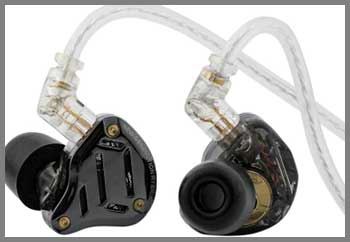
- The Infamous “KZ Glare” (Harsh Treble):The biggest complaint—and my personal struggle—with the original ZS10 Pro is the treble spikes. The high frequencies can be aggressive. If you are sensitive to treble or listen at high volumes, you might find that “S” and “T” sounds (sibilance) become piercing. It causes listening fatigue fairly quickly.2 I often found myself turning the volume down after 45 minutes because my ears felt like they needed a break from the sharpness.
- Bass Bleed:While the bass is fun, it isn’t exactly “clean.” The mid-bass hump is so prominent that it often bleeds into the lower mids. This can make male vocals sound a bit muddy or recessed. In complex tracks with lots of instruments, the bass tends to overpower the finer details, creating a “wall of sound” rather than a separated stage. It lacks the texture and speed of more modern drivers.
- The Stock Cable is Terrible:KZ is notorious for their “spaghetti” cables. The cable included with the ZS10 Pro is thin, prone to tangling, and feels fragile. The ear hooks are often stiff and uncomfortable. Almost everyone who buys these eventually spends extra money to upgrade the cable, which effectively raises the price of the IEM.
- Zero Customizability:What you hear is what you get. If you decide you want a little less bass or a little more air, you are out of luck unless you know how to use software EQ on your source device. The hardware itself is locked to that specific, aggressive V-shape tuning.
My Experience With KZ ZS10 Pro 2
Switching to the ZS10 Pro 2 felt like growing up. I sat down at my desk, used the little pin tool to set the switches to “All On” (bass boost + treble boost) first, just to see if it could match the original’s energy.
It did, but with discipline. The bass hit just as hard, but it didn’t linger. The snare drums sounded snappy rather than slushy. But the real revelation was when I flipped the switches to the “Standard” tuning (DDUU). Suddenly, the mids came forward. I could hear the texture in male vocals that used to be buried. The harsh metallic tinge was gone, replaced by a smooth, airy top end.9
I tested them in a round of Valorant, and the difference was night and day. With the original ZS10 Pro, an explosion would muddy the audio for a second. With the Pro 2, the explosion happened, and I could still hear the enemy reloading behind it. They have become my go-to recommendation for friends who want one pair of IEMs for both music and gaming. They simply do everything the original did, but cleaner, faster, and with more respect for your ears.
Pros Of KZ ZS10 Pro 2
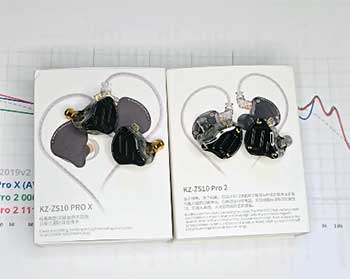
- Hardware Tuning Switches:This is the killer feature of the Pro 2. On the back of each earbud, there is a tiny panel with four switches.3 These are not gimmicks; they physically alter the crossover circuit. You can boost the bass, tame the treble, or aim for a more balanced sound. This versatility is incredible. I found that flipping the bass switches up gave me that classic ZS10 Pro thump, but turning them down provided a much cleaner, monitoring-style sound perfect for gaming or critical listening.
- Superior Instrument Separation:KZ upgraded the internal acoustic structure significantly.4 The “mushiness” of the original is gone. On the Pro 2, you can clearly distinguish the bass guitar from the kick drum—they don’t blend into one blob of low-end frequencies. The separation is surprisingly good for this price bracket. If you listen to orchestral music or complex metal tracks, the Pro 2 keeps up with the speed without getting congested.
- Refined Treble (No More Bleeding Ears):They finally fixed the glare. The Pro 2 uses updated 31736 balanced armature drivers that offer better extension without the harsh spikes.5 The highs are still crisp and detailed—you won’t miss any nuances—but the painful sibilance is largely gone. I found I could listen to these for three or four hours straight without that nagging fatigue I got from the original.
- Tighter, Faster Bass:The new super-linear dynamic driver focuses on quality over quantity.6 The bass on the Pro 2 is punchy and fast. It hits hard and then gets out of the way immediately. This “fast decay” prevents the mud that plagued the original. It feels more mature, like a Hi-Fi product rather than a consumer toy.
- Improved Gaming Performance:Because of the tighter bass and better imaging (the ability to hear where sounds are coming from), the Pro 2 is a beast for gaming. Footsteps in FPS games are distinct and directional, not drowned out by explosions.7 The soundstage isn’t massive, but the imaging accuracy is pinpoint sharp.
Cons Of KZ ZS10 Pro 2
- Tip Rolling is Difficult:KZ changed the nozzle design on the Pro 2. It has a slightly wider lip and a different mesh angle.8 I found it incredibly frustrating to get aftermarket ear tips on and off. If you have a favorite pair of SpinFit or Comply tips, be prepared to wrestle with them to get them seated on the Pro 2 nozzle.
- The Switches Require a Tool:While the switches are great, they are microscopic. You need the included SIM-card-style pin (or a safety pin) to flip them. You cannot adjust them on the fly with your fingernail. If you lose the tool, you are stuck with whatever tuning you last set. It makes A/B testing different sounds a bit of a hassle.
- Accessories Are Still Mediocre:Despite the “Pro 2” name and the slightly higher price, the unboxing experience is still very budget. You get the same tangled, white silver-plated cable and a basic set of silicone tips (though some regions include one pair of foam tips now). You will likely still want to buy a better cable, just like with the original.
- Aesthetics Are Identical:If you were hoping for a new look to show off your upgrade, you will be disappointed. Aside from the open-back grille looking slightly more transparent, the Pro 2 looks almost exactly like the Pro 1. It’s the same shape, same metal faceplate, and same weight. It doesn’t feel new in the hand, only in the ear.
Maintenance Tips For KZ IEMs
- Clean the Mesh Regularly:The mesh filters on KZ nozzles can get clogged with earwax easily, which will cause one side to sound quieter than the other (channel imbalance). Use a small brush or a little blu-tack to gently lift debris off the mesh once a week.
- Cable Connection Care:The 2-pin connectors (Type C QDC) are reliable, but if you detach the cable constantly, the plastic sockets can loosen. Try to avoid unplugging the cable unless necessary. If you do swap cables, pull straight out—do not wiggle them side-to-side, or you might crack the resin shell.
- Moisture Management:These are metal and resin. If you use them in humid environments or at the gym, wipe the metal faceplate down after use. The screws on the faceplate can rust over time if left wet. Keeping a small silica gel packet in your carrying case is a pro move.
Also Read:My Thought on FleGobey Translator Earbuds
Comparison with other brands
- KZ ZS10 Pro 2 vs. Moondrop Aria 2:The Aria is the benchmark for “smooth” sound. The Aria sounds warmer, more natural, and more relaxed. However, the ZS10 Pro 2 is much more energetic and resolving. If you want to relax, get the Aria. If you want to be excited or game competitively, the Pro 2 wins on technicalities and imaging.
- KZ ZS10 Pro 2 vs. CCA Rhapsody:CCA is a sister brand of KZ.10 The Rhapsody is another multi-driver hybrid with switches. The Rhapsody has more bass quantity and a slightly bigger shell. The ZS10 Pro 2 is more comfortable for smaller ears and sounds slightly more coherent in the treble. They are very similar, but the Pro 2 feels a bit more refined in the mids.
- KZ ZS10 Pro 2 vs. KZ ZSN Pro X:The ZSN Pro X is the ultra-budget option (usually $20). It is strictly 1DD+1BA. It sounds screechy and thin compared to the ZS10 Pro 2. The upgrade to the Pro 2 is massive. You are getting four extra drivers per ear and a much more sophisticated crossover. Do not cheap out on the ZSN if you can afford the ZS10 Pro 2.
Frequently Asked Questions (FAQ)
Yes, absolutely. While they look the same, the sound quality is a significant leap forward. The improved driver separation, tighter bass, and reduced treble harshness make it a much more mature product. Plus, the tuning switches give you versatility the original lacked.
Yes, they do, but the effect is subtle on some settings. The bass switches (1 and 2) make a noticeable difference in low-end volume. The treble switches (3 and 4) are more subtle, affecting the “air” and detail. Do not expect the switches to transform it into a completely different headphone, but they do fine-tune the flavor effectively.
The KZ ZS10 Pro 2 is superior for gaming.11 The improved instrument separation and imaging allow you to pinpoint footsteps and directional cues much better than the original, which could get muddy during chaotic in-game moments.12
Yes. Both IEMs use the same “Type C” (QDC-style) 0.75mm 2-pin connector. Your old cables, Bluetooth adapters (like the AZ09), and upgrade cables will work perfectly with the new model.
Conclusion
The KZ ZS10 Pro had a great run. It was the gateway drug for thousands of audiophiles, proving that great sound didn’t have to cost a fortune. It remains a fun, rowdy, bass-heavy option for those who just want to rock out.
However, the KZ ZS10 Pro 2 is better in almost every measurable way. KZ didn’t just slap a “2” on the box; they listened to the community. They fixed the piercing treble, tightened the flabby bass, and added customization options that actually add value.13
If you are buying your first pair of IEMs today, skip the original and go straight for the Pro 2. If you already own the original and are wondering if the upgrade is worth it: yes, it is. It’s the same fun sound you love, just cleaned up, dressed up, and ready for clearer listening.