
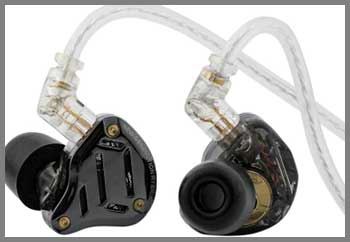
If you are sick of spending hundreds of dollars on brand-name earbuds that break in a year or sound like muddy garbage, you need to buy this product. The KZ ZS10 Pro is the gateway drug into the world of “Chi-Fi” (Chinese High Fidelity) audio. It offers a level of clarity, separation, and punch that rivals in-ear monitors costing three times as much. For musicians looking for a cheap stage monitor, or gamers wanting to hear footsteps with pinpoint accuracy without breaking the bank, this is the best value-for-money purchase you can make right now.
My Experience With KZ ZS10 Pro
I still remember the first time I fell down the rabbit hole of budget audiophile gear.
I was using a pair of generic earbuds that came with my phone, thinking music sounded “fine.” Then a friend told me about Knowledge Zenith, or KZ. I was skeptical.
How could a pair of earphones that cost less than a tank of gas possibly sound good?
When the box arrived, it was tiny and unassuming, almost like a deck of cards. But as soon as I lifted the ZS10 Pro out of the plastic tray, my opinion started to shift.
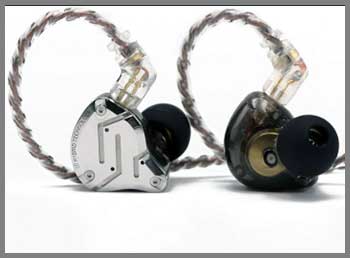
The first thing that struck me was the build. The faceplate is made of polished stainless steel, and it felt cold and substantial in my hand. It didn’t feel like a cheap toy; it felt like a piece of jewelry. I plugged the braided cable into the 2-pin connectors—a satisfying click—and hooked them into my phone. I put on “Hotel California,” the live version, which is my go-to track for testing soundstage. I was genuinely floored. I could hear the crowd noise distinct from the guitar, and the bass kick had a physical thump I had never felt with standard earbuds. It was like someone had taken a blanket off my speakers.
Using them daily for the past year has been an interesting journey. I wear them for everything: commuting, editing video, and even plugged into my PlayStation controller. The fit is surprisingly ergonomic for how bulky they look. The resin shell is molded to fit the concha of the ear, and once they are in, they lock into place. I have worn them for four-hour flights without needing to take them out. However, I did swap the silicone tips immediately. The stock ones are slippery, and getting a good seal is 90% of the battle with IEMs. Once I put on some memory foam tips, the isolation improved dramatically, shutting out the drone of the airplane engine almost entirely.
The sound signature is energetic. It isn’t flat or boring; it is exciting. The bass is boosted, and the treble is sharp. It makes pop, EDM, and rock music sound incredibly lively. I have noticed, though, that on poorly recorded tracks, the treble can be a bit unforgiving. It reveals flaws in the recording that my old headphones hid. But that is the price you pay for high fidelity. I also learned to love the detachable cable. One time, I snagged the wire on a door handle. On normal earbuds, that would have been the end of them. With the ZS10 Pro, the cable just popped out of the socket. I plugged it back in, and it was good as new. That modularity alone makes them worth the price of admission.
Also Read:My Thought on FleGobey Translator Earbuds
Pros Of KZ ZS10 Pro
- Incredible Hybrid Driver Configuration: The “10” in the name refers to the total number of drivers (five per ear). Most consumer earbuds use a single dynamic driver to handle all frequencies, which often leads to muddy sound where the bass bleeds into the vocals. The ZS10 Pro uses a hybrid setup: one heavy-duty dynamic driver for the bass and four balanced armature drivers to handle the mids and highs. This separation of labor is evident the moment you listen. The bass is deep and rumbly without drowning out the crisp snap of a snare drum or the breathiness of a singer’s voice. You get a separation of instruments that usually requires bulky over-ear headphones to achieve. It allows you to “see” the music, picking out individual guitar layers that you didn’t know existed in your favorite songs.
- Robust Build Quality and Aesthetics: In a market flooded with cheap plastic, the KZ ZS10 Pro stands out with its 304 stainless steel faceplate bolted onto a transparent resin shell. This gives it a premium, industrial look that screams durability. I have dropped these on concrete, shoved them in pockets with keys, and tossed them in backpacks, and the steel faceplate hasn’t dented or scratched significantly. The transparent inner shell is also a cool touch, allowing you to see the actual drivers and wiring inside. It is a conversation starter. Unlike rubberized cables or soft-touch plastics that get sticky over time, these materials age very well. They feel dense and solid, providing confidence that they won’t crack under normal usage pressure.
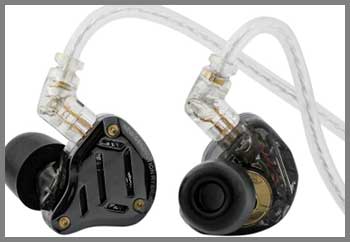
- Detachable 2-Pin Cable System: This is arguably the most pro-consumer feature of the IEM world. The cable connects to the earpieces using a standard 0.75mm 2-pin connector (Type C / QDC style). If your cat chews the wire, or if the jack shorts out after a year of abuse, you do not have to throw the earphones away. You simply buy a replacement cable for a few dollars. Furthermore, this opens up a world of upgrades. I eventually swapped the stock cable for a higher-quality 16-core silver cable that feels softer and tangles less. You can even buy a Bluetooth adapter cable that plugs into the ear units, converting your wired IEMs into wireless Bluetooth earbuds instantly. The versatility this offers is unmatched by fixed-cable alternatives.
- Easy to Drive (No Amp Needed): You might think that with five drivers per side, you need a powerful amplifier or a fancy dedicated music player to make these work. That is not the case. The ZS10 Pro has a low impedance (30 ohms) and high sensitivity (111dB). This means they are incredibly efficient. You can plug them directly into a smartphone, a Nintendo Switch, or a laptop headphone jack, and they will get plenty loud at 50% volume. You don’t need to carry around a bulky DAC/Amp dongle to get good sound out of them. They are designed for the everyday user who wants high-quality audio from standard sources, making them extremely accessible for beginners entering the audiophile hobby.
- Exceptional Price-to-Performance Ratio: When people talk about “Chi-Fi,” the ZS10 Pro is often the poster child because the value proposition is absurd. To get a similar hybrid driver setup from a mainstream Western brand like Shure or Westone, you would likely be paying hundreds of dollars. KZ has managed to democratize this technology. You are getting about 90% of the performance of a $300 IEM for a fraction of the cost. For students, budget-conscious musicians, or just frugal people who appreciate good audio, there is simply no better deal. It proves that great sound engineering doesn’t have to stay behind a luxury paywall.
Cons Of KZ ZS10 Pro
- Treble Can Be Fatiguing (Sibilance): The sound signature of the ZS10 Pro is what audiophiles call “V-shaped,” meaning boosted bass and boosted treble. While this makes the music sound fun and energetic, the boosted treble can be a double-edged sword. The balanced armature drivers used for the high frequencies are very detailed, sometimes to a fault. On tracks with high-pitched vocals or crashing cymbals, the sound can become sharp or “piercing.” This is known as sibilance—that harsh “sss” or “tzz” sound. If you are sensitive to high frequencies, or if you listen at high volumes for hours on end, you might experience ear fatigue faster than you would with a warmer, darker sounding headphone. They are aggressive, not laid back.
- The Stock Cable is Mediocre: While the fact that the cable is removable is a pro, the actual cable included in the box is a definite con. It is a thin, braided copper wire that feels somewhat flimsy. It is prone to tangling if you just shove it in your pocket, resulting in a frustrating knot-picking session before you can listen to music. Furthermore, it lacks a “chin slider” (the little bead that lets you tighten the cable under your chin), which helps keep the wires secure. The pre-formed ear hooks are also a bit stiff and can cause pressure points behind the ears during long listening sessions. Most users end up spending extra money to upgrade the cable immediately, which adds to the total cost.
- Bulky Shell Size: Because KZ had to cram five drivers into each earpiece, the physical housing of the ZS10 Pro is on the larger side. It has a protruding nozzle that goes deep into the ear canal. For the average male ear, this usually fits fine, but if you have smaller ears or narrow ear canals, you might find them uncomfortable. The shell can press against the ridge of the ear (the anti-helix), causing a dull ache after an hour or so. They are not low-profile earphones you can sleep in comfortably; if you lie on your side, the hard resin and steel will press painfully into your ear. It is a “try before you commit” fit for those with petite ears.
- Noise Isolation is Only Average: Despite being in-ear monitors, the noise isolation is heavily dependent on the ear tips you use. The stock silicone tips are quite thin and don’t create the perfect vacuum seal needed to block out the world. Even with a good seal, the ZS10 Pro has small vents on the inner side of the shell to relieve pressure for the dynamic driver. While this helps the bass sound better, it also lets a tiny bit of outside noise in (and leaks a tiny bit of your music out). They are not noise-canceling headphones. If you are on a loud subway or mowing the lawn, you will still hear some background rumble unless you crank the volume up to unsafe levels.
Maintenance Tips For KZ ZS10 Pro
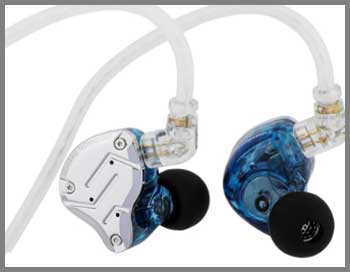
- Cleaning the Mesh and Nozzle: The number one reason one side of your IEMs stops working or becomes quieter than the other is earwax clogging the nozzle mesh. It is gross, but it happens to everyone. You should inspect the metal mesh at the tip of the earphone regularly. If you see buildup, use a small cleaning tool (often included with aftermarket tips) or a soft toothbrush to gently brush it away. Do this with the earphone facing down so the debris falls out, not deeper in. Do not use a needle or pin to poke the holes, as you can puncture the mesh and damage the drivers inside. A quick brush once a week keeps the sound channels clear and balanced.
- Protecting the 2-Pin Connectors: The connection point where the cable meets the earbud is the most vulnerable part of the unit. While the “Type C” connector (which has a plastic housing around the pins) is more durable than older styles, it can still loosen over time if you constantly detach and reattach the cable. My advice is to leave the cable plugged in unless you are actually changing it. Do not unplug them just for storage. The more you swap cables, the looser the socket becomes, which can eventually lead to the earpiece falling off the wire and getting lost. If the pins do oxidize (turn green or black), use a tiny bit of isopropyl alcohol on a cloth to wipe the pins clean before reinserting.
- Proper Cable Storage: The stock cable, and even upgraded braided cables, have a “memory.” If you crumple them up into a ball, they will eventually stay kinked and twisted. To prolong the life of the cable and prevent internal wire breakage, use the “over-under” coiling method (also known as the roadie wrap) when putting them away. Loop the cable in a circle without twisting it. I highly recommend buying a small hard-shell carrying case (KZ sells one, or you can find generic ones for cheap). Throwing these loose into a backpack is a recipe for crushed resin or bent pins. A $5 case protects your investment.
- Moisture Management: The KZ ZS10 Pro is not waterproof. It does not have an IPX rating. Sweat and humidity are the silent killers of balanced armature drivers. If you use these for working out (which many people do because of the secure fit), you need to be careful. After a sweaty session, wipe down the earpieces with a dry cloth. Do not put them immediately back into a sealed case if they are damp, as this traps the moisture inside with the electronics. I keep a small packet of silica gel (the little “do not eat” packets found in shoe boxes) inside my IEM carrying case. This desiccant absorbs any lingering moisture and keeps the drivers dry and crisp.
- Tip Replacement Cycle: Silicone and memory foam ear tips degrade over time. Silicone tips can become oily and lose their grip, causing the IEMs to slide out of your ears. Foam tips will eventually crack, crumble, and lose their ability to rebound. Using old, dirty tips is not only unhygienic but also ruins the sound quality by breaking the seal. I recommend washing silicone tips with warm soapy water (remove them from the IEM first!) every few weeks. For foam tips, you usually need to replace them entirely every 2-3 months depending on usage. Keeping the tips fresh ensures you are always hearing the bass response the way it was intended.
Also Read: My Thought on Rythflo Bluetooth Headphones
Comparison with Other Brands
- KZ ZS10 Pro vs. Moondrop Aria: This is the battle of the titans in the budget audiophile space. The Moondrop Aria typically costs about twice as much as the KZ, but many wonder if the upgrade is worth it. The Aria has a much smoother, more “Harman-tuned” sound signature. It is less aggressive in the treble and has a more natural tone for vocals. If the KZ is a rock concert, the Aria is a jazz lounge. The Aria also has a more premium, matte metal build, though the paint is known to chip. If you find the KZ too sharp or fatiguing, the Aria is the logical step up. However, for pure excitement and detail retrieval in electronic music or gaming, the KZ actually holds its own and might even be preferred by “bassheads.”
- KZ ZS10 Pro vs. Shure SE215: The Shure SE215 has been the industry standard for stage musicians for over a decade. In terms of sound quality, the KZ ZS10 Pro absolutely destroys the Shure SE215. The Shure uses a single, older dynamic driver that sounds muddy, dark, and lacking in detail compared to the crisp hybrid setup of the KZ. However, Shure wins on isolation and comfort. The SE215 shape is smaller, flatter, and fits almost any ear perfectly, blocking out massive amounts of noise. If you are a drummer who needs to block out a cymbal crashing next to your head, get the Shure. If you want to actually enjoy listening to music with clarity and detail, buy the KZ. The KZ is the modern choice; the Shure is the dinosaur.
- KZ ZS10 Pro vs. KZ ZSN Pro X: The ZSN Pro X is the younger, cheaper brother of the ZS10 Pro. It usually costs about half the price. Visually, they look very similar, but the ZSN Pro X only has two drivers (1 dynamic, 1 balanced armature) compared to the ZS10 Pro’s five. The difference is audible. The ZSN Pro X is much harsher; the treble is piercing and can be painful at high volumes, and the mids are recessed (pushed back). The ZS10 Pro sounds fuller, richer, and more coherent. While the ZSN Pro X is an amazing value for under twenty bucks, the jump in quality to the ZS10 Pro is significant and worth the extra cash. The ZS10 Pro feels like a finished product, while the ZSN Pro X feels like a rough draft.
Frequently Asked Questions (FAQ)
Yes, they are excellent for gaming, particularly competitive shooters like Valorant, CS:GO, or Apex Legends. Because of the hybrid driver setup, the separation of sounds is fantastic. You can clearly distinguish the deep thud of an explosion from the high-pitched click of footsteps. The imaging (the ability to tell where a sound is coming from) is very accurate for the price point, often outperforming “gaming headsets” that rely on virtual surround sound software.
It depends on which version you buy. When purchasing, you usually have the option to select “With Mic” or “No Mic.” The version with the mic features a simple one-button control on the cable for play/pause and answering calls. The microphone quality is decent for phone calls but not amazing for broadcasting or streaming. Since the cable is removable, even if you buy the version without a mic, you can buy a replacement cable with a mic later.
The KZ ZS10 Pro has a total of 10 drivers, which means it has 5 drivers per side. Each earpiece contains one Dynamic Driver (for low frequencies/bass) and four Balanced Armature drivers (two for mids and two for highs). This “1 Dynamic + 4 BA” configuration allows each driver to focus on a specific part of the frequency spectrum, resulting in clearer sound than a single driver trying to do everything at once.
The original ZS10 was an earlier model with a plastic shell and a different driver arrangement. It was bulky and the sound was somewhat incoherent. The ZS10 Pro is the upgraded version. It features a redesigned stainless steel faceplate, a more ergonomic shape, and significantly improved tuning. The Pro version has punchier bass and much better detail retrieval. There is almost no reason to buy the original ZS10 anymore; the Pro is superior in every way.
Conclusion
The KZ ZS10 Pro is a disruptor in the audio market. It proves that you don’t need a fat wallet to experience high-fidelity sound. While it has its quirks—like a mediocre stock cable and a treble-heavy sound that might fatigue sensitive ears—the sheer technical performance you get for the price is undeniable. It turns music listening from a passive background activity into an engaging experience. If you are ready to ditch your disposable earbuds and hear your playlist like never before, the ZS10 Pro is the perfect starting line.