
Insomnia is a thief. It steals your energy, your patience, and your ability to think clearly. If you have spent nights staring at the ceiling, calculating how many hours of sleep you could get if you fell asleep right now, you know the desperation that leads to the sleep aid aisle. In that aisle, or more likely while scrolling online, you have probably encountered the Kirkland Signature Sleep Aid. It is famous not for flashy marketing, but for the sheer volume of pills you get for a ridiculously low price.
In this review, I am going to break down whether this budget-friendly blue pill is the solution to your sleepless nights or just a one-way ticket to a groggy morning. I will analyze the active ingredient, Doxylamine Succinate, and how it compares to the big-name brands that charge triple the price for the exact same thing. Whether you are a shift worker, a stressed student, or just someone who needs a reset, this guide will help you decide if Kirkland is the right tool for your nightstand.
My Experience With Kirkland Signature Sleep Aid
I bought the two-bottle pack of Kirkland Sleep Aid on a whim during a particularly bad bout of stress-induced insomnia. I had been using ZzzQuil (diphenhydramine) for a while, but it seemed to stop working; I would fall asleep but wake up at 3 AM wide awake. I read that Doxylamine Succinate, the active ingredient in Kirkland and the original Unisom, was better for staying asleep, so I figured, for the price of a sandwich, why not try it?
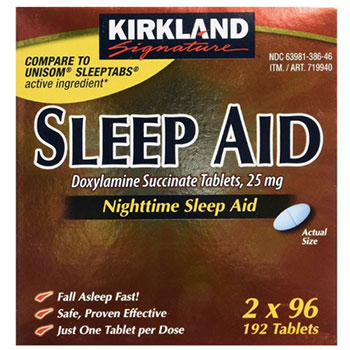
The first night, I made a classic rookie mistake: I took a full 25mg pill.
The bottle says one tablet, so I took one tablet.
About 45 minutes later, I felt a heavy, almost physical weight pulling my eyelids down.
It wasn’t the gentle drift of melatonin; it was a hard “shut down” command.
I slept for a solid nine hours, completely dead to the world.
However, the next morning was rough.
Waking up felt like I was swimming through wet cement.
I was incredibly groggy, my mouth was dry as a desert, and it took about two cups of strong coffee and a cold shower to feel human again. The “hangover” effect was real. I realized that 25mg was simply too high of a dose for my body weight and tolerance level.
The next night, I used a pill splitter to cut the tablet in half (12.5mg). This was the sweet spot. I still got that heavy, drowsy sensation that knocked me out within an hour, but the next morning the brain fog was significantly more manageable. I slept through the night without that annoying 3 AM wake-up call.
Over time, I noticed that if I used it more than three nights in a row, the effectiveness started to wane. I had to be careful not to rely on it daily. It became my “emergency brake” for nights when I knew I needed to sleep now to function tomorrow. It is not a supplement I would take casually like magnesium, but as a heavy-duty tool for occasional insomnia, it is incredibly effective. The sheer quantity of pills in the bottle means one purchase literally lasts me years, which is an unbeatable value proposition compared to buying 12-packs of brand-name sleep aids at the drugstore.
Read More: My Thoughts On Klova Sleep Patch
Pros Of Kirkland Sleep Aid
When evaluating this product, the value and potency are undeniable. It is a no-nonsense medication that does exactly what it says on the bottle, often better than more expensive competitors. Here are the specific benefits that make it a staple in many medicine cabinets.
- Unbeatable Cost Per Dose: The most obvious advantage is the price. You can often get a pack of 192 tablets (two bottles of 96) for less than the price of a single box of 32 Unisom tablets. If you break that down, it costs pennies per night to get a full night’s sleep. For anyone on a budget who suffers from chronic occasional insomnia, this financial accessibility is a massive relief compared to prescription costs or high-end herbal blends.
- Superior for Sleep Maintenance: Unlike Melatonin, which primarily signals the body that it is time to sleep, or Diphenhydramine, which wears off relatively quickly, Doxylamine Succinate is a powerhouse for staying asleep. Its half-life is roughly 10 hours, meaning it stays active in your system through the entire night. This makes it specifically excellent for people who struggle with “middle-of-the-night” insomnia where they wake up and cannot drift back off. You are far less likely to see 3 AM when taking this compared to other OTC options.
- Scored Tablets for Easy Dosing: The tablets come with a distinct score line down the middle. This might seem like a small detail, but it is crucial because 25mg is a strong dose for many people. Being able to cleanly snap the pill in half allows you to titrate your dose down to 12.5mg easily. This flexibility lets you find the minimum effective dose to get to sleep without incurring the maximum side effects the next day. It effectively doubles the lifespan of the bottle if half a pill works for you.
- Identical to Brand Name Unisom: This is a generic drug, meaning the chemical structure is legally required to be identical to the brand name version (Unisom SleepTabs). You are not getting a “weaker” version just because it is a store brand; you are getting the exact same 25mg of Doxylamine Succinate. The only difference is the filler ingredients and the lack of a fancy box. You get the same clinical efficacy without paying for the marketing budget of a major pharmaceutical company.
Cons Of Kirkland Sleep Aid
Despite its effectiveness, Doxylamine Succinate is a strong antihistamine with significant side effects. It is not a “gentle” natural remedy, and you need to respect its potency.
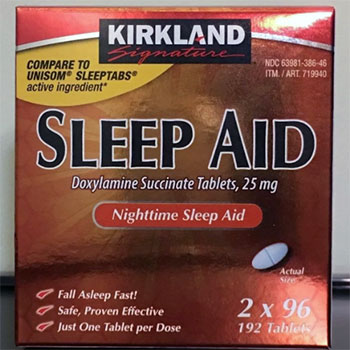
- The “Next Day Hangover” is Significant: The long half-life that helps you stay asleep is a double-edged sword. Because the drug stays in your system for so long, it often hasn’t fully metabolized by the time your alarm goes off. Many users report feeling groggy, heavy, or mentally slow until noon the next day. If you have to drive early in the morning or perform complex mental tasks immediately upon waking, this residual drowsiness can be dangerous. It requires you to commit to a full 8-9 hours of sleep to minimize this effect.
- Anticholinergic Side Effects: Doxylamine works by blocking acetylcholine, a neurotransmitter, which causes a specific set of physical side effects. You will likely experience dry mouth (xerostomia), dry eyes, and potentially constipation. For older men, it can cause urinary retention, making it difficult to empty the bladder completely. These side effects can be uncomfortable and are the reason why this medication is generally not recommended for elderly patients, as it increases the risk of confusion and falls.
- Rapid Tolerance Build-Up: Your body adapts to antihistamines very quickly. If you take this every single night, you will find that 25mg stops working within a week or two. This can lead to a dangerous cycle where you feel tempted to increase the dose to get the same effect. It is not designed for chronic, long-term daily use; it is meant for short-term relief (2 weeks maximum according to most guidelines). Relying on it daily can mask underlying sleep issues like apnea or anxiety that need real treatment.
- Potential for Rebound Insomnia: When you stop taking it after using it for several days in a row, you might experience “rebound insomnia.” This is where your sleep is actually worse than it was before you started taking the pills. Your body forgets how to initiate sleep without the chemical crutch, leading to a few nights of intense tossing and turning. This withdrawal effect can make people feel trapped into continuing the medication just to avoid the withdrawal sleeplessness.
Maintenance Tips For Kirkland Sleep Aid
Using this powerful sedative safely requires a strategy. You cannot just pop it like a vitamin. Here are tips to manage the side effects and maintain its effectiveness.
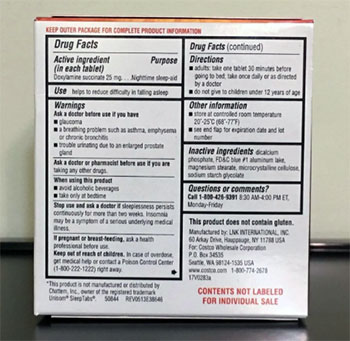
- Start Low and Go Slow: Never start with a full tablet if you have never taken Doxylamine before. Use the score line to break the tablet in half (12.5mg) or even quarters for your first try. See how your body reacts to the lower dose before committing to the full 25mg. Many users find that half a tablet provides all the sleep benefits with half the morning grogginess. You can always take more next time, but you cannot “untake” it once the grogginess sets in.
- Hydrate Aggressively: Because of the drying anticholinergic effects, you need to counteract the dehydration. Drink a large glass of water when you wake up to help clear the fog and rehydrate your mucous membranes. Keep water by your bedside (though be careful about drinking too much right before bed if you have bladder issues). Using a saline nasal spray or eye drops in the morning can also help if you wake up feeling like you have been dried out.
- Cycle Your Usage: To prevent tolerance, you should use the “2 days on, 1 day off” or “weekday vs. weekend” method. Do not take it for more than 3-4 consecutive nights. Give your receptors a break to reset so the medication remains effective at the same dose. If you find yourself needing it every night for more than two weeks, you need to stop and consult a doctor, as the instructions warn. Treat it as a rescue medication, not a daily supplement.
- Timing Is Everything: Do not take this pill at 2 AM when you can’t sleep. You must take it roughly 30 minutes before your planned bedtime, and you must have at least 8 hours available to sleep. If you take it at 2 AM and have to wake up at 7 AM, you will be functionally impaired. The “hangover” is a math equation of Dose vs. Time; give the drug enough time to leave your system.
Comparison with Other Brands
The sleep aid aisle is confusing. Here is how Kirkland compares to the other major options you will see on the shelf.
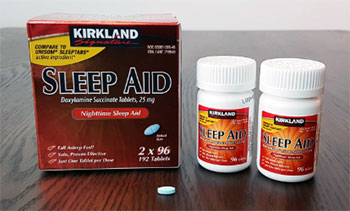
- Unisom SleepTabs (Brand Name): This is the direct equivalent product. Comparison: Unisom SleepTabs contain the exact same active ingredient (Doxylamine Succinate 25mg) in the exact same dosage. The primary difference is the price; Unisom can cost upwards of $15 for 32 tablets, whereas Kirkland can be found for roughly the same price for 192 tablets. Unisom does have a slightly smoother coating that might be easier to swallow for some, but the effect is identical. Unless you have a specific allergy to a filler ingredient in the generic, there is no medical reason to pay the premium for Unisom.
- ZzzQuil / Benadryl (Diphenhydramine): These are the other most common OTC sleep aids. Comparison: These contain Diphenhydramine HCl, which is a different antihistamine. Diphenhydramine has a shorter half-life (meaning it wears off faster) than Doxylamine. Kirkland (Doxylamine) is generally considered stronger and better for keeping you asleep, while ZzzQuil is better for just falling asleep. However, the “hangover” from Kirkland is usually worse than ZzzQuil because it lasts longer. If you struggle to wake up, stick with ZzzQuil; if you wake up too early, try Kirkland.
- Natrol Melatonin: This is a hormone supplement, not a sedative drug. Comparison: Melatonin is much gentler and works by shifting your circadian rhythm, not by sedating your brain. It does not cause the same heavy “knockout” feeling or the dry mouth side effects of Kirkland. Melatonin is safer for nightly use and for older adults. However, Melatonin is often ineffective for severe stress-related insomnia where your mind is racing. Kirkland is a “sledgehammer” for sleep; Melatonin is a gentle nudge.
Also Read: My Thoughts On Manta Sound Sleep Mask
Frequently Asked Questions (FAQ)
Yes, the tablets are scored (they have a line down the center) specifically for this purpose. Many users find that 25mg is too strong and causes excessive grogginess, so taking half a tablet (12.5mg) is a very common and effective practice.
No, they are different drugs, although they are both antihistamines. Benadryl contains Diphenhydramine, while Kirkland Sleep Aid contains Doxylamine Succinate. Doxylamine is generally considered to be more sedating and has a longer duration of action than Benadryl, making it better for staying asleep but more likely to cause morning drowsiness.
No, it is not recommended for long-term daily use. The labeling typically advises not to use it for more than two weeks. Using it daily leads to rapid tolerance (it stops working) and can mask underlying health conditions that cause insomnia.
Yes, like all medications, it has an expiration date printed on the bottle. While solid tablets are generally stable, they can lose potency over time. Given that the bottle contains 192 tablets, if you only use it occasionally, you might reach the expiration date before finishing the bottle.
Conclusion
Kirkland Signature Sleep Aid is arguably the best value in the over-the-counter sleep market, providing a potent, clinically proven sedative for a fraction of the cost of brand-name competitors. It is a highly effective tool for those nights when stress or travel makes sleep impossible, offering a “heavy” sedation that keeps you under for the long haul.
However, that potency comes with a price: the morning grogginess is real, and the side effects like dry mouth can be unpleasant. It is not a lifestyle supplement for daily wellness; it is a serious medication that should be treated with respect. If you need a reliable, cost-effective emergency brake for occasional insomnia and can afford a slow start to your morning, this bottle is a must-have for your medicine cabinet.