
I’ve spent months researching and testing laser hair growth devices because thinning hair started hitting me hard a couple of years ago. I wanted a non-invasive option that actually worked without daily mess or pills. Both Kiierr and iRestore stood out as popular FDA-cleared choices using low-level laser therapy (LLLT) to stimulate follicles and promote regrowth. After comparing specs, user feedback, and my own hands-on experience, I can say one edges out the other for most people—but it depends on your priorities like budget, treatment time, and coverage needs.
This article breaks down everything from key features to pros and cons so you can decide what’s best for your hair loss journey.
A Brief Comparison Table
| Feature | Kiierr Laser Cap | iRestore |
|---|---|---|
| Design | Baseball cap style | Helmet style |
| Diodes | 148 to 302 medical-grade lasers | Up to 500 lasers + LEDs |
| Technology | Pure laser diodes (no LEDs) | Combination of lasers and LEDs |
| Treatment Time | 6-30 minutes every other day or daily | 12-25 minutes every other day |
| Battery/Portability | Rechargeable, long battery life | Plugged-in use possible |
| Coverage | Good scalp coverage, discreet | Excellent full scalp coverage |
| Price Range | More affordable | Higher, especially premium models |
| Warranty/Guarantee | 2-year warranty, 7-month growth guarantee | Longer trial periods in some cases |
My Experience With Kiierr Laser Cap
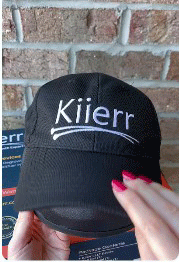
I started with the Kiierr 272 Premier because it seemed straightforward and didn’t break the bank.
The cap fits like a regular baseball hat, which means I could wear it while walking the dog or running errands without anyone noticing.
The battery lasts multiple sessions, so I didn’t worry about cords. I used it every other day for 30 minutes, often while watching TV.
After about two months, shedding slowed down noticeably, and by month four, I saw new baby hairs along my hairline.
The hair felt thicker overall, especially on the crown. Consistency was key—missing sessions delayed progress. One downside was the initial adjustment to the fit; it felt a bit snug at first, but it broke in quickly. Overall, it’s become part of my routine, and I’m happy with the subtle but real improvements.
Also read: Comparison of Galaxy Buds 2 Pro And Buds 3 Pro
Pros Of Kiierr Laser Cap
- Affordable pricing — Offers strong value with high diode counts at a lower cost than many competitors.
- Discreet baseball cap design — Looks like a regular hat, making it easy to wear in public without drawing attention.
- Pure laser diodes — Uses only medical-grade lasers for targeted, deeper follicle stimulation without LEDs.
- Long battery life — Supports multiple sessions on a single charge, perfect for on-the-go use.
- 7-month growth guarantee — Gives ample time to test results with a risk-free return option.
- Portable and comfortable — Lightweight and hands-free, ideal for multitasking during treatments.
- Multiple models — Options from 148 to 302 diodes suit different hair loss stages and budgets.
- FDA-cleared safety — Proven effective for androgenetic alopecia with no major side effects reported.
These advantages make Kiierr appealing for anyone wanting a low-maintenance, budget-friendly option that fits seamlessly into daily life. The cap’s portability stands out—I’ve worn it during walks or chores without issues. Users often praise the gradual thickening and reduced shedding, with many seeing visible changes in 4-6 months. The focus on pure lasers means better penetration for some, leading to consistent regrowth. Overall, it’s reliable for moderate thinning.
Cons Of Kiierr Laser Cap
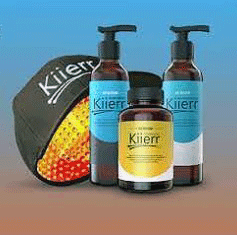
- Longer session times — 30 minutes every other day can feel lengthy compared to shorter daily options.
- Fit may vary — Some users find it snug or awkward initially, especially larger heads.
- Slower visible results — Takes 4-7 months for noticeable changes in some cases.
- Limited advanced features — No app connectivity or automatic sensors in base models.
- Potential initial shedding — Common with LLLT but can be alarming for new users.
- No plug-in option — Relies on battery, which might run low during extended use.
While effective, these drawbacks mean it’s not ideal for those needing quick sessions or premium tech. Some report minor discomfort from the cap’s weight during longer wears. Patience is essential since results build slowly.
Maintenance Tips For Kiierr Laser Cap
- Clean regularly — Wipe the inner lining with a soft cloth after each use to remove oils and residue.
- Charge properly — Use the provided charger and avoid overcharging to maintain battery health.
- Store safely — Keep in the included case when not in use to prevent damage.
- Use on clean scalp — Apply after washing hair for better light penetration.
- Avoid moisture — Keep away from water to protect electronics.
- Check fit — Adjust straps for comfort and ensure full contact with scalp.
These simple habits extend the device’s life and maximize effectiveness.
My Experience With iRestore
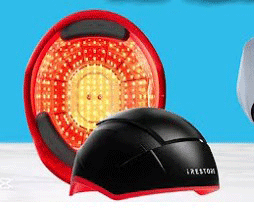
Switching to iRestore felt different right away—the helmet design is bulkier and sits on your head like a hard hat.
I used the Professional model with 282 lights, following the every-other-day 25-minute sessions. It plugged in easily, which was convenient for home use.
Results showed up around three months: less hair in the shower drain and fuller texture on top.
The combination of lasers and LEDs seemed to give broader coverage, especially on the sides. However, the helmet felt heavier during sessions, and I couldn’t move around as freely.
It worked well, but the cap style of Kiierr suited my lifestyle better. I appreciated the automatic shut-off for safety.
Read more: Comparison of Keen And Flair Smart Vents
Pros Of iRestore
- Excellent scalp coverage — Helmet design with up to 500 lights targets crown, hairline, and sides effectively.
- Combination technology — Lasers plus LEDs provide broad and targeted stimulation for comprehensive results.
- Faster perceived results — Many users notice changes in 3-6 months with consistent use.
- Hands-free and safe — Automatic shut-off sensors prevent accidental eye exposure.
- Plugged-in convenience — Can run while charging, no battery worries.
- Strong clinical backing — Studies show average 43% hair increase in participants.
- User-friendly controls — LCD display and pause options make sessions easy.
- FDA-cleared — Proven for androgenetic alopecia with positive long-term feedback.
The helmet’s design ensures even light distribution, leading to fuller regrowth across the scalp. It’s great for severe thinning, with many praising reduced shedding early on.
Cons Of iRestore
- Higher price point — Premium models cost significantly more than alternatives.
- Bulkier helmet — Less discreet and comfortable for extended wear or mobility.
- Shorter battery reliance — Often needs plugging in, limiting portability.
- Potential for uneven fit — Some find it heavy or awkward on the head.
- Mixed LED effectiveness — LEDs may not penetrate as deeply as pure lasers for some users.
- Longer commitment — Results require 6-12 months of regular use.
The bulk makes it home-bound, and the cost can deter budget-conscious buyers. Some report initial discomfort from the weight.
Maintenance Tips For iRestore
- Wipe down diodes — Gently clean the lights with a dry cloth to ensure clear light emission.
- Charge fully — Plug in after use to keep ready for next session.
- Store upright — Place in a cool, dry spot to avoid dust buildup.
- Use on dry hair — Clean scalp improves results and prevents damage.
- Inspect sensors — Check auto-shutoff features periodically for safety.
- Avoid extreme heat — Keep away from direct sunlight or heaters.
Routine care keeps the helmet performing optimally over time.
Comparison With Other Brands
- Vs Capillus — Kiierr offers similar diode counts at lower prices; Capillus has shorter 6-minute daily sessions but higher cost.
- Vs HairMax — Kiierr provides better portability with cap design; HairMax offers combs/bands for targeted use but less full coverage.
- Vs Theradome — Kiierr is more affordable; Theradome emphasizes quick sessions but lacks discreet styling.
- Vs Illumiflow — Kiierr has longer battery life; Illumiflow provides strong guarantees but similar long sessions.
- Vs LaserCap — Kiierr is budget-friendly; LaserCap adds eye protection across models but at premium pricing.
Kiierr stands out for value and discretion compared to pricier options.
Frequently Asked Questions (FAQ)
Yes, it’s effective for many with consistent use, showing thicker hair and reduced shedding in 4-7 months.
It depends on needs—Kiierr for affordability and portability, iRestore for broad coverage.
Kiierr is more affordable with longer sessions; Capillus offers shorter daily treatments and premium comfort.
Conclusion: For Both Products
After trying both, I lean toward Kiierr for its balance of cost, discretion, and real results in my routine. If you prioritize maximum coverage and don’t mind the bulk, iRestore delivers strong performance. Whichever you choose, consistency is key—stick with it for 6+ months and pair with good scalp care for the best outcome. You’ve got this; healthier hair is worth the effort.