
If you’re tired of uneven temperatures in your home—one room freezing while another feels like a sauna—Keen smart vents could be the solution you’ve been waiting for. I’ve used them for years now, and they truly transform how your HVAC works, giving you room-by-room control without a full zoning overhaul. If comfort and potential energy savings matter to you, you should absolutely consider buying Keen smart vents today.
My Experience With Keen Smart Vents
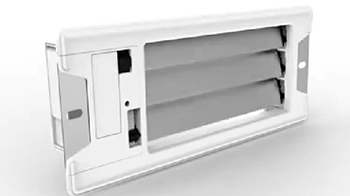
I remember the frustration all too well before I installed Keen smart vents in my home.
My upstairs bedrooms would always lag behind the downstairs living areas during heating seasons, leaving us bundling up at night while the main floor felt perfect.
In summer, it was the opposite—the guest room stayed stuffy no matter how low I cranked the thermostat.
You know that feeling when you adjust the whole house just to fix one spot, only to make everywhere else uncomfortable? That’s what I dealt with constantly.
When I first heard about Keen smart vents, I was skeptical. Could replacing regular vents really make that big a difference? But after researching and seeing how they integrate with my ecobee thermostat, I decided to start small.
I bought a kit with four vents, a bridge, and a couple of temperature sensors for the problem rooms.
Installation was straightforward—I just swapped out the old vents, no tools beyond a screwdriver needed for most. The magnetic grilles snap on easily, and pairing everything to the app took minutes.
From day one, the change was noticeable. I set preferences in the Keen app for each room: cooler in the bedrooms at night, warmer in the home office during the day.
The vents automatically adjust airflow, redirecting it where it’s needed most. That nursery I mentioned earlier? It used to swing wildly in temperature, but now it holds steady, which made sleep so much better for everyone.
You feel the difference immediately—no more rushing to manually close vents or forgetting to reopen them.
What surprised me most was how intuitive it became. The pressure sensors prevent over-straining the HVAC system, opening slightly if needed, so I never worried about damage.
Pairing with room sensors meant precise control; the app even lets you schedule changes, like boosting airflow to the kitchen in the evenings.
Over time, I’ve expanded to more vents, covering about half my home’s registers. The battery life holds up well—I change them every couple years without issue—and the build feels solid, with smooth motor operation.
Of course, it wasn’t perfect at first. Early on, I had occasional connectivity hiccups with the bridge, but updates improved that dramatically.
Now, it’s reliable, and seeing consistent temperatures across rooms makes me wonder how I lived without it. You start appreciating the little things, like walking into a perfectly cooled bedroom after a hot day.
For me, Keen turned my house into a truly comfortable space, saving hassle and likely some energy along the way. If your home has those stubborn hot or cold spots, you’ll likely feel the same relief I did.
Read more: My Thoughts on Accusharp Knife Sharpener
Pros Of Keen Smart Vents
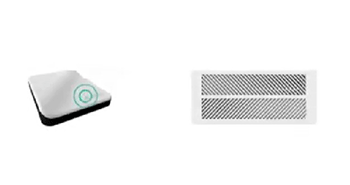
- Room-Specific Temperature Control: These vents let you set individual preferences for each room, redirecting airflow automatically so you enjoy personalized comfort without adjusting the main thermostat constantly.
- Easy Installation Process: You swap them in place of existing vents in minutes, no professional help or duct modifications required, making it a simple weekend project for most homeowners.
- Built-In Pressure Safeguards: Sensors monitor system pressure and prevent full closures that could strain your HVAC, giving you peace of mind that the vents protect your equipment while optimizing flow.
- Integration With Popular Thermostats: They pair seamlessly with ecobee and others, allowing end-to-end control where the vents communicate needs directly, enhancing overall efficiency.
- Energy Savings Potential: By focusing heating or cooling only where needed, you reduce wasted airflow to unused rooms, which can lower bills over time as the system runs more targeted.
- Scheduling And Automation Features: You create daily schedules or let sensors handle adjustments based on occupancy and temperature, making comfort hands-free once set up.
- Durable Design Elements: The magnetic grilles and sturdy construction hold up well, with smooth, quiet motor operation that doesn’t disrupt daily life.
- Expandable System: You start with a few vents and add more as needed, scaling to cover problem areas without committing to a full-house overhaul upfront.
- Improved Home Comfort Overall: Eliminating hot and cold spots creates even temperatures, making every room feel just right no matter the season.
Cons Of Keen Smart Vents
- Occasional Connectivity Issues: Some users, including me early on, experience drops between vents and the bridge, requiring reboots or repositioning, though updates have minimized this.
- Battery Replacement Needed: Powered by AA batteries that last 1-2 years depending on use, you’ll need to pop them out periodically, which can be annoying in hard-to-reach spots.
- Noise When Adjusting Or Under Pressure: The motors make a noticeable sound when opening/closing, and fully closed vents can whistle if airflow is strong, though partial openings reduce it.
- Higher Upfront Cost: Individual vents run around $80-90 each, plus the bridge, so outfitting multiple rooms adds up quickly compared to manual adjustments.
- Limited Full Automation: The app works well but doesn’t always predict needs perfectly without manual tweaks, especially in complex setups.
- Not Ideal For All HVAC Systems: If your ducts aren’t well-designed, results vary, and over-closing risks pressure buildup despite safeguards.
- App Could Use More Features: While functional, it lacks some advanced reporting or deeper integrations that competitors offer.
- Potential For Uneven Results Initially: You might need trial and error to calibrate sensors and preferences for optimal balancing.
- Dependency On Bridge: Everything routes through the single hub, so if it glitches, multiple vents go offline until fixed.
Maintenance Tips For Keen Smart Vents
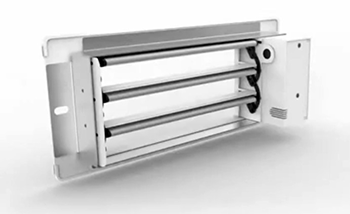
- Regular Battery Checks: Monitor levels in the app and replace AA batteries proactively every 18-24 months to avoid sudden drop-offs that halt automation.
- Clean The Grilles Periodically: Dust the magnetic covers monthly with a soft cloth or vacuum brush to prevent buildup that could affect airflow or motor performance.
- Ensure Strong Bridge Placement: Position the bridge centrally with clear line-of-sight to vents for reliable ZigBee connection, avoiding interference from thick walls or electronics.
- Update The App And Firmware: Check for updates regularly, as they fix connectivity bugs and improve pressure sensing accuracy.
- Test Pressure Sensors Seasonally: Run the HVAC and observe if vents adjust properly under load, ensuring safeguards engage without excessive whistling.
- Avoid Over-Closing Manually: Let automation handle it, but if tweaking, keep at least some openness to maintain system health.
- Inspect For Dust In Vents: Occasionally remove grilles to clear any debris inside that might jam the louvers over time.
- Pair With Compatible Thermostat: Maintain your ecobee or similar for best integration, calibrating room sensors accurately for precise readings.
- Monitor For Unusual Noises: If motors sound strained, check batteries or reposition for better signal strength.
- Expand Gradually: Add vents one room at a time, testing maintenance ease before committing to more.
Comparison With Other Brands
Flair Smart Vents Stand Out For Build Quality
When I looked at Flair as an alternative, the metal grilles immediately felt more premium than Keen’s plastic ones, promising better longevity in high-traffic areas. You get similar room control, but Flair’s Pucks double as sensors and remotes, adding convenience Keen lacks. Battery life stretches longer too, often 3-4 years versus Keen’s 2, reducing how often you climb ladders for changes.
Ecovent Integration Adds Whole-Home Options
Since Keen merged with Ecovent, you access broader zoning now, but standalone Ecovent focused on professional installs for deeper duct sensing. It appealed if you wanted system-wide monitoring beyond Keen’s register-level approach, though availability shifted post-merger.
SmartCocoon Boosters Target Under-Vented Rooms
For rooms needing more airflow rather than restriction, boosters like SmartCocoon push extra air effectively. Keen redirects existing flow better for balancing, while boosters suit spot fixes without full vent replacement.
Overall Brand Reliability Considerations
Flair often gets praise for consistent connectivity where Keen had early hiccups, making it feel more set-and-forget. You pay a bit more per vent, but the wired option eliminates battery worries entirely. Keen shines in easy DIY and thermostat ties, but if support matters, Flair’s responsiveness edges ahead based on user feedback.
Also read: My Thoughts on Bed Bunny Sheets
Frequently Asked Questions (FAQ)
Smart vents like Keen don’t filter air directly, but by optimizing circulation and reducing over-conditioning, you minimize dust buildup and moisture issues in stagnant rooms. Better airflow helps distribute filtered air more evenly from your HVAC, indirectly supporting healthier indoor environments.
The vents themselves can endure 10-15 years or more with proper care, built solidly for daily use. Batteries need replacement every 1-3 years depending on the model and usage, but the hardware holds up well beyond that.
You use smart vents to control airflow room by room, automatically opening or closing to balance temperatures and redirect heating or cooling where needed most, eliminating hot and cold spots without manual adjustments.
Keen vents typically range from $80-90 each, with bridges around $40; full setups for several rooms often total a few hundred dollars, varying by size and quantity.